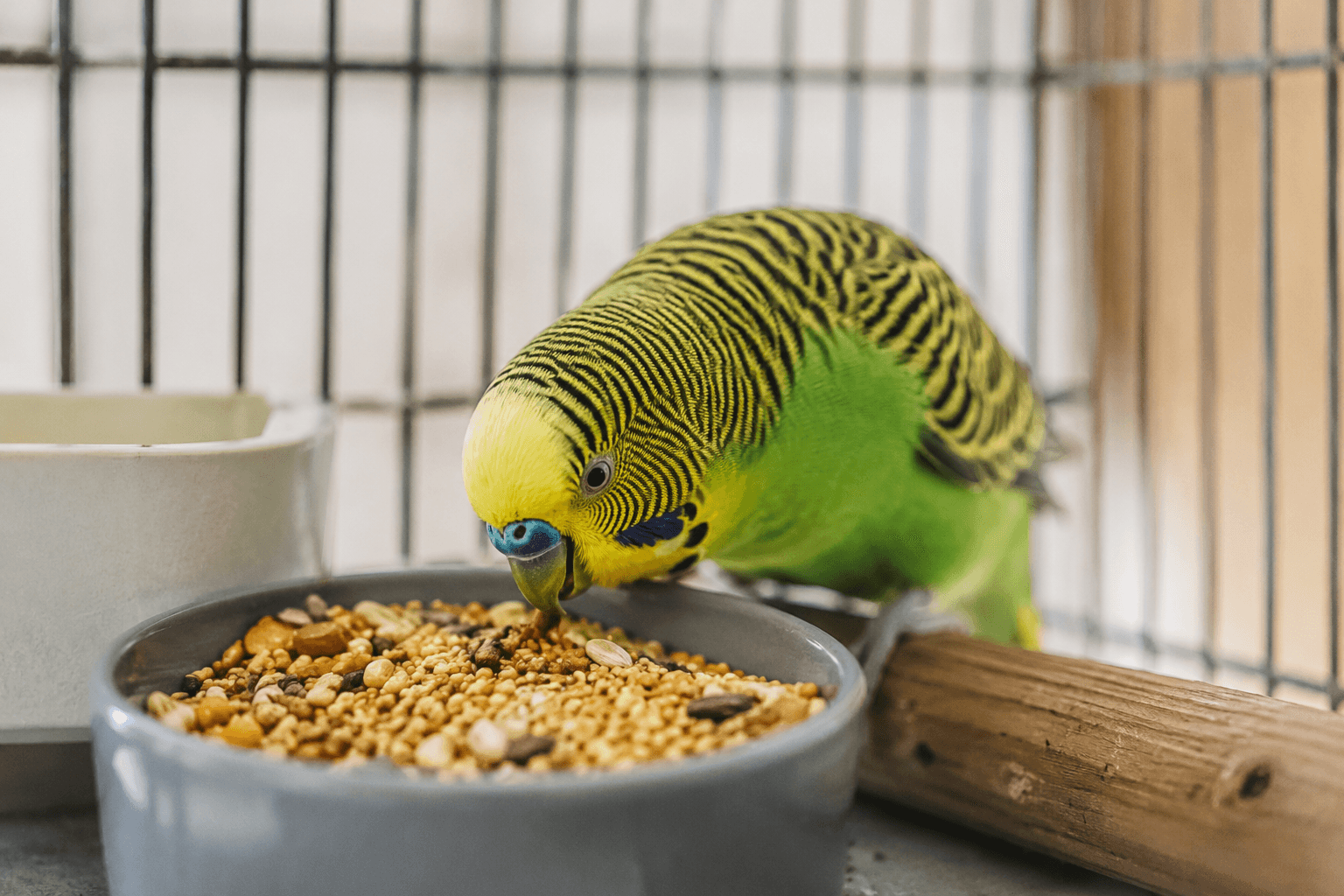
The Fundamentals of Birds Nutrition — What Does Your Little Feathered Friend Actually Need?
Before we talk about what your bird eats, let's understand how their body works.
A bird — no matter how small — is an incredibly precise biological machine. Their heart rate ranges between 200 and 400 beats per minute. Their normal body temperature sits between 40 and 42°C (104–107°F). And this finely tuned machine needs clean, balanced fuel to run at its best.
That understanding is your real starting point. 🎯
Seeds Alone Aren't Enough — Busting the #1 Common Myth
Imagine eating a plain bowl of rice every single day. You'd survive — but you'd be far from thriving. That's exactly what happens to your bird when seeds are their only food source.
Seeds are rich in fats and carbohydrates, but they're critically lacking in:
- ✅ Vitamin A (essential for respiratory health and eye function)
- ✅ Calcium (for strong bones and beak development)
- ✅ Vitamin D3 (which controls how calcium is absorbed)
- ✅ Adequate protein (to support feather growth and immune function)
A bird that relies entirely on seeds is, simply put, a bird living with chronic nutritional deficiency — showing up as dull feathers, general weakness, and much higher vulnerability to illness.
And the bigger problem? Your bird will always prefer seeds — because they're tasty and fat-rich. Just like a child who always reaches for chips over carrots. This is exactly where your role as a responsible owner comes in! 😊
The Right Grains and Seeds for Each Bird Type
Now, this doesn't mean you'll eliminate seeds from your bird's diet entirely — they're still an essential component, just in specific proportions and the right varieties.
The Golden Rule: Seeds should make up no more than 30–50% of your bird's daily intake. The rest should be complemented by vegetables, fruits, and protein.
Generally safe and beneficial seed options:
- 🌱 Millet: Light and easy to digest — ideal for small birds
- 🌻 Sunflower seeds: Energy-dense, but only in very small amounts due to high fat content
- 🌾 Crushed oats: Excellent for medium to large birds
- 🟡 Ground yellow corn: A solid energy source for larger species
Important note: Commercial seed mixes are often packed with seeds your bird will ignore and push aside — meaning you're regularly buying food that half goes uneaten. Always check what's left in the bowl — it tells you more than you'd think! 🔍
Fruits and Vegetables — The Colors That Make All the Difference
This is where the secret to a vibrant, healthy bird lives — one with glossy feathers and bright, lively eyes. 🌈
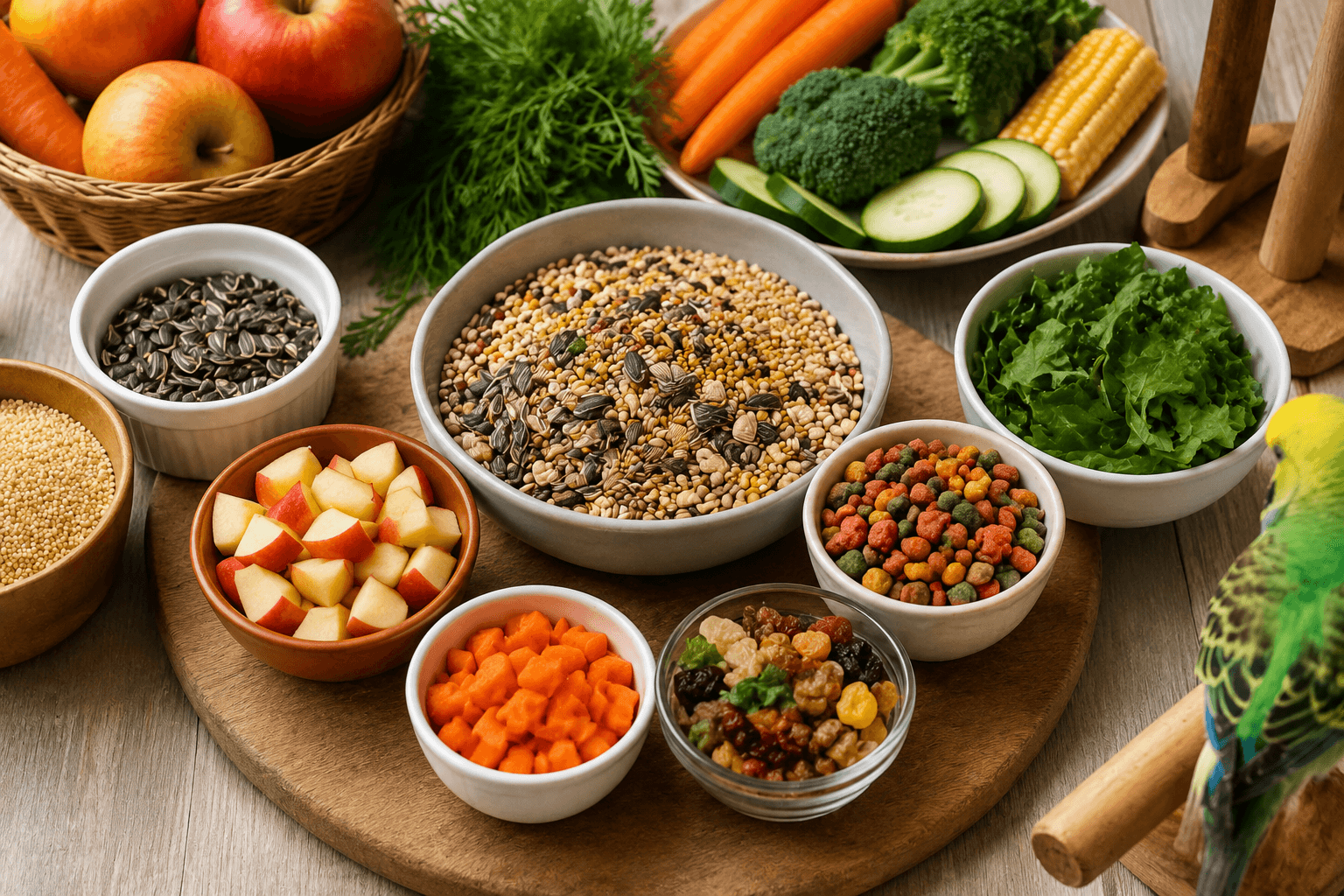
Fruits and vegetables are your bird's primary source of vitamins, minerals, and antioxidants — none of which seeds can provide adequately. The rule here is beautifully simple: the deeper and richer the color, the higher the nutritional value.
Best vegetables for your bird:
- 🥕 Carrots: Rich in beta-carotene, which converts to Vitamin A — absolutely essential for respiratory health
- 🥦 Broccoli: A powerhouse of calcium and Vitamin C
- 🌿 Spinach and dark leafy lettuce: Iron and folate
- 🌽 Fresh corn on the cob: Loved by most birds and a great source of fiber
- 🫑 Colorful bell peppers: Among the richest sources of Vitamin C and antioxidants
Best fruits for your bird:
- 🍎 Apple (seeds completely removed): Fiber and natural sugars
- 🫐 Blueberries: Potent antioxidants to support the immune system
- 🥭 Mango: Abundant in Vitamins A and C — and many birds go absolutely wild for it!
- 🍉 Watermelon (seedless): Hydrating and a warm-weather favorite
How much to offer: Fruits and vegetables should make up 20–30% of daily intake for small birds, and up to 40% for larger species.
Safety reminder: Always wash produce thoroughly and serve it fresh. Never leave fruits or vegetables in the cage for more than two hours — bacteria and mold develop quickly. 🚫
Protein in Your Bird's Life — When, How, and How Much?
Protein is the building block of everything in your bird's body: feathers, muscles, the immune system, even hormones.
Many bird owners are genuinely surprised to learn just how important protein is — especially during these key periods:
- 🥚 Breeding season and egg-laying
- 🪶 Molting (feather shedding) cycles
- 🌱 Growth stages in chicks and juveniles
- 🏥 Recovery from illness or injury
Safe and appropriate protein sources:
- Hard-boiled eggs: The gold standard of bird-safe protein — easy to digest, offer 2–3 times per week in small amounts
- Cooked legumes: Well-cooked lentils and beans, cooled before serving
- Cottage cheese: In very small quantities for larger bird species
- Small insects: Such as locusts or mealworms for domesticated wild-type birds
What to always avoid: Raw meat, full-fat dairy products, and processed protein sources of any kind.
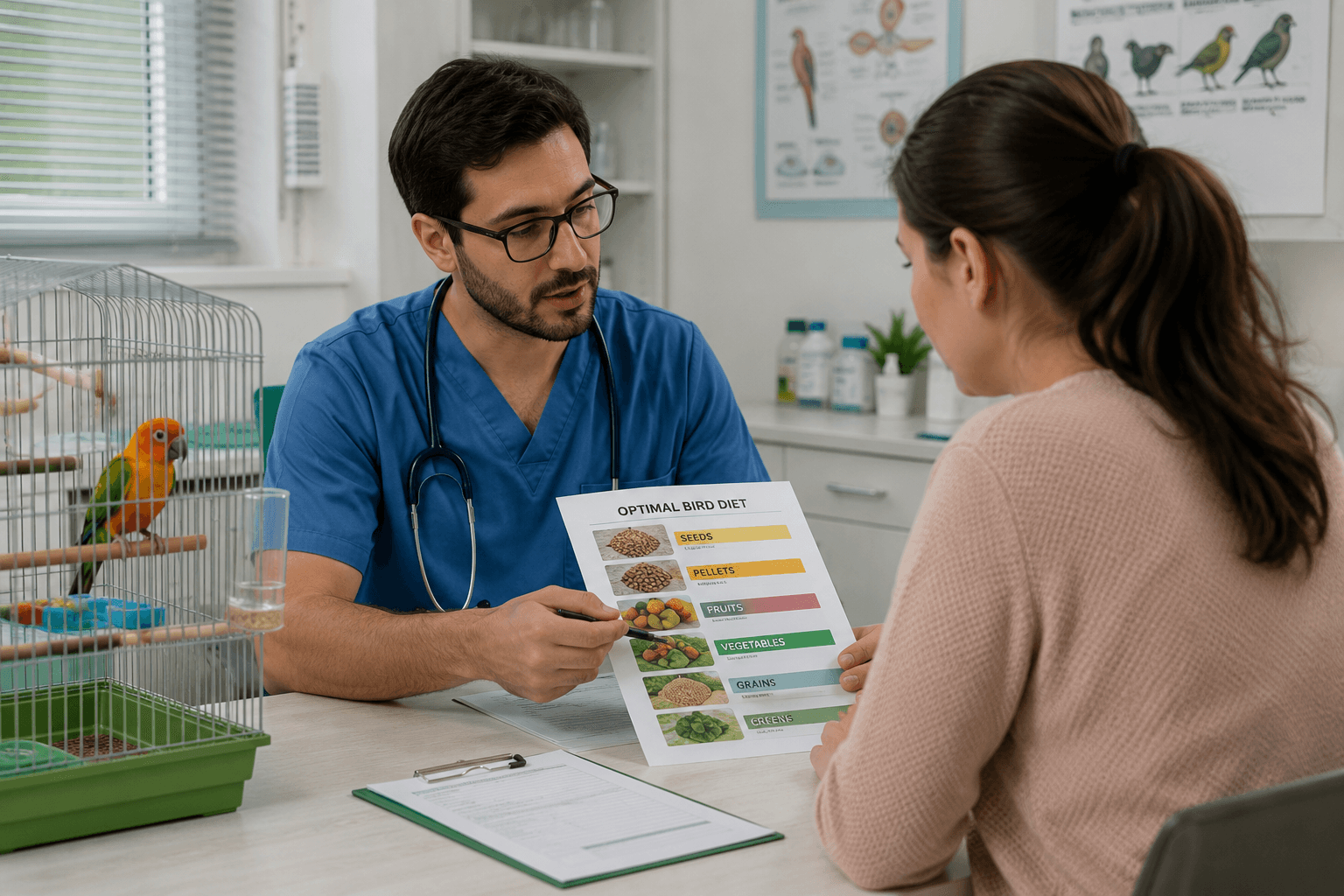
💡 SCOTY Tip: If you're unsure about the ideal nutritional ratios for your specific bird species, or if you've started noticing changes in their appetite or feather condition, remember — you can book a consultation with a specialized avian vet through SCOTY from the comfort of your home in just minutes, rather than waiting until the problem worsens. 🩺
Forbidden Foods — What Could Kill Your Bird Without You Even Knowing?
This is the most critical section in this entire birds nutrition guide.
Not because the information here is meant to frighten you — but because ignorance of these facts is the real reason behind so many tragic cases of poisoning and sudden death that owners describe as: "They were perfectly fine yesterday."
Your bird cannot tell you they're in pain. They don't whimper or cry. They go quiet and hide until the very last moment — because birds instinctively conceal weakness as a survival mechanism inherited from the wild.
That's why prevention here isn't optional — it's everything. 🛡️
Avocado — The Silent Green Killer 🥑
Avocado is one of the most dangerous foods you can expose your bird to — and far too many owners simply don't know this.
Avocado contains a compound called Persin, a naturally occurring fungicidal toxin found in the fruit's flesh, seed, leaves, and even the bark of the tree.
What does Persin do inside a bird's body?
- Causes direct damage to heart muscle tissue
- Leads to fluid accumulation around the heart and lungs
- Triggers severe difficulty breathing
- In most cases, results in death within 24 to 48 hours
And the most devastating part? There is no specific antidote for Persin poisoning. Treatment is supportive only.
🚨 The Absolute Rule: Avocado is forbidden — completely and without exception. Even a tiny amount. Even if your bird seems curious about it.
Chocolate, Caffeine, and Alcohol 🍫☕
These three might seem far removed from your bird's world — but real-life incidents tell a different story.
Chocolate:
Contains both theobromine and caffeine, both of which have catastrophic effects on a bird's nervous system and heart.
Symptoms appear rapidly:
- Tremors and seizures
- Vomiting and diarrhea
- Severe cardiac arrhythmia
- Sudden death in serious cases
Even white chocolate — which some assume is "safer" — remains dangerous because it still contains caffeine and its derivatives.
Caffeine in general — whether from coffee, tea, or energy drinks — causes acute cardiac arrhythmia in birds even in the tiniest amounts.
Alcohol: It may seem unthinkable that a bird would ever be exposed to alcohol — but some overripe or fermented fruits contain trace amounts. Alcohol causes rapid central nervous system failure in birds at a speed that's genuinely alarming.
Onion, Garlic, and Sulfuric Vegetables 🧅🧄
This danger is less widely known, but no less serious.
Onions and garlic — whether raw, cooked, dried, or even powdered — contain sulfur compounds that destroy red blood cells in birds.
The result is a condition called Hemolytic Anemia:
- 🔴 The bird becomes visibly lethargic and exhausted
- 🔴 Breathing becomes labored and rapid
- 🔴 Droppings change color and consistency
- 🔴 In severe cases, organ failure follows
What makes this particularly dangerous is that symptoms may not appear immediately — days can pass before you notice a change, by which point the damage has already quietly accumulated.
Also in this category: leeks, scallions, and chives. All are strictly forbidden in every form. 🚫
Salt, Sugar, and Processed Foods 🧂
This is where many owners fall into what I'd call the "affectionate sharing trap" — snacking on crackers or chips while their bird watches with curious eyes, and offering them a small piece.
That tiny piece, relative to your bird's body size, represents a massive dose of sodium and chemical preservatives.
Salt causes birds to experience:
- Extreme thirst and excessive water intake
- Electrolyte imbalance
- Kidney failure with repeated exposure
- Chronic neurological problems
Artificial sugar disrupts the gut microbiome in birds, weakens the immune system, and dramatically increases the risk of fungal infections — particularly Candidiasis.
The Rule: Anything a human doctor would call "acceptable in small amounts" is completely off-limits for your bird. Their body is far smaller, and the impact of any substance is proportionally amplified.
The Forbidden Seeds — What Hides Inside Sweet Fruits 🍒🍎
Yes, we said apples are great for your bird — but with one non-negotiable condition: absolutely no seeds.
The seeds of apples, pears, cherries, peaches, and apricots contain a compound called Amygdalin, which converts inside your bird's body into hydrogen cyanide — the classic poison.
- Even one or two cherry seeds can be enough to cause severe poisoning in a small bird
- Symptoms include sudden respiratory distress, tremors, loss of balance, and loss of consciousness
- Speed of response is the difference between life and death — literally
This is precisely why you should always peel fruit and remove every single seed before offering it. Never trust a "small piece" — the danger isn't about size, it's about content. ⚠️
🆘 What to Do If Your Bird Swallows Something Forbidden?
The first thirty minutes are the true deciding window in bird poisoning cases.
Don't wait. Don't Google. Open SCOTY immediately and book a consultation right away.
You can attach photos or a short video of your bird's condition directly in the app before the session begins — giving the vet a precise visual assessment rather than relying on verbal description alone. ⚡
Birds Nutrition by Species — A Tailored Recipe for Every Wing
If you've made it this far, you're taking your bird's nutrition genuinely seriously — and that alone makes you an exceptional owner. 💚
But let's be honest: a lot of the information available online talks about "birds" as if they're one uniform category.
The reality? A budgie's nutritional needs are radically different from an African Grey's. A canary is nothing like a cockatiel. Every species has its own digestive physiology, metabolic rate, and evolutionary history — all of which determine what truly works for them.
In this section, we break it down species by species — in a practical, immediately applicable way. 🍽️
The Budgerigar (Budgie) — The Most Popular Bird and the Most Frequently Malnourished 💙
The budgie is the most widely kept pet bird across the world — and unfortunately, it's also the most commonly malnourished, largely because its small, cheerful appearance gives the impression that it's "easy to keep."
The ideal daily breakdown:
- 🌱 50% grains and seeds: Millet, wheat, crushed oats, flaxseed
- 🥦 30% vegetables: Grated carrot, small broccoli florets, cucumber, red bell pepper
- 🍎 15% fruits: Peeled apple (seeds removed), berries, mango
- 🥚 5% protein: Hard-boiled egg, offered 2–3 times per week
Key things to know about budgie nutrition:
Budgies naturally tend toward obesity if given too many sunflower seeds — which, of course, happen to be among their absolute favorites. Obesity in budgies leads to fatty tumors called Lipomas, which appear as soft lumps beneath the skin.
Budgies also need a Cuttlebone permanently available in their cage — a dried cuttlefish bone that provides calcium and helps naturally wear down the beak. 🦴
A sensitive point: Budgies are among the most commonly Vitamin A-deficient birds — showing up as nasal discharge, breathing difficulties, and color changes to the cere (the fleshy area above the beak). Carrots and red bell peppers are your simplest, most powerful defense against this problem. 🥕
The Cockatiel — A Delicate Balance Between Seeds and Greens 🌟
The cockatiel is intelligent, emotionally sensitive, and highly attuned to routine — and this reflects directly in how they respond to their diet.
The ideal daily breakdown:
- 🌾 40% grains and seeds: A blend of millet, oats, and grass seeds
- 🥦 35% vegetables: Spinach, carrot, broccoli, grated zucchini
- 🍎 15% fruits: Apple, pear, mango, grapes (one or two only)
- 🥚 10% protein: Hard-boiled egg, cooked legumes
Specific points to watch with cockatiels:
Cockatiels are frequently deficient in Vitamins A and E. Vitamin E in particular is critical for fertility and neurological health — you'll find it in sprouted wheat seeds and flaxseed.
Cockatiels are also among the birds that benefit most from sprouted seeds — seeds soaked in water for 12 hours and then allowed to germinate. This process significantly multiplies their vitamin content while substantially reducing fat levels.
🌿 Quick sprouting method:
Soak seeds in clean water for 12 hours, drain and rinse thoroughly, then place in a sieve covered with a damp cloth. After another 24 hours, you'll see tiny green shoots — that's the real nutritional treasure. Serve fresh and refrigerate any remainder for one to two days only. 🌱
Large Parrots (African Grey and Amazon) — A Distinguished Diet for a Distinguished Mind 🧠
The African Grey and Amazon parrots are among the most intelligent creatures on Earth — their cognitive abilities are genuinely comparable to a five-year-old child. And that remarkable mind needs exceptional nutritional fuel.
The ideal daily breakdown:
- 🫘 35% grains and legumes: Oats, corn, cooked lentils, cooked beans
- 🥦 40% vegetables: Wide daily variety — carrots, broccoli, zucchini, fresh corn, safe leafy greens
- 🍇 15% fruits: Pomegranate, mango, berries, papaya
- 🥚 10% high-quality protein: Hard-boiled egg, small amounts of cottage cheese, occasional insects
What sets large parrots apart:
First — they need genuine daily variety. Intelligent birds grow bored of dietary monotony quickly, and may actually go on hunger strike in protest! Offer different colors, textures, and shapes every single day.
Second — the African Grey in particular is especially prone to calcium deficiency, which can cause seizure-like episodes. Calcium from natural sources — broccoli, kale, and cuttlebone — is non-negotiable for this species.
Third — these birds benefit enormously from "foraging enrichment" — presenting food inside toys or puzzle feeders that require them to search and problem-solve to access it. This directly supports their psychological wellbeing, which is deeply interconnected with their physical health. 🧩
Canaries and Zebra Finches — High Energy That Demands Clean Fuel ⚡
These two small birds electrify any room with their constant movement and song — and their metabolic rate is among the highest of any pet bird.
What this means practically: they burn enormous energy daily and need a continuous, high-quality nutritional supply.
Ideal daily breakdown for canaries:
- 🌱 60% seeds: White and red millet, canary grass seed, flaxseed
- 🥦 25% fresh vegetables: Finely grated carrot, cucumber, spinach
- 🍎 10% fruits: Berries, peeled apple, small amounts of kiwi
- 🥚 5% protein: Hard-boiled egg once a week in very small portions
Ideal daily breakdown for zebra finches:
Similar to canaries, but with a slightly higher protein proportion during breeding season — when they're simultaneously building a nest, incubating eggs, and feeding hatchlings all at once.
An important note for both species:
Because of their tiny body size, any nutritional deficiency manifests far faster than in larger birds. Sudden feather loss, a bird sitting at the cage floor and refusing to fly, or one who keeps their eyes closed during the day — these are all urgent nutritional warning signs that deserve immediate evaluation. 🚨
Pigeons and Backyard Chickens — The Most Overlooked and the Most In Need 🕊️🐓
These two species receive the least nutritional attention among pet bird owners — perhaps because they appear "hardy" and capable of fending for themselves. But that assumption carries a long-term cost that's far higher than most owners realize.
Pigeons:
Primarily seed and grain eaters, but they also need:
- 🫘 Peas, lentils, and small nuts as protein sources
- 💧 Constant access to clean water — pigeons drink differently from other birds (they suck water rather than tilting their head back), meaning contaminated water reaches their system directly and immediately
- 🪨 Small grit: Essential for grinding food in their gizzard, since they swallow seeds whole without husking them
Backyard chickens:
Need a far more varied diet than most owners realize:
- A complete, balanced feed as the foundation
- Fresh leafy greens daily
- Regular animal protein: insects, worms, unseasoned cooked meat scraps
- Additional calcium — especially for laying hens, who lose significant calcium with every egg
And if you notice your hen eating her own eggs — that's a very clear signal of calcium deficiency in her diet. 🥚
💡 Is Your Bird a Poor Fit for Any of These Profiles?
Some birds have a unique health history, a chronic condition, or are a hybrid between two species — in which case the general guidelines above may not apply cleanly to them.
Through SCOTY, you can browse the profiles of avian-specialist veterinarians, choose the right doctor for your needs, and book your appointment directly from the calendar in minutes — to receive a nutrition plan tailored specifically to your bird, not a generic template. 🗓️
Warning Signs of Malnutrition — And How to Act Before It's Too Late
We've arrived at the final section — and it may be the most practically valuable of everything you've read.
Because theoretical knowledge alone isn't enough. What truly saves your bird is your ability to read their body, catch the warning signals early, and move at the right time.
A bird suffering from chronic malnutrition doesn't suddenly fall off their perch — they send small, accumulating signals over weeks or even months, and you are the one who needs to decode them. 🔍
Responsible birds nutrition doesn't end when food goes into the bowl — it begins the moment you observe your bird, armed with the knowledge of what to look for.
Dull or Falling Feathers — When the Body Speaks Through Plumage
Feathers are the first honest mirror of your bird's internal health.
A well-nourished, healthy bird has feathers that are:
- ✨ Glossy, dense, and neatly structured
- 🌈 Vibrant in color with rich, clear gradients
- 🧴 Consistently groomed and clean, as birds continuously preen with their beak
So if you start noticing the opposite — the body is sending a clear message.
Feather warning signs that should stop you in your tracks:
- Non-seasonal shedding unrelated to normal molting cycles
- Dull or lifeless feathers despite being newly grown
- Frayed or mid-shaft broken feathers with no mechanical explanation
- Bald patches or bare areas on the head, neck, or chest
- The bird avoiding preening or ceasing the behavior altogether
What these signs mean nutritionally:
- Protein deficiency → brittle, structurally weak feathers
- Vitamin A deficiency → changes in feather texture and color
- Fatty acid deficiency → dry feathers that lose their natural sheen
- Zinc deficiency → abnormal shedding and bald patches
⚠️ Important distinction: Normal seasonal molting (Molting) occurs once or twice a year in a regular, symmetrical pattern. Concerning feather loss is random, asymmetrical, and unrelated to seasonal timing.
Loss of Appetite and Sudden Lethargy 😔
These two symptoms together form the clearest alarm bell in a bird's health vocabulary.
A healthy bird starts their day with unmistakable energy — singing, moving between perches, preening, and lunging eagerly toward their food bowl.
A sick or malnourished bird does the exact opposite of all of that.
Lethargy signals worth taking seriously:
- 😴 Staying fluffed up for extended periods (fluffing is how birds retain warmth when unwell)
- 👁️ Keeping eyes closed during the day or appearing "asleep" while standing
- 🐾 Sitting at the bottom of the cage instead of perching on their bar
- 🍽️ Ignoring food entirely, or tasting it and walking away without eating
- 🔇 A sudden and noticeable silence — no singing, no familiar sounds
Why does a bird hide their illness?
Because birds instinctively conceal weakness in the wild — a visibly sick bird is the first target for predators. So by the time your bird appears overtly unwell, the underlying problem may have been quietly building for days or weeks already.
This means any behavioral change you notice — even one that seems minor — deserves to be taken seriously immediately. ⏱️
Repeated Vomiting or Abnormal Droppings 💩
Yes, we're talking about droppings — and there's a very real scientific reason for it.
Your bird's droppings are one of the most precise indicators of their internal and nutritional health available to you. Every avian vet begins their assessment by examining the droppings — and now you can, too.
Normal bird droppings consist of three distinct components:
- The solid dark portion (true feces)
- The white or beige portion (uric acid)
- The clear liquid portion (urine)
Changes that warrant concern:
| Change | What It May Indicate |
|---|---|
| Very dark green droppings | Severe reduction in food intake or liver issue |
| Yellow or yellow-green droppings | Kidney or pancreatic dysfunction |
| Watery droppings over an extended period | Chronic diarrhea — possible infection or nutritional deficiency |
| Dark brown or bloody droppings | Inflammation or bleeding in the digestive tract |
| Excessive white, cheese-like material | Fungal infection — very common in birds |
And vomiting?
Always distinguish between normal regurgitation (a male bird regurgitating food for his mate or his owner as a display of affection 😅) and true vomiting — characterized by head-shaking and food splattered around the bowl. The latter is a serious medical signal that requires prompt attention.
Practical Steps: What to Do Right Now ✅
If you've noticed any of the symptoms above, here are the practical steps to take — in order:
Step One — Document everything immediately:
- Take clear photos of your bird, their feathers, and their droppings
- Record a short video of their behavior and movement
- Note exactly when symptoms began and any dietary changes that preceded them
Step Two — Don't change the diet randomly:
Many owners instinctively start swapping foods or adding supplements the moment something seems off — but this can significantly complicate diagnosis later. Wait until you've consulted a specialist. 🚫
Step Three — Don't wait until you're "certain":
Birds deteriorate fast. What looks like a "minor issue" today can become a critical emergency within 48 hours. Seeking advice early is always the right call — always.
SCOTY — Your Avian Vet, Right in Your Pocket 📱
This is exactly where SCOTY steps in — practically and meaningfully.
Picture this scenario: It's 10 PM. Your bird is fluffed up and sitting at the bottom of the cage. Veterinary clinics are closed. You're worried, but you don't know whether this is a true emergency or something that can wait until morning.
That's precisely the situation SCOTY was built for.
Here's what you can do through SCOTY in that exact moment:
- 📋 Browse vet profiles and choose an avian specialist based on their experience and pet owner reviews
- 📅 Book your appointment directly from the available calendar — no waiting, no phone calls
- 📸 Upload photos and videos of your bird's condition before the session begins — so the vet can review them carefully before the call even starts
- 📞 A full 30-minute video consultation to walk through everything calmly and in detail with the vet
- 💊 A certified digital prescription if your bird needs medication — downloadable and fillable online instantly
- 📁 A complete case report saved to your bird's medical profile within the app, accessible anytime you need it
And the most valuable feature of all?
🌟 A full week of free post-consultation follow-up:
- Open chat support around the clock for seven days — for any question or concern that comes up
- One additional free follow-up call to confirm your bird's recovery and progress
This isn't just a consultation — it's a genuine partnership in your bird's care. 💚
In Closing 🎯
Getting birds nutrition right isn't complicated once you truly understand it — but it absolutely deserves to be taken seriously.
Your little bird cannot tell you they need more Vitamin A, or that they're tired of the same seed mix day after day, or that their dull feathers are a quiet cry for help.
But you — after everything you've read — now have the knowledge to hear those silent messages.
Start today with one small step:
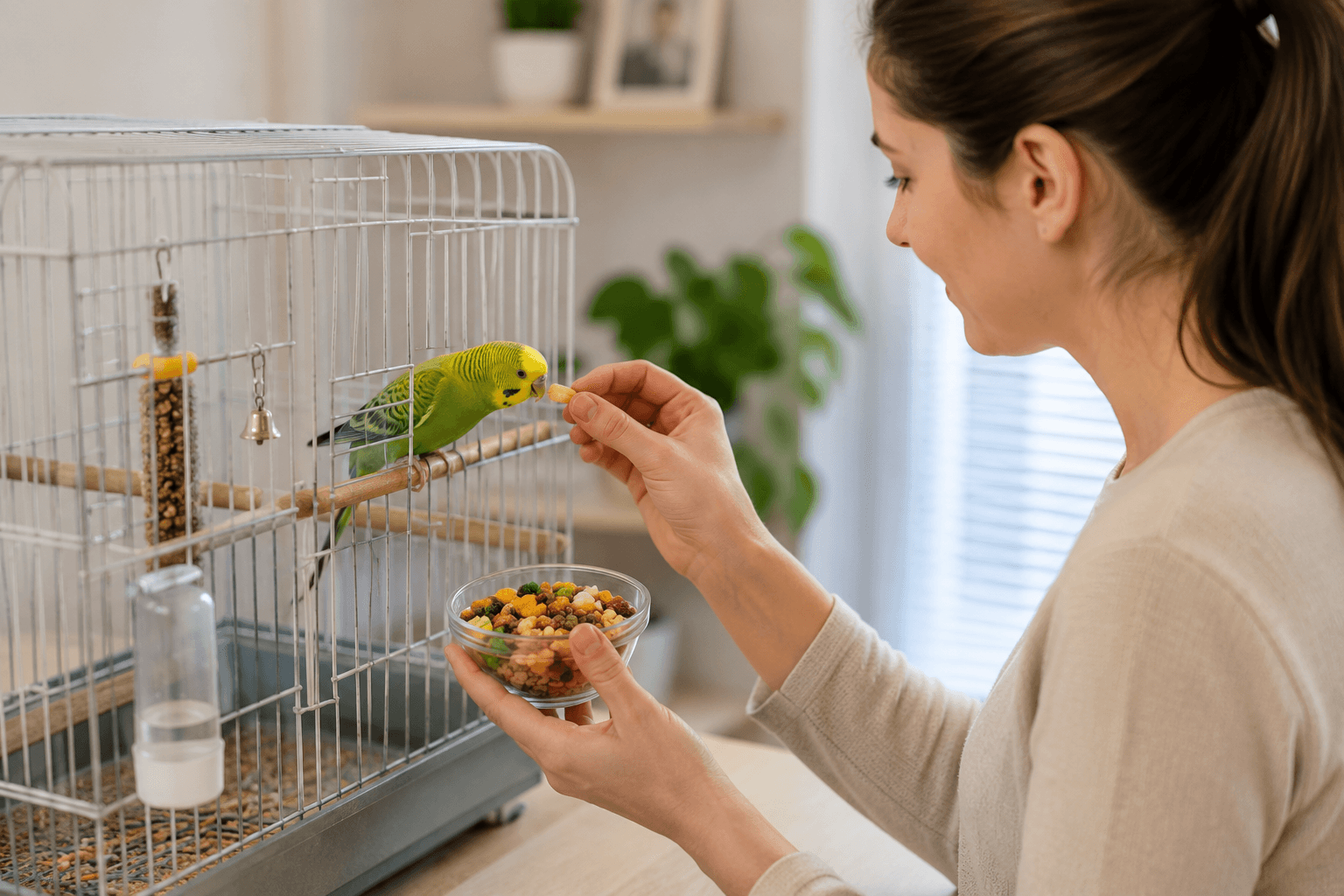
Add a piece of grated carrot or a sliver of red bell pepper to your bird's bowl tomorrow. Watch how they respond. Begin the change gradually. And whenever you have a question or a worry, your avian vet through SCOTY is just one tap away — and booking an appointment takes less than two minutes. 🐦💚