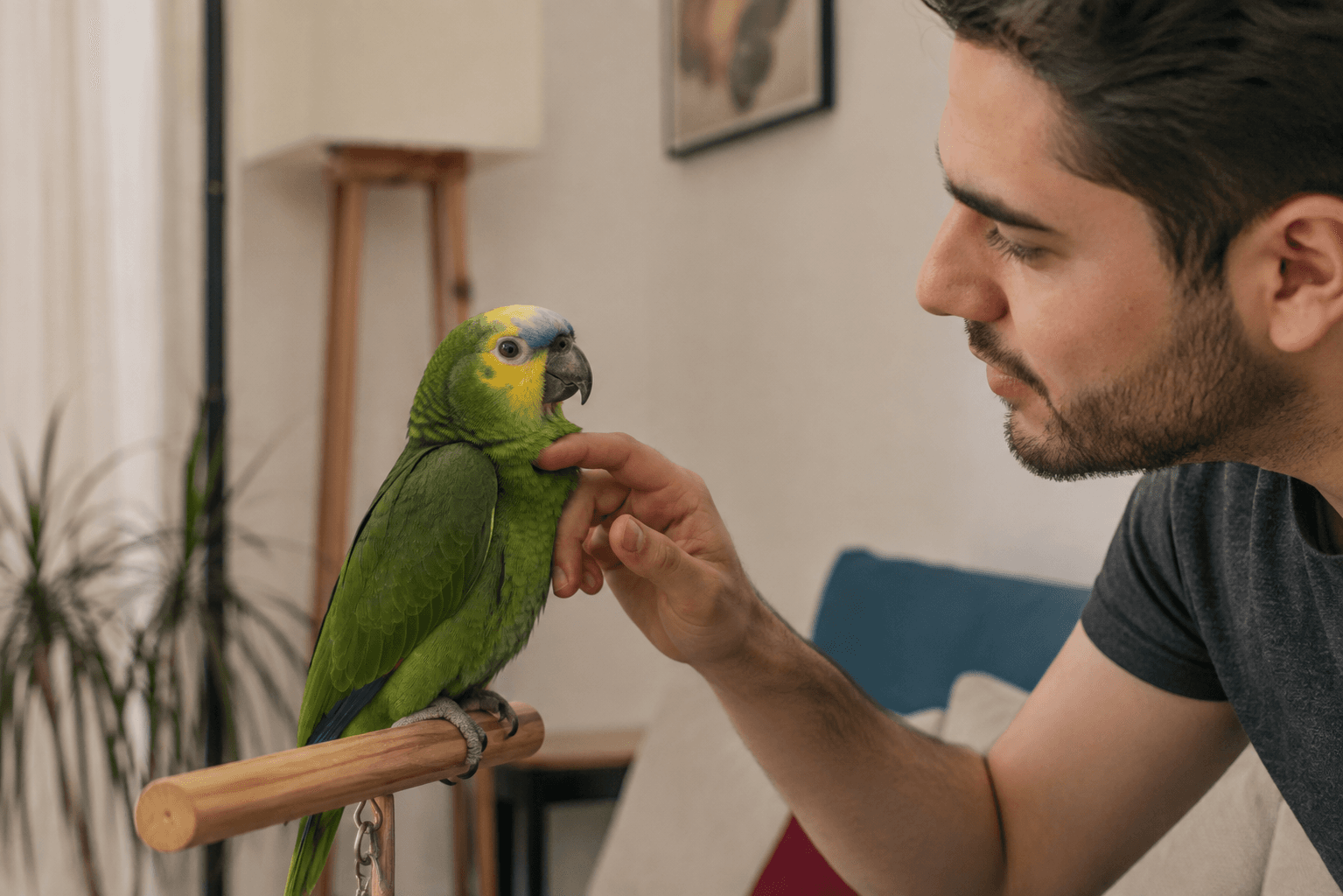
Inside Your Parrot's World — How Does Your Bird Think, and Why Does It Behave This Way? 🦜
Before you label your parrot as "aggressive," "difficult," or "just plain crazy," pause for a moment and take this truth to heart:
Parrot behavior is never random.
Every screech, every bite, every swing on the perch — it's a clear message your bird is trying to send you. The only problem is that most of us haven't learned to speak its language yet.
This section is your first step toward learning exactly that. 🌟
🐦 Your Parrot Isn't "Just a Bird" — It's a Child With Wings
Yes, you read that right.
When scientists say that parrot behavior closely resembles that of a child between the ages of two and five, they're not exaggerating. Parrots are among the most fascinating subjects neuroscience has ever studied — and the findings are nothing short of astonishing.
Why?
- A parrot's brain contains complex regions responsible for social learning, strikingly similar to those found in primates.
- They possess exceptional visual and auditory memory, allowing them to remember events and people for years.
- They experience emotions in a genuine, measurable way — loneliness causes them real pain, fear can paralyze them, and joy literally radiates from their feathers.
Imagine leaving a five-year-old child alone in a room for eight hours every single day. What would you find when you came back?
That's exactly what happens when a parrot is left without adequate social interaction. And the fallout shows up in its behavior before anywhere else.
🔍 Your Parrot's Secret Language — What Is Its Body Telling You?
A parrot communicates with every part of its body. Its eyes, feathers, tail, and voice are all "words" in its own unique language.
Here's a quick translation of the most common signals:
🟢 Signs of Comfort and Happiness:
- Feathers slightly puffed with eyes gently closing → your parrot is relaxed and happy in your presence
- Soft beak grinding just before sleep → a sign of deep contentment and security
- Standing on one foot → total confidence in its environment
🟡 Signs of Tension and Stress:
- Feathers completely flattened against the body with enlarged, wide eyes → fear or readiness to defend itself
- Rapid, continuous tail wagging → tension or excessive stimulation
- Pacing back and forth without stopping → anxiety or severe boredom
🔴 Warning Signs That Need Attention:
- Redness or swelling around the eyes
- Holding a wing in an abnormal position
- Sudden simultaneous loss of appetite and vocalization
Those last signs don't have the luxury of waiting. If you notice them, booking a vet appointment is the fastest and safest decision you can make.
🧠 Emotional Memory and Social Intelligence in Parrots
Did you know that a parrot can remember someone who wronged it — years later?
And on the flip side, it can fall deeply in love with one specific human to the point of completely rejecting everyone else in the household.
Scientists in animal behavior call this "selective social bonding," and it's a natural trait in most parrot species. It only becomes a behavioral problem when it crosses into an unhealthy obsession.
Healthy bonding looks like this:
- Warmly welcoming its primary person while still accepting other family members
- Being able to tolerate reasonable periods alone without excessive anxiety
- Expressing its emotions in varied ways — vocalization, movement, play
Concerning bonding looks like this:
- Screaming nonstop whenever one specific person leaves the room
- Attacking anyone who comes near its "favorite human"
- Beginning to pluck its feathers when it feels neglected or ignored
The difference between these two patterns is worth a conversation with a specialist. And that's precisely what SCOTY offers — a veterinarian who specializes in bird behavior and understands your parrot before you've even finished your first sentence.
🌈 Behavioral Differences Between Common Parrot Species
Not all parrots are created equal. The species you own largely determines its default behavioral tendencies:
🟡 Cockatiel:
One of the calmest and most trainable companion birds. It expresses its emotions clearly through the crest on its head — raised when excited or frightened, lowered when calm and relaxed. Suffers deeply from loneliness and thrives with a companion.
🟢 Budgerigar (Budgie):
Small in body, enormous in personality. Highly social, loves movement and exploration, and doesn't tend to form the intense one-person attachments that other species do. Leans more toward being vocal and lively rather than quiet.
🔴 African Grey:
Arguably the most intelligent parrot species — and equally the most emotionally sensitive. Gets bored at an alarming speed and develops obsessive behaviors when not given adequate mental stimulation. Needs daily intellectual challenges like puzzle toys and active vocabulary training.
🔵 Cockatoo:
Emotions are always front and center — expresses love, jealousy, fear, and joy in an almost theatrical, over-the-top way. Requires an enormous amount of daily interaction, and without it, becomes genuinely destructive (to your furniture and your nerves alike 😅).
🟤 Lovebird:
Despite the romantic name, lovebirds can be surprisingly aggressive if not socialized with humans from a very young age. Extremely energetic and requires consistent environmental enrichment to stay balanced.
The One Takeaway From This Section:
Parrot behavior isn't moodiness or mischief — it's a complete communication system shaped over millions of years of evolution. The moment you truly understand this system, everything about your relationship with your bird changes.
In the next section, we're diving into the behaviors that frighten most parrot owners — and revealing which ones are completely normal and which ones actually deserve your attention.
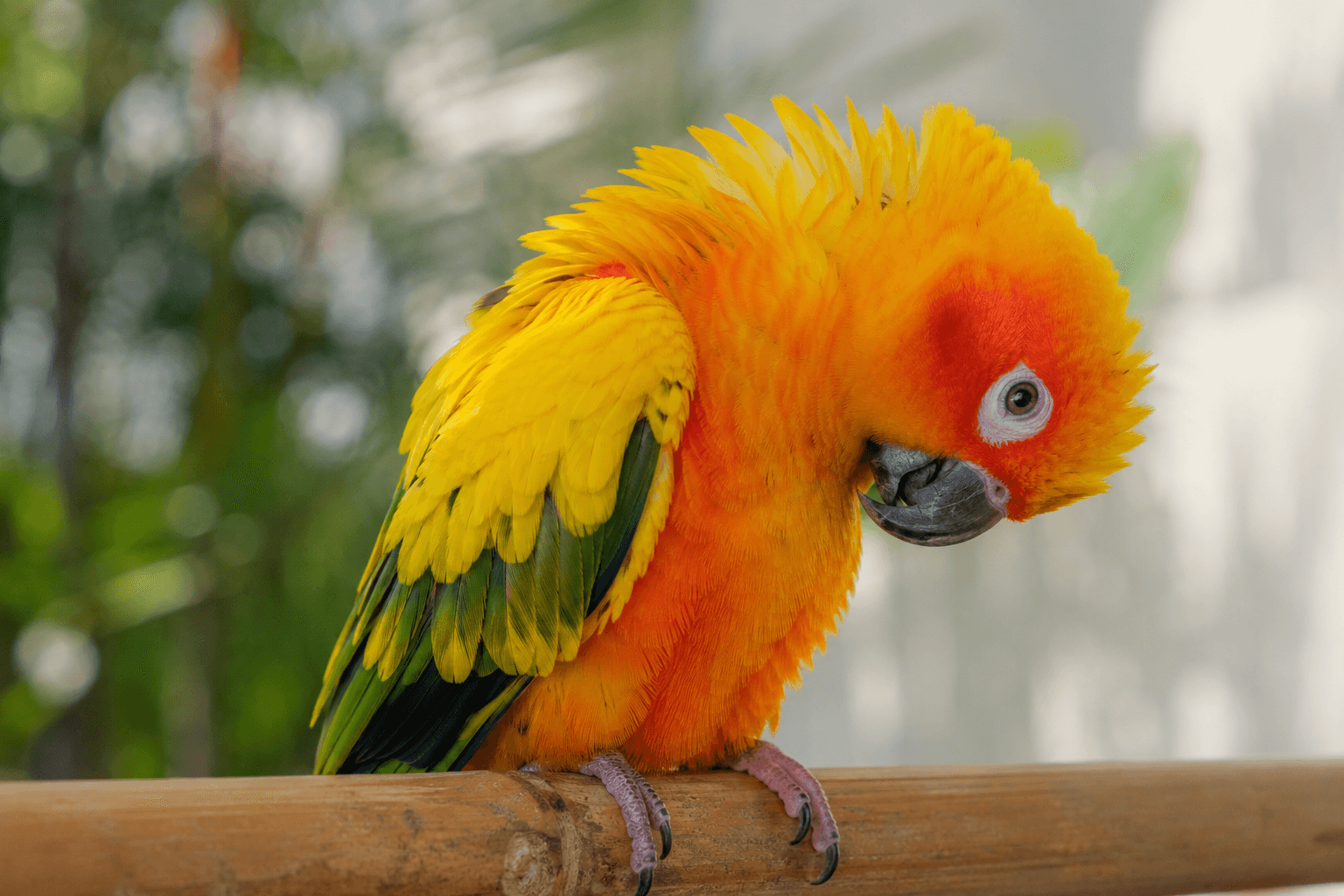
The Behaviors That Scare New Parrot Owners — But Are Actually Completely Normal! 😅
How many times have you panicked over something your parrot did and found yourself deep in an internet rabbit hole at two in the morning? 😄
The truth is that parrot behavior can look alarming on the surface while being entirely natural underneath. Most of these behaviors are instinctive responses to deep, biological needs that have nothing to do with aggression or illness.
The problem isn't your bird — the problem is that we judge parrot behavior through a human lens, or worse, through the lens of dogs and cats. And that's simply not fair to your feathered companion. 🦜
In this section, we're going to open the files on the most anxiety-inducing behaviors parrot owners report, and put each one in its proper context.
🦷 Biting and Nipping — Expression or Aggression?
The number one question almost every new parrot owner asks: "My parrot bites me — is it aggressive?"
The short answer: In most cases, no.
A parrot uses its beak the way we use our hands — for exploration, balance, and emotional expression. When your bird gently nips your finger, it's likely saying one of the following things:
- "I'm curious about you and exploring" → a light, investigative nibble
- "Stop — I don't want that right now" → a moderate nip as a clear warning
- "I'm scared, back off!" → a genuine bite as a defensive reflex
When is biting considered normal?
- During breeding season (hormones spike and make them significantly more sensitive)
- When you approach something it considers "its territory" — its cage, its food bowl, its favorite perch
- When it's exhausted or unwell and simply wants to be left alone
- When it's overstimulated (yes, excessive excitement can also trigger biting!)
When does biting become concerning?
- Repeated biting with no clear trigger and completely sudden onset
- A sharp shift in aggression level over just a few days
- Biting accompanied by puffed feathers and labored breathing
💡 Expert Tip: When your parrot bites you, resist the urge to yell or jerk your hand away sharply — this teaches it that biting produces an exciting reaction, which encourages it to do it again. Stay calm and gently, firmly move your hand aside.
📢 Screaming and Mimicry — When Is It Normal, and When Is It a Problem?
Parrots are vocal creatures by nature. This isn't a personality flaw — it's the very core of their wild identity.
In the wild, parrot flocks scream at dawn and dusk as a social ritual — to communicate, to warn of predators, and to confirm the presence of every flock member. Your bird at home is doing exactly the same thing — you are its flock, and it's making sure you're still there.
Normal vocalization includes:
- Early morning and evening calls (the loudest and most consistent)
- Responding to outside sounds like cars, the television, or other animals
- Mimicking the voices of family members or household sounds (alarms, doorbells, laughter)
- Calling out when it feels lonely or wants your attention
Abnormal vocalization worth investigating:
- Nonstop screaming for hours on end while ignoring food
- Sounds that are completely unlike its normal voice (sudden hoarseness or a raspy quality)
- Screaming paired with visible physical tension and inability to settle even when you're present
Mimicry itself is a remarkable phenomenon. When your parrot copies the sound of the microwave or says your name in your own exact tone, it's integrating itself into your "human flock" in the most intelligent way it knows how. 💚
Feather Plucking — The Fine Line Between Habit and Illness
This is the number one concern that brings parrot owners to SCOTY on an almost daily basis — and for good reason.
Feather plucking exists in a genuinely grey area — sometimes completely normal, sometimes a serious warning sign.
First: What's completely normal?
- Seasonal molting: Parrots shed and replace their feathers periodically. Finding a significant amount of loose feathers in the cage is entirely normal.
- Preening: Parrots run their beaks through their feathers regularly to clean and realign them. To an untrained eye, this can look like plucking — but it's actually meticulous self-grooming.
- Social preening: If you have two parrots, you'll often see them grooming each other's feathers — one of the most heartwarming displays of bonding you'll ever witness.
Second: When does it become concerning?
- Visible bald patches on the chest, neck, or under the wings
- Plucking that progresses to breaking the skin and drawing blood
- Continued plucking even after enrichment and social interaction have been improved
Pathological feather plucking has multiple possible causes — it can be psychological (boredom or separation anxiety) or physical (skin parasites, fungal infections, nutritional deficiencies). Distinguishing between the two is impossible without a professional examination — and that's not alarmism, it's basic medical fact.
🔄 Swaying and Repetitive Movement — Energy or Obsession?
Have you watched your parrot sway back and forth on its perch for several minutes straight? Or repeat a specific movement in a way that catches your attention?
Don't jump to conclusions just yet.
Normal repetitive movement includes:
- Gentle swaying with the head bobbing side to side → a sign of happiness and vitality in many species
- Dancing to music → a scientifically documented and genuinely astonishing behavior — parrots are among the very few animals capable of rhythmic synchronization
- Walking back and forth on the perch before eating → a natural anticipatory behavior
Concerning repetitive movement (Stereotypy):
- Repeating a single movement for hours with no response to the surrounding environment
- Continuing the behavior even with food present or family members nearby
- The repetitive movement appearing suddenly following a change in environment or routine
The core difference: normal movement stops when the parrot finds something engaging. Compulsive movement doesn't stop — even when you offer its favorite treat.
If you're noticing the second pattern, connecting with a specialist is the right move. You can book a veterinary consultation easily, and attach a video clip documenting the behavior beforehand so the vet can observe it directly and assess it with precision before your session even begins.
What Do You Take Away From This Section? 🎯
The behaviors we unpacked today — biting, screaming, feather plucking, and repetitive movement — all exist on a wide spectrum that stretches from "completely normal" to "needs attention." The key to understanding where your bird falls is always context: what was happening just before the behavior? And how has it changed from its usual baseline?
The next section is more serious, because we're going to talk about the behaviors you should never ignore. 🔴
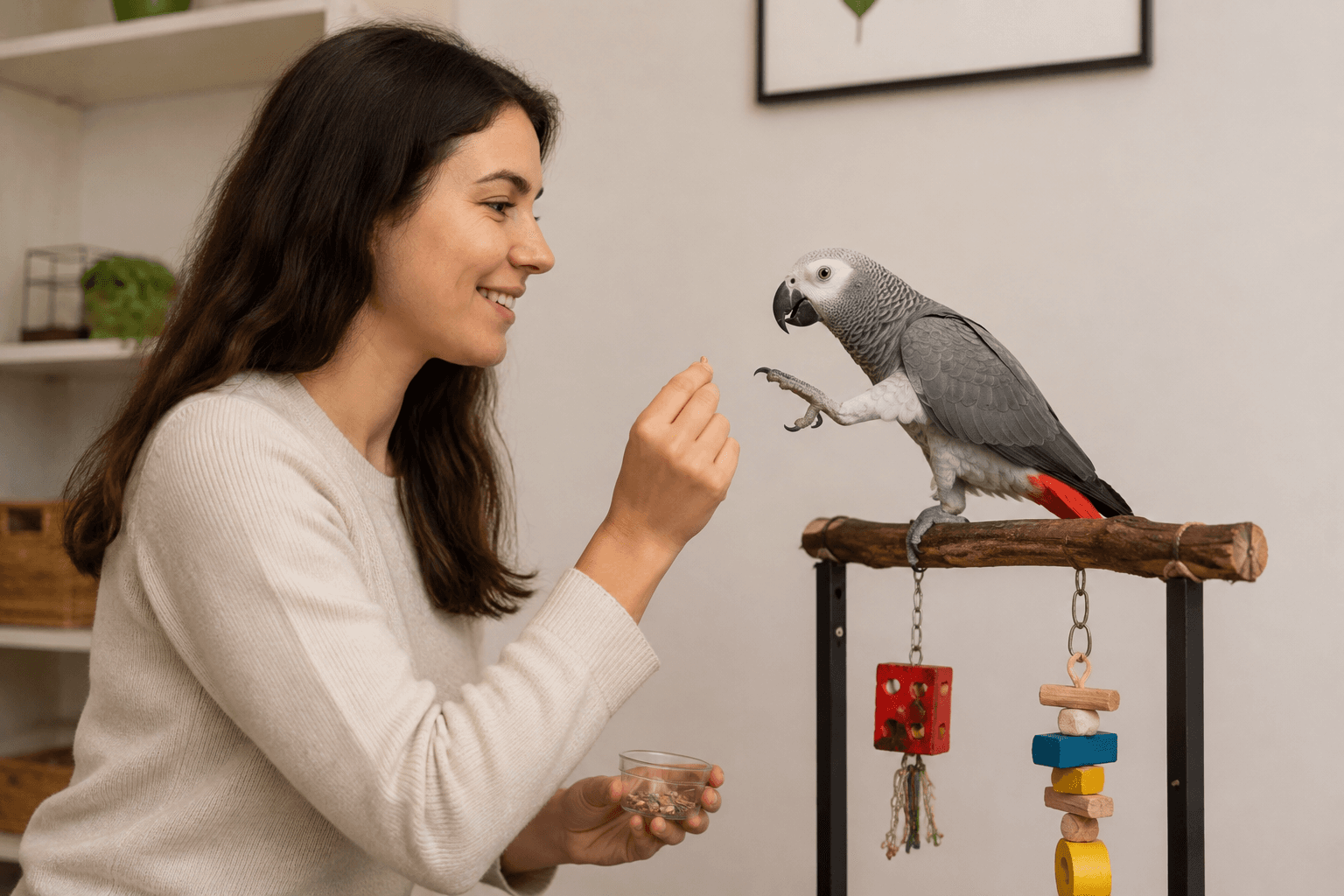
The Behaviors That Are Genuinely Alarming — When Does Your Parrot Need a Vet? 🚨
Up to now, we've talked about normal parrot behavior and about the patterns that look frightening but are really just part of your bird's personality.
But this section is different.
There are signals that genuinely light up a red light — signals that say clearly and unmistakably: "Your bird needs you. Right now."
A parrot cannot tell you "I'm in pain" or "I'm terrified" in plain language. But it says exactly that through every part of its body and behavior — and you are the one who must learn to translate.
This section is your guide to parrot behavior in genuine emergency territory. Read it carefully and keep it close. 📌
⚠️ Sudden Aggression and Personality Changes
Picture this scenario:
Your friendly, affectionate parrot — the one that used to fly straight to you the moment you opened the cage — suddenly lunges at your hand and screams when you come near. No change in the environment, no obvious stressful event. It just shifted, seemingly overnight.
This isn't a "mood." This is a medical red flag.
Medical causes of sudden aggression that must be ruled out first:
- Hidden pain: Parrots are instinctive about concealing their pain — in the wild, showing weakness is an invitation for predators. When a parrot becomes suddenly aggressive, it may be suffering from a fracture, internal inflammation, or a tumor that's completely invisible to the naked eye.
- Hormonal disruption: Breeding season causes a sharp hormonal surge, but if aggression persists well outside of season, that warrants a thorough examination.
- Neurological disease: Certain viral and bacterial illnesses directly affect a bird's behavior and temperament.
- Heavy metal toxicity: Exposure to lead or zinc causes rapid, dramatic behavioral changes in parrots.
The essential difference between seasonal and medical aggression:
Seasonal aggression builds gradually, correlates with changes in light and temperature, and fades on its own.
Medical aggression strikes suddenly — like a switch being flipped — and almost always comes accompanied by other signs like reduced appetite or changes in droppings.
If you witness this kind of sudden shift in your bird, don't wait a week to "see if it goes back to normal." Booking a vet appointment at that moment is the smartest decision you can make. 🏥
😶 Self-Isolation and Loss of Appetite as a Danger Signal
A healthy parrot is a curious, social creature that simply doesn't know how to stay still.
That's exactly why — when you find your bird sitting alone in the corner of its cage, hunched over, indifferent to everything happening around it — you need to stop what you're doing immediately.
This behavior is medically referred to as "concealment behavior" in birds, and it's one of the most critical warning signs a parrot can display. It means the bird has reached a point where it can no longer hide its illness any further.
The indicators that demand immediate action:
- 🔴 Suddenly stopping eating for more than 24 hours — birds have extremely high metabolic rates, and ceasing to eat is a genuine, rapidly dangerous emergency. It's not comparable to a cat or dog skipping a meal.
- 🔴 Sitting at the bottom of the cage instead of on its perch — a healthy bird always stays elevated; a sick bird drops to the floor because it no longer has the strength to grip the perch.
- 🔴 Eyes closed in the middle of the day — excessive sleeping outside of normal rest periods is a clear sign of illness.
- 🔴 Continuously puffed feathers with visible trembling — the bird is attempting to raise its body temperature because something is wrong internally.
Two or more of these symptoms together constitute a genuine veterinary emergency.
Don't spend time searching online for answers. A professional consultation through SCOTY reaches you within minutes, and you can attach a video of your bird directly so the vet can assess the situation with their own eyes before the session even begins.
🩸 Severe Feather Destruction and Self-Mutilation
We touched on feather plucking in the previous section as a behavior that can sometimes be normal.
Here, we're talking about something categorically different — when a parrot moves beyond feather plucking into actively injuring its own skin.
This behavior is among the most heartbreaking things a parrot owner can witness, and simultaneously one of the most medically complex situations to address.
The stages you need to understand:
Stage One — Feather Plucking:
Removing feathers without damaging the underlying skin. Can be psychological or physical in origin, and requires professional assessment.
Stage Two — Feather Barbering:
Chewing feathers at the mid-shaft without fully removing them — essentially "trimming" them. Often a strong indicator of severe boredom or understimulation.
Stage Three — Self-Mutilation:
Breaking through to the skin and creating open wounds. This is a genuine emergency requiring immediate medical intervention.
Possible causes a vet will evaluate:
- External parasites (feather mites, lice)
- Fungal or bacterial skin infections
- Nutritional deficiencies (particularly Vitamin A and calcium)
- Obsessive-compulsive disorder — yes, it genuinely affects birds too
- Reactions to cigarette smoke or household chemical sprays
What you should never do:
- ❌ Apply any ointment or cream without a veterinary prescription
- ❌ Use an E-collar without medical supervision — it can dramatically increase stress and worsen the problem
- ❌ Wait and hope "it stops on its own" — open wounds on birds become infected with terrifying speed
😱 Persistent Night Screaming and Unexplained Panic
A healthy parrot settles into quiet sleep the moment its cage is covered and the lights dim.
But some parrots wake suddenly in the middle of the night with terrifying, hysterical screaming — thrashing inside the cage, appearing consumed by absolute panic with no visible trigger.
This phenomenon is medically documented as "Night Frights", and it's particularly well-known in cockatiels.
Common causes:
- Shadows passing over the cage (a passing car, a cat, any sudden movement outside)
- A sudden flash of light (lightning, car headlights through the window)
- Severe hunger — a bird that hasn't eaten enough is significantly more vulnerable to night panic
- Early-stage neurological disease
What to do when it happens:
- Immediately turn on a soft, dim light in the room to calm and orient your bird
- Speak to it in a low, steady, repeated voice until it recognizes your familiar sound
- Don't open the cage immediately while it's mid-panic — that can amplify the fear
When does this cross into a medical concern?
When it happens more than once a week, when it intensifies in severity over time, or when it's accompanied by other symptoms during the day — at that point, it's no longer an occasional scare. It's a pattern that needs professional evaluation.
🏥 An Honest Moment With Yourself as a Parrot Owner
Many parrot owners delay seeking help for understandable reasons — they don't know where to turn, or a veterinarian who genuinely specializes in birds simply isn't accessible in their area.
This is precisely the gap that SCOTY was built to close.
Imagine describing what's happening with your bird to a specialized avian vet, sending them a video that documents the concerning behavior, and then sitting with them in a full 30-minute call where you discuss everything — the symptoms, the health history, the home environment, and every option available to you.
And when the session ends, the vet doesn't disappear. You get an entire week of free follow-up through in-app chat available around the clock, plus one additional free follow-up call — because recovery and behavioral improvement are a journey, not a single event.
All of this from the comfort of your own home, without the stress of transporting your bird and putting it through an anxiety-inducing clinic visit. 💙
What Do You Take From This Section? 🎯
The signals we covered — sudden aggression, self-isolation and appetite loss, self-mutilation, and night panic — are genuine red lines that should never be dismissed or left to resolve on their own.
Your bird cannot ask for help out loud. You are its voice. 🦜❤️
In the final section, we shift from diagnosis to solution — how to build a relationship with your parrot grounded in trust and balance, and how to shape its behavior in a way that actually works. 🚀

How to Shape Your Parrot's Behavior and Build an Exceptional Bond 🌟
We've made it to the most rewarding and practical section of this journey together.
We understand how your bird thinks. We've identified its normal behaviors and its genuinely alarming ones. Now the real question is: what do you actually do with all of this knowledge?
The answer lives in one single concept: building a relationship.
Because parrot behavior, at its core, isn't a problem to be solved through punishment or neglect — it's a direct reflection of the quality of your relationship with your bird and the quality of the environment it lives in. When you improve both, your parrot naturally improves its own behavior in return. 🦜💚
🎯 Positive Reinforcement Training — The Most Powerful Tool You Have
Positive reinforcement training isn't a luxury or a party trick — it's a genuine psychological necessity for parrots.
A parrot needs to learn things. It needs to achieve things. When you give it structured opportunities to do both, you're activating its brain in precisely the way it was biologically designed to function.
The entire principle of positive reinforcement, in one word: reward.
No punishment, no yelling, no physical correction — just rewarding the right behavior and calmly ignoring the wrong one.
How to get started in practice:
Step One — Discover Your Bird's Ultimate Reward:
Not all parrots want the same thing. Some go absolutely wild for a sunflower seed, others prefer a slice of apple, and some find their highest reward in a head scratch or an enthusiastic "Good bird!" delivered in an excited tone. Experiment and observe which response makes your bird eagerly repeat the behavior.
Step Two — Timing Is Everything:
The reward must arrive within one to three seconds of the correct behavior. Parrots cannot connect a delayed reward to the action that earned it.
Step Three — Start Incredibly Simple:
- The "Step Up" command: extend your finger in front of its feet and say "step up" — the moment it steps onto your finger, reward it immediately.
- Training it to return to the cage willingly rather than turning every session into a chase.
- The calm "no": when it bites, say "no" quietly and withdraw your hand — when it stops, give it attention as the reward.
Step Four — Keep Sessions Short:
Five minutes, three times a day far outperforms thirty minutes all at once. A parrot's brain tires from active learning and needs rest between training sessions.
What to absolutely avoid during training:
- ❌ Yelling or showing frustration when it makes a mistake — this teaches fear, not cooperation
- ❌ Forcing interaction when it's showing clear stress signals
- ❌ Repeating a command more than twice without a response — stop and try again later
- ❌ Ending a session on a failed attempt — always close with a small success and a reward
💡 A parrot that learns consistently is a parrot that screams less, bites less, and is genuinely happier. Training isn't entertainment — it's one of the most effective preventive tools against behavioral problems.
🏡 The Ideal Environment That Creates a Happy, Balanced Parrot
A significant portion of parrot behavior problems don't originate from the bird's nature — they originate from the environment it's living in.
In the wild, a parrot might fly hundreds of kilometers a day, forage for food, interact with its entire flock, explore, and play. When you place that same bird in a small cage with no enrichment, you're asking it to be calm and balanced in conditions that would push any living creature to its breaking point.
What a healthy parrot environment looks like:
📦 The Cage:
- Minimum space: your bird must be able to fully spread both wings without touching the sides
- Shape: rectangular cages are better than square ones — they allow natural horizontal movement
- Placement: at roughly human eye level, away from direct windows and drafts, close enough to family activity to feel included but not overwhelmed by constant noise
🌿 Environmental Enrichment:
This is the single biggest differentiator between a happy parrot and a problem parrot.
- A rotating variety of toys changed weekly (parrots get bored with the same toy quickly)
- Beak-engaging toys: wooden beads, nuts in their shells, tied fabric knots
- Brain-engaging toys: food puzzles that require a simple solution to access the reward
- Safe natural branches inside the cage (from non-toxic trees like apple or olive)
🌡️ Lighting and Temperature:
- Parrots need 10 to 12 hours of natural or full-spectrum artificial light daily
- The ideal temperature range is between 18 and 26 degrees Celsius
- Keep the cage well away from the kitchen — fumes from non-stick cookware (Teflon) are genuinely lethal to birds
🚿 Bathing:
- Most parrots enjoy a light misting
- A gentle spray with lukewarm water two to three times per week visibly improves both feather condition and mood
- Never force a bath if your bird refuses — offer the option and let it decide
🔄 Routine and Socialization — The Two Pillars of a Balanced Parrot
Parrots are creatures of deep routine.
In the wild, flocks leave to forage at the same time every day and return at the same time every evening. This predictability creates a sense of safety — it tells the bird that the world is working exactly as it should.
When that routine is repeatedly disrupted, your parrot experiences real anxiety — and that anxiety reflects directly in its behavior.
A suggested daily routine for a balanced parrot:
- 🌅 Morning: Uncover the cage + fresh water and food + brief interaction (10 minutes)
- ☀️ Daytime: Supervised out-of-cage time (2 to 4 hours, spread across the day)
- 🎯 Afternoon: A short training session (5 to 10 minutes)
- 🌙 Evening: Wind-down time, gradually dimming the lights, covering the cage at the same time each night
Socialization — a need, not a luxury:
A parrot cannot achieve full emotional wellbeing without daily social interaction. That interaction includes:
- Talking to it even while you're doing other things — your voice alone provides reassurance
- Allowing it to share mealtimes with you (from parrot-safe foods, of course)
- Keeping the cage in the living room where it can see movement and hear everyday sounds
- Direct, hands-on play every single day
If you're frequently away from home:
- Consider getting a second bird of the same species as a companion — but consult an avian vet first about the proper introduction process
- Leaving the television or radio on at a moderate volume helps soften the impact of solitude
- Automatic feeders help maintain consistent feeding routines when your schedule is unpredictable
🩺 When Should You Consult a Specialist? SCOTY's Role in Your Journey With Your Bird
With everything you've absorbed throughout this article, there will be moments when you find yourself standing in front of one genuine, important question:
"Is what I'm seeing normal — or not?"
And in exactly that moment, the most important thing you can do is not answer that question alone.
SCOTY was built for precisely that moment — when you need a specialist's perspective quickly, without putting yourself or your bird through the stress of a physical clinic visit.
Here's what your SCOTY experience looks like, step by step: 🗺️
First: Browse the profiles of specialized avian veterinarians and choose the one that's right for you — based on their expertise, qualifications, and patient reviews.
Second: Book your appointment directly from the calendar at a time that fits your schedule perfectly.
Third: Before the session begins, upload photos or video clips documenting the behavior or physical symptoms you've observed — the vet reviews them carefully before the call starts, so your session begins exactly where it needs to.
Fourth: A full 30-minute video call where you discuss everything without rushing — the behavior, the health history, the living environment, the diet, and every question on your mind.
Fifth: If your bird needs medication, you receive a certified electronic prescription that's downloadable and can be filled online — no waiting, no complications.
Sixth: Every detail of the session is saved in your bird's digital health file inside the app, so you can refer back to it anytime and track progress over time.
And the best part of all? 🌟
When the session ends, your relationship with the vet doesn't. You receive a full week of free follow-up through in-app chat available around the clock, plus one additional free follow-up call — because behavioral improvement is a journey, not a one-time event.
You can book your appointment right now — your bird has earned every minute of this care. 💙
💛 A Final Word, From the Heart
The parrot living with you has chosen you as its only flock in the entire world.
It doesn't know the forest. It doesn't know what a real flock looks like. It knows your face, your voice, your scent, and the sound of your footsteps approaching the cage every morning.
When you understand parrot behavior at the level of depth you've reached today, you're not just improving the experience of owning a bird — you're genuinely changing the life of a complete living being, with its own emotions, its own memories, and its own profound attachments.
And that is worth every single effort. 🦜❤️