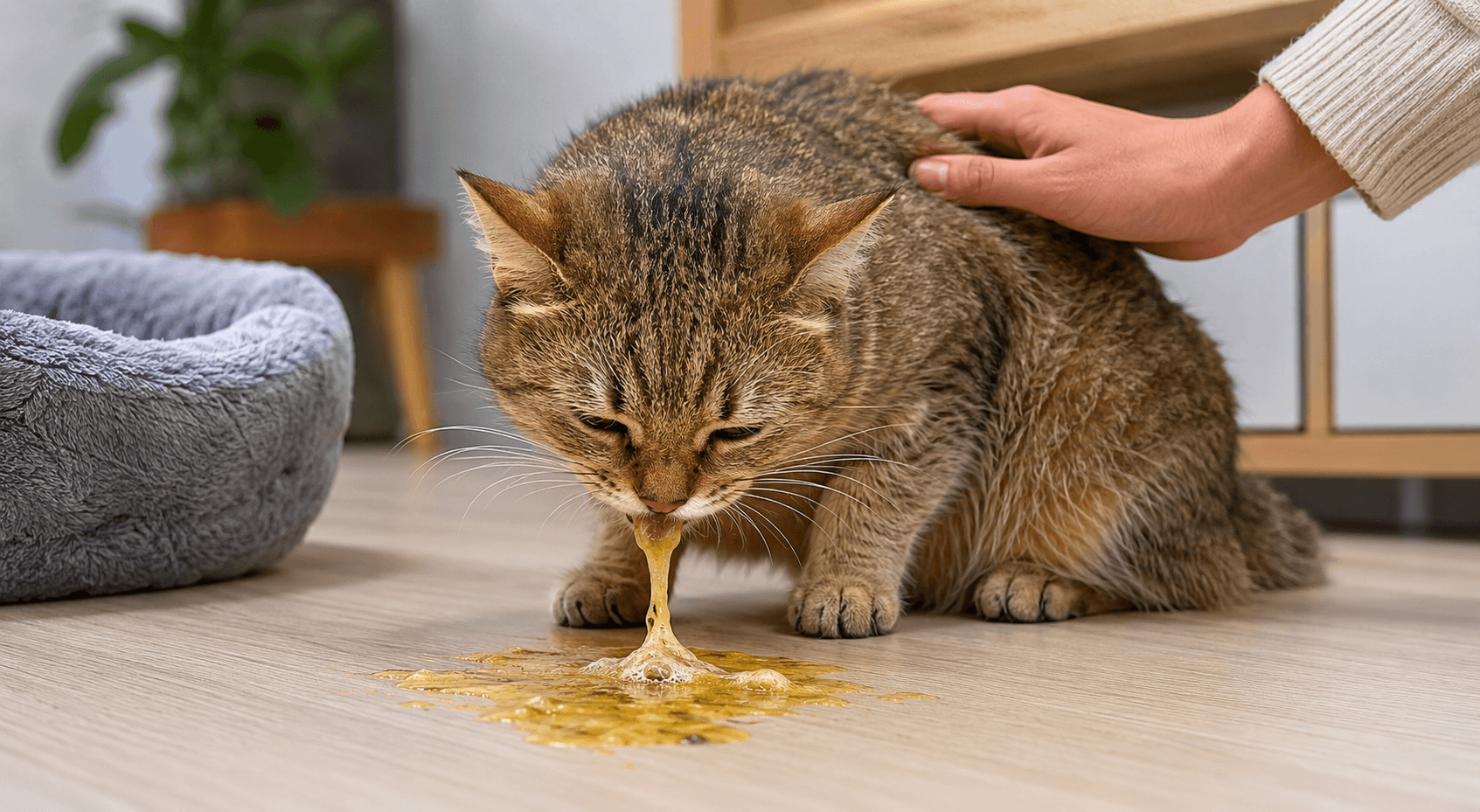
Treating Cat Vomiting at Home: When Is It Normal and When Is It Serious?
If your cat suddenly starts vomiting, the first thing most pet owners feel is stress and panic, especially if it’s their first time raising a cat. The truth is that treating cat vomiting at home can sometimes be simple, but in other cases it may be a sign of a health problem that needs quick attention. The important thing is knowing the difference and handling the situation correctly without putting your cat at risk.
Many people think vomiting in cats is always normal, especially when it’s caused by hairballs or eating too quickly. But sometimes it can be linked to illness, stomach inflammation, or even poisoning. In this article, we’ll explain everything in a simple and beginner-friendly way, from the cause of cat vomiting to when home treatment is enough and when you should contact an online vet or visit a veterinary clinic.
What Is Considered Normal Vomiting in Cats?
Before searching for treating cat vomiting at home, you should know that not every vomiting case is dangerous.
Some cats vomit occasionally because of:
- Eating too fast
- Hairballs
- Sudden food changes
- Playing immediately after eating
- Stress or environmental changes
If vomiting happens only once and your cat is still active and eating normally, the issue is usually minor. But if it happens several times in one day or continues for more than 24 hours, you should pay attention.
The Most Common Cause of Cat Vomiting
1. Hairballs
Cats constantly groom themselves, and over time hair collects inside the stomach. Some cats vomit hairballs naturally, and this is considered normal to a certain extent.
However, if it happens very frequently, you may need to change the food or use products that help reduce hair buildup.
2. Sudden Food Changes
One of the most common reasons behind vomiting is changing your cat’s food too quickly. Cats have sensitive stomachs, and sudden changes can upset digestion.
It’s always better to switch foods gradually over 5 to 7 days.
3. Eating Too Fast
Some cats eat extremely fast and vomit right after. In this case, it’s not necessarily an illness, but you need to manage feeding better.
Try:
- Dividing meals into smaller portions
- Using slow-feeding bowls
- Reducing portion size
4. Infection or Inflammation
Sometimes the cause of cat vomiting is linked to a viral infection or stomach inflammation, especially if it comes with:
- Low energy
- Fever
- Diarrhea
- Loss of appetite
In these cases, it’s better to contact an online vet quickly to determine whether your cat needs medication or further tests.
5. Poisoning
Some household plants and human foods are toxic to cats. If your cat vomits after eating something unusual, don’t wait too long.
Quick action is very important here.
Types of Cat Vomiting and What They Mean
One thing that helps you understand the cause of cat vomiting is paying attention to the color and appearance of the vomit itself.
Yellow Vomit
Usually caused by an empty stomach or bile, especially if your cat hasn’t eaten for a while.
White Foamy Vomit
This may indicate stomach irritation or mild inflammation, especially if it happens repeatedly.
Hairball Vomit
This is often normal and related to hairballs, especially in long-haired cats.
Vomit with Blood
In this situation, stop trying treating cat vomiting at home and immediately contact a vet or visit a veterinary clinic, as blood may indicate severe inflammation or internal injury.
Treating Cat Vomiting at Home Step by Step
If the condition seems mild and there are no dangerous symptoms, you can start treating cat vomiting at home using these steps:
Stop Food for a Short Time
One of the first things vets recommend is letting the stomach rest.
Avoid food for 6 to 12 hours, but never completely remove access to water.
If your cat is very young, avoid long fasting periods.
Keep Water Available
Vomiting can quickly cause dehydration, especially in kittens.
Try to:
- Provide clean water at all times
- Offer small amounts frequently
- Use a water fountain if your cat prefers running water
Reintroduce Food Gradually
Once vomiting stops:
- Offer light meals
- Use easy-to-digest food
- Avoid returning to normal meal sizes immediately
Monitor Behavior
While treating cat vomiting at home, keep an eye on:
- Energy levels
- Litter box habits
- Appetite
- Vomit color
- Frequency of vomiting
Any unusual change may require quick veterinary advice.
Foods That Help Cats Recover After Vomiting
Once the stomach settles, it’s important to choose light foods that won’t irritate it again.
Commonly recommended options include:
- Veterinary digestive-support food
- Plain boiled chicken
- Small portions of wet food
- Smaller meals throughout the day
Avoid:
- Fatty foods
- Milk
- Large amounts of tuna
- Heavy human foods
If you’re unsure what to feed, an online vet can guide you based on your cat’s age and condition.
Warning Signs That the Situation Is Serious
Not every case can be managed at home. Sometimes vomiting is a warning sign of a bigger issue.
Watch carefully if you notice:
- Frequent vomiting within hours
- Blood in vomit
- Severe lethargy
- Refusing water or food
- Difficulty breathing
- Severe diarrhea
- Loss of balance
- Swollen abdomen
If these symptoms appear, don’t rely only on treating cat vomiting at home.
When Do You Need a Veterinarian?
In some cases, contacting a veterinarian is absolutely necessary, especially if:
- Your cat is very young
- Elderly
- Has chronic illness
- Vomiting continues for more than one day
- Symptoms worsen quickly
Having access to a cat vet number can save a lot of time, especially if you can’t immediately visit a veterinary clinic.
How Can an Online Vet Help with Vomiting Cases?
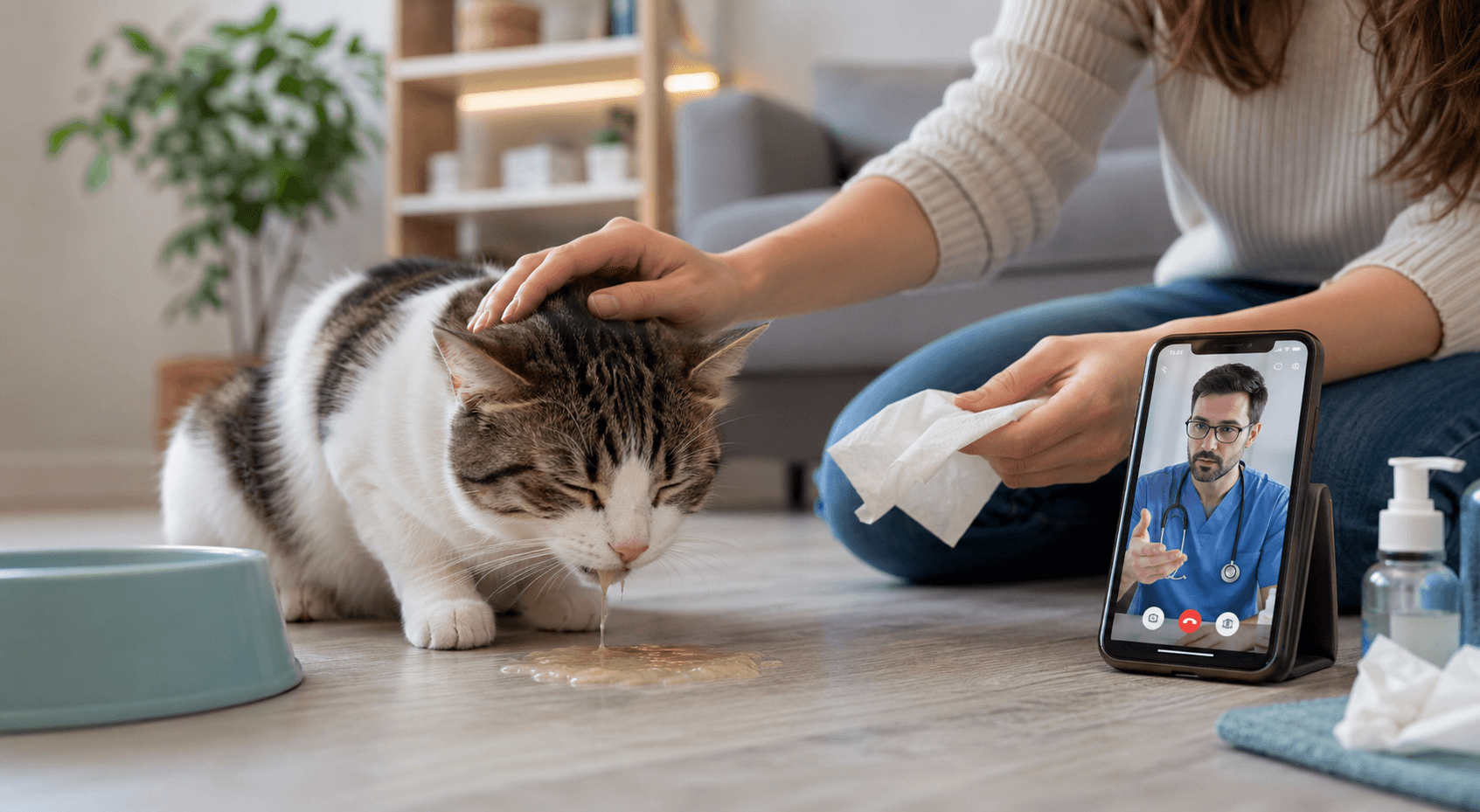
Many pet owners now rely on online vet services because they provide fast and convenient help, especially for situations needing quick evaluation.
Some of the biggest advantages include:
Direct Video or Voice Consultation
Instead of waiting at a clinic, you can speak directly with a vet and explain the symptoms.
Sending Photos and Videos
If your cat is vomiting or behaving strangely, you can send photos or videos so the vet can assess the condition better.
This helps identify the cause of cat vomiting more quickly.
Electronic Prescriptions
Some cases only need simple medications or dietary adjustments, and the vet can send an electronic prescription immediately.
One-Week Follow-Up
One of the best things about online vet services is that follow-up continues after the consultation.
If your cat’s condition changes, you can continue chatting with the vet easily.
When Is a Veterinary Clinic Better Than Home Treatment?
Although treating cat vomiting at home can help in mild cases, sometimes visiting a veterinary clinic is the safer option.
Especially if your cat needs:
- IV fluids
- X-rays
- Blood tests
- Intravenous medications
- Emergency care
A clinic becomes important if vomiting is severe or your cat cannot keep water down.
How to Prevent Vomiting in the Future
Prevention is always better than treatment, and a few simple habits can reduce the chances of vomiting happening again.
Clean Food Bowls Regularly
Bacteria can build up quickly, especially in hot weather.
Avoid Sudden Food Changes
Always transition gradually.
Brush Your Cat Frequently
Especially for long-haired cats.
Monitor Behavioral Changes
Lethargy or appetite loss sometimes appears before vomiting itself.
Schedule Regular Checkups
Even if your cat looks healthy, regular checkups with an online vet or a veterinary clinic help detect problems early.
Common Mistakes Cat Owners Make
Giving Human Medication
Some people give cats human medicine without professional advice, which can be extremely dangerous.
Many medications safe for humans are toxic to cats.
Forcing the Cat to Eat
If the stomach is upset, forcing food may make things worse.
Ignoring Frequent Vomiting
Even if your cat acts normal between episodes, repeated vomiting should never be ignored.
Best Ways to Reduce Vomiting Risks
Use High-Quality Food
Good nutrition greatly reduces digestive problems.
Keep Water Available
Dehydration can cause many digestive issues.
Reduce Stress
Cats are sensitive to environmental changes and loud noises.
Regular Veterinary Monitoring
Even healthy cats benefit from regular checkups with an online vet or a veterinary clinic.
How to Choose a Reliable Cat Vet Number
If you need a cat vet number, look for services that provide:
- Fast response times
- Licensed veterinarians
- Photo and video sharing
- Follow-up after consultation
- Clear treatment plans
Reliable support makes a huge difference, especially during emergencies.
Does Every Vomiting Case Need Treatment?
No.
Some cats vomit once and quickly return to normal. The important thing is monitoring frequency and associated symptoms.
If vomiting is:
- Frequent
- Severe
- Combined with lethargy
- Or loss of appetite
Then you should act quickly.
The Difference Between Normal Regurgitation and Dangerous Vomiting
Some owners confuse hairball regurgitation with true vomiting.
Dangerous vomiting is often:
- Strong-smelling
- Unusual in color
- Very foamy
- Bloody
- Repeated frequently
Hairballs are usually easier to recognize.
How to Help Your Cat Recover Faster
While treating cat vomiting at home, try to provide:
- A quiet environment
- Constant access to water
- Light meals
- Plenty of rest
- Continuous monitoring
Avoid stressing your cat or changing routines suddenly.
Are Kittens More Vulnerable?
Yes. Kittens are much more sensitive to dehydration and fluid loss.
That’s why repeated vomiting in kittens should always be monitored quickly through an online vet or inside a veterinary clinic.
How Can an Online Veterinary Clinic Help?
The biggest advantage of an online veterinary clinic is convenience and speed, especially for situations needing fast guidance.
Main benefits include:
- Quick access to a veterinarian
- Consultation from home
- One-week chat follow-up
- Ability to share photos and videos
- Electronic prescriptions
- Saving time and effort
This makes it an excellent option for many pet owners, especially for mild cases or quick questions.
FAQ – Frequently Asked Questions
Is it normal for a cat to vomit once a month?
Sometimes yes, especially because of hairballs. But if it happens frequently, the cause should be checked.
When is cat vomiting dangerous?
If vomiting is frequent or accompanied by blood, lethargy, or appetite loss.
Can I treat my cat at home?
For mild cases, yes. Treating cat vomiting at home may help with rest and dietary adjustments, but severe cases need veterinary care.
Are online vet consultations enough?
Many mild cases can be handled through an online vet, but emergencies require examination at a veterinary clinic.
How can I quickly find a cat vet number?
You can contact online veterinary services that provide fast responses and direct follow-up.
Conclusion
In the end, treating cat vomiting at home can be effective for mild cases if you respond correctly and monitor symptoms carefully. But the most important thing is not ignoring the situation if vomiting becomes frequent or other symptoms appear.
Quick action can sometimes prevent bigger health problems, whether through contacting an online vet or visiting a veterinary clinic when needed. And if you feel unsure about your cat’s condition, speaking with a veterinarian will always give you more confidence and clarity than guessing.