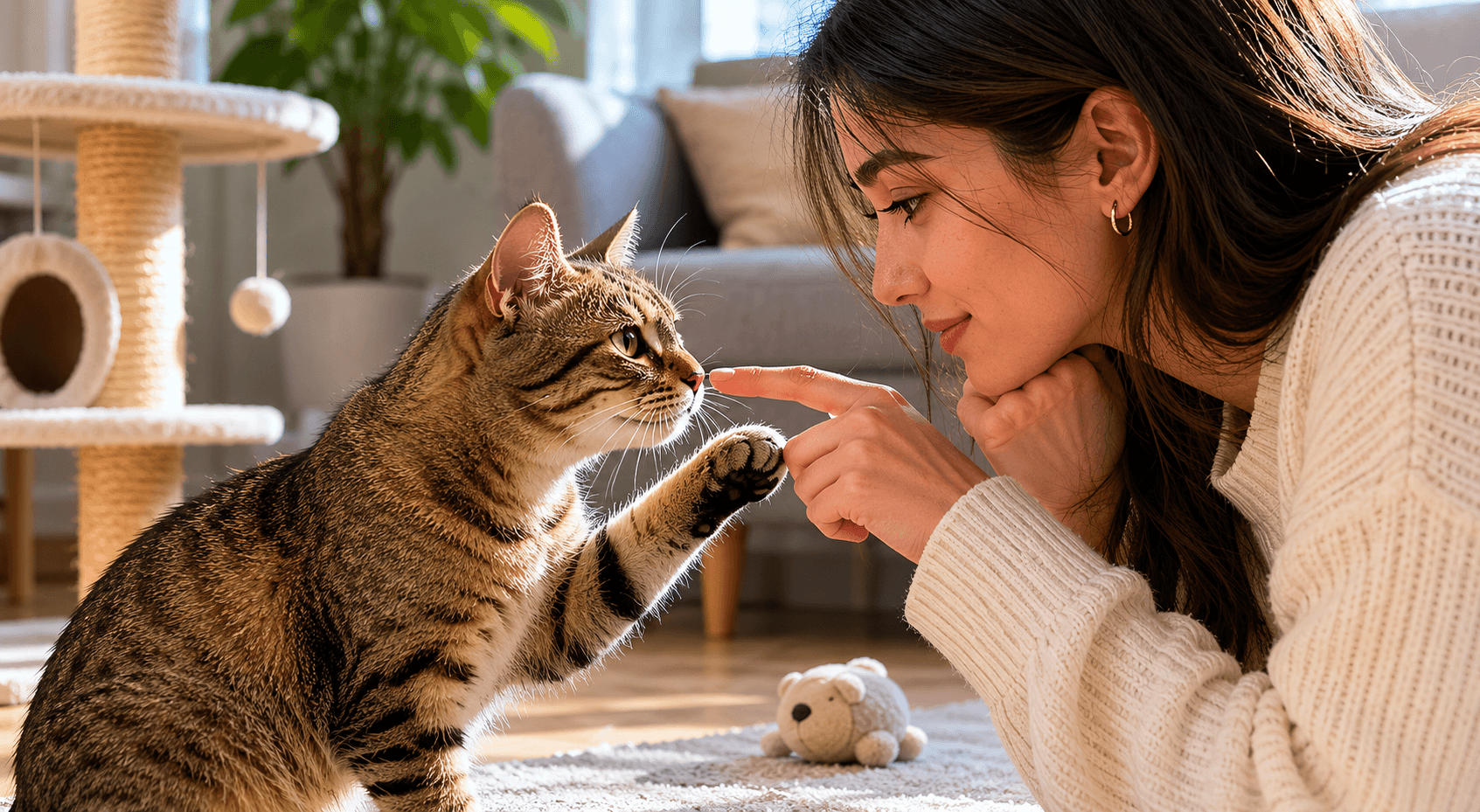
How to Understand Your Cat’s Feelings and Behavior ?
If you are raising a cat for the first time, you have probably looked at your cat and wondered, “What does this movement mean?” or “Why is my cat acting like this?”. Many people think cats are mysterious and difficult to understand, but the truth is that cats have their own complete language. Every movement, sound, and look is a message they are trying to communicate.
Over time, pet owners realize that understanding cat language is not only fun, but also very important for recognizing their cat’s emotional and physical needs. It can even help prevent many problems caused by misunderstanding your cat’s behavior.
Cats communicate in many ways, including tail movements, ear positions, eye expressions, sounds, body posture, and sleeping habits. Once you learn how to understand these signals, your relationship with your cat becomes much stronger, and you will be able to notice health or behavioral problems early.
In this article, we will explain in a simple and beginner-friendly way how to understand your cat’s language, what common behaviors mean, when certain actions may be dangerous, and how an online veterinary clinic can help if you need quick advice from home.
Why Understanding Cat Language Is Important
Many cat owners focus on food, toys, and grooming, but forget that communication is just as important. Cats rely heavily on body language, and misunderstanding it may lead to stress or behavioral issues.
For example:
-
Some people think a cat bites because it is aggressive, while it may actually be scared or overstimulated.
-
Others believe a quiet cat is relaxed, when it may actually be sick or depressed.
-
Some cats meow excessively because they are in pain, but owners assume they just want attention.
That is why understanding cat language helps you know:
-
When your cat feels comfortable
-
When your cat is afraid
-
When your cat needs personal space
-
When your cat may be sick or in pain
-
How to build trust with your cat
The more you understand your cat, the calmer and happier your relationship becomes.
How Cats Communicate With Humans
Cats communicate differently from dogs. Dogs are usually more direct, while cats depend on subtle signals.
The most important communication methods in cats include:
-
Tail movements
-
Ear positions
-
Eye contact
-
Sounds and vocalization
-
Body posture
-
Physical touch and movement
All of these are part of understanding cat behavior correctly.
Understanding Cat Language Through the Tail
Tail Held High
If your cat walks with its tail straight up, it usually means your cat feels safe, confident, and happy.
Tail Wrapped Around the Body
This often shows caution or mild stress, especially in a new environment.
Puffy Tail
A puffed-up tail is one of the clearest signs of fear in cats. It is usually accompanied by an arched back or sudden escape behavior.
Fast Tail Flicking
If your cat is hitting or flicking its tail quickly, it often means irritation or frustration, especially during overstimulation or excessive play.
Cat Ear Movements and Their Meanings
Ears Facing Forward
This usually means the cat feels relaxed or curious.
Ears Pulled Back
This is commonly linked to fear, stress, or irritation.
Rapid Ear Movement
Cats may move their ears quickly when they feel nervous or hear uncomfortable sounds.
This is one of the important parts of understanding cat body language.
Understanding Cat Eye Expressions
Slow Blinking
If your cat slowly blinks at you, this is considered a sign of trust and affection.
Dilated Pupils
Large pupils may happen because of:
-
Excitement
-
Playfulness
-
Fear
-
Stress
Always look at the rest of the body language as well.
Intense Staring
Long staring may sometimes indicate tension, stress, or challenge behavior.
Cat Sounds and Their Meanings
Meowing in Cats
Every cat has its own style of meowing.
Short and Soft Meow
Usually a greeting or simple request.
Repeated Meowing
May happen because of:
-
Hunger
-
Boredom
-
Wanting attention
-
Desire to play
Loud or Unusual Meowing
If it suddenly becomes excessive or intense, it could indicate pain, illness, or anxiety.
Cat Purring Sounds
Many people think cat purring always means happiness, but that is not always true.
Cats may purr when they:
-
Feel comfortable
-
Want attention
-
Feel safe
-
Feel stressed
-
Try to calm themselves during illness
If purring is combined with symptoms like lethargy or appetite loss, it is important to pay attention.
Understanding Cat Body Language at Home
Rubbing Against You or Furniture
This is normal cat behavior. Cats rub against objects and people to leave their scent and feel secure.
When your cat rubs against you, it usually means trust and affection.
Kneading With Their Paws
Kneading blankets or your body often means comfort, safety, and emotional relaxation.
Sleeping Next to You
If your cat sleeps beside you or on you, this is a strong sign of trust.
Understanding Cat Behavior During Play
Sometimes owners struggle to know whether their cat is playing or becoming aggressive.
Signs of Normal Play
-
Relaxed body posture
-
Light movement
-
No hissing
-
Gentle biting
Signs of Stress or Aggression
-
Puffing fur
-
Hissing
-
Hard scratching
-
Painful biting
If this happens, it is best to stop the play session and give your cat some space.
Signs of Fear in Cats You Should Notice
Some cats hide fear very well, but there are common signs to watch for.
Constant Hiding
If your cat spends a lot of time hiding under furniture, it may feel stressed or unwell.
Loss of Appetite
This can be one of the strongest signs of fear or illness in cats.
Urinating Outside the Litter Box
Sometimes this behavior is related to anxiety rather than hygiene problems.
Sudden Aggression
If your cat suddenly starts biting or scratching, try to understand the cause instead of punishing it immediately.
How to Build Trust With Your Cat
Respect Their Personal Space
Do not force your cat to play or cuddle when it feels uncomfortable.
Create a Calm Environment
Cats prefer quiet and organized spaces.
Spend Time Playing Daily
Daily play helps release energy and reduce stress.
Use Positive Reinforcement
Rewards and encouragement work much better than punishment.
Understanding Cat Language During Illness
Cats naturally hide illness, so small behavioral changes are very important.
Signs That May Indicate a Health Problem
-
Excessive sleeping
-
Appetite loss
-
Isolation
-
Lack of interest in play
-
Changes in vocal sounds
-
Sudden aggression
-
Poor grooming habits
If you notice several symptoms together, it is best to contact a veterinarian quickly.

When Should You Visit a Veterinarian Immediately?
Signs That Need Urgent Veterinary Attention
-
Difficulty breathing
-
Repeated vomiting
-
Loss of balance
-
Refusing food for more than a day
-
Severe lethargy
-
Bleeding
-
Seizures
-
Crying because of pain
These situations require immediate veterinary care.
How Can an Online Veterinary Clinic Help?
Today, many pet owners rely on online veterinary clinics for quick advice and early evaluation.
This is especially useful for first-time cat owners who are unsure whether a situation is serious or not.
Talking to a Veterinarian Through a Call
You can explain your cat’s behavior and symptoms directly to the veterinarian.
Sending Photos and Videos
This is extremely useful because many cat issues require visual observation of movement, breathing, or body language.
Saving Time
Instead of stressful trips and waiting rooms, you can receive professional advice from home.
Electronic Prescriptions
If your cat needs simple treatment, the veterinarian may provide an electronic prescription.
Follow-Up After the Consultation
Some online veterinary services provide chat follow-up for up to a week after the consultation.
Reducing Stress for Cats
Many cats become highly stressed during transportation and clinic visits, so online consultations may be more comfortable in some situations.
How Can an Online Veterinary Clinic Help You Understand Your Cat?
With the growth of digital veterinary services, many pet owners now rely on online veterinary clinics as a fast and convenient solution, especially in situations that need quick advice or an early evaluation. Cats in particular benefit greatly from these services because they naturally get stressed easily during travel, car rides, and clinic visits.
One important thing to remember is that many cat behaviors are connected to emotional or physical health, but owners sometimes struggle to understand the difference. This is where an online veterinarian becomes very helpful by explaining your cat’s behavior and guiding you on the right way to handle the situation.
Why Are Online Veterinary Clinics Ideal for Cat Owners?
Cats love routine and calm environments, and sudden changes may cause stress or anxiety. Many cats become uncomfortable because of:
-
Car rides
-
Loud clinic noises
-
Long waiting times
-
Being around other animals
-
Being handled by strangers
That is why online veterinary consultations can be a much more comfortable option, since your cat stays relaxed in its familiar environment.
How Online Consultations Help You Understand Cat Language
Sometimes you notice strange behavior in your cat and do not know whether it is normal or not, such as:
-
Sudden hiding
-
Excessive meowing
-
Loss of appetite
-
Aggression
-
Sleeping too much
-
Sudden fearfulness
All of these behaviors are part of understanding cat language and daily feline communication.
An online veterinarian can help you determine whether these behaviors are:
-
Completely normal
-
Related to stress
-
Caused by pain or illness
-
Something that needs monitoring
-
A sign that your cat needs an in-person clinic visit
Sending Photos and Videos to the Veterinarian
One of the best features of online veterinary clinics is the ability to send photos and videos of your cat. This helps the veterinarian evaluate the condition more accurately.
For example, you can record:
-
Walking style
-
Tail movement
-
Breathing pattern
-
Body posture
-
Meowing sounds
-
Ear and eye movement
These details are extremely important when understanding cat body language because some conditions cannot be explained clearly through text alone.
Speaking Directly With a Veterinarian
Some online veterinary services provide voice or video calls, making it easier for you to explain your concerns and ask questions comfortably.
Many first-time cat owners benefit from this because they often wonder:
-
Is this behavior normal?
-
Is my cat scared or sick?
-
Is this an emergency?
-
Do I need to visit a clinic?
Having quick access to a veterinarian gives reassurance and reduces stress for both you and your cat.
Electronic Prescriptions and Follow-Up Support
If the condition is simple, the veterinarian may provide an electronic prescription directly, helping you start treatment quickly and conveniently.
Some online veterinary clinics also offer chat follow-up for up to a week after the consultation. This allows you to contact the veterinarian again if:
-
Symptoms change
-
You have additional questions
-
The condition does not improve
-
New behaviors appear
This feature is especially useful for behavioral or emotional issues that require continuous monitoring.
When Is an Online Consultation Enough?
Online consultations are excellent for:
-
Mild symptoms
-
Early-stage concerns
-
Behavioral issues
-
Initial evaluations
-
Questions about unusual behavior
However, emergency situations such as:
-
Difficulty breathing
-
Heavy bleeding
-
Serious injuries
-
Seizures
-
Loss of consciousness
require immediate in-person veterinary care.
How Online Veterinary Clinics Help You Understand Your Cat Long-Term
Many pet owners say they understand their cats much better after using online veterinary consultations because veterinarians explain:
-
The meanings behind certain movements
-
Reasons for unusual behaviors
-
Signs of stress
-
Early symptoms of illness
Over time, owners become more confident in recognizing changes quickly, helping them protect both their cat’s physical and emotional health more effectively.
In the end, online veterinary clinics have become an important solution for cat owners because they combine convenience, fast support, and reduced stress while helping owners better understand cat language and behavior.
Common Mistakes New Cat Owners Make
Treating Cats Like Dogs
Cats have different personalities and communication styles. They usually need more personal space.
Ignoring Body Language
Many owners only focus on meowing and forget that cats mainly communicate through movement and posture.
Punishment and Yelling
Punishment increases fear and damages trust.
Changing Routine Suddenly
Cats love routine, and sudden changes may cause stress and anxiety.
How to Know Your Cat Truly Loves You
Many behaviors show affection and trust:
-
Slow blinking
-
Rubbing against you
-
Sleeping beside you
-
Purring while sitting with you
-
Following you around the house
-
Raising the tail when seeing you
These behaviors are all important parts of understanding cat body language.
Frequently Asked Questions About Understanding Cat Language
Do Cats Understand Their Names?
Yes, many cats learn their names through repetition and voice recognition.
Why Does My Cat Sleep So Much?
Sleeping a lot is normal for cats, but if it comes with lethargy or appetite loss, it may indicate illness.
Is Biting During Play Normal?
Gentle biting may be normal, but strong biting needs behavior correction.
How Do I Know If My Cat Is Stressed?
Signs of fear in cats include hiding, reduced appetite, escaping, or sudden aggression.
Does Purring Always Mean Happiness?
No. Sometimes cat purring can happen because of stress or pain.
Conclusion
In the end, understanding cat language is one of the most important things that helps you build a healthy and strong relationship with your cat. Every movement, sound, and expression has meaning, and the more attention you give to your cat’s behavior, the better you will understand its needs.
Remember that sudden behavioral changes may sometimes indicate a health or emotional problem, so do not hesitate to contact an online veterinary clinic if you need quick reassurance or professional advice. Features like video calls, photo sharing, electronic prescriptions, and follow-up chats make caring for your cat much easier and more convenient.
The more you understand your cat, the happier and safer its life will be.