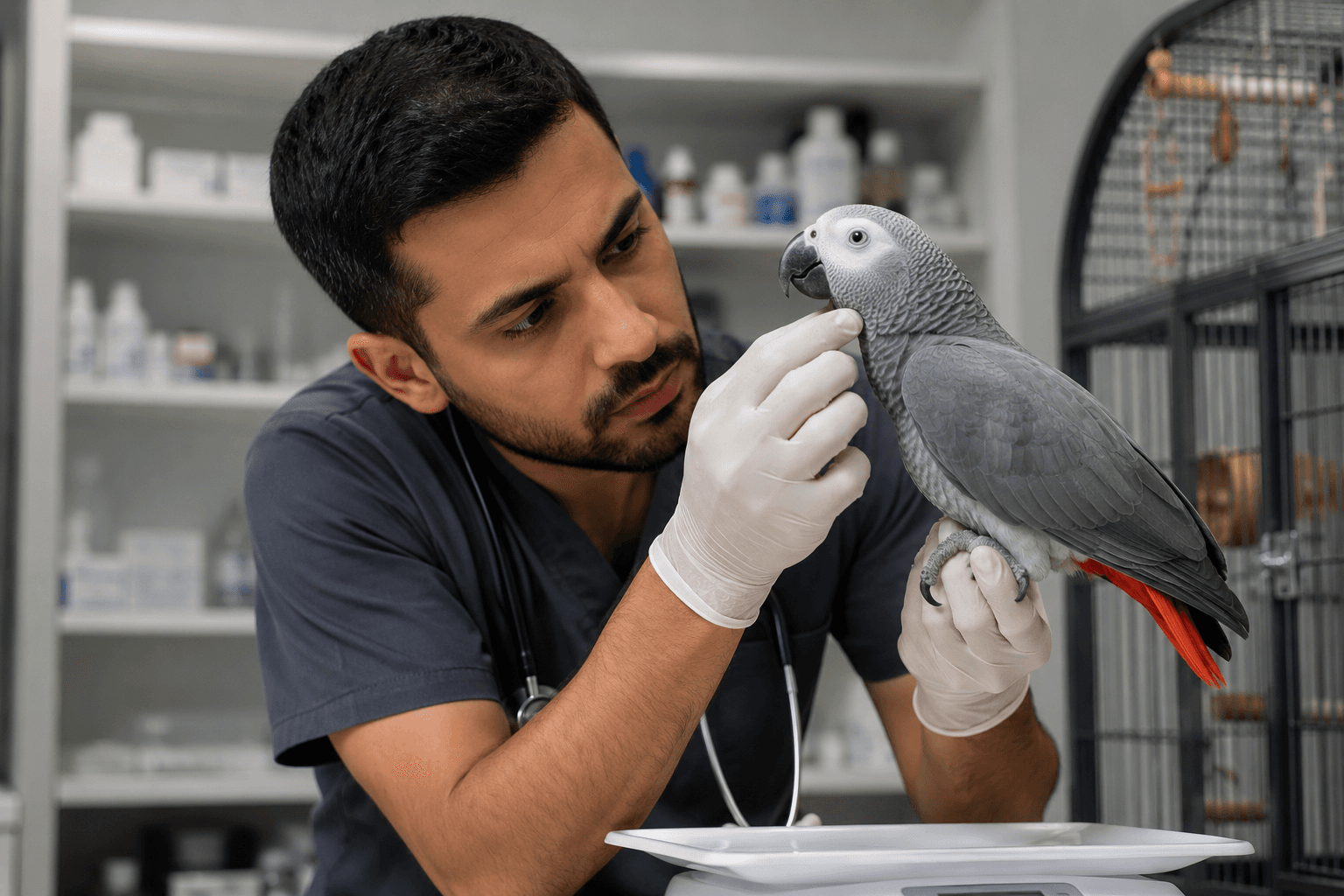
Avian Vet Guide: Everything You Need to Know About Finding a Veterinarian for Birds
That small bird of yours — the one who fills your home with chirping and vibrant colors — is far more than just a beautiful guest perched by the window. He is a true companion, with his own personality, moods, and health needs that deserve every bit of your attention.
But here's the painful truth most bird owners don't realize: most people don't know when their bird is sick — until it's too late.
Unlike cats and dogs, birds are remarkably skilled at hiding their pain. This is precisely why having access to a specialized veterinarian for birds isn't a luxury — it's a genuine necessity that could save your feathered friend's life.
In this comprehensive guide, you'll find everything you need: from understanding your bird's silent nature, to recognizing dangerous symptoms, mastering proper nutrition, and accessing expert avian veterinary care — all from the comfort of your home through SCOTY.
The World of Avian Medicine — Why a Veterinarian for Birds Is Different
Before we discuss diseases and symptoms, let's understand something fundamental that many people overlook: avian medicine is a completely independent specialty — not simply an extension of dog and cat veterinary care.
A veterinarian who spent years studying and training with mammals may feel genuinely lost when faced with a sick parrot. Birds are fundamentally different in their anatomy, organ function, and even how they respond to medications. Understanding this distinction is the very first step in protecting your beloved bird.
🤫 Birds Don't Cry When They Hurt — Understanding Their Silent Nature
Imagine your bird is suffering from intense abdominal pain, yet continues chirping and eating normally right in front of you — this isn't fiction. This is exactly what happens.
Birds in the wild are prey animals. A creature that shows weakness in the wild becomes an immediate target for predators. Over millions of years, birds evolved a powerful instinct: conceal pain and illness with every ounce of strength they have.
What this means for you as an owner:
- 🚨 By the time you notice obvious symptoms, the illness has usually already progressed significantly.
- 👁️ Daily close observation is your most important tool.
- ⏰ Delaying a visit to a veterinarian for birds can sometimes cost you what cannot be replaced.
A truly attentive bird owner doesn't just react when their bird falls ill — they learn to read their companion's "silent body language" every single day.
🔬 Avian Veterinary Specialties You Should Know About
Avian medicine isn't a single monolithic field. Within it exist precise subspecialties, much like human medicine:
First — Avian Pathology:
This branch focuses on studying viral, bacterial, and fungal diseases that affect birds. Specialists in this area are the ones who unravel the mystery when an epidemic strikes an entire flock.
Second — Avian Surgery:
An extraordinarily delicate specialty. A bird's anatomy is radically different — hollow and lightweight bones, organs packed into tight spaces. The scalpel here demands hands trained in a very particular way.
Third — Pet and Companion Bird Medicine:
This is the most relevant specialty for you as an owner. It covers parrots of all species, canaries, cockatiels, lovebirds, cockatoos, and more. This is the doctor who becomes your true partner in your feathered companion's health journey.
Fourth — Wildlife and Migratory Bird Medicine:
Specialists in rehabilitating injured wild birds and raptors such as falcons and eagles. An entirely different world with its own unique requirements.
Knowing which specialty fits your bird's situation saves precious time and ensures you reach exactly the right person.
⚖️ The Difference Between a General Vet and an Avian Specialist
A question many people ask: "Can't I just take my bird to any veterinarian?"
The honest answer: it depends on the situation.
| Situation | General Vet | Specialized Avian Vet |
|---|---|---|
| Emergency when no specialist is available | ✅ Acceptable temporarily | Always the best choice |
| Diagnosing an unclear illness | ⚠️ Limited ability | ✅ The right choice |
| Prescribing bird-specific medication doses | ⚠️ Risky | ✅ Safe and reliable |
| Surgery or invasive procedures | ❌ Extremely dangerous | ✅ The only qualified option |
| Specialized nutritional advice | ⚠️ General information only | ✅ Precise dietary plan |
The core difference lies in the finer details: a drug dose formulated for a dog, if given to a bird, could be fatal. The anatomical differences mean that an abdominal examination performed by a general vet won't yield accurate results for a bird.
This is precisely why SCOTY built its network of specialized avian veterinarians — so you can connect with exactly the right person and book an appointment with a veterinarian for birds who is perfectly suited to your companion's needs.
🦜 The Most Popular Pet Birds and Their Most Common Health Issues
Let's take a quick tour through the most common species found in our homes and get familiar with what threatens the health of each:
🌟 Canary:
One of the most beautiful voices in the bird world — but remarkably sensitive to environmental changes.
- Common conditions: Coccidiosis, air sac mites, and respiratory infections.
- Hidden danger: Air quality in the room affects canaries far more than most owners realize.
🦜 Cockatiel:
The most popular pet bird in the Arab world by far. Their gentle, social nature masks considerable sensitivity.
- Common conditions: Psittacosis infection, Psittacine Beak and Feather Disease (PBFD), and liver disease.
- Hidden danger: Cooked human food slowly destroys their liver over time.
🦚 African Grey Parrot:
The most intelligent of all pet birds. But that very intelligence can be a source of its own challenges.
- Common conditions: Calcium deficiency (extremely dangerous), and feather-plucking caused by boredom and psychological stress.
- Hidden danger: They require daily mental stimulation. Without it, they develop symptoms that look like illness but are actually depression.
🐦 Budgerigars and Lovebirds:
Companions in Arab homes for decades. Their small size doesn't mean fewer health challenges.
- Common conditions: Testicular cancer in males (surprisingly common!), and fatty cysts.
- Hidden danger: Two bonded birds kept together for years — and when one dies, the surviving bird can experience genuine grief that affects its physical health.
💡 The bottom line: Every species needs a veterinarian for birds who truly understands its unique nature. And every case requires its own specific approach. You can easily book an appointment with a specialist who knows your exact species — without any guesswork.
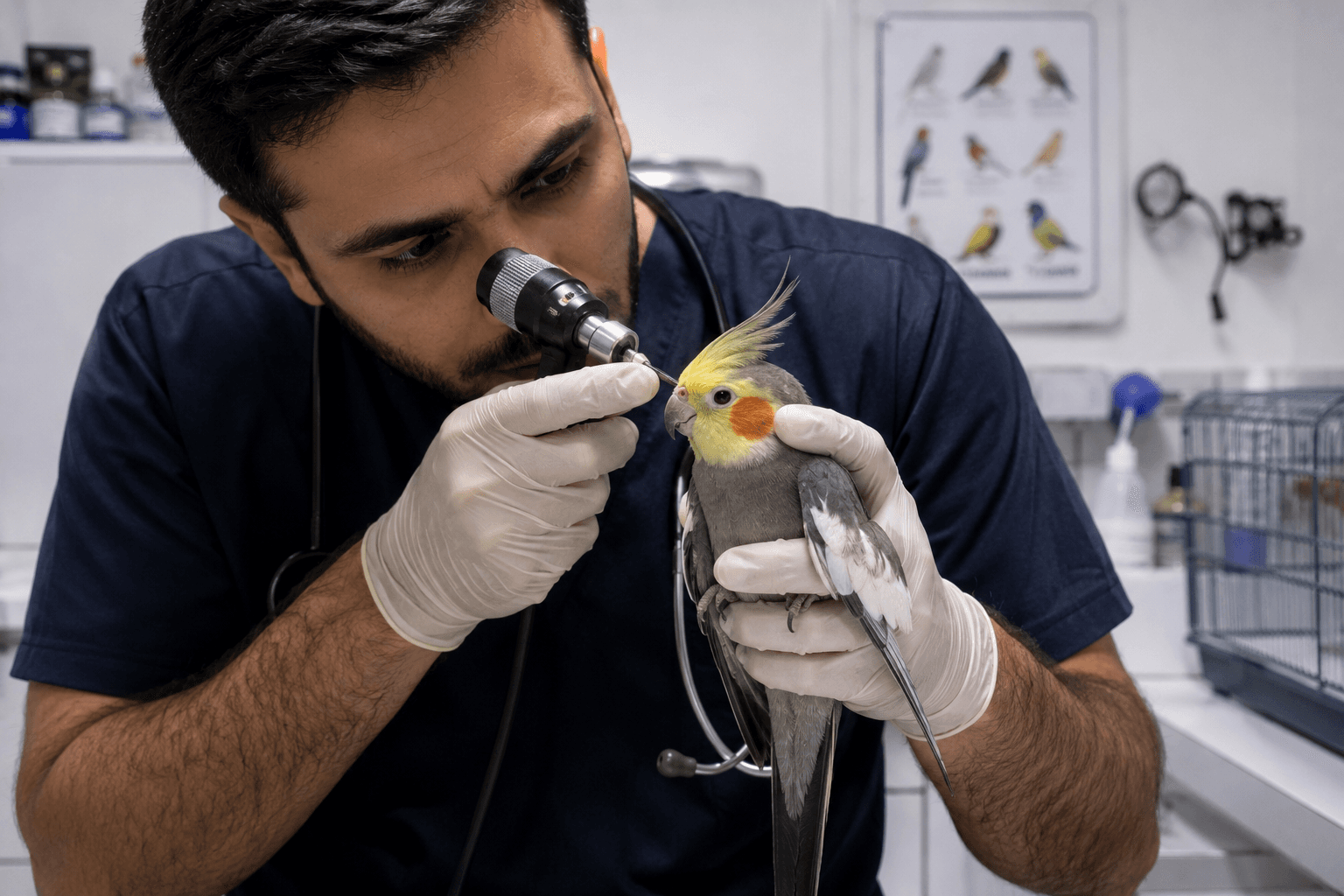
Warning Signs You Must Never Ignore — When to Call an Avian Vet
Remember what we said in the first section: your bird hides its pain with remarkable skill. This means your role as an owner is to become a sharp-eyed "investigator" who notices the subtlest details in your companion's daily behavior.
The good news? Birds — despite their silence — do send signals. You just need to know how to read them.
🚩 The Quiet Warning Signs in Your Bird
These symptoms carry no obvious drama or noise, but they deserve your immediate attention:
👁️ Changes in Eye Appearance:
Your bird's eyes should be bright, fully open, and alert. Any half-closed eye, discharge around the eye, or eyelid swelling is a warning bell.
Think of it this way: if you ran into a friend whose eyes were half-shut in the middle of the day, you'd immediately know something was wrong. The exact same logic applies to your bird.
🪶 Fluffed Feathers at the Wrong Times:
Fluffing feathers is perfectly normal during sleep or in mild winter cold. But a bird with fluffed feathers in the middle of a warm day while wide awake? That bird is trying to conserve body heat because its system is fighting illness.
⚖️ Rapid Weight Loss:
Small birds lose weight at an alarming speed when they fall ill. Gently place your hand on your bird's chest occasionally — if you can feel the keel bone (the breastbone) jutting out sharply like a knife's edge, this is a serious sign of malnutrition or chronic illness.
🤧 Changes in Droppings:
Yes, we're talking about this. Your bird's droppings are a direct mirror of its internal health.
- Normal droppings: three distinct components (dark green solid portion + white portion + clear liquid).
- Very light green or yellow droppings: liver problems.
- Brown or bloody droppings: seek help immediately.
- Excessively watery droppings: may indicate kidney inflammation.
🎵 Voice Changes or Sudden Silence:
A bird that sang every morning and suddenly goes silent for days — that silence is saying something. A sudden change in vocal tone or unexpected hoarseness can signal a respiratory system issue.
🧠 Personality and Behavioral Shifts:
A normally social bird that withdraws from interaction, or a typically calm bird that suddenly becomes aggressive — both are messages. Animals don't behave differently without reason.
🚨 True Emergencies — Situations That Cannot Wait
These situations mean every minute counts. If you notice any of the following, don't wait for a routine appointment — reach out immediately:
😮💨 Breathing Difficulty:
A bird that continuously opens its beak to breathe, rhythmically bobs its tail with each breath, or produces wheezing or clicking sounds — these are genuine respiratory emergencies.
Imagine sitting and feeling like air simply cannot reach your lungs properly. That's exactly how your bird feels. It cannot afford to wait.
🩸 Visible Bleeding:
Any bleeding that doesn't stop within a few minutes is an emergency — especially from the beak, a nail broken at the root, or a damaged blood feather (pin feather).
😵 Loss of Balance or Seizures:
A bird that repeatedly falls from its perch, or experiences convulsions, may be suffering from a neurological issue or acute calcium deficiency. Both require immediate intervention.
🥚 Egg Binding:
This is one of the most dangerous crises female birds face. A hen that has been trying to lay an egg for hours without success is experiencing a potentially fatal emergency. Symptoms include: visible swelling in the lower abdomen, extreme fatigue, and inability to perch normally.
☠️ Ingestion of Toxic Substances:
If you see your bird tampering with something potentially toxic and then notice sudden symptoms — don't wait and don't try home remedies. This is the moment to immediately book an emergency consultation with a specialist.
⚠️ Symptoms That Seem Minor but Are Serious
This list is perhaps the most important of all, because these are the symptoms most tempting to dismiss:
"Eating normally but seems lethargic":
Unexplained lethargy paired with a normal appetite is a deceptively misleading combination. It may be the early stage of a slowly developing disease. Don't tell yourself "maybe they're just tired" and move on.
"Feathers look dull or ragged":
Feathers are a direct reflection of internal health. Dull, broken, or missing feathers in unusual patterns can indicate nutritional deficiency, parasitic infection, or even a hormonal disorder.
"Grooming much more than usual":
Excessive preening to the point of pulling feathers out from the skin — this is either a skin irritation from parasites or deep psychological distress. Both require specialized evaluation.
"Drinking much more water than usual":
A noticeable increase in water consumption can be an early sign of diabetes in birds, or a kidney problem. Yes, these conditions affect birds too.
"Only a slight change in breathing sound":
No obvious distress, but you catch a faint, strange sound with each breath. This could be the beginning of air sac inflammation or a tracheal parasite. Caught early, it's treated easily. Ignored, it becomes seriously complicated.
😴 The Difference Between Normal Laziness and Illness in Birds
This question confuses many owners: "How do I know if my bird is sick or just having a lazy day?"
Here are the practical differences:
| Indicator | Normal Laziness | Possible Illness |
|---|---|---|
| Feathers | Fluffed only during sleep | Fluffed throughout the day |
| Eyes | Closed during sleep | Half-open while awake |
| Response | Reacts when you approach | Indifferent even to touch |
| Eating | Regular appetite | Noticeable decrease in eating |
| Balance | Sits steadily on perch | Grips cage bars with both feet |
| Droppings | Normal color and consistency | Changed color or texture |
The golden rule: if the "laziness" persists for more than 24 hours alongside any other symptom — it isn't laziness.
And because reading these signals isn't always straightforward — and your bird can't tell you how it feels — the fastest decision you can make is to book a consultation with a specialist. Some symptoms require a careful visual examination, and that's exactly what you can arrange through SCOTY, where you can send photos or videos of your bird's condition before the session so the vet arrives fully prepared.
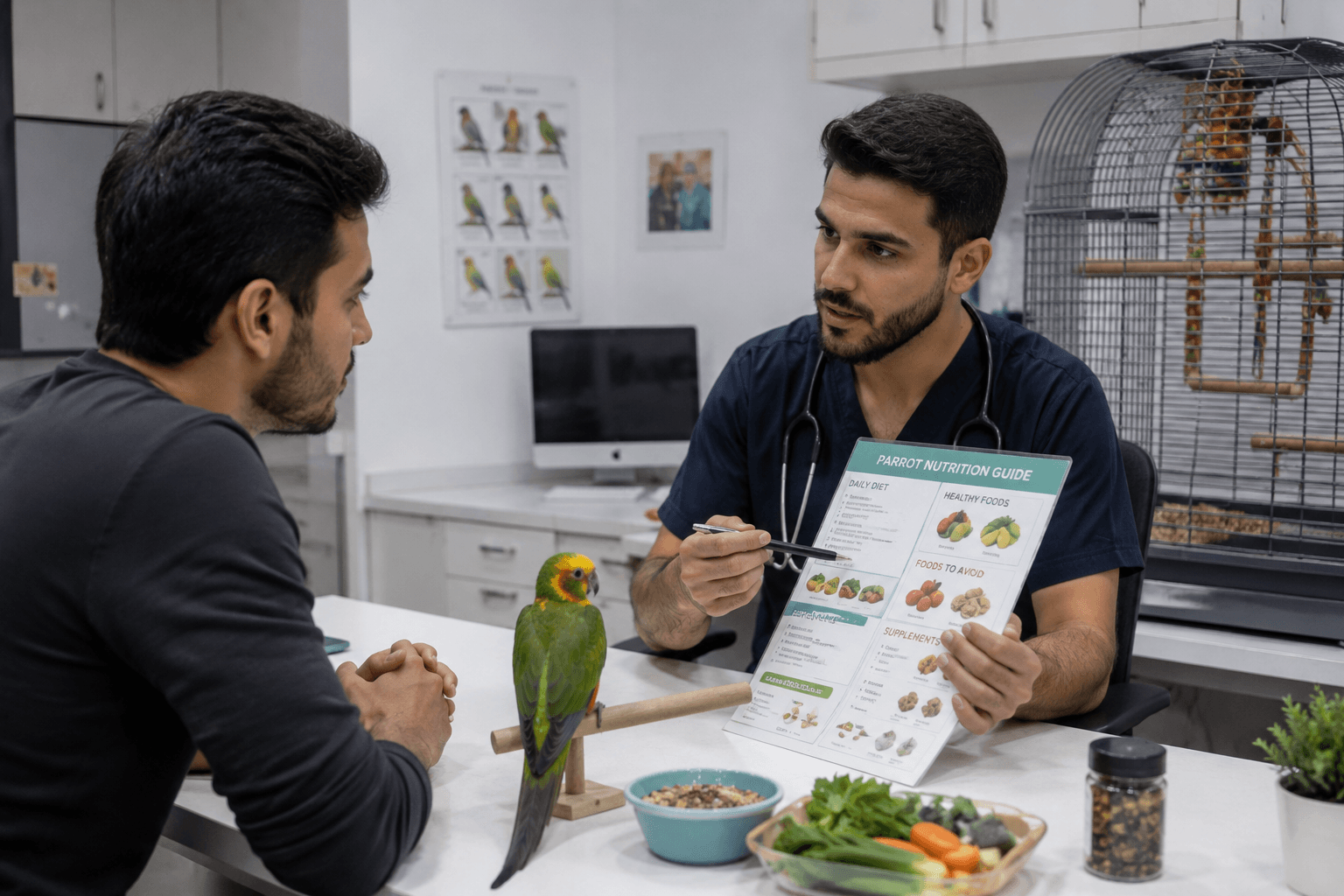
Nutrition and Daily Care — Secrets Every Expert Veterinarian for Birds Knows
If you asked any specialized avian veterinarian about the number one cause of the illnesses they see in their practice every single day — the answer would genuinely surprise you:
"Poor nutrition."
Not viruses. Not parasites. Not cold weather. Improper diet is the leading silent killer of pet birds. And the issue goes far beyond what you feed your bird — it encompasses the entire environment they live in, from their cage to the lighting in their room to their sleep schedule.
In this section, you'll learn what specialists know but rarely appears in mainstream sources.
🌿 What Does Your Bird Actually Eat? — The Truth That May Shock You
Seeds alone are not a complete meal. This single sentence surprises countless bird owners who've gotten used to filling the feeder with millet and grain and considering the job done.
The scientific reality: birds in the wild don't eat seeds exclusively. They consume fruits, vegetables, leaves, insects, and a wide variety of plant-based foods. Their natural diet is literally colorful.
What your bird should eat daily:
🥦 Dark Leafy Greens:
Spinach, arugula, fresh coriander leaves, carrot tops — these are nutritional treasures. The carotenoids within them nourish feather color and strengthen the immune system. Serve them fresh and thoroughly washed.
🥕 Colorful Vegetables:
Shredded carrots, bell peppers of all colors (especially red and yellow — rich in vitamin C), pumpkin and squash. The more colors on your bird's plate, the more balanced their diet.
🍎 Fresh Fruit (with caution):
Apples (without seeds!), berries, peaches, mango — all excellent choices. But avoid overfeeding since excess natural sugar strains the liver in smaller birds.
🌾 Diverse Seeds — Not Single-Grain Feeding:
A proper mix including sunflower seeds (in small amounts), flaxseed, sesame, and pumpkin seeds is far superior to relying on millet alone.
🥚 Animal Protein for Larger Birds:
Large parrots such as African Greys and Amazons occasionally need animal protein. A small chopped hard-boiled egg once or twice a week is an excellent source.
💊 Nutritional Supplements:
Calcium is critically important. A cuttlebone in the cage isn't a luxury — it's a necessity. Especially for females during breeding season.
☠️ Toxic Foods That Many Bird Owners Don't Know About
This list could save your bird's life. Memorize it and keep it somewhere visible:
🧅 Onions and Garlic:
These break down red blood cells in birds, causing hemolytic anemia. Even small amounts are dangerous. The problem is that many home-cooked foods contain them.
🥑 Avocado:
Contains a compound called persin that is toxic to birds. It causes respiratory distress and cardiac weakness that can lead to death. Even a tiny amount poses a serious risk.
☕ Caffeine and Chocolate:
Coffee, tea, cocoa, chocolate — all toxic to birds. They cause rapid heart rate and convulsions. Your bird may be attracted to the taste, but these foods are genuinely dangerous.
🍬 Refined Sugar and Salt:
Excessively salty foods gradually damage birds' kidneys. Refined sugar leads to liver disease and obesity. Never share your salty or sweet snacks with your bird.
🌰 Fruit Pits and Apple Seeds:
These contain cyanide compounds. The fruit itself is safe, but pits and seeds are strictly off-limits.
🥜 Raw or Old Peanuts:
These can carry aflatoxin mold, which is highly toxic. If you want to offer peanuts, choose fresh roasted ones in very small quantities.
🌿 Common Houseplants:
Dieffenbachia, ficus, lily leaves, caladium — all toxic if your bird nibbles on them. Check a list of bird-safe plants before placing any greenery near your bird's cage.
🏠 The Perfect Cage — Size, Lighting, and Ventilation
The cage isn't just a "home" for your bird — it's their entire environment, affecting both their physical and psychological health simultaneously.
📐 Size — The Golden Rule:
The cage must be larger than you think is sufficient. The scientific standard: your bird must be able to fully spread both wings without touching the sides. That is the minimum — and bigger is always better.
For larger birds like parrots:
- The minimum cage width should equal twice the bird's body length.
- Height must allow for climbing and vertical movement.
💡 Lighting — More Important Than You Think:
Birds need natural light or its equivalent from full-spectrum bulbs designed specifically for birds. This light is essential for:
- Synthesizing vitamin D3, which enables calcium absorption.
- Regulating the biological clock and sleep-wake cycle.
- Psychological wellbeing and daily activity levels.
A bird living in a dim room or under only yellow artificial lighting will slowly suffer from chronic deficiencies — even with an otherwise good diet.
🌬️ Ventilation — Clean Air Is Not Optional:
Birds have an extraordinarily sensitive respiratory system. Very ordinary things in your home can be lethal for your bird:
- 🍳 Fumes from overheated non-stick (PTFE-coated) cookware — toxic and can kill within minutes.
- 🕯️ Scented candles and aerosol air fresheners — burn the respiratory tract.
- 🚬 Cigarette smoke — accumulates toxins in the lungs slowly but surely.
- 🧹 Cleaning sprays and pesticides — extremely dangerous.
The rule of thumb: if a smell is strong enough that you clearly notice it — it's harming your bird.
🌡️ Temperature:
Most pet birds live comfortably between 18 and 26 degrees Celsius. Sudden temperature fluctuations are more dangerous than steady cool temperatures. Position the cage away from direct airflow from air conditioners or open windows.
🧠 The Psychological and Social Needs of Pet Birds
This is the aspect most overlooked by bird owners, despite the fact that it directly impacts physical health in very real ways.
Birds — especially parrots — are inherently social creatures. In the wild, they are never alone. Isolating them in a cage for long hours without interaction causes something remarkably similar to anxiety and depression in humans.
Signs of Unmet Psychological Needs:
- 🪶 Self-feather plucking — one of the most common psychological symptoms in pet birds.
- 🔄 Repetitive, compulsive movements (stereotypies), such as constant rocking.
- 😤 Sudden aggression toward the owner or toward itself.
- 📢 Extended, continuous screaming without an obvious cause.
What Your Bird Needs Daily for Psychological Health:
⏰ Time Outside the Cage:
At least one hour daily outside the cage in a safe environment — essential for larger birds.
🎮 Toys and Variety:
Rotate cage toys regularly. Intelligent birds get bored quickly. Offer simple foraging puzzles that hide food inside.
👥 Direct Interaction with You:
Talking to your bird, teaching it words, playing together — this isn't spoiling, it's a fundamental need.
🎵 Music and Sound:
Many bird owners leave a quiet radio or natural sounds playing during their absence — and it genuinely helps.
The truth is that many physical bird illnesses begin with neglected psychological needs. If you notice feather-plucking or compulsive behavior, don't wait for things to worsen — you can book a consultation with a specialist through SCOTY, who will evaluate both your bird's psychological and physical condition together and create a comprehensive care plan starting that very same day.
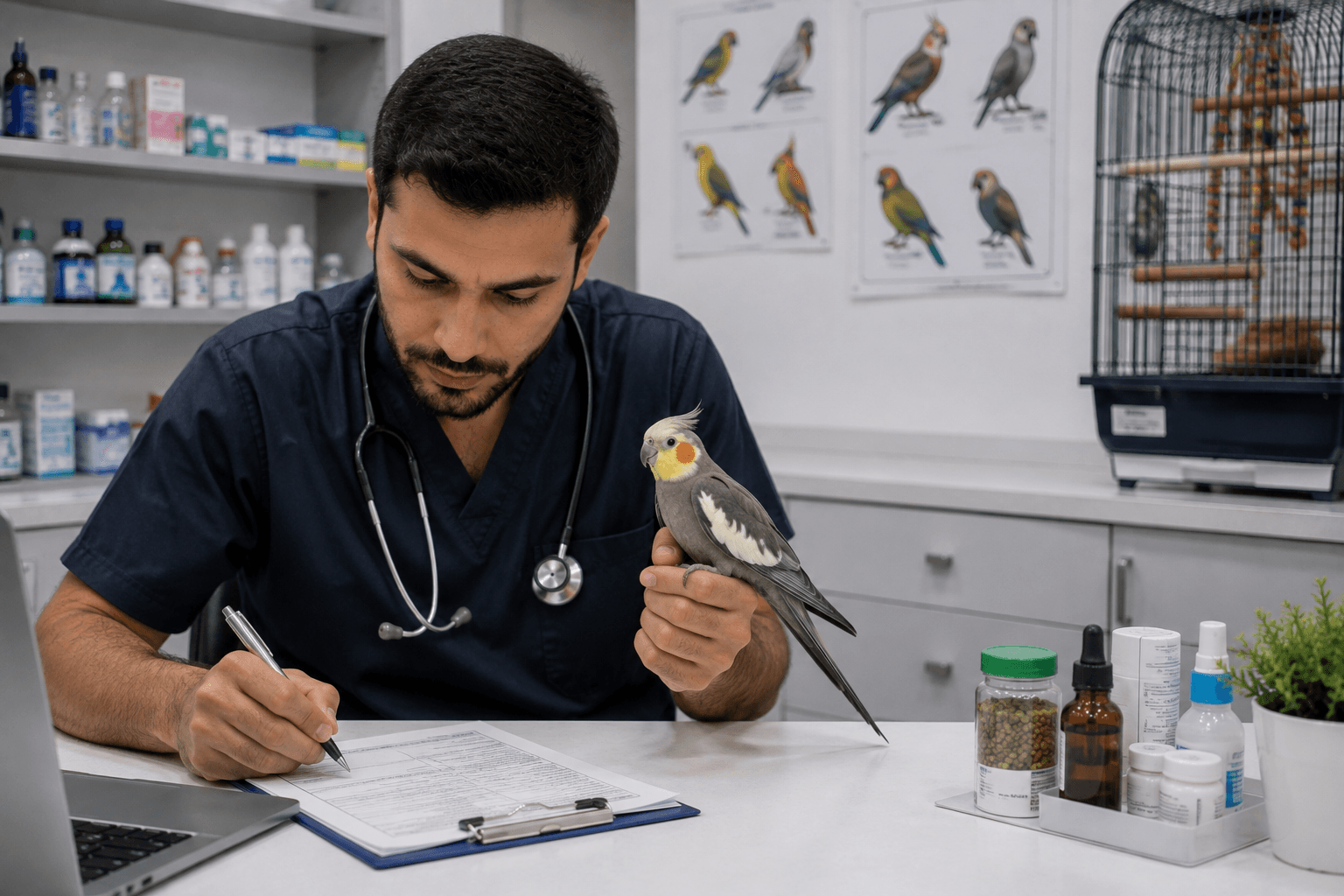
Your Practical Guide to Working with an Veterinarian for Birds Online
In the past, accessing a specialized veterinarian for birds meant a long journey, an exhausting wait, and a bird worn out from the stress and fear of travel. Today, everything has changed.
Remote veterinary consultation is no longer a second-rate alternative — in many situations, it has become the smarter, faster, and more precise choice. Especially for birds, where travel itself causes significant psychological and physical stress.
Let's walk through this new world together, step by step.
💻 What Can Actually Be Diagnosed Through a Remote Avian Consultation?
A perfectly logical question many owners ask: "How can the vet examine my bird without physically touching it?"
The answer lies in understanding the nature of avian diagnosis. A significant portion of veterinary assessment relies on:
- Careful visual observation of feathers, eyes, posture, and movement.
- A detailed case history (What has it been eating? When did symptoms start? What do the droppings look like?)
- Analysis of photos and videos you send to the vet.
- Environmental information (cage type and dimensions, diet, temperature).
Conditions that are resolved with high effectiveness through remote consultation:
✅ Evaluating early respiratory symptoms and determining their severity.
✅ Diagnosing nutritional problems and creating a corrected dietary plan.
✅ Assessing feather-plucking behaviors and possible psychological causes.
✅ Following up on chronic conditions after an initial diagnosis.
✅ Reviewing lab results or X-rays obtained from another provider.
✅ Prescribing medications for known, previously monitored conditions.
✅ Preventive health consultations and appropriate vaccination guidance.
✅ Assessing skin and feather conditions through high-quality photos.
✅ Providing immediate first aid guidance and emergency direction when no nearby specialist is available.
Conditions that require a physical in-person visit:
❌ Surgery and invasive procedures.
❌ Blood draws or swabs for laboratory analysis.
❌ Critical emergencies requiring immediate hands-on intervention (such as acute egg binding).
❌ Visible fractures and physical injuries.
The intelligence lies in knowing when to use each option — and a good remote vet will tell you honestly if your bird's situation requires an actual clinic visit.
📋 How to Prepare for Your Avian Vet Session to Get the Best Results
A 30-minute session with the vet can be surface-level or deeply thorough — and the difference is made almost entirely by how well you prepare beforehand.
Here is your practical step-by-step guide:
🎥 Step One — Visual Documentation Before the Session:
This is the single most important step. Hours or even a day before the session, record:
- A short video (one to two minutes) of your bird in its cage behaving naturally.
- A focused video of the specific symptom that concerned you (strange breathing sound, abnormal movement, worrying behavior).
- A clear, well-lit photo of its eyes and beak.
- A photo of the cage floor to clearly show the droppings.
- A photo of its food and how it's being presented.
SCOTY allows you to attach photos and videos directly before your session begins, so the vet reviews them and arrives fully prepared with their observations — and this dramatically elevates the quality of your consultation.
📝 Step Two — Have Your Answers Ready for These Questions:
The specialist will almost certainly ask all of these, and having them ready saves time and deepens the diagnosis:
- How long ago did the symptoms start? Were they sudden or gradual?
- What does your bird eat, in detail? Approximate quantities?
- Has its diet changed recently?
- What type of cage does it have, and what are the approximate dimensions?
- Does it live with other birds? Are they showing the same symptoms?
- Has it experienced any recent environmental change (moving home, visitors, relocating the cage)?
- Has it received any prior treatment? What was it?
- How old is it approximately? Is the sex known?
⚖️ Step Three — Weigh Your Bird Before the Session:
A precise digital scale (your kitchen scale works perfectly). Place your bird on a small bowl and record the weight. This simple number gives the vet critically important information for assessing the condition and calculating medication doses.
🧘 Step Four — Choose a Quiet Time for the Session:
Your bird is affected by its surroundings. Choose a time when it's relatively calm, with a quiet room free from excessive noise. This helps the vet clearly hear your bird's breathing sounds or vocalizations if needed during the call.
📱 After the Session — Follow-Up and Your Electronic Prescription
Many owners assume the veterinary session ends when the call does. With SCOTY, the experience is completely different.
📄 Your Electronic Prescription:
Immediately after the session, if your bird needs medication, you receive a certified electronic prescription that you can download and fill online with complete ease. No printing, no manual pharmacy visits — everything is digital and fully documented.
📂 Your Bird's Medical File:
Everything discussed with the vet — symptoms, diagnosis, medications, recommendations — is documented in full in your pet's medical file within the app. This file stays with you permanently and can be shared with any other vet at any time.
Imagine six months from now your bird develops a similar symptom — you open the app and see the complete medical history in seconds. That's a world of difference from a crumpled piece of paper lost in a drawer somewhere.
🔄 The Free Follow-Up Week — The Biggest Advantage:
And this is where the real difference lies — what truly sets SCOTY apart:
After your session concludes, you receive:
- ✅ Free follow-up and review via chat, available around the clock, for a full week.
- ✅ An additional free follow-up call with the same vet.
This means you are never alone during the hardest days — those first days after a diagnosis, when questions multiply and worry runs high. "Is the medication working? Is this symptom normal after treatment? How many times a day should I give the medicine?" — all of these questions get immediate answers at no extra cost.
❓ Frequently Asked Questions from Bird Owners
Q: How often should I visit an avian vet preventively?
A: For healthy birds, specialists recommend at least one annual preventive checkup. For long-lived large parrots — every six months is better. These checkups catch problems invisible to the naked eye, such as subtle weight changes or early-stage liver disease.
Q: Can my bird be vaccinated? What vaccines are available?
A: Some birds, like pigeons, benefit from specific vaccines. But most pet companion birds don't follow a standardized vaccination protocol the way dogs and cats do. What protects them most is good environmental prevention and avoiding exposure to unfamiliar birds. Consult a specialist based on your specific species.
Q: My bird suddenly lost feathers — is this dangerous?
A: It depends on the context. Some feather loss is completely normal during the annual molt. But feather loss in an irregular pattern outside of molt season, bald patches appearing, or witnessing your bird pulling out its own feathers — all of these warrant immediate specialized evaluation.
Q: Is the constant noise and screaming from my bird normal?
A: Social birds like parrots have a natural vocal level — especially in the early morning and at dusk. But continuous screaming for hours that is out of character may signal boredom, anxiety, or unmet social needs. If your bird's screaming pattern changes suddenly, consult a specialist.
Q: My bird refuses to eat a certain healthy food — how do I introduce it?
A: Birds are remarkably conservative about their dietary habits. The solution lies in gradual exposure and repetition: place the new food beside their favorite food daily without forcing it. After a few weeks, you'll find them trying it on their own. You can also eat the new food in front of your bird while they watch — birds learn by imitation.
Q: Can I give my bird human medication in an emergency?
A: Absolutely not. Never. This is one of the most dangerous things you can do. A bird's body metabolizes medications in a fundamentally different way from humans. Even drugs that seem "natural" or harmless — including certain antibiotics — can be lethal at a very small dose. In an emergency, immediately book an urgent consultation with a specialist rather than taking that risk.
🌟 The Takeaway — Your Journey With Your Bird
That small bird of yours — with every chirp, every flash of color, every unique personality quirk — deserves the very best care you can give. And by reading this guide from beginning to end, you've already proven yourself to be exactly the owner they deserve.
Real care for your bird stands on three pillars:
- 👁️ Daily attentive observation — because your bird hides its pain.
- 🥗 Balanced nutrition and a healthy environment — because prevention is always better than treatment.
- 👨⚕️ Fast access to a trusted specialist — because in bird health, time is measured in hours.
All three pillars point toward one action you can take right now — book a preventive consultation for your bird before any symptoms appear. Browse specialist profiles, choose the vet who's the right fit, and begin a genuine care journey for your feathered companion through SCOTY — because your bird deserves the best, and you deserve complete peace of mind.