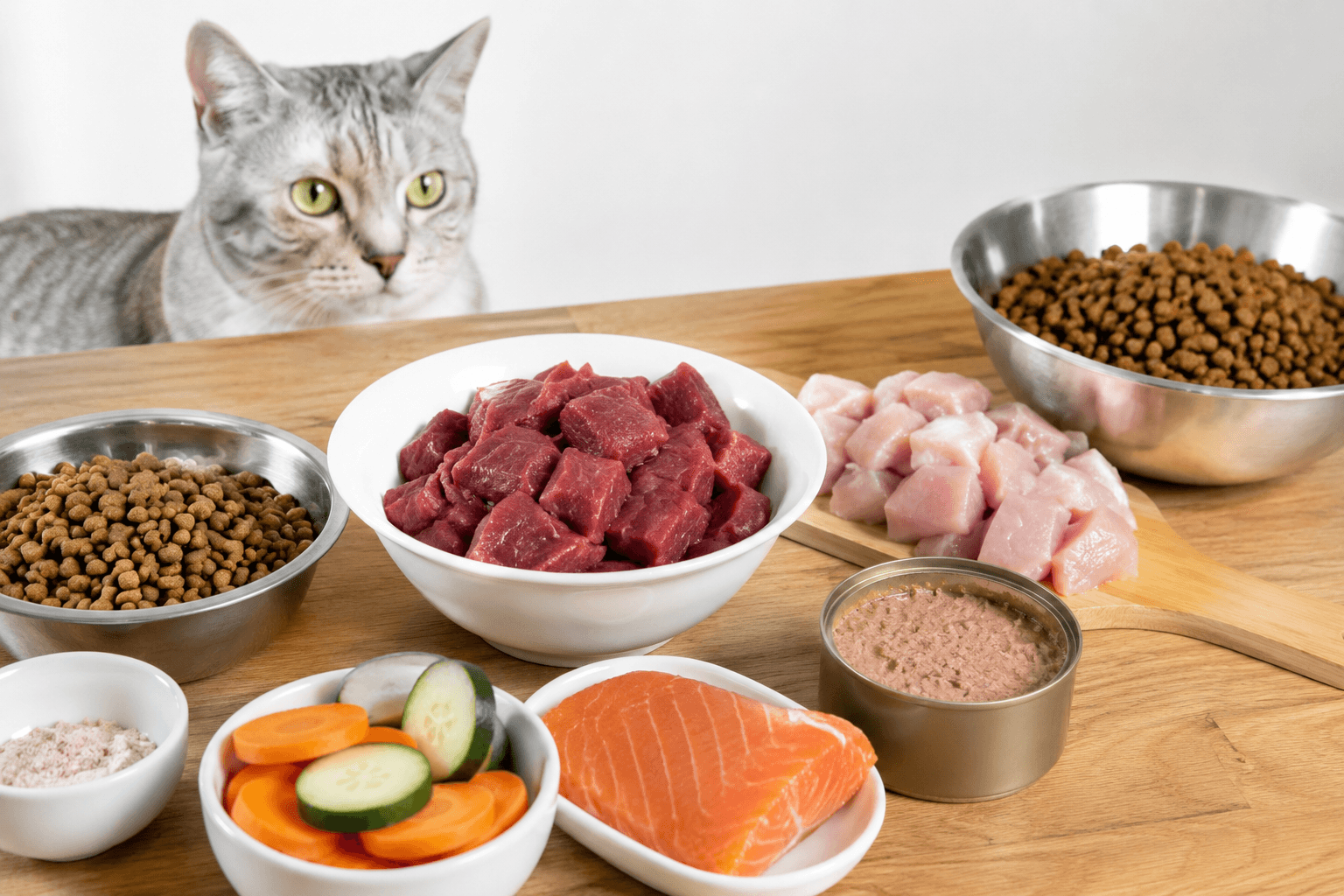
You stand in front of the pet food aisle, your cat waiting impatiently at home, wondering if this can is really among the best types of cat food or just clever packaging. It's a small daily decision, yet one that shapes her health for years.
Through SCOTY, your remote veterinary consultation clinic, you can get a trustworthy answer from a specialized veterinarian instead of guessing on your own.
In this article, we'll help you tell apart the best types of cat food on the market today, and show you how to pick what truly fits your cat's age and health without the guesswork.
If you're unsure which diet suits your cat best, talk to a specialist vet for a precise, personalized recommendation.
The Essential Nutrition Guide 🐱
Your cat doesn't speak — but her body screams every single day.
When she turns away from her food bowl, when her coat looks dull and rough, or when she stares at you with tired eyes right after eating — she's actually trying to tell you something very important: what you're feeding her may not be right for her.
We put together this comprehensive, precise guide to answer the question that every true cat lover asks: what are the best types of cat food?
You won't find dry academic talk here. You'll find simplified science, practical tips you can apply starting tomorrow, and warnings that might save your cat's life someday.
Let's begin. 🐾
Before you open any can or search for any brand, you need to understand one thing that changes everything:
Your cat is not a miniature dog. And she's not a small human.
She is a biological creature with completely unique nutritional needs — needs that differ fundamentally from any other pet. Understanding this difference is the real starting point for healthy feeding and a healthy life for your beloved companion.
🥩 The Cat Is an Obligate Carnivore
The scientific term is "Obligate Carnivore," which simply means:
Your cat cannot obtain all her nutritional needs from anything other than meat.
This isn't just preference. This is clear genetic architecture that evolved over thousands of years. A cat's body simply lacks the enzymes needed to convert certain plant-based materials into nutrients it can absorb.
A simple example you'll understand immediately 💡:
Humans can convert beta-carotene from carrots into Vitamin A. Your cat? She absolutely cannot. She needs ready-made Vitamin A from animal sources like liver. If she relied on vegetables alone as a vitamin source, she would gradually go blind without any obvious cause.
This means practically:
- ❌ No fully or semi-vegetarian foods as a primary meal
- ✅ Yes to foods containing high-quality animal protein as the first and main source
- ✅ Yes to reading the ingredient list on any product before buying it
🔬 The Nutrients Your Cat Cannot Do Without
Think of your cat's body like a luxury car engine — it needs precisely specified fuel that accepts no substitute.
Animal Protein — The Primary Fuel: It's the building block of muscles, organs, and the immune system. Make sure the first source in her food ingredient list is: chicken, tuna, beef, or turkey.
Essential Amino Acids — Especially Taurine: Taurine is literally a matter of life or death for your cat. Its deficiency leads to serious heart disease and vision problems. The human body produces it on its own — a cat's body cannot. It must come from food.
Healthy Fats: Don't be afraid of fats in your cat's food. Animal fats are an excellent energy source, essential for absorbing fat-soluble vitamins (A, D, E, K), and they give her coat that beautiful shine that makes you want to pet her with joy. 😄
Water — The Forgotten Element: Cats in nature get most of their water from fresh prey. At home? They often don't drink enough. This is precisely why many cat nutrition experts point to the importance of including wet food in the daily diet, especially for cats prone to kidney or urinary tract problems.
For more on how to build a balanced, healthy diet for your cat from day one, check out our complete guide on The right way to care and raise your cat
🍽️ The Difference Between Wet, Dry, and Natural
This is where most owners genuinely feel confused. And because you deserve a clear, honest answer, here's a practical comparison:
Dry Food (Kibble / Croquettes) 🟡
Advantages:
- Easy to store, practical, and doesn't spoil quickly
- Helps clean teeth to some extent (though this is sometimes overstated)
- Generally less expensive than wet food
Disadvantages:
- Contains very low moisture content (only 8-10%)
- Often contains high proportions of starches and grains your cat doesn't need
- Some cheap products list "meat powder" or "slaughter by-products" as the first source instead of fresh meat
Golden tip: If you choose dry food, choose brands that list a specific meat name (like "chicken" or "salmon") in first place on the ingredient list — not "unspecified animal protein."
Wet Food (Wet Food / Pâté / Chunks) 🟢
Advantages:
- High moisture content (75-85%) supporting kidney and urinary tract health
- Closer to the nature of a cat's wild diet
- Generally more palatable and easier for senior cats or those with dental problems
Disadvantages:
- Spoils quickly after opening (don't leave it in the bowl for more than 4 hours)
- More expensive than dry food
- Some types contain high salt levels
The ideal recommendation: Combining both — wet food in the morning and high-quality dry food in the evening — is a system many veterinarians approve of and most cats eagerly accept. 🌟
Natural Home Food (Raw / Home-cooked) 🔵
Some enthusiastic owners choose to prepare their cat's meals by hand, and this is possible but requires very precise knowledge.
Random home cooking without a plan developed with a specialist usually leads to a severe deficiency in vital nutritional elements like calcium, taurine, and Vitamin E.
If you're interested in this option, the best thing you can do is speak with a veterinarian specialized in nutrition before starting — and this is exactly what's available to you through an integrated platform like SCOTY
⚖️ Food Quantities According to Age & Weight
There's no single perfect fixed amount for all cats — but this table gives you a good starting point:
| Life Stage | Daily Meals | Important Note |
|---|---|---|
| Kittens (under 6 months) | 3 - 4 meals | Their energy needs are very high |
| Adult cats (1 - 7 years) | 2 meals | Monitor weight and avoid overfeeding |
| Senior cats (over 7 years) | 2 - 3 small meals | Digestion is slower, may need special food |
| Pregnant or nursing cats | As directed by vet | Their needs differ fundamentally |
One very important rule: Watch your cat's waist from above — you should see a slight narrowing. From the side, the belly should not visibly sag. Obesity in cats opens the door to serious health problems like diabetes, joint disease, and fat accumulation around the liver.
If you notice a sudden change in your cat's appetite — whether increased or decreased — this is a signal worth paying attention to and should not be ignored. A changed appetite may reflect a health problem in its early stages that can be easily treated if caught early.
💡 Have you ever wondered: Does the food you're giving your cat right now truly meet all her needs? This question deserves an answer from a specialist, not from guesswork. In the last section, you'll find the easiest way to get an accurate assessment of your cat's diet.
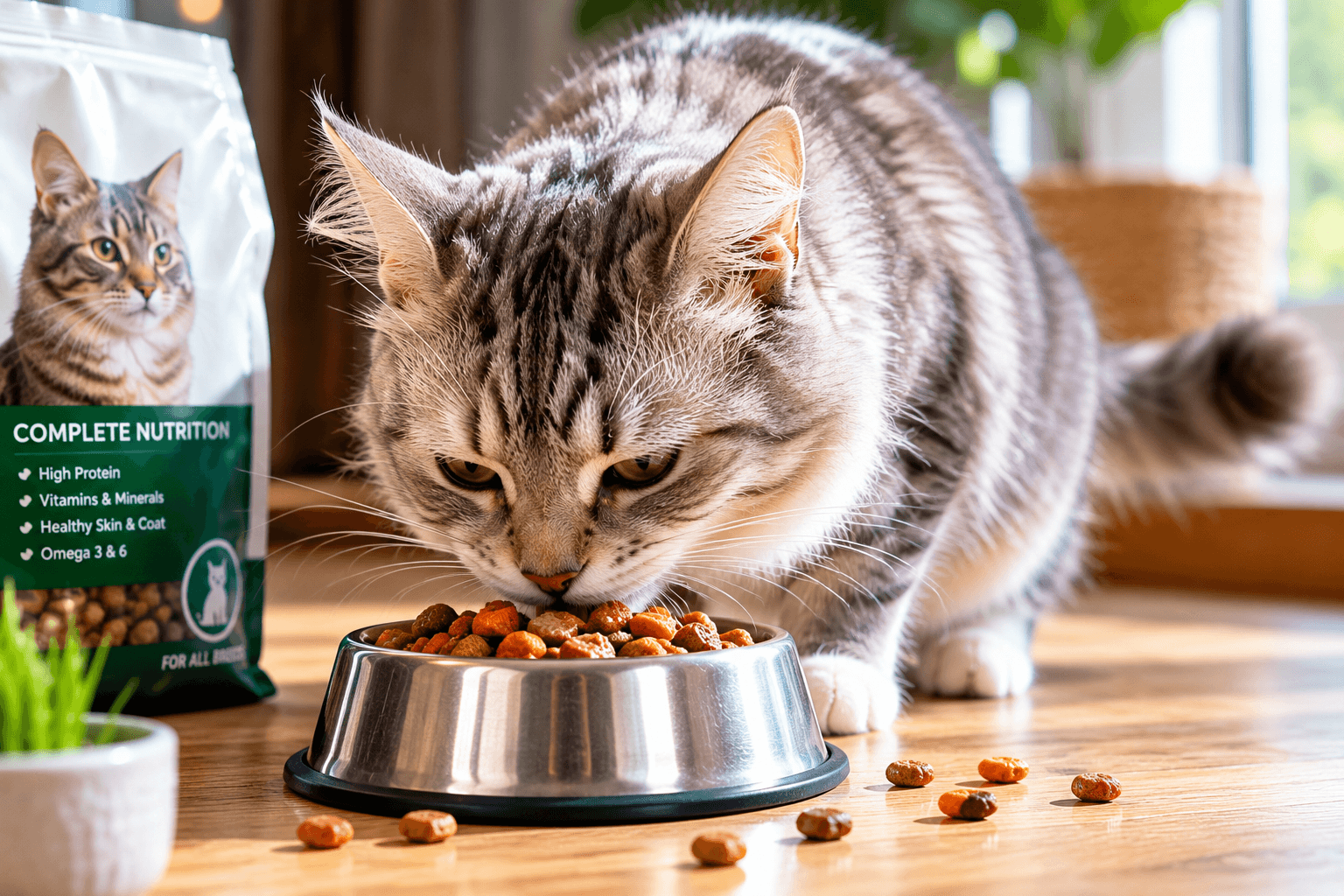
The Best Types of Cat Food on the Market 🛒
Before we get into details, let's agree on something important:
There is no single perfect brand for all cats.
Your cat is a unique individual — her age, weight, health condition, and even the nature of her stomach are all factors that affect choosing the right food specifically for her. But there are clear scientific criteria that differentiate between an excellent product and one that isn't worth its price.
Let's explain these criteria first, then apply them. 🔍
📖 How to Read a Cat Food Label
Before any brand, before any attractive advertisement, before any picture of a happy cat on the packaging — read the ingredient list.
The golden rule: The first ingredient is the most important.
Ingredients are listed in descending order by weight. So if the first thing you read is:
- ✅ "Fresh chicken" or "salmon" or "beef" ← This is very good
- ⚠️ "Chicken meal" or "meat powder" ← Acceptable within limits
- ❌ "Corn" or "wheat" or "starch" ← This means the product relies on plant-based filler as its primary calorie source
Other quality indicators to look for:
- Crude protein percentage: no less than 30% in dry food
- Moisture percentage: in wet food should be 75% or more
- Free from artificial colors and harmful preservatives like BHA, BHT, and Ethoxyquin
🏆 The Best Types of Dry Food for Cats
Dry food is the most common choice for obvious practical reasons. But the difference between one product and another can be the difference between full health and ongoing problems.
What makes a dry food stand out:
- 🥇 Specifically named animal meat in first position
- 🥇 Low carbohydrate percentage (ideally less than 25%)
- 🥇 Free from whole grains as a main ingredient (Grain-free) — though this isn't an absolute requirement for every cat
- 🥇 Taurine addition explicitly mentioned in the ingredient list
Types of dry food by need:
| Type | Suitable For | What to Look For |
|---|---|---|
| For regular adult cats | Cats aged 1-7 years in good health | Protein ≥30%, fat 15-20% |
| For neutered cats | Cats after neutering (more prone to obesity) | Fewer calories, higher fiber |
| For long-haired cats | Persian, Maine Coon, etc. | Added Omega 3 and Omega 6 for coat health |
| For sensitive cats | Cats with food allergies | Single Protein only |
A real-world tip: If you switch your cat from one brand to another and notice mild diarrhea, don't panic immediately. Her body needs two to three weeks to adjust to the new food. Gradual transition is the solution — start with 25% new food and 75% old food, and gradually increase each week.
💧 When To Prefer Wet Food Over The Dry
Wet food isn't just "pampering" your cat. In certain situations, it's an actual medical necessity.
When is wet food the top priority?
- 🔴 Cats suffering from kidney or urinary tract problems — high moisture dilutes urine concentration and protects the bladder
- 🔴 Cats in recovery after illness or surgery — easier to digest and more appealing to cats with poor appetite
- 🔴 Senior cats with dental or gum problems — they don't need exhausting chewing
- 🔴 Cats that don't drink enough water — many cats actually "drink" their water through wet food
Types of wet food on the market:
🥫 Pâté: Uniform, ground texture — ideal for picky cats and small kittens
🥣 Chunks in Gravy: Many cats love the feeling of "real hunting" — visible meat pieces in broth
🐟 Flakes: Ideal for fish-loving cats — fish flakes in light broth
Important warning: Some types of wet food contain very high levels of salt (sodium). This poses a real risk to cats with heart or kidney disease. Always read the label. 👀
🍗 Natural Home Food Is It Really Safe?
This question comes up frequently in cat owner communities and deserves a frank, balanced answer.
The short answer: Possible — but with strict conditions.
The detailed answer:
Properly prepared home food means offering high-proportion animal protein, cooked or raw, with precisely calculated nutritional supplements. This requires specialized knowledge of the precise daily needs for your cat's specific weight, age, and health condition.
The most common mistakes in home feeding:
- ❌ Relying on boiled chicken alone without adding calcium ← leads to bone weakness
- ❌ Feeding frozen raw fish frequently ← may contain parasites and bacteria
- ❌ Offering "kitchen leftovers" — onions, garlic, and spices are completely toxic to her
- ❌ Believing "natural = always safe" — unbalanced natural food is very dangerous
If you're determined about this option, I strongly advise consulting a veterinary specialist before starting. You can refer to the detailed questions with specialized veterinarians in specialized veterinary Q&A blog to get accurate scientific input before making any decision.
💊 Nutritional Supplements Necessity or Luxury?
The inconvenient answer: It depends.
If your cat eats high-quality commercial food bearing an AAFCO certification (the American standard for animal nutrition adequacy) or its equivalent — she likely doesn't need additional supplements.
But in these situations, supplements genuinely become important:
| Supplement | When Does Your Cat Need It? |
|---|---|
| Omega 3 (fish oil) | Dry and dull coat, skin problems, chronic inflammation |
| Probiotics | After a course of antibiotics, recurring digestive problems |
| Vitamin B12 | Cats with poor appetite or in recovery |
| Glucosamine | Senior cats suffering from joint pain |
| Additional Taurine | Cats eating primarily home-prepared food |
⚠️ Important warning: Don't give your cat any nutritional supplement "by guessing" or because your neighbor gave it to their cat. An overdose of some vitamins — like Vitamins A and D — causes actual poisoning.
The best step? Consult a veterinarian who knows your cat's complete health history before adding any supplement to her diet. If you're looking for specialized cat veterinarian near you who can help with this, this step is best than you imagine.
🛒 Smart Buying Tips
Advertisements sell you the image of a happy cat. We sell you real knowledge.
Before any purchase, ask yourself:
- ✅ Is animal meat the first ingredient?
- ✅ Does the product hold a recognized nutritional certification?
- ✅ Does it specifically suit your cat's age (Kitten / Adult / Senior)?
- ✅ Does its price actually reflect its quality or is it just marketing?
- ✅ Does my cat eat it eagerly and without digestive problems?
The most expensive food isn't always the best. And the cheapest doesn't necessarily mean the worst. Scientific criteria are the only judge. 🎯
🐾 A moment of reflection: If you're currently unsure whether what you're feeding your cat truly meets her actual needs — you're not alone. This is exactly what most devoted cat owners ask about. The good news? One question with a specialized veterinarian can change everything. In the last section, we'll tell you the easiest way to do that — without leaving home. 🏠
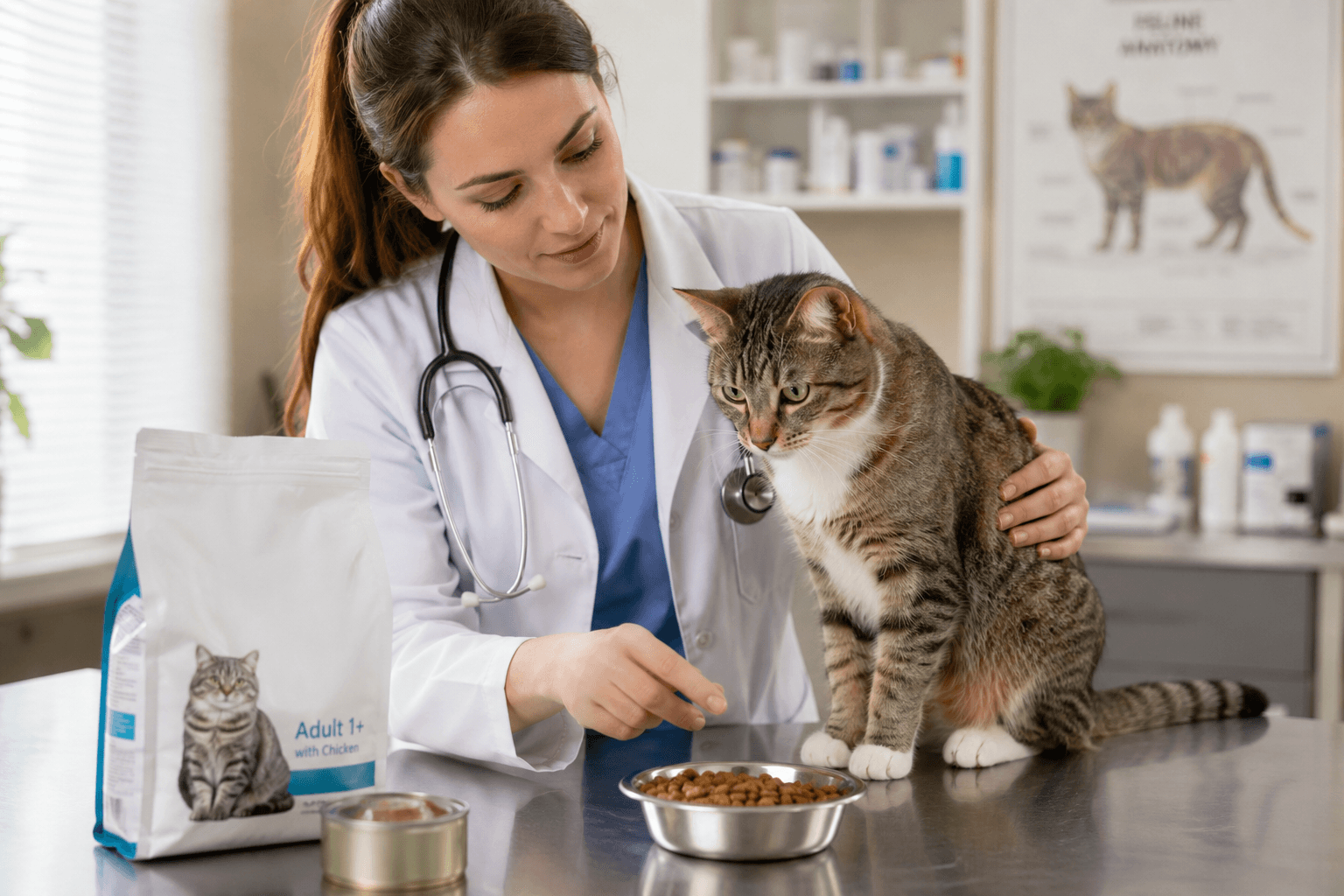
Foods Completely Forbidden for Your Cat ⚠️
This section may be the most important in the entire article.
Not because it tells you what to feed your cat — but because it might save her life someday.
Many loving owners, with completely good intentions, give their beloved pet foods they think are harmless or even beneficial — when in reality they are toxic or destructive to their health in the long run. Let's put the dots on the i's with complete clarity. 🚨
☠️ 12 Foods That Can Harm Your Cat
1. 🧅 Onions, Garlic, and Leeks The most dangerous of all. They contain chemical compounds that destroy a cat's red blood cells and cause hemolytic anemia. Even the dried powder form is dangerous. And the effect doesn't appear immediately — it can accumulate over days without you noticing anything.
2. 🍫 Chocolate and Cocoa Contain a substance called theobromine that a cat's body cannot digest. Causes trembling, convulsions, and serious cardiac arrhythmias. Even small amounts are concerning.
3. 🍇 Grapes and Raisins The precise reason is still under scientific study — but the result is well known: acute kidney failure. A single grape may be enough to cause damage.
4. ☕ Caffeine (coffee, tea, energy drinks) Causes hyperactivity, rapid heartbeat, trembling, and in high doses can be fatal.
5. 🥛 Milk and Dairy Products A surprise for many! Most adult cats lack the lactase enzyme needed to digest milk sugar. The result? Diarrhea and painful intestinal cramps. The romantic image of a cat and a bowl of milk? Pure fiction. 😅
6. 🥜 Avocado Contains a substance called persin that causes damage to heart and lung tissue in cats.
7. 🍖 Cooked Bones Contrary to popular belief, cooked bones are brittle and break into sharp splinters that can puncture the esophagus or intestines. A real danger, not an exaggeration.
8. 🧂 Salt and Heavily Salted Foods Salted chips, salted nuts, or any excessively salty human food — causes fluid retention, high blood pressure, and in high doses, sodium poisoning.
9. 🍬 Xylitol (sugar substitute found in gum and some candy) Devastatingly dangerous to the liver and acts very quickly. Even very small amounts cause a sharp drop in blood sugar.
10. 🍞 Raw Dough and Yeast Expands in the stomach and produces alcohol as a byproduct of fermentation — imagine the effect of that on a small body like your cat's.
11. 🐟 Canned Tuna for Humans (frequently) A small amount occasionally is fine. But regular reliance on it causes Vitamin E deficiency and a painful condition called Steatitis or "fat inflammation." Plus it has high salt content.
12. 🥚 Raw Egg Whites Contains a substance called avidin that inhibits absorption of biotin (Vitamin B7) and weakens skin and coat over the long term.
If you notice your cat ate any of these foods by accident and started vomiting ( especially onions, chocolate, or grapes )
don't wait for symptoms to appear. Early action makes a big difference. You can now contacting a veterinarian immediately.
🍼 Feeding Kittens — The Weaning Stage
Kittens are the most sensitive group to food quality — because what they eat now shapes their physical and immune structure for all the years ahead.
From birth to 4 weeks: Mother's milk is the only appropriate food. If kittens lose their mother for any reason, specialized cat milk replacement formula (KMR - Kitten Milk Replacer) is the only safe option.
🚫 Never give orphaned kittens cow's milk. Their small stomachs cannot handle it and it may cause their death.
From 4 to 8 weeks — the weaning stage: Start offering wet food specifically formulated for kittens, slightly diluted with warm water to make it softer. At this stage, kittens are learning how to eat solid food for the first time.
From 8 weeks to one year: This is a stage of rapid growth. Kittens need:
- 🥩 Much higher protein than adult cats (no less than 35-40%)
- 🦴 Calcium and phosphorus in balanced ratios for building healthy bones
- 🧠 DHA fatty acids for brain and nervous system development
- 🍽️ Smaller, more frequent meals (3-4 times daily)
Always look on the packaging for: "Complete and Balanced for Kittens" or "For All Life Stages"
For more about kitten health and the most common diseases affecting them during this critical stage, check out our comprehensive guide on the most important diseases for kitten you'll find it an indispensable reference for every kitten owner. 🐱
🤰 Feeding Pregnant and Nursing Cats
This stage significantly multiplies your cat's nutritional needs — and neglecting it affects not only her health but the complete health of her kittens.
During pregnancy (approximately 63 days):
- In the first trimester: no major change in quantities required
- In the last trimester: her needs begin rising gradually — she may need double her normal amount
- Best option at this stage: switching to kitten food (Kitten Food) because it has higher nutritional density and calories
During nursing: This is the most physically demanding stage on her body. A nursing cat burns enormous calories every day producing milk for her kittens.
- 🍽️ Leave food available all day (Free Feeding) — no quantity restrictions here
- 💧 Always fresh, replenished water — nursing consumes large amounts of fluids
- 🚫 Don't start reducing food quantities until after complete weaning
When to call the veterinarian? If you notice the mother cat is visibly losing weight during nursing, or the kittens don't seem satisfied after feeding, or her breasts are swollen and red — these are signals requiring prompt intervention. In such situations, you can easily connect with a specialized veterinarian through specialized cat veterinary contact numbers who are near to you or through SCOTY platform.
👴 Feeding Senior and Sick Cats
A cat over seven years officially enters the senior stage. Her body changes — and her diet must change with it.
Physical changes that affect nutrition:
- 🔻 Kidneys become less efficient at filtering protein — some cats need moderate-quantity but high-quality protein
- 🔻 The digestive system becomes slower at absorbing nutrients
- 🔻 The sense of smell weakens — warm wet food becomes more appealing to her
- 🔻 Joints may become painful — making it difficult to reach the food bowl if it's elevated
What to look for in senior cat food:
- ✅ "Senior Formula" or "7+" label on the packaging
- ✅ Added antioxidants to support immunity
- ✅ Glucosamine and chondroitin to support joints
- ✅ Relatively lower phosphorus to protect kidneys
Sick cats — an important note: If your cat is receiving treatment for a chronic condition like diabetes, kidney disease, heart disease, or hyperthyroidism — her diet is an integral part of her treatment, not just regular meals.
These specific conditions require a medical dietary plan developed with a specialized veterinarian, not just choosing a brand off the shelf. If you need to speak with a veterinary specialist who understands your cat's specific condition, you can seeking help of veterinary phone numbers on Google to get precise guidance tailored to her health situation in detail. Or book an appointment with SCOTY Doctors.
🌟 The Best Types of Cat Food — Practical Summary by Life Stage
| Stage | Nutritional Priority | Special Warning |
|---|---|---|
| Kitten (0-12 months) | Very high protein, DHA, calcium | No cow's milk, no adult food |
| Adult (1-7 years) | Protein/moisture balance | Monitor weight after neutering |
| Pregnant/nursing | High calories, kitten food | No quantity restrictions during nursing |
| Senior (7+ years) | Low phosphorus, high moisture | Consult vet for customized plan |
| Sick | Depends on illness type | Diet is part of the treatment |
💡 Remember: Every life stage of your cat is a new chapter that needs a different "book" on nutrition. The most common mistake is feeding a senior cat food designed for adult cats — or vice versa. The simple difference in ingredients can make a huge difference in health over the years.
Signs That Tell You Your Cat's Nutrition Is Wrong 🚨
Your cat cannot tell you: "This food doesn't suit me."
But she says it in her own way every day — through her body, her behavior, her coat, and even the way she looks at you.
The problem is that many of these signals pass without us noticing them, or we misinterpret them as "normal." This section will teach you how to read your cat's body the way a veterinarian reads it — before things escalate. 🔍
👁️ The Best Types of Cat Food — How to Read Your Cat's Body Reactions
Your cat's body is the most honest mirror of what she eats. Here's a quick guide to reading it correctly:
🐾 Coat and Skin — The First to Reveal the Truth
A healthy coat should be:
- Shiny and smooth to the touch
- Dense and uniform without bald patches
- Free from scales or constant itching
If you notice a dry and dull coat, or excessive shedding outside the normal shedding season, or your cat constantly scratching her skin — food is the first suspect.
The most common cause? Deficiency in Omega 3 and Omega 6 fatty acids, or deficiency in high-quality animal protein in her daily meals.
⚖️ Weight — The Scale Doesn't Lie
- Unexplained weight loss: May mean food isn't providing enough calories, or there's an absorption problem, or an underlying disease
- Excessive weight gain: Food rich in carbohydrates and starches, or excess quantities, or reduced activity after neutering
- The right way to check: Place your hands on either side of your cat's chest — you should feel the ribs with gentle pressure without seeing them clearly
💩 Stool and Digestive System — An Infallible Guide
This topic is uncomfortable to discuss — but it's one of the most important nutritional health indicators:
| What You Notice | What It May Mean |
|---|---|
| Firm small stool with mild odor | ✅ Excellent nutrition and good absorption |
| Soft stool or recurring diarrhea | ⚠️ Food allergy, sudden food change, or infection |
| Black stool or containing blood | 🚨 Urgent medical intervention needed |
| Chronic constipation | ⚠️ Lack of moisture in food or fiber |
| Very unpleasant odor | ⚠️ Poor digestion or low-quality protein |
😺 Energy and Behavior — Your Active Cat Is Telling You She's Fine
A well-nourished cat is:
- Active, curious, and interested in her surroundings
- Plays enthusiastically and doesn't tire quickly
- Sleeps normally (cats sleep 12-16 hours daily and this is completely normal)
If you notice unusual lethargy, or a cat sitting blankly for hours, or she suddenly lost interest in playing — this is not "normal laziness." This is a signal you should take seriously.
🔴 Symptoms of Nutritional Deficiency or Food Allergy
Food allergy in cats is more common than many think — and it's often diagnosed late because its symptoms resemble those of other diseases.
Most common symptoms of food allergy:
- 🔴 Constant itching around the head, neck, and ears
- 🔴 Redness and irritation of the skin
- 🔴 Diarrhea or vomiting repeatedly right after eating
- 🔴 Abnormal discharge from the eyes or nose
- 🔴 Gradual loss of appetite for food she previously loved
Most common causes of food allergies in cats: Beef, dairy products, fish, wheat, and eggs — are the most frequent culprits.
If you suspect a food allergy, the gold-standard solution is an Elimination Diet — a precise medical protocol that must be developed with a specialized veterinarian. You can also check our guide about cat eye discharge if the eyes were the first thing you noticed.
🚨 When Does Nutrition Become an Emergency?
Some symptoms don't tolerate "let's see" or "maybe it'll improve tomorrow." These signals mean: act now.
🔴 Complete Refusal to Eat for More Than 24-48 Hours
Cats are different from humans — prolonged fasting leads to a dangerous condition called Hepatic Lipidosis or "fatty liver degeneration."
Simply put: when your cat doesn't eat, her body starts burning stored fat as an alternative energy source, but in a chaotic way that burdens and damages the liver. And this happens faster in overweight cats.
If a full day passes and your cat hasn't touched her food — contact a veterinarian.
🔴 Repeated Vomiting in the Same Day
Vomiting once? May be normal. Vomiting three or more times in one day? This is absolutely not normal.
Especially if the vomit contains blood, yellow bile, or is accompanied by lethargy and obvious abdominal pain. In this case, our article on causes of cat vomiting and how to handle it at home will give you important first steps — but it doesn't replace a veterinarian.
🔴 Drinking Very Large Amounts of Water Suddenly
If you notice your cat has started drinking water noticeably and frequently — this is one of the clearest signs of diabetes or kidney problems. Never delay this.
🔴 Abdominal Swelling or Difficulty Breathing After Eating
Sudden swelling in the abdominal area with breathing difficulty — this is an emergency requiring immediate direction to the nearest veterinary clinic.
🔴 Symptoms of Food Poisoning
Trembling, convulsions, dilated pupils, stumbling while walking, or loss of consciousness — if you see any of these symptoms after eating something unusual, this is a veterinary emergency.
💙 How to Get a Customized Nutrition for Your Cat Now
After everything you've read in this article, you might be asking yourself:
"How do I know if my cat's nutrition is truly right? And where do I start if I want to change it?"
The honest answer: you need the opinion of a specialist who knows your cat specifically — her weight, age, health history, and any chronic condition she suffers from.
And this is exactly where SCOTY comes in — the integrated remote veterinary consultation clinic designed for pet owners who want genuine care without the need to coordinate appointments, long waiting, or the stress of transporting their pet.
How Your SCOTY VET Experience Works Step by Step:
① Choose Your Own Doctor 👨⚕️ Browse the CVs of specialized veterinarians, read their specializations and ratings, and choose who you trust for your pet specifically. Then book your appointment directly from the calendar in the app — just a few taps.
② Send Information Before the Session 📸 Before your call begins, you can attach precise photos and videos of your cat — the nature of her eating, any symptom you notice, her movement, her coat condition. The doctor reviews all of this before the session starts so he's completely ready for her case.
③ A 30-Minute Call with the Doctor 📞 A full half hour dedicated to your cat alone. Discuss everything — her diet, her weight, any concern on your mind, the ideal nutrition plan for her age and condition. No rushing, no pressure.
④ An Approved Electronic Prescription 📋 If your cat needs nutritional supplements or a specific treatment, you'll receive an official electronic medical prescription that can be downloaded and dispensed easily.
⑤ A Complete Medical File That Stays With You Forever 📁 All session details, the nutrition plan, and recommendations — all documented in your pet's medical file inside the app. In every future visit, the doctor sees the complete history and you don't need to repeat anything.
⑥ Free Follow-Up for a Full Week 🌟 And most importantly: after the session ends, you're not left alone. You have a full week of free follow-up via chat around the clock — plus a free complete follow-up call. If you notice any change in your cat, or have a sudden question, the app is in your hand and the doctor is a message away.
Does your cat deserve anything less than this? 🐾
If you're ready to provide the best nutritional care for your pet, then booking your first consultation with a specialized veterinarian is the easiest and smartest step you can take today.
Your cat trusts you with every decision you make. And we're here to make those decisions easier and more precise — together. 💙
🎯 Article Summary — In A Minute
| Topic | The Golden Summary |
|---|---|
| Cat's nature | Obligate carnivore — animal protein is a non-negotiable foundation |
| Best food type | Mix of high-quality wet and dry food with animal protein in first place |
| Most dangerous foods | Onions, garlic, chocolate, grapes — a red line without exception |
| Nutrition by age | Every stage has its needs — no single food suits everyone |
| When to call the vet | Refusing to eat for 24 hours, repeated vomiting, sudden behavior change |
| Easiest next step | Specialized veterinary consultation via Scoty from the comfort of your home |
Did you find this article helpful? Share it with everyone who loves their cat — because the right knowledge is the most beautiful gift you can give your pet. 🐱💙