
Why Your Cat Needs a Specialist Vet — Not Just Any General Practitioner
🐱 Cats Are Wired to Hide Their Pain… And That Changes Everything
If your cat is hurting, she probably won't tell you.
This isn't indifference — it's a survival instinct inherited from the wild. In nature, an animal that shows weakness becomes prey. That's exactly why your cat can go through her entire day looking "perfectly fine" even when she's in significant pain.
The result? Many cat owners discover a problem far too late — when it's become far more complex than it would have been with early detection.
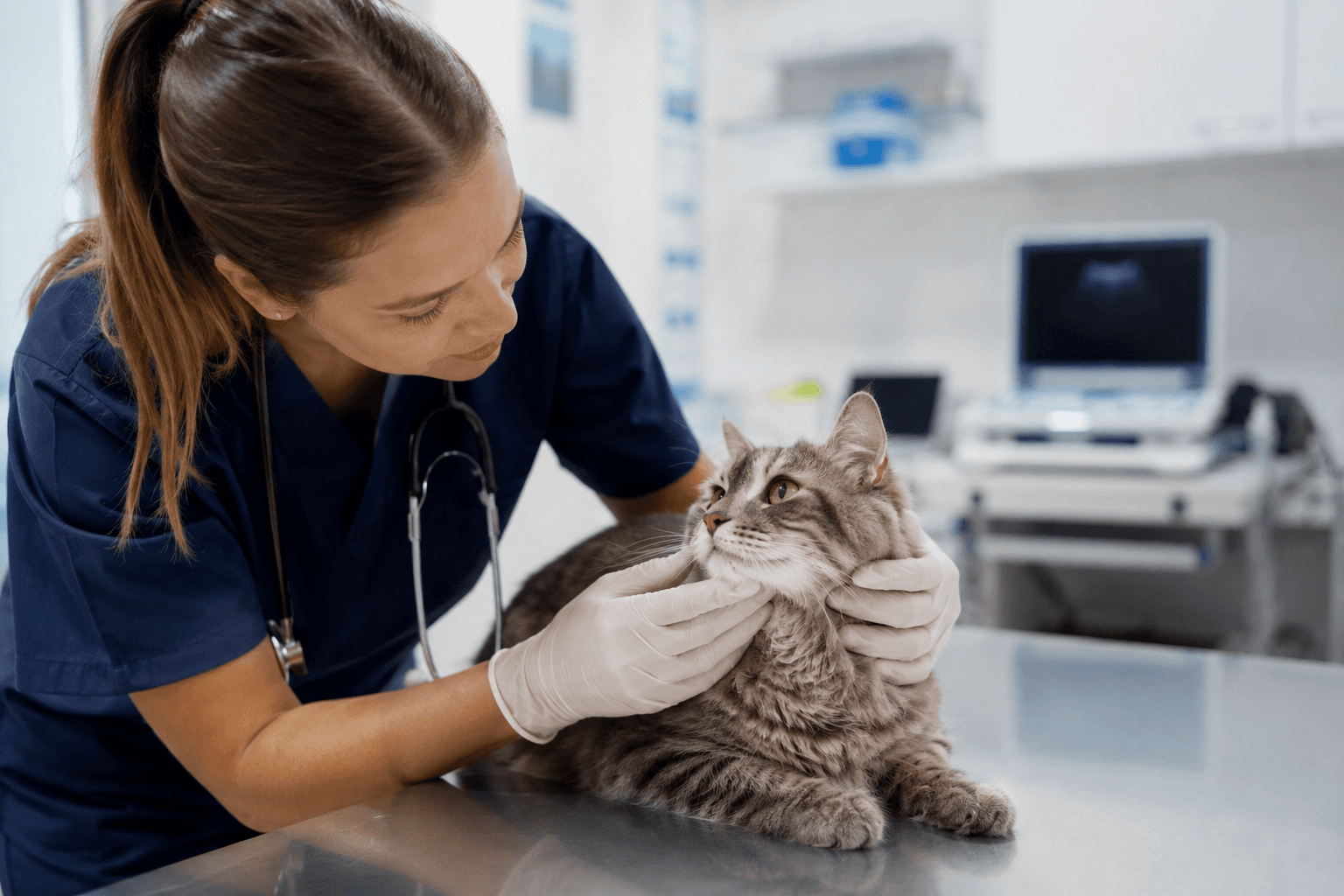
This is precisely why a deep understanding of feline nature isn't a luxury — it's a necessity. And a veterinarian specializing in cats knows how to read what your cat hides behind her outward calm.
🔬 The Difference Between a General Vet and a Feline Specialist
A general veterinarian is excellent for many situations and serves as the first line of defense for every pet. But there's a real gap when it comes to cats specifically.
Why? Because cats are not small dogs, and they're certainly not miniature humans.
Their anatomy is different, their response to medications is different, and the way their symptoms present is entirely different. Some medications that are completely safe for dogs are fatally toxic to cats — paracetamol (acetaminophen), for example, is a straightforward poison to a cat's system.
A feline specialist stands out through:
- 🧠 Deeper understanding of feline physiology and how a cat's body differs from other animals
- 🔍 Greater experience in reading the subtle symptoms cats quietly mask
- 💊 Precise knowledge of appropriate drug dosages for every feline age group
- 🤝 A calmer, more attuned approach that respects the sensitive nature of cats
This means a single visit to the right doctor can save you weeks of guessing and worry.
⚠️ 7 Signs Telling You "Your Cat Needs a Specialist Right Now"
Don't wait until things become unmistakably obvious. These warning signs call for a prompt consultation:
- 1️⃣ Sudden change in appetite — eating noticeably less or more than usual for more than two days
- 2️⃣ Drinking abnormal amounts of water — a classic indicator of kidney issues or diabetes
- 3️⃣ Change in litter box frequency — whether more or less than normal
- 4️⃣ Withdrawal and social isolation — a cat that constantly hides is telling you something
- 5️⃣ Change in movement patterns — less jumping, avoiding places she used to climb easily
- 6️⃣ Unusual discharge — from the eyes, nose, or ears
- 7️⃣ Change in vocalization or excessive meowing — especially in older cats
💡 Have you noticed your cat sitting in an unusual way or consistently preferring a specific posture? Cat sitting positions and meanings can be a golden key to understanding what your cat is feeling on the inside.
💻 Is a Remote Veterinary Consultation Enough?
Many cat owners ask this — and the honest answer is: yes, in a surprisingly large number of cases.
Not every situation requires loading your cat into a carrier, enduring a car ride, and sitting in a crowded waiting room. Many consultations can be handled with great effectiveness remotely, especially when it comes to:
- 🩺 Monitoring known chronic conditions
- 📋 Reviewing lab results and imaging
- 💬 Questions about nutrition, behavior, and vaccinations
- 😟 Reassuring a worried owner who's noticed a new symptom
Acute emergencies — fractures, accidents, severe bleeding — naturally require an in-person clinic visit.
The smart approach is to start with a book with veterinarian specializing in cats through a digital consultation. The vet assesses your cat's situation and guides you precisely: can this be handled remotely, or is an in-person visit necessary?
This is exactly what SCOTY offers — feline-specialist vets whose profiles you can browse, choose the right fit, and book your appointment directly from the calendar. You can then attach detailed photos and videos of your cat's condition before the session begins — so the vet reviews everything and arrives at your call fully prepared.

Common Cat Illnesses That Are Frequently Misdiagnosed
Your cat won't come to you and say "something hurts." She hides it, endures it, and carries on with her day. This causes some conditions to go unnoticed until they've progressed into something far harder to treat.
In this section, we shine a light on the most common feline diseases — the ones that tend to be misread or discovered too late — so you're fully equipped to catch them early. 🐾
🚨 Urinary Tract Problems — The Silent Killer
One of the most frequent cases a veterinarian specializing in cats encounters daily: urinary tract issues — specifically FLUTD, or Feline Lower Urinary Tract Disease.
Why is it particularly dangerous?
Because its early symptoms appear deceptively minor:
- Your cat visits the litter box more than usual but produces very little
- She sits in the litter for a long time without result
- She starts urinating outside the box in unusual spots
Many owners assume it's just "mood" or a "routine change." But in male cats especially, a complete urinary blockage can become a life-threatening emergency within just 24 to 48 hours.
What causes this condition?
- Excessive dry food (kibble) consumption without adequate water intake
- Stress and uncomfortable living environment
- Genetic predisposition in certain breeds
- Bacterial infections or bladder stones
The smart move: If you notice any change in your cat's bathroom habits — don't wait. A quick call with a specialist vet could save your cat's life. 🐱
🩸 Thyroid Disease and Diabetes in Senior Cats
Has your cat passed the seven-year mark? Then this section is especially important for you.
Middle-aged and older cats are prone to diseases that many owners don't notice until they've progressed significantly.
Hyperthyroidism:
Extremely common in cats over ten years old. And in a striking paradox, the early symptoms can seem almost positive:
- Your cat is eating more than ever — and you're happy about her appetite!
- She seems more active and energetic — and you think she's doing great!
- But she's simultaneously losing weight despite eating so much
This contradiction — increased appetite alongside weight loss — is the precise alarm bell you need to watch for.
Feline Diabetes:
Very similar to Type 2 diabetes in humans. The most telling symptoms:
- 💧 Intense thirst and consumption of large amounts of water
- 🚽 Frequent urination in large volumes
- 🦵 Noticeable weakness in the hind limbs and difficulty walking
- 📉 Gradual, unexplained weight loss
And if your cat has been sneezing repeatedly, don't dismiss it — cat sneezing can be a sign of a respiratory infection or other conditions that need an accurate diagnosis 🩺
🦠 Skin Conditions and Fungal Infections — Not Just a Hygiene Issue
One of the most common things that makes cat owners feel embarrassed: assuming their cat's skin problem means they've been negligent about cleanliness. That's completely untrue.
Cats are among the cleanest creatures on earth — they groom themselves almost constantly. But this doesn't protect them from:
1. Ringworm (Dermatophytosis):
- Despite the name, it's a fungus — not a worm
- Appears as circular, hairless patches on the skin
- Highly contagious and can spread to humans
- Very common in kittens and multi-cat households
2. Mange and Fleas:
- Ear mites cause intense itching and dark discharge inside the ears
- Fleas trigger hair loss and skin irritation even in strictly indoor cats
3. Allergic Skin Reactions:
- Can stem from food, cleaning products, or fragrances in the home
- Present as redness, persistent itching, or patchy bald spots
💡 If you notice your cat scratching more than usual or losing fur in specific areas — don't wait. Early diagnosis changes the outcome entirely.
👁️ Eye Inflammation and Upper Respiratory Infections
If you see your cat sneezing, notice discharge around her eyes, or hear her breathing differently than usual — you're likely looking at an upper respiratory tract infection.
These infections are very common in cats. The most frequent culprits:
- Feline Herpesvirus (FHV-1): Causes recurring eye inflammation and nasal discharge
- Feline Calicivirus (FCV): Can cause mouth ulcers and sudden-onset limping
- Bacteria like Chlamydia: Frequently responsible for conjunctivitis
Eye inflammation in cats is one of the most commonly asked-about conditions among cat owners — and it's generally very treatable once the correct cause is accurately identified.
Watch out for a very common mistake: Using human eye drops or antibiotics without a veterinary prescription. This can cause increased irritation or mask the real underlying condition instead of treating it.
🦷 Dental and Gum Problems — The Hidden Source of Chronic Pain
Did you know that over 70% of cats older than three years have some form of gum disease?
Even more alarming — most of them continue eating and playing normally, while living with a silent, chronic pain their owners know nothing about.
The most common dental issues in cats:
- 🦷 Tartar buildup: Hardens into bacteria that destroy the gums and travel through the bloodstream to the kidneys and heart
- 🔴 Gingivitis: Redness and swelling that makes eating painful
- 💔 FORL (Feline Odontoclastic Resorptive Lesions): Hidden erosion at the tooth root — intensely painful and invisible to the naked eye
Warning signs to watch for:
- Very strong, unpleasant breath
- Your cat chewing only on one side of her mouth
- Food dropping from her mouth while eating
- Pawing at or rubbing her face against the floor or wall
How to clean your cat's teeth is one of the most important preventive habits every cat-owning household should learn — and it's far easier than most people imagine when started early.
🆘 When to Reach Out Right Now
If you've noticed any of these symptoms in your cat and aren't sure where to begin, the easiest step you can take right now is to Ask VET through SCOTY directly.
You can attach photos or short video clips showing the symptoms before your session begins — and your vet will have reviewed them fully before your call starts, making every minute of your 30-minute session genuinely productive.
Or, you might look for a animal vet contact on classified websites like Haraj or similar platforms; however, it is highly recommended to verify their license and credentials before reaching out.
Nutrition and Behavior — What Every Cat Owner Needs to Know
A significant number of health problems that reach a vet's clinic actually trace back to something surprisingly simple: poor nutrition or a misunderstanding of cat behavior.
And these two factors are more interconnected than we might think — a properly nourished cat is healthier, calmer, and more behaviorally balanced. 🐾
Let's dive into the details that set a truly informed cat owner apart.
🍽️ Cats Are Not Small Dogs — The Right Nutrition Philosophy
This sounds obvious, yet most nutritional mistakes happen because owners unconsciously apply dog logic — or even human logic — to their cats.
A cat is an obligate carnivore.
This means her body was biologically built to rely on animal protein as its primary energy source — not starches or carbohydrates.
What this biological reality means in practice:
- 🥩 Cats need high animal protein in every meal — chicken, meat, fish, liver
- 💧 Cats in the wild don't feel strong thirst instincts — because they get moisture from their prey. This makes relying entirely on dry kibble a genuinely problematic long-term choice
- ❌ Excess carbohydrates are directly linked to obesity, diabetes, and urinary tract issues in cats
- 🐟 Canned tuna made for humans — which many owners believe is a treat — should never be given daily, as it lacks essential nutrients and contains far too much sodium
💡 The golden formula: wet food + always-available fresh water + high-protein kibble as a supplement — this is the ideal nutritional triangle for cats across most life stages.
📅 The Best Diet for Cats at Every Life Stage
Your cat's nutritional needs change substantially with every stage of her life. What works for a kitten may be completely inappropriate for an adult, and what a senior cat needs is entirely different again.
🐣 Nursing Stage (Birth to 4 Weeks):
Newborns need only their mother's milk during this phase. If the mother is lost or refuses to nurse, there are specially formulated kitten milk replacers — not cow's milk, which can cause severe diarrhea and dangerous dehydration.
For detailed guidance, see the best food for nursing cats to understand exactly how to navigate this sensitive stage if intervention becomes necessary.
🐱 Kitten Stage (Weaning to One Year):
- Kitten-formula food — higher in protein and calcium to fuel rapid growth
- Small, frequent meals (3 to 4 times daily)
- Introduce a variety of textures and flavors early to prevent finicky eating later
🐈 Adult Stage (One to Seven Years):
- Transition to adult food gradually over at least two weeks
- Monitor weight regularly — obesity is the most common issue at this stage
- Reduce to two meals daily with controlled portions
🦳 Senior Stage (Seven Years and Older):
- Senior-formula food — lower in phosphorus to protect kidney function
- Increase wet food ratio to support hydration and kidney health
- Monitor weight in the opposite direction — at this stage, unexplained weight loss becomes the warning sign, not weight gain
🧠 Strange Behavior — When Is It a Medical Issue and When Is It Just Personality?
This question occupies the minds of every cat owner: "Is what my cat is doing normal… or should I be worried?"
The honest answer: it depends heavily on context and sudden change.
A behavior your cat has always exhibited — even if it seems unusual — is generally normal for her personality. A sudden change in an established behavior is the real signal to pay attention to.
Normal behaviors that alarm new cat owners:
- 😴 Sleeping 12 to 16 hours a day: Completely normal for cats
- 🌀 Kneading ("making biscuits"): The alternating paw-pressing motion — a comfort behavior inherited from kittenhood nursing
- 🎁 Bringing "gifts" you didn't ask for: A natural hunting instinct — actually an expression of love and care in feline language!
- 🌙 Being active at dawn and dusk: Cats are naturally crepuscular — most active around dawn and twilight
Behaviors that warrant a Vet consultation:
- 🔴 Sudden aggression with no prior history — may indicate hidden pain
- 🔴 Excessive, continuous vocalizing especially at night — common with thyroid disease and feline cognitive dysfunction
- 🔴 Suddenly urinating outside the litter box — almost always a medical issue, not "revenge"
- 🔴 Over-grooming to the point of bald patches — a sign of anxiety or skin allergy
- 🔴 Consistently sitting near water sources or the sink — a classic indicator of kidney problems or diabetes
🤝 Handling Shy or Aggressive Cats
One of the most frequently asked questions owners bring to a feline specialist vet: "My cat is terrified of everything — what do I do?"
Or the opposite: "My cat attacks anyone who comes near her!"
Both patterns — extreme shyness and aggression — have distinct root causes and practical solutions. The first step is always understanding what's driving the behavior.
For shy, withdrawn cats:
- Give her space and time — never force interaction
- Start by being present near her without making direct eye contact — cats interpret prolonged staring as a threat
- Use a wand toy rather than your bare hand in the early stages of bonding
- Consider synthetic feline pheromones (like Feliway) to create a calmer environment
When cats get used to their owner is a question many new cat parents ask — and the timeline genuinely varies from cat to cat, but patience and consistency are always the master key.
For aggressive cats:
- Unexplained aggression may be hidden pain — a medical exam always comes first
- Never use physical punishment — it intensifies aggression and solves nothing
- Play-triggered aggression is very common in young cats — the solution is plenty of toys and a consistent play schedule
💬 If you're puzzled by your cat's behavior and can't tell if it's normal or concerning, SCOTY offers a powerful feature: you can Ask A Vet and attach video clips showing the behavior that worries you — the vet reviews them before your session and arrives with precise, specific answers rather than generic advice.

How to Find the Right Vet for Your Cat — and What to Ask Them
We've arrived at the most important question of all: How do you find the vet your cat actually deserves?
Not just any vet — but the one who genuinely understands feline nature, handles cats with the care their sensitivity demands, and gives you honest answers rather than vague reassurances.
This section gives you a clear roadmap to make that choice with confidence. 🐾
🔎 What to Look for in a Veterinarian Specializing in Cats
Not all veterinarians have equal experience with cats — and that's not a criticism of anyone, it's simply a professional reality.
Some vets specialize in large animals, others primarily in dogs, and some have developed genuinely deep expertise in cats specifically.
Here's what you're actually looking for:
- 🩺 Documented feline experience: What percentage of their patients are cats? Have they trained at feline-focused centers?
- 📚 Continuous learning: Veterinary medicine evolves rapidly — a good vet stays current
- 🤲 A calm, unhurried approach: Cats sense tension immediately. A vet who moves slowly and speaks gently dramatically reduces the stress your cat experiences
- 💬 Clear communication: Explains diagnoses in language you understand, and answers your questions with genuine interest
- 📋 Interest in medical history: A thorough vet asks about your cat's age, health background, and home environment before offering any opinion
💡 These exact qualities are what made the remote consultation model so transformative — it lets you compare vets and choose based on genuine fit, not just geographic convenience.
If you are looking for available options in your area, you can search for the nearest veterinarian in your city, or simply consult SCOTY vets with ease
❓ The Smart Questions to Ask Before Any Appointment
An informed cat owner doesn't walk into a vet appointment empty-handed — they arrive with specific questions that help evaluate the vet and make the most of every minute of the consultation.
Questions to ask about the vet:
- What percentage of your patients are cats compared to other animals?
- Do you have experience with my cat's specific breed? (if she's a purebred)
- How do you handle emergencies, and what's your protocol if I need urgent follow-up?
Questions to ask about your cat's condition:
- What's the most likely diagnosis based on these symptoms? What are the possible alternatives?
- Do we need bloodwork or imaging to confirm the diagnosis?
- What treatment options are available — and what are the pros and cons of each?
- What signs of improvement should I watch for, and when should I contact you again?
- Are there any dietary or environmental changes I should make at home?
Important questions that often get forgotten:
- Is this medication safe alongside anything else my cat is currently taking?
- Is this condition contagious to other cats in the household? Or to humans?
- What preventive protocol is appropriate for my cat's current age and lifestyle?
These questions transform a vet visit from a passive appointment into a genuine partnership in your cat's care. 🤝
And if you have an immediate question that can't wait, the Normal vet Q&A resource covers the most common questions cat owners ask.
🌐 Remote Veterinary Consultations — A Revolution in Cat Care
Not long ago, a veterinary consultation meant: loading your cat into a carrier, a stressful car ride, and sitting in a waiting room filled with unfamiliar smells and sounds that would exhaust your cat before the examination even began.
Today, that picture has changed entirely.
Why does remote consultation suit cats so exceptionally well?
Cats especially — more than almost any other pet — suffer from what's known as "white coat syndrome" or clinic environment anxiety. Blood pressure spikes, behavior changes, and some symptoms actually disappear or intensify purely because of stress.
When a cat is at home — her safe, familiar space — she's relaxed and behaving naturally. This gives the vet a far more accurate and honest picture of her true condition.
Conditions handled exceptionally well through remote consultation:
- ✅ Monitoring chronic conditions like diabetes and kidney disease
- ✅ Evaluating new symptoms and assessing their urgency
- ✅ Reviewing and explaining lab results and imaging
- ✅ Nutrition, behavior, and vaccination consultations
- ✅ Obtaining a prescription for a known, monitored condition
- ✅ Post-surgery or post-treatment follow-up and reassurance
Conditions that require an in-person clinic visit:
- ❌ Acute emergencies (fractures, bleeding, severe respiratory distress)
- ❌ Surgical procedures
- ❌ Certain diagnostics requiring specialized equipment
🐾 SCOTY — Your Cat's Veterinary Clinic in Your Pocket
Everything we've discussed throughout this guide — the importance of specialization, the value of accurate diagnosis, your cat's comfort and well-being — all of it comes together in one seamless experience on SCOTY.
Here's how your experience unfolds from start to finish:
Step One — Choose Your Own Vet:
Browse detailed profiles of specialist feline veterinarians, read about their experience and areas of expertise, and choose who feels right for your cat — exactly the way you'd choose your own doctor.
Step Two — Book Directly from the Calendar:
No hold music, no back-and-forth messages. Simply select the time that works for you and confirm your appointment instantly
Step Three — Attach Photos and Videos Before the Session:
This feature genuinely changes everything. Before your appointment, upload photos and short video clips showing the symptoms that concern you — your cat sneezing, walking differently, refusing food. The vet reviews everything carefully before your call begins, arriving fully prepared.
Step Four — A Full 30-Minute Call With Your Vet:
Half an hour of undivided attention on your cat alone — discussing the diagnosis, asking every question on your mind, and walking away with a clear, actionable care plan.
Step Five — Your Prescription Ready in Seconds:
If medication is needed, you receive a certified electronic prescription that can be downloaded and filled online immediately — no additional errands required.
Step Six — A Permanent Medical File for Your Cat:
Every report, every diagnosis, every prescription — saved in a complete medical file inside the app. Whenever you need to review your cat's health history, it's right there at your fingertips.
And the most valuable feature of all — One Full Week of Free Follow-Up:
After your consultation ends, the care doesn't stop. You receive an entire week of free follow-up through in-app chat, available around the clock — ask questions, clarify concerns, seek reassurance. And if you need more, an additional follow-up call is included at no extra charge.
This isn't just an app — it's a genuine care partner for your cat. 💙
🌟 Final Thoughts — Your Cat Deserves the Very Best
Throughout this guide, we've seen together what makes cats truly exceptional — and what it takes to care for them properly:
- They hide their pain, so we need to be more observant 👀
- Their conditions develop quietly, so regular monitoring is essential 🩺
- Their nutritional needs are genuinely unique, so real knowledge matters 🍽️
- Their behavior carries important messages, so we need to learn to read them 🧠
And the good news? You no longer have to navigate any of this alone or spend hours searching for answers.
A veterinarian specializing in cats is now just one click away — available for you and your cat any time, from the comfort of your home, with genuine expertise and real dedication.
Because your small cat — the one who trusts you completely and chooses your arms as her safe haven — deserves the very best care you can give her. 🐱🤍