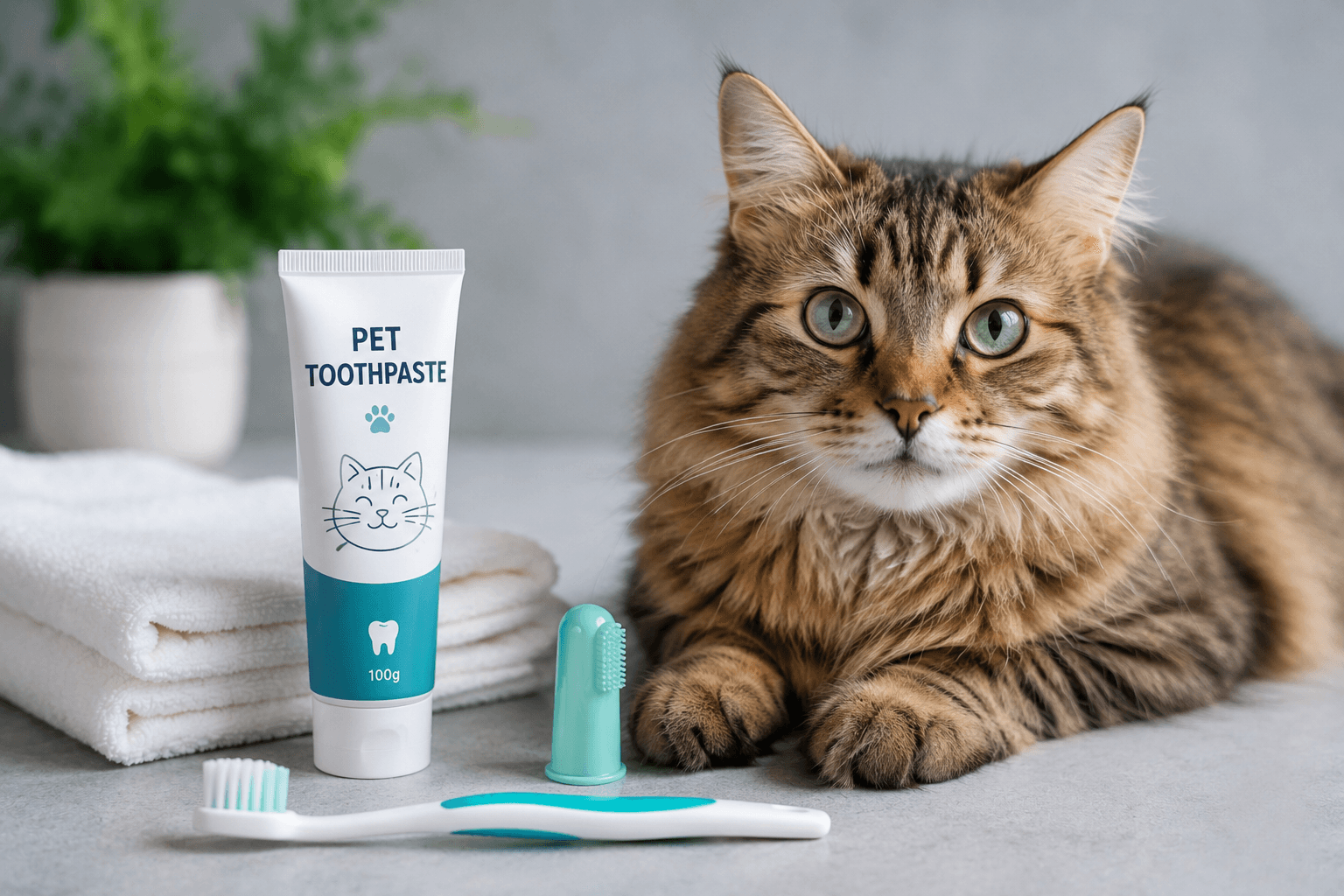
Have you ever caught an unusual smell from your cat's mouth while petting her? That small sign can hide a bigger issue, and it's often what sends owners searching for the right way to clean their cat's teeth before things get worse.
With SCOTY, your remote veterinary consultation clinic, you get a confident, medically accurate answer from a specialized vet without any waiting.
In this article, we'll walk you step by step through how to clean your cat's teeth safely at home, along with the key warning signs that mean it's time to see a vet.
If you need extra guidance or notice anything unusual in your cat's mouth, you can book an appointment with Vet and speak to him right now !
Why Cleaning Your Cat's Teeth Is a Necessity 🦷
How to clean cat teeth is not a topic you read about when you have nothing better to do — it is practical science that protects your beloved pet from real pain that can reach their heart and kidneys, not just their mouth.
In this comprehensive reference article, you will find everything you need: the science behind it, the practical steps, the right tools, and the special cases that deserve a different kind of attention.
Let's get started together. 🐾
Many pet owners believe that cats, being wild animals by nature, "take care of their own teeth."
That is completely wrong.
Wild cats eat whole prey, and the bones and rough tissues act as a "natural toothbrush." But your domestic cat eats soft food or kibble, and nothing plays that role for them.
The result? A daily build-up of bacteria — with no end in sight.
What Happens Inside Your Cat's Mouth Every Day?
Picture it this way:
After every meal your cat eats, tiny food particles begin to accumulate on the surface of the teeth and between the gums and the tooth.
Within just a few hours, bacteria feast on those remnants and form what is known as dental plaque — a nearly transparent, sticky layer that clings to the tooth.
If plaque is left without cleaning, it transforms within 24 to 48 hours into tartar (calculus) — a hard, yellow-to-brown layer that can no longer be removed with a brush and requires a veterinary professional.
From there, a chain of problems begins:
- 🔴 Gingivitis: The gums become red, swollen, and painful to the touch.
- 🔴 Advanced Periodontal Disease: Bacteria attack the bone that holds the tooth, and the tooth starts to loosen.
- 🔴 Tooth Loss: The tooth falls out, and your cat suffers in silence because they cannot cry from pain in a way you would understand.
- 🔴 Bacteria Entering the Bloodstream: And this is the real disaster — more on that later.
🧡 Remember: Your cat will not tell you they are in pain. Cats instinctively hide pain as a defensive mechanism inherited from their wild ancestors.
How to Clean Cat Teeth: What SCOTY VETs Say?
Veterinarians who specialize in dental medicine all agree on one point:
Daily brushing is the gold standard for prevention.
But they add, realistically: "Even brushing three times a week is far better than nothing."
The approach to how to clean cat teeth that experts recommend is built on three pillars:
- Consistency: It is not a rare event but a routine woven into your cat's life.
- The Right Tools: A brush designed for cats and a special veterinary toothpaste (human toothpaste is highly toxic to cats due to fluoride and xylitol).
- Psychological Preparation: A stressed cat = impossible cleaning. A relaxed cat = a calm experience for both of you.
Studies show that cats whose teeth are cleaned regularly live longer lives and need far fewer professional cleaning sessions under anesthesia at the vet.
Signs That Say: "My Cat's Teeth Need Help Now!" ⚠️
Before we get to the practical steps, here are warning signs every pet owner must know:
🔍 Check These Things Right Now:
- Breath: An unusually pungent or foul odor? That is bacteria — not a "normal cat smell."
- Gum Color: Gums should be a healthy pink. If you see redness, whiteness, or dark brown, that is a sign that needs attention.
- Visible Tartar: Can you see a yellow or brown layer at the base of the teeth? Especially on the canines and back molars?
- Changes in Eating Habits: Is your cat eating only on one side? Eating hesitantly? Refusing dry food they used to love?
- Unusual drooling or faint traces of blood in the water bowl.
- Lethargy and Withdrawal: A cat in dental pain often becomes withdrawn and less interactive.
💡 Real-Life Example: If you notice that your cat — who used to run to the food bowl with enthusiasm every morning — now approaches it slowly and sniffs it without eating properly, that is most likely mouth pain, not a "mood."
When to Act Immediately
If you notice any of the following signs, do not wait:
- ✅ A broken or loose tooth
- ✅ Obvious swelling on the face or under the eye (may indicate a dental abscess)
- ✅ Refusal to eat for more than 24 hours
- ✅ Visible blood from the mouth
In these cases, contacting a veterinarian cannot be delayed.
And if you are wondering: who do I call? How do I describe the situation accurately? SCOTY platform lets you connect with a specialized veterinarian remotely, and you can attach photos or videos of your cat's teeth directly before the session so the vet is fully informed before you even begin. You can also always browse our Q&A With VET educational articles if you want to understand any symptom before making your decision.
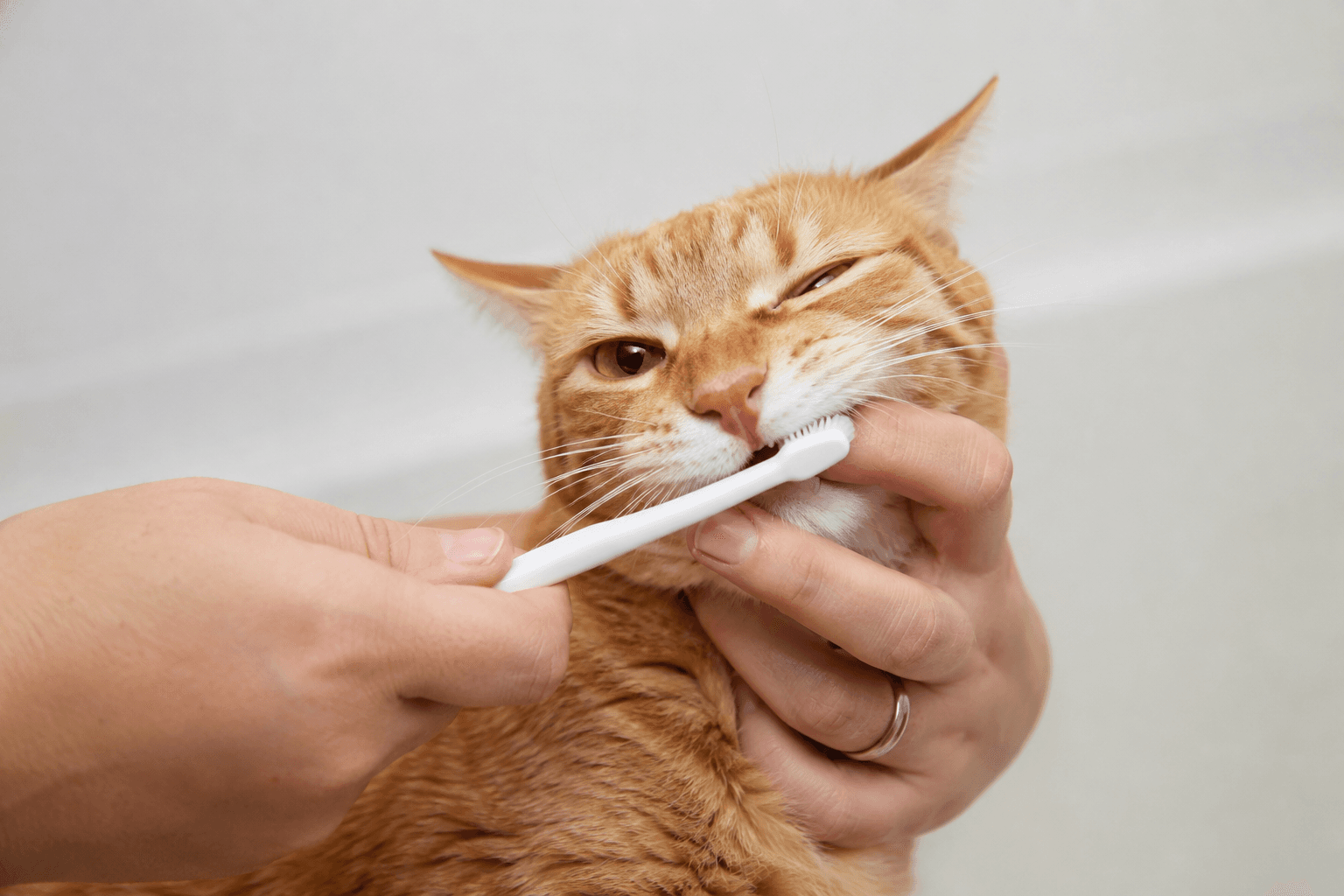
The Practical Step-by-Step Guide 🪥
Many pet owners try to clean their cat's teeth for the first time the same way they brush their own.
They pick up the brush, approach the mouth, and within seconds the cat turns into a ball of claws and fury. 😅
The problem is not your cat. The problem is the sequence.
Successful cleaning begins days — even weeks — before you ever touch your cat's mouth. Here is how.
Before You Start: The Tools You Need
Before any practical step, make sure you have the right tools. The wrong choice here can hurt your cat or make the experience painful for them.
✅ What You Need:
- A Cat Toothbrush: Available in three forms:
- A small-handled brush (like a children's toothbrush but smaller)
- A finger brush (slips over your fingertip) — Best for beginners
- A soft piece of gauze wrapped around your finger as a temporary alternative at first
- Veterinary Toothpaste for Cats: Comes in flavors cats love, like chicken or fish, which makes your cat far more cooperative.
- A Small, Tasty Treat as a Reward: You will need this to reinforce positive behavior after each session.
🚫 What to Strictly Avoid:
- Human Toothpaste: Contains fluoride and xylitol, both of which are toxic to cats even in small amounts.
- Large or Hard Toothbrushes: They hurt sensitive gums.
- Apple Cider Vinegar or Any Home Remedies: No science supports their use, and some are harmful.
💡 Golden Tip: Before buying, look into the best types of food for cats that suit your pet, because the type of food itself affects how much plaque accumulates daily. Dry food (kibble), for instance, reduces build-up more than wet food.
Preparing Your Cat Psychologically Before Cleaning
Most pet owners skip this stage, and the result is a cat that refuses cleaning entirely for months.
The golden rule here: "Never surprise your cat."
A cat is an animal that lives on routine and predictability. Anything new and sudden = a threat in their mind.
🗓️ Preparation Plan (7–14 Days):
Days 1–3: Touch Only
- In a quiet, relaxed moment, gently place your hand on your cat's face.
- Softly run your finger along the outside of their lips — outside only.
- Stop before you sense any tension. Always end the session on a positive note.
- Reward immediately with a treat they love or a petting session.
Days 4–6: Introducing the Mouth Area
- Begin gently touching the inside of the lips.
- Let them sniff the veterinary toothpaste and taste it as a "little snack."
- Do not introduce any tool yet.
Days 7–10: The Finger Brush
- Put on the finger brush and apply a tiny amount of toothpaste.
- Wipe it along the outer surface of the front teeth only, with gentle circular motions.
- 15 seconds is enough at the start. Do not rush.
Days 11–14: Gradual Expansion
- Begin reaching the side and back teeth.
- Gradually increase the time until you reach a full minute.
🧡 This same gradual approach is used when training young kittens for any new behavior — and the principle is always the same: trust is built slowly, never forced.
Also, cats that have had negative experiences with humans need more time to get used with their owner in any new routine, so do not compare your cat to others.
The Practical Steps for Daily and Weekly Cleaning
Once you have psychologically prepared your cat, here is the full routine:
⏱️ Daily Cleaning (3–5 Minutes):
Step 1 — Choose the Right Timing
- After a light meal and a play session: your cat is relaxed and content.
- Avoid: right after waking up, or when your cat is hungry, stressed, or sleeping.
Step 2 — A Comfortable Position
- Place your cat on your lap or on a stable elevated surface.
- Approaching from behind or from the side is better than a direct face-to-face (direct eye contact feels like a threat to them).
- Let your body surround them calmly without them feeling restrained or trapped.
Step 3 — The Cleaning Itself
- Gently lift the upper lip with one finger.
- Hold the brush at a 45-degree angle toward the gum line.
- Small circular motions along the outer surface of the teeth.
- Start with the canines and front molars, then work toward the back.
- Inner tooth surfaces: Your cat's tongue naturally cleans these to some extent, so focus on the outer surfaces.
Step 4 — Always End Positively
- End the session before your cat gets tired or stressed.
- Immediate reward: a treat, a massage, kind words.
- You are teaching them: "This routine ends with something wonderful."
📅 Suggested Weekly Schedule:
| Frequency | Goal |
|---|---|
| Daily (ideal) | Remove plaque before it turns into tartar |
| 3 times a week (very acceptable) | Significantly reduce build-up |
| Once a week (minimum) | Better than nothing, but insufficient on its own |
Common Mistakes Pet Owners Make (Watch Out!) ❌
After years of answering pet owner questions, these are the most repeated mistakes:
❌ Mistake #1: Forcing and Restraining Forcibly holding down your cat embeds in their mind that cleaning = danger. The result? Escalating resistance every single time. Leave the session and try again later if you sense tension.
❌ Mistake #2: Waiting Until a Problem Appears Many owners do not think about teeth until they smell something foul or see blood. By this point, tartar has already formed and home cleaning will not be enough.
❌ Mistake #3: Breaking the Routine Just one week without cleaning is enough for noticeable amounts of plaque to build up. Consistency is the real key.
❌ Mistake #4: Neglecting the Back Molars Most owners clean only the visible front teeth, but the teeth most prone to tartar are the upper back molars, which are difficult to see.
❌ Mistake #5: Relying on Supplements Instead of the Brush Dental chews and water additives are useful as supplemental support only — they are not a substitute for manual brushing.
🌟 If you are looking for a complete lifestyle plan for your pet, you will find a comprehensive guide in the right way to raise cats that ties all these aspects together into a healthy, balanced daily routine.
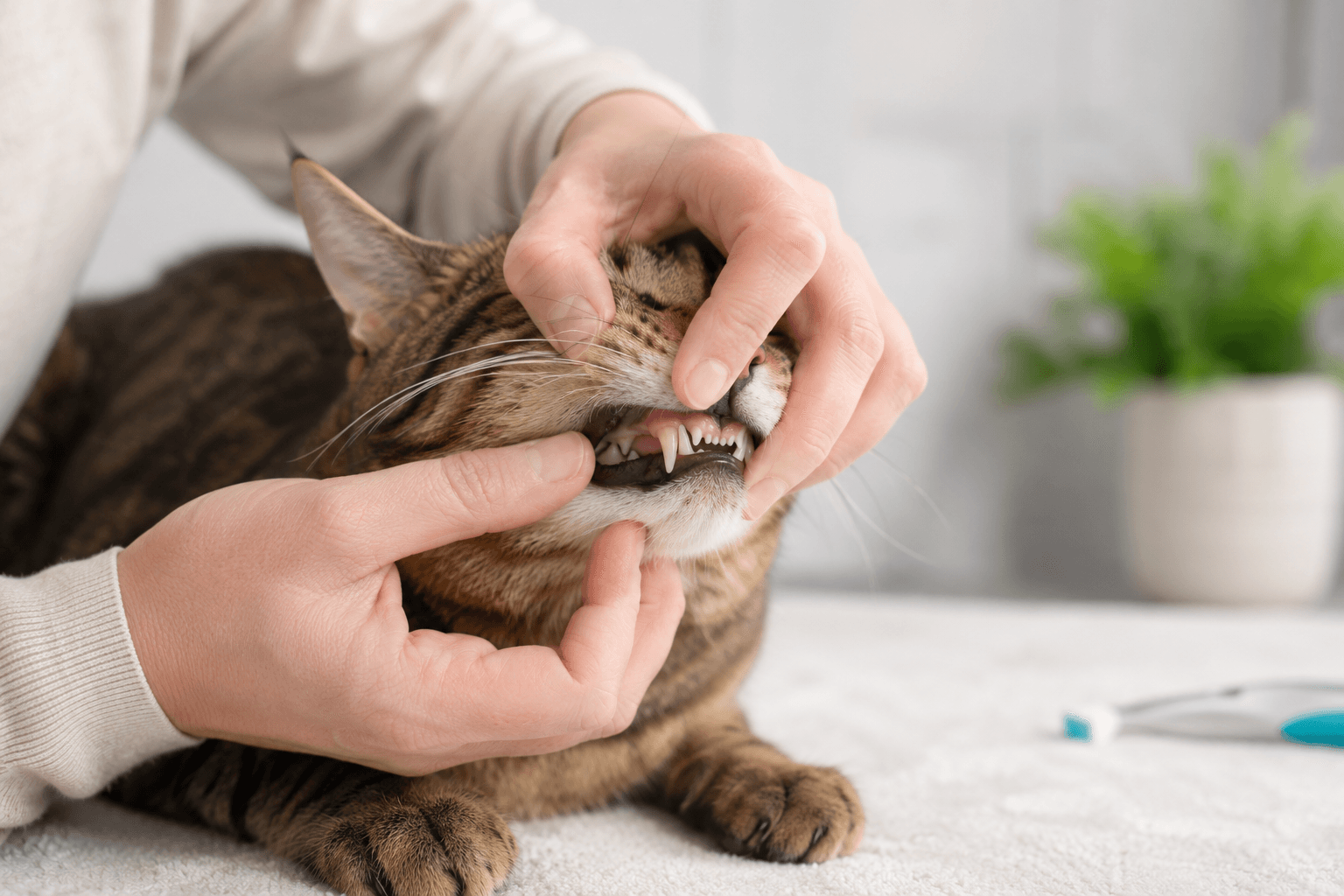
How to Clean Cat Teeth in Special Cases 🐱
What we learned in the previous section works for most cats under normal circumstances.
But reality is far more varied than that.
Your cat may be a tiny kitten building their habits right now, a fearful cat who will not allow anyone near their face, or a lifelong companion who has passed the age of ten and needs a completely different kind of handling.
This section is written specifically for those cases. 🧡
How to Build the Habit for Kittens
If your cat is between two months and one year old, you are in the best possible window for establishing this routine.
A kitten's brain at this stage is like a sponge. Everything they learn now becomes "normal" to them in the future.
🐾 How to Start with Kittens Specifically:
- Baby teeth do not need intensive cleaning in themselves, but the main goal is getting the mouth used to being touched.
- Let them sniff the brush and play with it like a toy. This is not wasted time — it is a direct investment.
- Start by touching the gums with just your finger during play or cuddling, as if you are giving their face a little massage.
- When the permanent teeth appear (between 3–6 months of age), real cleaning begins smoothly because they are already familiar with the routine.
💡 Real-Life Example: Imagine trying to teach a young child to brush their teeth. If you let them play with the brush first and watch you use it, they will happily imitate you. A young kitten works on almost the same principle.
The key difference between kittens and adult cats in this context is the absence of acquired fear. A young kitten has not had negative experiences yet — so do not give them a reason to fear from the very beginning.
And if you are in the early stages of caring for a new kitten, you will find a comprehensive guide in training young kittens that covers all the early learning stages with a gradual, enjoyable approach.
Fearful or Aggressive Cats: Safety First 🛡️
This group requires double the patience and a deeper understanding.
A cat that lashes out when you approach their mouth is not being mean — they are scared. And fear in cats shows up either as flight or as attack, and both carry the same message: "I do not feel safe."
Before anything else, understand their body language:
- Flat ears pressed back = high tension — stop immediately.
- Tail thumping the floor forcefully = a final warning before attack.
- Direct staring with dilated pupils = ready to defend.
- Low, compressed body = intense fear.
Understanding these signals is not a luxury — it is essential for both your safety and theirs. You will find a deeper explanation of these signals in our article on understanding cat language, which is an important reference for any owner who wants genuine communication with their pet.
🔑 Strategy for Dealing with a Fearful Cat:
Phase One — Building General Trust (Before the Teeth): Never start with the mouth. Begin with short sessions of general touch on the head, cheeks, and neck, and end before any tension builds. Repeat this daily for weeks if needed.
Phase Two — Very Gradual Introduction:
- Put veterinary toothpaste on your fingertip and let them taste it voluntarily — without holding their face.
- When they begin approaching you on their own to taste it, that is significant progress.
Phase Three — Touching Around the Mouth: Only when they are completely relaxed with your hand on their face, begin gently touching the outside of their lips.
⚠️ Important Warning: If your cat shows intense aggression at any attempt to touch their face, do not ignore this. There may be hidden pain in the mouth itself that is causing the aggression — not just a personality trait.
Also, a cat's sitting position during a cleaning session makes a big difference. A cat who is sitting in a relaxed, open position is far less tense than one who feels trapped in an uncomfortable posture.
Senior Cats: Very Special Considerations 🐈
A cat that has passed seven years of age officially enters the "senior" stage in veterinary medicine.
This stage brings entirely different challenges:
What Changes with Age:
- Gums become more sensitive and fragile: Very light pressure is required, and a soft finger brush is the best choice.
- Tartar may have been accumulating for years: Home cleaning maintains the current state, but it cannot remove old tartar.
- Advanced gum disease is more common: And it may be painful enough to make home cleaning impossible until the pain is treated first.
- Joints and muscles are less flexible: Shorter, more frequent sessions are better than one long session.
🩺 The Golden Rule for Senior Cats:
Before starting any cleaning routine with an older cat whose teeth have never been cleaned, consult a veterinarian first.
Why?
There may be accumulated tartar, hidden inflammation, or a loose tooth in their mouth — and cleaning over these conditions without treating them first can cause additional pain and complicate things further.
The vet may recommend a professional cleaning session under light anesthesia first, after which you maintain the results at home.
If you want a quick specialist opinion without stressing your older cat with a clinic visit, you can book a consultation with a vet through the SCOTY app, and attach clear photos of your cat's teeth directly before the session so the vet can see the situation themselves and guide you accurately.
When Is Home Cleaning Not Enough? 🏥
This is a question many pet owners ask, and rarely find a clear answer to.
The short answer: Home cleaning prevents and maintains — but it does not treat.
Cases That Require Professional Veterinary Cleaning:
- ✅ Visible tartar (yellow or brown layer on the teeth)
- ✅ Redness or bleeding in the gums when touched
- ✅ Foul breath despite regular cleaning
- ✅ Loose or broken teeth
- ✅ A cat whose teeth have never been cleaned and who is older than 3 years
- ✅ Senior cats before starting any home routine
What Happens During a Professional Veterinary Cleaning:
The pet is placed under light, safe anesthesia because deep cleaning below the gum line is painful and cannot be performed on an awake cat. Tartar is then removed using an ultrasonic scaler, and the teeth are polished to reduce future plaque adhesion.
How Often Is This Needed?
A cat whose teeth are cleaned daily at home may not need professional cleaning for 2–3 years or even less frequently. A cat that is never cleaned at home may need it annually or more.
The math is simple: a few minutes daily now = savings in time, cost, and pain later.
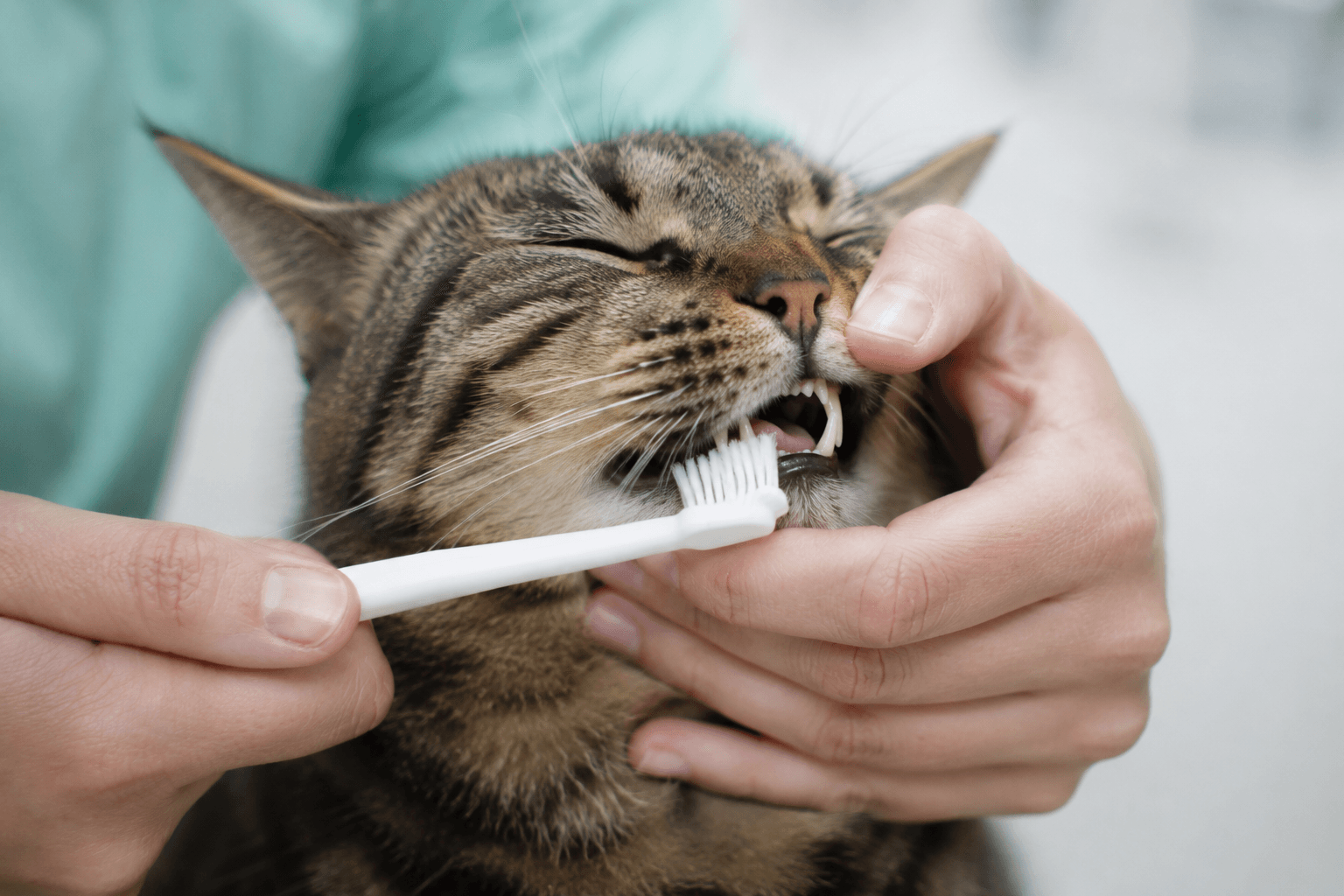
Dental Health Is Part of Your Pet's Overall Wellbeing 💚
We have reached the final section — and it is the most important from a comprehensive medical perspective.
Everything we have learned so far has been directly about the mouth and teeth.
But the scientific truth tells us something far deeper:
Your cat's mouth is not an isolated island. It is the gateway to their entire body.
And what happens behind those two small lips can affect their heart, kidneys, liver — and even their eyes.
Let us understand this together. 🧬
The Connection Between Teeth, Heart and Kidney Disease
This information surprises many pet owners the first time they hear it.
The bacteria that accumulate in your cat's mouth are not limited in their effect to just the teeth and gums.
When gum disease advances and worsens, the bacteria find their way through the tiny blood vessels in the inflamed gums directly into the bloodstream.
From there, they travel to three major organs:
❤️ The Heart: Veterinary studies have established a clear link between chronic gum disease and endocarditis — inflammation of the inner lining of the heart muscle. Cats suffering from advanced gum disease show higher rates of heart rhythm disorders.
🫘 The Kidneys: The kidneys are an inherently sensitive organ in cats, and they are the most vulnerable to bacteria carried through the blood. Chronic Kidney Disease — one of the most common diseases in adult cats — is closely associated with poor oral health over the long term.
🔬 The Liver: To a lesser but documented extent, bacteria can cause liver inflammation that manifests as gradual weight loss and general lethargy, which many owners mistakenly interpret as "normal aging."
🧡 Remember: Your cat cannot tell you their heart is struggling or their kidneys ache. But preventing all of this may start simply with a small toothbrush and three minutes a day.
Proper Nutrition and Its Impact on Oral Health 🍽️
Many pet owners think of dental health and nutrition as two completely separate topics.
But in reality, they are two sides of the same coin.
How Does Food Affect Your Cat's Teeth?
- Wet Food (canned/pouches): Delicious and loved, but it sticks to teeth more and accelerates plaque build-up if not accompanied by regular cleaning.
- Dry Food (kibble): The hard pellets create slight friction on the tooth surface during chewing, which reduces build-up somewhat. But do not rely on it alone as "natural cleaning" — it is not sufficient on its own.
- Foods High in Sugars or Elevated Starches: Feed bacteria and significantly accelerate plaque formation.
- Healthy Dental Treats: Useful as a supplement, but do not replace the brush.
The Hydration Connection: Cats that drink enough water naturally clean their mouth more. A water fountain instead of a static water bowl encourages cats to drink notably more.
If you want a deeper understanding of how to build a complete dietary plan that supports your cat's dental health and overall health together, our article on cat nutrition answers this in precise detail.
Eye Discharge in Cats and Oral Health 👁️
This connection surprises most pet owners when they hear it.
But it is scientifically documented and anatomically logical.
Why Are the Eyes Connected to the Teeth?
Cats have a nasolacrimal duct that connects the eye to the nasal cavity, and the nasal cavity is anatomically very close to the roots of the upper teeth — especially the upper fourth premolar.
When an infection develops around the roots of that specific tooth, the infection can spread to the area under the eye and cause:
- Visible swelling under the eye or on the cheek
- Excessive or abnormally colored eye discharge
- In advanced cases: a fistula appearing as a small wound under the eye
For this reason, when a veterinarian sees persistent eye discharge that does not respond to topical treatment, one of the first things they examine is the upper back teeth.
👁️ If you are noticing repeated or abnormal discharge from your cat's eyes, our article on treating eye discharge in cats guides you in understanding when discharge is normal and when it requires medical intervention — and what its potential connection to dental health might be.
SCOTY Is with You From Cleaning to Diagnosis 🐾
Your cat deserves care that does not stop at the boundaries of their teeth.
And you as a pet owner deserve to have specialized support available whenever you need it — without waiting, and without stressing your pet with clinic trips every time a concern arises.
That is exactly what we built at SCOTY.
How Does SCOTY Support You on Your Cat's Dental Health Journey?
When you notice any sign that worries you — whether an unusual odor, a change in eating habits, or a different gum color — you do not need to wait weeks for an appointment or drive a stressed cat to a distant clinic.
Here is what you can do right now:
- 📋 Browse the profiles of specialized veterinarians and choose the one you feel comfortable with personally, then book your appointment directly from the calendar.
- 📸 Attach photos or videos of your cat's teeth or any symptom you notice before the session begins, so the vet arrives at the call fully informed about the case.
- 📞 A full 30-minute call with the vet to discuss everything in depth — from diagnosis to the treatment plan, to answering every question on your mind.
- 💊 A certified electronic prescription that can be downloaded and filled online directly, if your cat needs medication.
- 📁 Full documentation of the case report in your pet's medical file inside the app — a permanent reference for every vet who follows up with them in the future.
- 🌟 And most importantly: A free follow-up period via chat around the clock for a full week after every session, plus another free follow-up call — because we know the questions do not stop when the call ends.
💚 Your cat's health does not need to be a battle you fight alone. You can book an appointment right now and surround your pet with the care they deserve — with one tap, from the comfort of your home.
Article Summary: all about How to Clean Cat Teeth 📝
Your cat lives in the present and trusts you completely in every moment.
They do not know their teeth might cause them pain later. They do not know the bacteria in their mouth affects their heart and kidneys.
But you know now.
Here is a summary of everything we covered together:
- 🦷 Plaque turns into tartar in just 24–48 hours — prevention is far easier than treatment.
- 🪥 The finger brush and veterinary toothpaste are your essential tools, and psychological preparation is the key to success.
- 🐱 Every cat is a special case: kittens need habit-building, fearful cats need trust, senior cats need a medical assessment first.
- ❤️ Oral health protects the heart, kidneys, and eyes — it is not merely a cosmetic matter.
- 🌟 Regular home cleaning + periodic veterinary check-ups = comprehensive, integrated protection.
Start today. One minute, one brush, and one cat who deserves all of this attention. 🐾