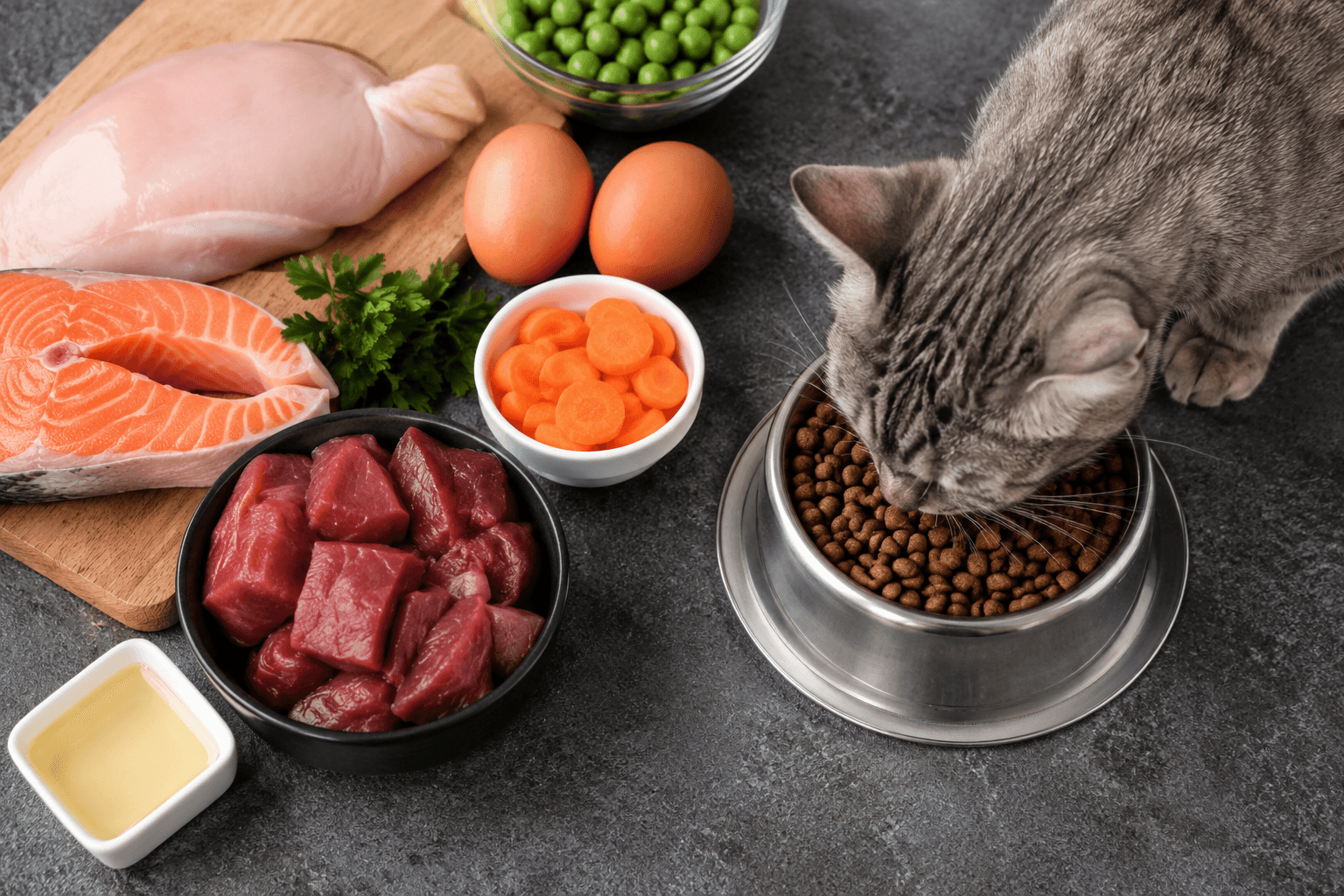
Every time you fill your cat's bowl, have you ever paused to wonder if what's inside it truly meets her needs? Cat nutrition is more than just a routine — it's the foundation of your feline friend's long-term wellbeing.
At SCOTY, your remote veterinary consultation clinic, a specialized veterinarian is just moments away, ready to give you fast, accurate answers wherever you are.
In this article, we'll walk you through the essentials of proper cat nutrition, from choosing the right food type to avoiding common mistakes that can quietly affect your cat's health.
If you have any questions about the ideal diet for your cat, feel free to book with veterinary now and get a nutrition plan tailored just for her.
🧬 Cat Nutrition Fundamentals
Cats Are Obligate Carnivores — Non-Negotiable
This isn't just a popular idea — it's a hard biological fact.
Cats belong to the category of Obligate Carnivores, meaning their bodies are evolutionarily designed to extract energy and nutrients exclusively from meat. Unlike dogs, who can adapt to some plant-based foods, your cat doesn't have sufficient enzymes to process complex carbohydrates, nor can she synthesize certain essential amino acids on her own.
In simpler terms: if you feed your cat a fully plant-based diet, you're not "cleaning up" her nutrition — you're slowly harming her without realizing it.
This is precisely why cat nutrition starts with choosing the right protein source — not counting calories.
🔬 Essential Nutrients Your Cat Cannot Live Without
Protein — The Fuel of Life
Cats require a significantly higher protein ratio than dogs or humans.
Protein nourishes:
- ✅ Muscles and tissues
- ✅ The immune system
- ✅ Skin and coat
- ✅ Hormone and enzyme production
The best sources in your cat's diet: Chicken, turkey, fish, and beef — well-cooked or found in high-quality commercial cat food.
Taurine — The Hidden Secret Behind Your Cat's Bright Eyes
Taurine is an amino acid your cat cannot produce on her own — she must obtain it daily through her food.
Its deficiency isn't immediately visible, but the damage it causes is devastating:
- 👁️ Vision deterioration leading to blindness
- 🫀 Dilated Cardiomyopathy (heart muscle disease)
- Weakened immune system
Quality commercial cat foods are required to include taurine, but if you're considering homemade meals, this point alone demands a consultation with a veterinary specialist before taking any step.
Fatty Acids & Essential Vitamins
Your cat also needs:
- Omega-3 & Omega-6 → coat shine, skin health, brain support
- Pre-formed Vitamin A → she cannot convert it from beta-carotene the way humans do
- Vitamin D → she doesn't synthesize it from sunlight like we do — it must be present in her food
- Niacin (B3) → she doesn't produce it efficiently, making it indispensable in her diet
All of these facts explain why evaluating the best cat food types shouldn't be based on price or packaging appearance alone — it comes down to reading the actual nutritional value inside.
💧 Hydration & Water The Silent Threat
This is one of the most dangerously overlooked points among cat owners.
Cats originally evolved in arid environments and developed the ability to extract a large portion of their daily water intake directly from their prey — raw meat containing 60-70% water. Because of this, cats are instinctively poor drinkers and don't feel thirsty enough to consume the water they truly need on their own.
What happens when your cat relies solely on dry kibble and drinks very little?
- ❗ Concentrated urine → formation of crystals and urinary stones
- ❗ Chronic bladder and kidney disease
- ❗ Hidden chronic dehydration
Simple home solutions:
- ✅ Add wet food to your cat's meals
- ✅ Place multiple water bowls in different locations around the home
- ✅ Try a cat water fountain — cats naturally prefer running water
🥣 The Difference Between Dry & Wet Food
Every owner asks this: Dry or Wet?
The honest answer: Both have their place — and the smartest approach is intelligent combining.
| Criteria | Dry Food (Kibble) | Wet Food (Canned) |
|---|---|---|
| Moisture Content | 6–10% | 70–80% |
| Protein | Variable | Generally higher |
| Cost | More affordable | More expensive |
| Kidney Health Support | Lower | Excellent |
| Dental Health | Mild benefit | No benefit |
| Convenience | Easy to store | Requires refrigeration after opening |
💡 The golden tip: At least one wet food meal daily alongside reasonable amounts of kibble — this is the balance that works for both health and budget.
Know, however, that common kitten illnesses very often begin with choosing a food that doesn't match the cat's life stage or health condition — something we'll detail thoroughly in the upcoming
sections.
🩺 When Your Cat's Nutrition Worries You
Sometimes you notice a change in your cat's appetite, or you want to build a precise feeding plan suited to her weight, age, and health status — but you don't know where to begin.
The smartest move here is speaking with an actual specialist — not guessing or relying on conflicting opinions scattered across the internet.
SCOTY connects you with specialized veterinarians directly from your phone, and you can book an appointment with a vet of your own choosing after browsing their full profile — at any time that suits you, with no waiting and no hassle.
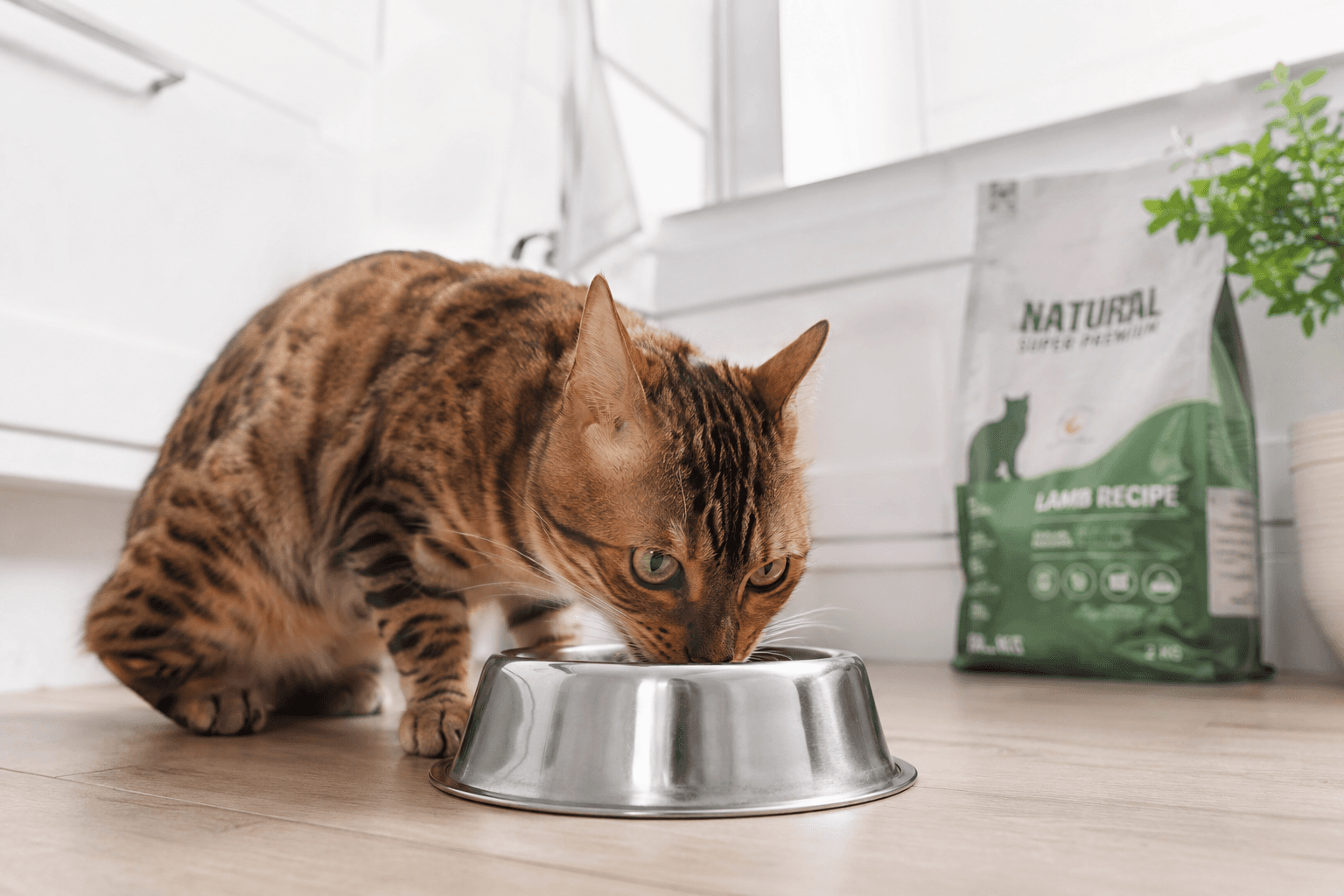
🐾 Cat Nutrition at Every Life Stage
Your cat is not the same creature at every stage of her life.
The tiny kitten exploring the world with half-open eyes needs a completely different diet from the calm adult cat — who in turn needs something different from the aging senior whose joints have begun to ache. 🐈
Understanding these stages is the difference between an owner who feeds their cat — and one who truly nourishes her.
🍼 Newborns & Weaning — Build Immunity
During the first four to six weeks of a kitten's life, mother's milk is the only perfect food — and there is no true substitute.
Mother's milk contains:
- ✅ Antibodies that build the kitten's first immune defenses
- ✅ A precise balance of protein and fat for nervous system development
- ✅ Growth hormones that cannot be replicated synthetically with the same perfection
What if the newborn is separated from its mother early?
In this exceptional case only, Kitten Milk Replacer (KMR) is used — available at veterinary pharmacies.
⚠️ Critical warning: Never give a newborn kitten cow's milk — it's processed entirely differently and will cause severe diarrhea and dangerous dehydration.
Weaning begins gradually between weeks four and six:
- Start with a soft paste made from wet kitten food mixed with a little warm water
- Offer it on your fingertip first so the kitten can recognize it, then gradually transition to a small shallow bowl
- Within two weeks, you'll watch your kitten confidently begin feeding on its own 🐾
🌱 Kittens — The Rapid Growth Phase
From 6 weeks to one full year of age, your kitten is in a phase of accelerated, compounding growth.
During this period specifically, a kitten's weight multiplies several times over, while its skeletal structure, muscles, and immune system develop at a pace that never repeats itself later in life.
What does a kitten need during this stage?
- 🥩 Very high protein — to build muscles and tissues
- 🦴 Calcium and phosphorus in precise ratios — for healthy bone development
- 🐟 DHA fatty acids — for brain and eye development
- 🔋 Higher caloric density — because kittens burn enormous energy playing and growing
This is exactly why kitten food is fundamentally different from adult cat food — you cannot substitute one for the other, assuming the difference is minor.
How many meals daily for a kitten?
- 6–12 weeks: 4 meals per day
- 3–6 months: 3 meals per day
- 6–12 months: 2 meals per day
💡 Since kittens are learning everything at once — including their eating habits — kitten training to follow fixed meal schedules from the very beginning helps build a disciplined, healthy digestive system that lasts a lifetime.
⚖️ Adult Cats — Balance Is Everything
From approximately one year to seven years of age, your cat has entered the phase of maturity and stability.
Her growth has stopped, but her nutritional needs haven't — they've simply shifted.
Golden principles for feeding adult cats:
- 🎯 Moderately high protein — no less than 30–40% of the meal
- 🚫 Low carbohydrates — cats don't need them and their digestive systems handle them poorly
- 💧 Adequate hydration — at least one wet meal daily
- ⚖️ Weight monitoring — obesity at this stage is the gateway to chronic disease later on
How many meals for an adult cat?
Two meals daily at fixed times is the ideal standard for most healthy adult cats.
Free-feeding (leaving food out all day) — though common — carries a significant risk of overeating and obesity, which we'll explore in more detail ahead.
🤱 Pregnant & Nursing Cats — Double Needs
This is one of the stages where well-meaning owners make the most mistakes.
A pregnant and nursing cat is in an entirely exceptional condition:
- Her body is simultaneously building the bodies of her kittens while maintaining itself
- Her caloric requirements rise progressively until they reach double her normal intake during peak nursing
- Her calcium requirements double to produce high-quality milk
The practical solution?
The simple, scientifically validated answer: feed her kitten food throughout pregnancy and nursing.
Kitten food is specifically designed with the high nutritional density that meets these doubled demands — without the need for complex supplementation.
For complete details on this sensitive stage, if you're searching for the food for nursing cats, you'll find a dedicated guide that walks you through it step by step.
🩺 And if your cat is pregnant for the first time and you want a feeding plan customized to her specific situation, you can schedule a consultation with a vet at any time to review her condition thoroughly and receive clear, personalized recommendations.
🌅 Senior Cats — A Special Diet for them
From seven years and older, your cat enters a stage that deserves a different kind of attention.
Her body is no longer what it was:
- Kidneys begin gradually losing some efficiency
- Joints may become more sensitive
- The digestive system becomes slower and less efficient at absorbing nutrients
- Appetite may fluctuate
The dietary adjustments your senior cat needs:
- 🥩 High-quality protein — not necessarily higher in quantity, but better in source and easier to digest
- 💧 Higher hydration — kidneys at this age need extra support, and wet food here is a necessity, not a luxury
- 🦴 Joint support — look for foods containing Glucosamine and Omega-3
- 🔬 Regular checkups — internal changes aren't visible to the eye, and early detection changes everything
⚠️ One of the most common mistakes: reducing protein thinking it protects the kidneys — this is outdated thinking. Senior cats need adequate protein to maintain muscle mass, and reduction is only appropriate based on blood tests showing actual kidney function.
💬 And if your senior cat has started behaving differently or approaching her food in a strange way, this deserves a pause — because understanding how cats bond with their owners isn't the only question that helps you understand her behavior. Recognizing the behavioral changes linked to age and nutrition together gives you a much more complete picture.
🐱 Every Cat Has a Different Story
What you've read is the general framework — but your cat may have specific circumstances that call for a slightly different approach.
Perhaps she has a sensitivity to a particular protein source. Perhaps she's refusing a type of food in a puzzling way. Perhaps her weight keeps climbing even though you're following portion guidelines carefully.
All of these details are resolved easily when you speak with someone who knows — not someone who guesses.
SCOTY connects you with specialized veterinarians who can assess your cat's situation with precision, review her current diet, and design a plan tailored specifically to her — all from the comfort of your home, without the stress of a clinic visit.
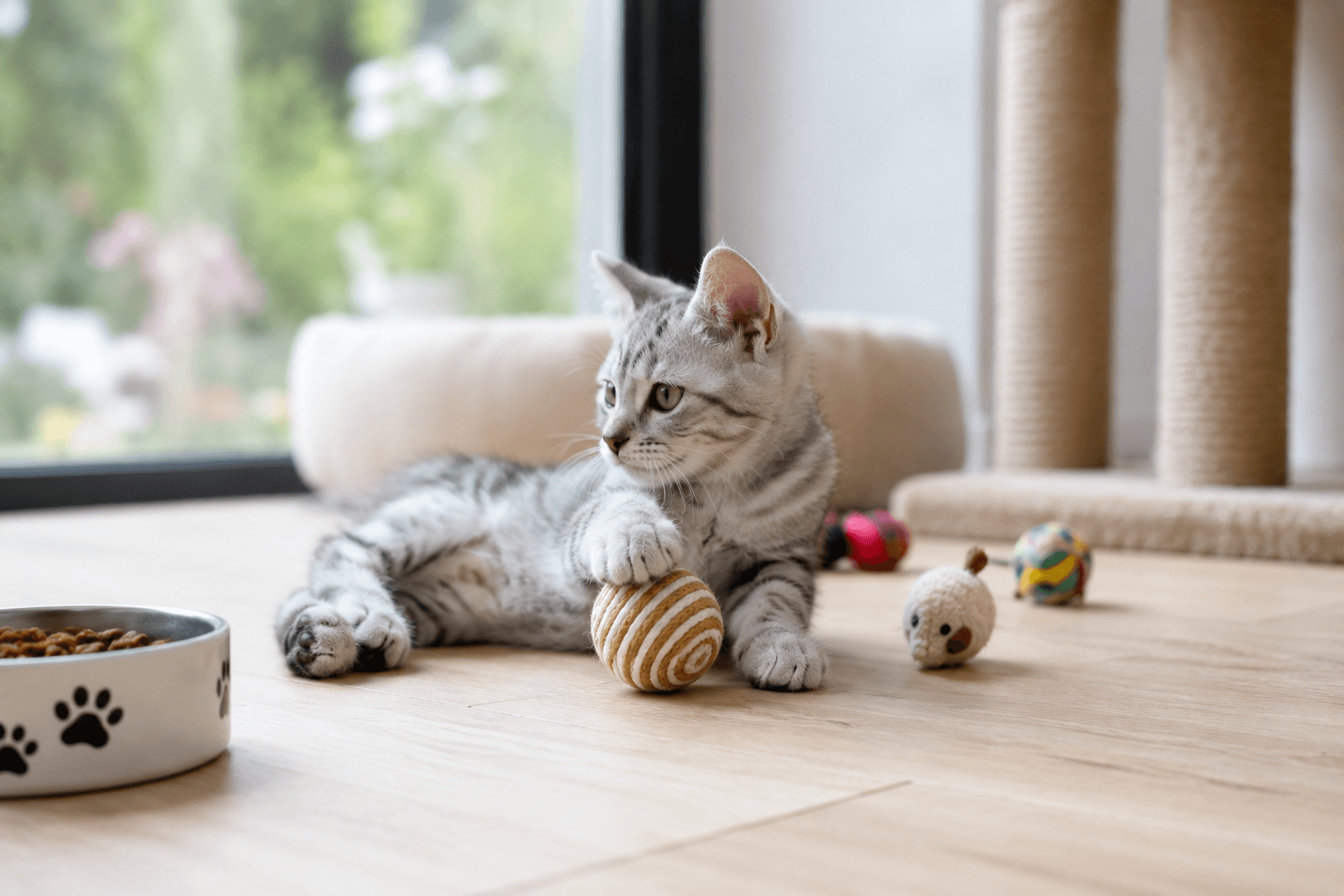
☠️ Forbidden Foods And What Can Kill Your Cat
This section isn't meant to frighten you — it's meant to protect your cat.
Many owners offer their cats certain foods with the best of intentions, believing they're harmless, or they let their cats wander near the dinner table without a second thought. The painful truth is that some of the most common foods in your kitchen are capable of causing serious harm to your cat — sometimes from a single exposure. 🚨
Learn them now, before you learn them the hard way.
🧄 Common Hiding Household Toxins
Garlic & Onions — A Danger That Accumulates
Garlic, onions, and every member of the Allium family — leeks, scallions, chives — contain chemical compounds that destroy red blood cells in cats, causing a dangerous condition called hemolytic anemia.
What makes this especially alarming is that the effects don't appear immediately.
Your cat may consume a small amount today and seem perfectly fine — while the damage accumulates silently for days until symptoms appear suddenly and severely.
⚠️ The bigger problem: garlic and onions hide in countless forms — store-bought chicken broth, spice blends, sauces, and even some baby foods. Don't assume safety simply because you can't see whole pieces.
The dangerous dose: A very small amount can be sufficient — especially for small cats or those with low body weight.
🍫 Chocolate & Caffeine
Chocolate contains two compounds — Theobromine and Caffeine — both of which are toxic to cats because their bodies cannot break them down efficiently.
Their effects on the nervous system and heart:
- 💓 Rapid and irregular heartbeat
- 🤢 Severe vomiting and diarrhea
- 😵 Tremors and seizures
- In severe cases: coma or death
Dark chocolate and raw cacao are the most dangerous — but don't be misled by "just a small amount of milk chocolate." Cats are far smaller than we tend to realize, and their tolerance margins are much narrower than we calculate.
Coffee, tea, and energy drinks? Equally dangerous.
🍇 Grapes & Raisins — The Kidney Failure
This is one of the revelations that shocks most pet owners.
Grapes and raisins — despite their innocent appearance — cause acute kidney failure in cats and dogs, and the exact chemical mechanism remains under scientific investigation to this day.
The problem is that a safe dose is unknown.
There is no documented safe threshold — which is why the only rule is: absolute zero tolerance for grapes, raisins, and all their derivatives.
🥑 "Healthy Human Foods" That Harm Cats
This list surprises everyone — because these foods genuinely are healthy for humans, but are veterinarily classified as hazardous for your cat:
| Food | Why It's Dangerous |
|---|---|
| 🥑 Avocado | Contains Persin, which causes respiratory distress and fluid accumulation around the heart |
| 🥛 Milk & dairy products | Most adult cats are lactose intolerant — causes diarrhea and bloating |
| 🧁 Raw dough & yeast | Yeast expands in the stomach and produces alcohol — highly dangerous |
| 🥜 Nuts (especially Macadamia) | Muscle weakness, fever, vomiting |
| 🍬 Artificial sweeteners (Xylitol) | Found in gum and diet treats — causes sudden blood sugar crash and liver failure |
| 🧂 Excess salt | Causes dehydration, kidney disruption, and at high doses: seizures |
| 🐟 Human-grade tuna (in large amounts) | High in sodium and mercury — yes, tuna isn't always as safe as you think in the quantities many owners offer |
💡 The golden rule: what's good for you is not necessarily good for her — and what looks "natural" can be a poison.
🚨 Signs of Food Poisoning — When to Call A Vet
Sometimes mistakes happen despite all precautions — your cat reaches something unexpected, or eats something before you notice.
Know the symptoms that require immediate action — no waiting:
🆘 Contact a veterinarian immediately if you notice:
- ✅ Repeated or sudden vomiting
- ✅ Severe diarrhea or blood in stool
- ✅ Trembling or seizures
- ✅ Obvious difficulty breathing
- ✅ Severe, unexplained lethargy
- ✅ Abnormal abdominal bloating
- ✅ Pale or bluish gums
- ✅ Loss of balance or difficulty standing
⏱️ Time is your enemy here — don't wait until morning, and don't settle for monitoring if symptoms are clearly present.
Home remedies for cat vomiting may be helpful for mild, isolated cases — but in suspected poisoning situations, there is no substitute for a veterinarian.
🤦 Common Mistakes Well-Meaning Owners Make
These mistakes don't come from negligence — they come from incomplete information or inherited myths passed down through generations:
❌ Mistake #1: Offering milk as a treat The classic image of a cat lapping up milk is charming in films — and a health disaster in reality. Most adult cats cannot digest lactose, and milk causes painful diarrhea and bloating.
❌ Mistake #2: Sharing seasoned table scraps Home-cooked family meals are full of onions, garlic, spices, and salt — all of which make your table scraps dangerous to your cat even when they look like "real food."
❌ Mistake #3: Relying on a single food forever Feeding only one type of food daily without variety can cause cumulative nutritional deficiencies, and may make your cat so "addicted" to one flavor that she refuses all others later — complicating her care when a dietary change becomes medically necessary.
❌ Mistake #4: Giving supplements without veterinary guidance Vitamins and supplements are not candy — excess Vitamin A, for example, is toxic to cats and causes serious bone disorders. Never give any supplement without consulting a veterinarian first.
❌ Mistake #5: Ignoring food-related body language Your cat sends subtle signals when her food bothers or hurts her — understanding cat behavior helps you catch these early warning signs before they develop into a real problem.
🩺 When You Suspect Your Cat Has Eaten a Danger
Panic doesn't help — but swift action saves lives.
First step: do not attempt to induce vomiting yourself — this approach can worsen damage in certain situations and should only be done under veterinary guidance.
What to do:
- Identify as precisely as possible what she ate and how much
- Watch closely for the symptoms listed above
- Contact a veterinarian immediately
With SCOTY, you can attach photos or a video of your cat's condition along with a description of what happened, and connect with a vet within minutes. The doctor will assess the situation, tell you whether the case can be managed at home, or whether it requires an emergency clinic visit — and that single decision alone is worth everything.
And if the session ends and you're still worried, the free follow-up period via chat for a full week ensures you're never alone in monitoring your cat's condition until you feel completely at ease. 🐾
By the way — the right way to raise a cat includes building a safe home environment from the very beginning, which means securing the kitchen and food storage areas well away from your endlessly curious companion.
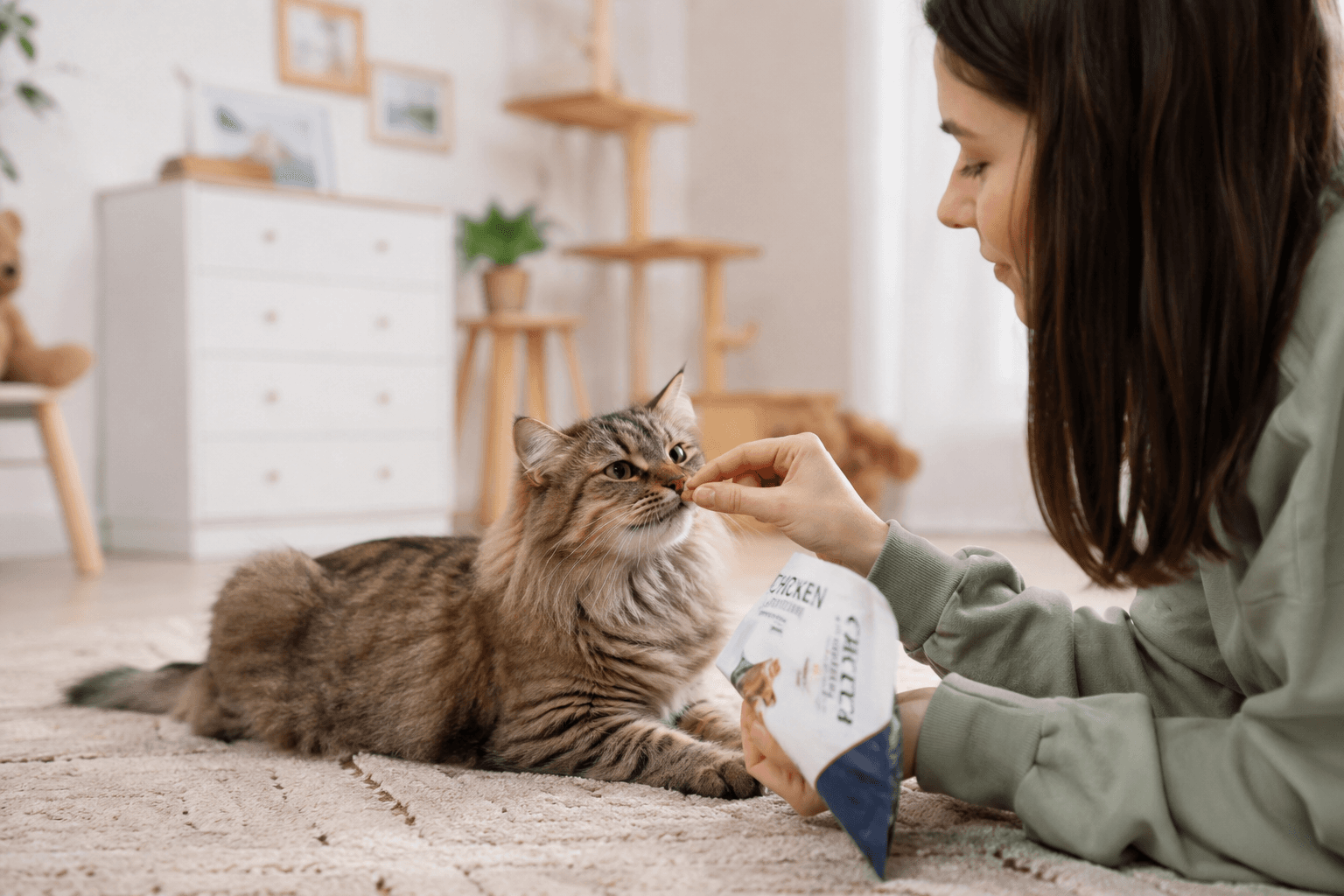
🍽️ Building a Complete Diet for Your Cat Practically
We've reached the section every serious cat owner has been waiting for.
Knowledge is beautiful — but what truly makes a difference in your cat's life is what you do every day, in practice, in her actual meals. 🐾
This section is designed to become your everyday practical guide.
🔍 How to Read a Commercial Pet Food Label
Most owners look at a label and see: a product name, a happy cat photo, and a price. Done.
But the back label tells a completely different story — and that's the story that actually matters.
Here's what you need to look for, in order:
① Ingredients List Ingredients are listed in descending order by weight — the first is the most abundant.
- ✅ Good: The first ingredient is a clearly named meat source — "Chicken," "Turkey," "Salmon"
- ❌ Warning: The first ingredient is "Meat By-products" or "Poultry Meal" without specifying the source
- ❌ Be cautious: Long carbohydrate lists — Corn, Wheat, Soy appearing near the top signal weak protein content
② Guaranteed Analysis Look for:
- 🥩 Crude Protein: no less than 30% in dry food, 8–12% in wet food (the difference reflects water content)
- 🧈 Crude Fat: 15–20% for adults, slightly higher for kittens
- 🌾 Crude Fiber: less than 5% — cats don't need much fiber
- 💧 Moisture: below 12% in dry food, around 75–80% in wet food
③ The AAFCO Statement Look for a phrase similar to: "formulated to meet AAFCO nutritional profiles" or "complete and balanced."
This statement means the food has passed complete nutrition standards — without it, the food is a supplement, not a primary diet.
④ Life Stage
- "All Life Stages" — suitable for all ages
- "Kitten" — for kittens only
- "Adult Maintenance" — for adults
- "Senior" — for older cats
Don't feed your adult cat kitten food as a permanent diet — the high nutritional density will lead to obesity over time.
⏰ Portions & Timing — How Many Meals ?
This question has no single answer that fits every cat — but there's a reliable general framework to build from.
Daily approximate amounts for a healthy adult cat:
| Cat Weight | Daily Dry Food | Daily Wet Food |
|---|---|---|
| 4–7 lbs (2–3 kg) | 35–45 grams | 1 small can (85g) |
| 7–9 lbs (3–4 kg) | 45–55 grams | 1–1.5 cans |
| 9–11 lbs (4–5 kg) | 55–70 grams | 1.5–2 cans |
| 11+ lbs (5+ kg) | Consult a vet | Consult a vet |
⚠️ These are general guidelines only — activity level, health status, and whether your cat is spayed or neutered all significantly affect these numbers.
The ideal daily schedule:
- 🌅 Early morning: First meal — wet food when possible
- 🌆 Evening: Second meal — dry food or a combination
Why do fixed mealtimes matter?
Cats are deeply routine-oriented creatures — the digestive system actually prepares itself for food when it anticipates it. Fixed schedules reduce food-related anxiety, prevent overeating, and make it far easier to notice any change in appetite early on.
🏠 Homemade Cat Food — Is It Safe?
This question weighs on the minds of many devoted owners who want "the very best" for their cats.
The honest answer: it can be excellent — or catastrophic — depending entirely on how it's done.
✅ Benefits of homemade food:
- Complete control over ingredient quality and sourcing
- Avoids artificial preservatives and synthetic additives
- Ideal for cats with specific identified food sensitivities
❌ Risks of homemade food when not managed with knowledge:
- Taurine deficiency — the most dangerous, completely invisible until it causes cardiac or ocular damage
- Imbalanced calcium-to-phosphorus ratio — progressively weakens bones
- Deficiencies in specific vitamins that show no symptoms for months
If you're serious about homemade food:
- Don't rely on random internet recipes
- Consult a veterinary nutritionist to design a properly balanced recipe specifically for your cat
- Add a veterinarian-recommended supplement such as "Balance IT" to close any nutritional gaps
⚖️ Obesity & Underweight — Diagnosis and Solutions
How do you know if your cat is at a healthy weight?
Don't rely on appearance alone — thick fur hides a great deal. Try this simple home test:
The Rib Check:
- Gently place your hand on the side of your cat's chest
- ✅ Ideal weight: You can feel the ribs easily without seeing them with the naked eye
- ❌ Underweight: Ribs are very prominent and you can visually see the hollows between them
- ❌ Overweight: You can only feel the ribs with notable pressure — or can't feel them at all
Common causes of obesity in cats:
- 🍽️ Portion sizes exceeding actual needs
- 🛋️ Low physical activity — especially common in indoor apartment cats
- ✂️ Spaying/neutering lowers metabolic rate — neutered cats need approximately 20–30% fewer calories
- 🎁 Excessive treats and food rewards
The silent dangers of obesity:
- Diabetes mellitus
- Joint disease and cartilage inflammation
- Hepatic Lipidosis (fatty liver disease)
- Measurably shortened life expectancy
Common causes of excessive underweight:
- Intestinal parasites
- Kidney or thyroid disease
- Painful dental disease preventing comfortable eating
- Psychological stress or issues with the feeding environment
💡 If you notice a change in your cat's weight without any change in food portions — this is a medical signal that deserves immediate attention, as unexplained weight loss in particular can indicate an underlying internal condition.
🌟 Holistic Health — A Complete Care
Proper nutrition alone doesn't complete the picture — it's one part of an integrated health system.
Dental Health & Nutrition: Many owners don't realize that periodontal and dental disease in cats directly affects their appetite and their ability to eat comfortably. A cat suffering from dental pain won't eat well no matter how perfect the food is.
How to clean your cat's teeth regularly is an inseparable part of her daily health routine — and its impact on nutrition and appetite is far greater than most owners imagine.
Parasites & Nutrition: A cat infected with intestinal parasites eats and eats — but the nutrients go to the parasite, not to her. If you notice a cat with a strong appetite but persistent weight loss, this warrants a stool examination.
Stress & Nutrition: Cats are highly sensitive to environmental changes — a sudden switch in food type, a change in the bowl's location, or even a new bowl can trigger a hunger strike. Any change in dietary routine should be gradual over 7–10 days.
🏁 Your Cat Deserves the Best Care
We've reached the end of this guide together — and we hope you now see cat nutrition through an entirely different lens.
It's not just a bowl you fill every day. It's a daily decision that builds or erodes your cat's health over the long term.
The truth every veterinarian knows: the majority of health problems that appear later in a cat's life could have been prevented or delayed with correct nutritional decisions made early on.
You now have the knowledge — and that makes all the difference.
💙 When You Need More Than an Article
Some questions need personal answers, not general ones.
Your cat has her own weight, her own age, her own medical history — and sometimes she needs a dietary plan designed specifically for her, not for cats in general.
This is where SCOTY becomes your real partner in the care journey:
- 📋 Browse veterinarian profiles and choose the one that feels right for you
- 📅 [Book your appointment](internal link) directly from the calendar at whatever time suits your schedule
- 📸 Attach photos or video of your cat's condition before the session so the vet can review them thoroughly
- 📞 Enjoy a full 30-minute call to discuss everything without rushing
- 📄 Receive a certified digital prescription — downloadable and fillable online with ease
- 🗂️ Everything is documented in your cat's complete medical file inside the app, always available for reference
- 💬 And most importantly: a full week of free follow-up via chat around the clock, plus a complimentary follow-up call — because your peace of mind doesn't end when the session does
Your cat deserves expert guidance, and you deserve total peace of mind. 🐾