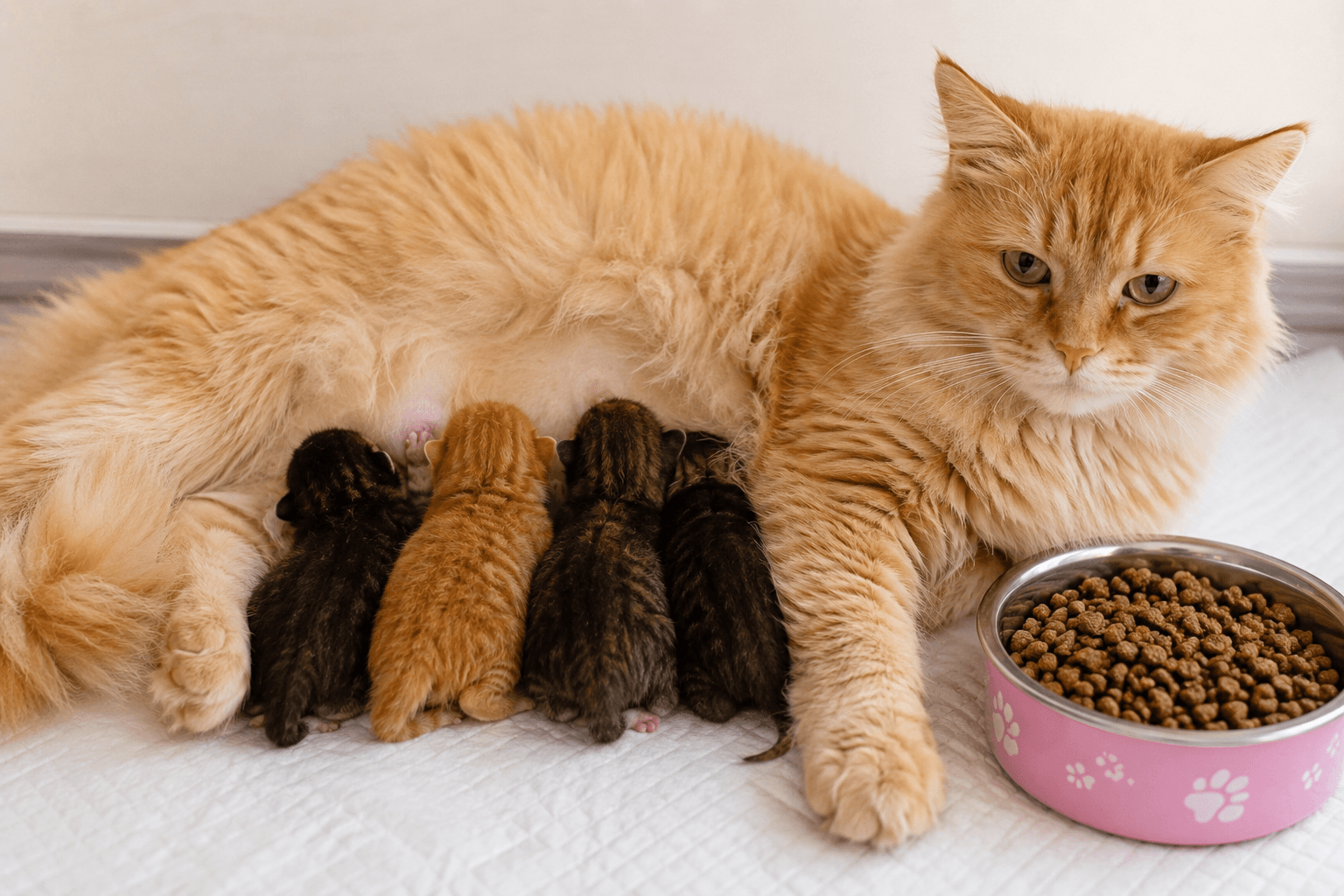
Just days after giving birth, you notice your cat seems more exhausted than usual and is eating far more than before, leaving you wondering: what's really the best food for nursing cats to help her regain that lost energy?
Through SCOTY, your remote veterinary consultation clinic, you can get quick, easy access to a specialized veterinarian without ever leaving your home.
In this article, we'll break down the extra nutrients your nursing cat needs during this delicate stage, and how to choose a diet that supports both her health and her kittens'.
To make sure your cat gets the right nutritional care, you can consult a veterinarian today and build a plan tailored to her nursing period.
Your Guide to Safely Feeding Mom and Kittens 🍼
There's something magical — and quietly stressful — about watching your cat nurse her litter. 🐾
You sit beside her, watching those tiny kittens feed, and suddenly your mind fills with questions: Is she eating enough? Is her milk sufficient for all of them? Am I giving her the right food?
That worry you feel right now? It means you're a wonderful pet parent — and this article was written specifically for you.
Here you'll find clear, science-backed answers in simple, everyday language. And if you ever need a veterinary specialist quickly, SCOTY is available for you anytime, anywhere.
Let's dive in. 🐱
What a Nursing Cat Actually Need Nutritionally?
Before we talk about the best food for nursing cats, we need to understand why a nursing mother's nutritional needs are completely different from any other cat.
The simple answer? Her body is running on two engines at once.
🔥 The Enormous Energy Demand of Lactation
Imagine doing intense exercise every single day, without stopping, for two full months.
That's roughly what your cat's body goes through during lactation.
Veterinary research shows that a nursing cat needs two to three times her normal caloric intake — and that number climbs significantly when she's feeding three or more kittens.
By the numbers:
- A typical 2kg cat needs around 200 calories per day
- The same cat while nursing may need 500 to 600 calories daily
- And the more kittens she has, the higher her needs climb
That's why the very first golden rule of feeding a nursing cat is: never restrict her portions. Keep food available at all times and let her eat whenever she wants — her body knows exactly what it needs.
🥩 Protein — The Building Block of Her Milk
Cats are obligate carnivores by nature, and this fact becomes even more critical during lactation.
Cat milk is exceptionally rich in protein, and her body manufactures that milk directly from what she eats. If her diet is low in protein, her body will start pulling reserves from her own muscle tissue — which explains why some cats look visibly "wasted" after nursing.
What this means practically:
- ✅ High-quality animal protein sources (chicken, fish, turkey)
- ✅ Protein listed as the first ingredient on the food label
- ❌ Avoid foods where corn, grains, or fillers appear at the top of the ingredient list
The ideal protein content in food for a nursing cat is no less than 30% on a dry matter basis — an important figure you'll know how to use when reading packaging.
🦴 Calcium & Phosphorus
Newborn kittens are born with soft bones that need to harden rapidly, and all that early calcium comes directly from their mother's milk.
If mom's diet is calcium-deficient, a dangerous condition called Eclampsia (milk fever) can develop — a sudden, severe drop in blood calcium that can trigger seizures and alarming neurological symptoms.
But here's the other side of the coin — adding calcium supplements without veterinary guidance is equally dangerous.
The safe, practical rule:
- Choose food specifically formulated for pregnant and nursing cats or kittens — both are designed with the precise calcium-to-phosphorus ratios nursing mothers need
- Never add supplements independently without a vet's recommendation
And if you want to build a solid foundation of knowledge around cat nutrition in general, it's worth exploring even beyond the nursing period.
💧 Water Makes All the Difference
This is the point many pet parents overlook despite its critical importance.
Milk production is fundamentally water-dependent. A nursing cat needs significantly more water than usual, and if she's not drinking enough, her milk supply can drop suddenly with no other obvious cause.
Some cats are naturally reluctant drinkers from a still bowl — here are practical solutions:
- 🐱 A flowing water fountain — cats are instinctively drawn to moving water and drink far more from it
- 🐱 Add wet food — it delivers 70–80% moisture versus just 10% in dry kibble
- 🐱 Place multiple water bowls around the house, not just one
- 🐱 Add a small amount of low-sodium, onion-free chicken broth to her water occasionally to encourage drinking
📌 Practical note: If your cat seems lethargic or the kittens seem unsatisfied despite her eating well, suspect inadequate water intake before anything else.
⚠️ When Mom Gets Too Thin
A nursing cat who's eating and drinking well shouldn't be losing noticeable weight.
If you run your hand along her back and can easily feel prominent spinal vertebrae, or her ribs are effortlessly palpable, that's a sign worth taking seriously.
Sometimes the reason is straightforward — insufficient food quantity or the added stress of common kitten health issues affecting one of the litter members, increasing the burden on mom. Other times, it requires a proper veterinary examination.
The important thing: don't wait for something to become obviously wrong. A nursing mother cannot afford to be neglected.
💡 Section One Quick Summary:
- Double (or more) her food and never restrict it
- Choose high animal protein food (30%+ dry matter basis)
- Food formulated for kittens or pregnant/nursing cats is ideal
- Water is just as critical as food
- Any sudden weight loss warrants a vet consultation
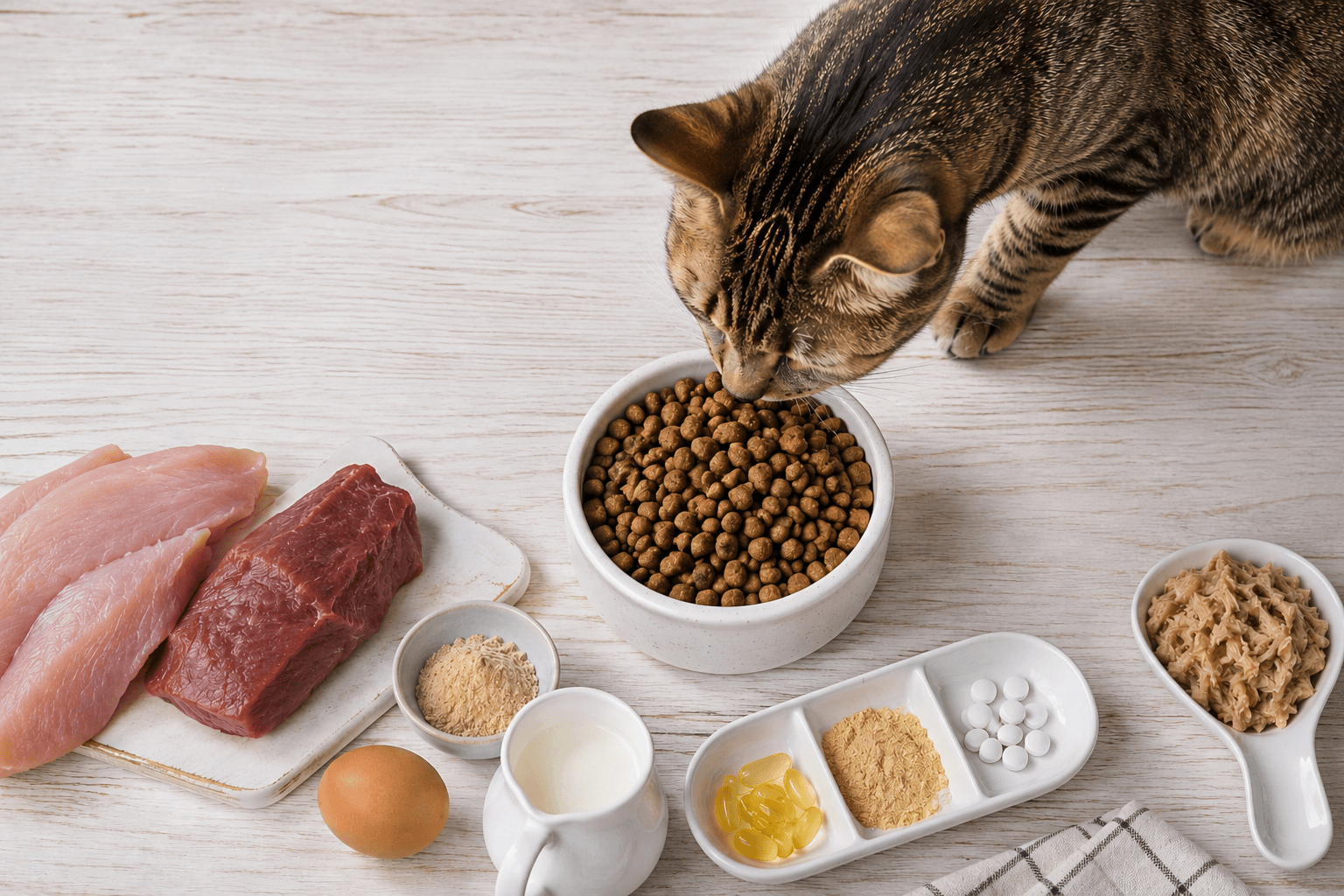
The Best Food for Nursing Cats And Nutrients Types 🥩
Now that you know what her body needs, it's time for the most important question:
Where do those nutrients come from? And which foods actually deliver them?
The market is packed with options, and every bag claims to be "the best" — so let's break it down objectively, without bias toward any brand or category.
🥜 Dry Food And What Does Science Say?
Dry food is the most common choice among pet parents, and the reasons are understandable:
- Easy to store
- Generally more affordable
- Can be left in the bowl all day without spoiling
But when it comes specifically to a nursing cat, there's one major drawback that can't be ignored:
Its moisture content doesn't exceed 10%.
And as you learned in Section One, moisture and water are the primary drivers of milk production.
This doesn't mean dry food is completely off the table — it means it shouldn't be the only source of nutrition for a nursing mother.
If you choose dry food, make sure:
- ✅ It's labeled "for all life stages" or formulated for pregnant and nursing cats
- ✅ An animal protein is the very first ingredient
- ✅ It's paired with abundant fresh water or combined with wet food
- ❌ Avoid very cheap budget options where corn or grains dominate the ingredient list
🥩 Wet Food — The Gold Standard for Lactation
If you want a straight answer: wet food is the best option for nursing cats, according to most veterinary professionals.
The reasons are clear:
- 🌊 70–80% moisture content — directly supports milk production
- 🥩 Higher animal protein in most quality varieties
- 😋 More appetizing — nursing cats are drawn to wet food's aroma, especially in the days right after birth
- ⚡ Easier to digest — ideal for a digestive system working at full capacity
How to read a wet food label intelligently:
When you're standing in front of the pet store shelf, scan the label this way:
- First ingredient → must be a clearly named animal protein (chicken, fish, turkey, beef)
- Protein percentage → 10%+ on the wet food label (equals 30%+ on dry matter basis)
- Complete and balanced → look for the "Complete and Balanced" statement
- Avoid → cans where "broth" or "gravy" is the primary component — nutritionally incomplete
💡 Golden tip: Combining high-quality dry food + wet food daily is the optimal approach — you capture the benefits of both while compensating for each one's weaknesses.
🍗 Fresh & Home-Cooked Food
Many pet parents love the idea of feeding their cat fresh, home-cooked meals — and that impulse is beautiful. You want the very best for your little one.
But here's an important truth you need to know:
A nutritionally complete homemade diet for cats is far harder to achieve than it looks.
Cats require a very precise balance of vitamins and minerals — especially taurine, an amino acid cats cannot synthesize on their own and must get entirely from food. Taurine deficiency leads to serious heart and eye complications.
If you want to go the homemade route, these rules are non-negotiable:
- ✅ Well-cooked animal proteins (chicken, fish, liver in moderate amounts) — safe and beneficial
- ✅ Absolutely no salt, onion, or garlic — toxic to cats even in small amounts
- ✅ Cooked fish is fine, but not as a daily staple — excessive amounts cause vitamin B1 deficiency
- ❌ Never rely on homemade food alone without veterinary supervision — a genuine risk to mom and kittens
- ❌ Raw meat: controversial even among vets and not recommended during nursing due to bacterial risk
The practical best approach? Use home-cooked food as a supplement and variety alongside high-quality commercial food — not as a complete replacement.
🚫 Foods That Completely Off-Limits for Nursing Cats
This list is critically important — screenshot it or bookmark it. 📸
| ❌ Food | ⚠️ Why It's Dangerous |
|---|---|
| Onions & garlic | Destroy red blood cells |
| Chocolate | Completely toxic to cats |
| Grapes & raisins | Cause kidney failure |
| Caffeine (coffee, tea) | Damages the nervous system |
| Cow's milk | Most cats cannot digest lactose |
| Avocado | Toxic to cats |
| Alcohol | Extremely dangerous even in tiny amounts |
| Roasted nuts (macadamia) | Cause neurological and muscular weakness |
| Raw yeast dough | Ferments in the stomach and causes dangerous bloating |
📌 Important note: Everything a nursing mother consumes can pass — in varying amounts — into her milk. The stakes during lactation are doubled.
And if you've ever wondered about the causes behind cat vomiting and how to treat it, eating something that doesn't agree with her is often the simplest explanation.
🛒 How to Select A Brand Name
Rather than recommending specific brands that may vary in availability, here are the criteria that let you choose confidently on your own:
🏆 Premium food checks all these boxes:
- Carries the "AAFCO Complete and Balanced" statement
- First 3 ingredients are real animal proteins (not just "meat by-products")
- No artificial colors or chemical preservatives
- Labeled for "all life stages," "pregnant and nursing," or "kittens"
💰 Price alone is never the measure: Some expensive options aren't necessarily the best, and some mid-range foods are excellent. The ingredient list is always the real benchmark.
🏥 When the Choice Feels Overwhelming
Sometimes you find yourself facing dozens of options, and your cat has a specific health condition — anemia, digestive issues, or a difficult delivery.
In those situations, guessing is far too costly when it comes to mom's and kittens' health.
A far better approach is describing the situation to a specialist who can guide you directly. Through SCOTY, you can book a vet consultation from the comfort of your home, and attach photos or video of your cat before the session so the vet can assess her carefully before the call even begins.
Thirty minutes with a specialist often saves weeks of anxiety and guesswork.
💡 Section Two Quick Summary:
- Wet food is best for nursing cats due to its high moisture and protein content
- Dry food is acceptable as part of the diet, not the sole source
- Home-cooked food is a useful supplement — not a standalone solution
- The banned foods list is non-negotiable — save it 📌
- Always look for: animal protein first + AAFCO Complete statement
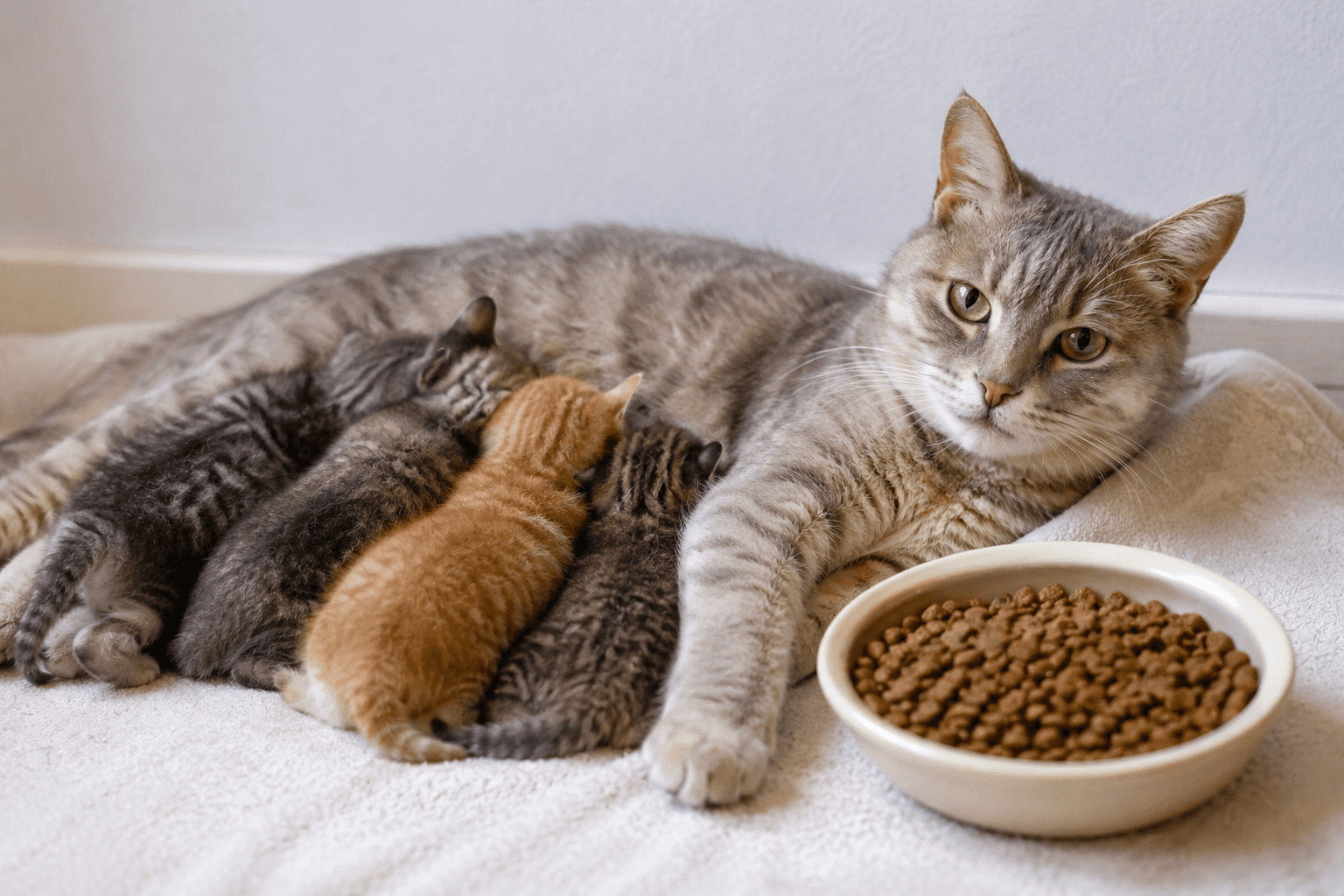
Caring for Mom and Kittens Together
Proper nutrition is only half the story.
The other half is understanding what's happening around you — when to step in, when to let nature work, and when to call a vet immediately without hesitation.
This section gives you the complete picture of the nursing period from beginning to end. 🐾
🍼 When Do Kittens Start Eating Solid Food?
This is one of the most common questions pet parents ask, and the answer follows a precise timeline worth knowing.
The natural developmental timeline:
| Age | What's Happening |
|---|---|
| Weeks 1–2 | Mother's milk only — nothing else |
| Weeks 3–4 | Kittens begin opening their eyes and noticing their surroundings |
| Weeks 3–4 | Time to introduce mashed wet food as a first exploration |
| Weeks 5–6 | Kittens increasingly eat independently |
| Weeks 7–8 | Full natural weaning |
How to introduce solid food for the first time:
- Place a small amount of mashed wet food on a shallow, low-sided plate
- Position it near mom — kittens naturally imitate her
- Never force any kitten; let them explore with their natural curiosity 😺
- At first they'll lick more than they eat — completely normal
📌 Important note: Mom continuing to nurse while kittens begin eating solid food is perfectly natural — weaning is a gradual process, not a single moment. And if you'd like to understand how to support their development from these earliest weeks, there's a wealth of helpful guidance on kitten training and socialization to build positive habits right from the start.
⚖️ Mom's Weight After Birth — When Should You Worry?
It's normal for a nursing cat to lose some weight during lactation, but there's an important line between "expected and natural" and "concerning and actionable."
What's normal:
- Slight weight loss in the first few weeks
- Mildly palpable ribs upon gentle touch
- Noticeably increased appetite
What requires immediate attention:
- ⚠️ Ribs clearly prominent and easily felt with minimal pressure
- ⚠️ Spinal vertebrae visibly protruding
- ⚠️ Continuous weight loss despite good food intake
- ⚠️ Coat appearing dull, coarse, and lacking shine
- ⚠️ Unusual lethargy and reduced engagement with kittens
The practical solution?
Gradually increase her food and add an extra wet food serving daily. If the weight loss persists for more than a week despite changes, don't wait — that's a moment for veterinary assessment, not continued experimentation.
🔄 Feeding Mom After Weaning
The day of full weaning doesn't mean mom immediately snaps back to her regular portions.
Her body needs two to three weeks to gradually rebalance.
The safe transition plan:
- Week 1 post-weaning: Maintain approximately the same elevated food quantity
- Week 2: Begin gradually reducing toward the normal maintenance amount
- Week 3 onward: Return to the portion appropriate for her weight and age
📌 Why does this matter? Abruptly cutting food after weaning creates additional stress on a body that's been running at double capacity — give her the time she needs to fully recover.
As mom settles back into her routine, you may notice behavioral shifts in how she interacts with the kittens — this is natural. Some cats begin distancing from the litter gradually post-weaning, a healthy instinctive behavior. If her body language and posture have you curious, understanding cat sitting positions and what they mean can reveal a great deal about what she's communicating silently.
🚨 Warning Signs That Require Immediate Vet
This is the most important subsection in the entire article — read it carefully and memorize these symptoms.
🔴 Emergency symptoms in the mother:
- Muscle tremors or convulsions — may indicate Eclampsia (milk fever), a genuine medical emergency
- Sudden refusal to nurse combined with other symptoms and actively avoiding kittens
- Severe redness or swelling in the mammary glands with localized heat — may indicate Mastitis
- Abnormal mammary discharge (yellow, green, or brownish coloration)
- Elevated temperature — above 39.5°C (103.1°F)
- Severe lethargy and food refusal for more than 24 hours
🔴 Emergency symptoms in the kittens:
- Continuous, inconsolable crying for hours — signals hunger and insufficient milk intake
- Very low body weight or failure to gain weight after the first days
- Pale or bluish gums
- Severe weakness and inability to latch and nurse
- Diarrhea or visibly bloated abdomen
What do you do right now?
Don't wait until morning if any of these symptoms appear.
Through a vet consultation on SCOTY, you can attach precise photos or video of your cat's condition before the call — the vet reviews everything with an expert eye before the session even begins, then you receive a full diagnosis and a certified electronic prescription you can download and fill immediately.
And the best part? A full week of free follow-up chat support around the clock after your session — because the worry doesn't end when the call does. 💙
🌱 Building Healthy Kittens — It Starts With Mom
There's a beautiful scientific truth that many pet parents never hear:
The quality of the mother's nutrition directly shapes the immune system of her kittens.
The very first milk a cat produces after birth — called colostrum — is packed with maternal antibodies that protect kittens in their earliest weeks before their own immune systems become functional.
If mom is well-nourished, that first milk is richer in immune protection. If she's underfed or unwell, it's considerably weaker.
That alone is reason enough to make your nursing cat's nutrition your top priority from day one.
As the kittens grow and begin exploring, you may occasionally notice mild symptoms like eye discharge or frequent sneezing. Knowing how to handle cat eye discharge treatment early prevents unnecessary anxiety and keeps the kittens healthy.
And it's equally wonderful to understand when cats bond with their owners because this nurturing period lays the very foundation for the deep emotional connection that will develop between you and your new little ones. 🐾
💡 Section Three Quick Summary:
- Weaning begins around week 3 and completes by weeks 7–8
- Introduce solid food gradually with zero pressure
- Post-weaning return to normal portions should be gradual over 3 weeks
- Mom emergency signs: tremors, nursing refusal, swollen mammary glands
- Kitten emergency signs: continuous crying, low weight, pale gums
- Colostrum = the most important immune shield kittens will ever receive
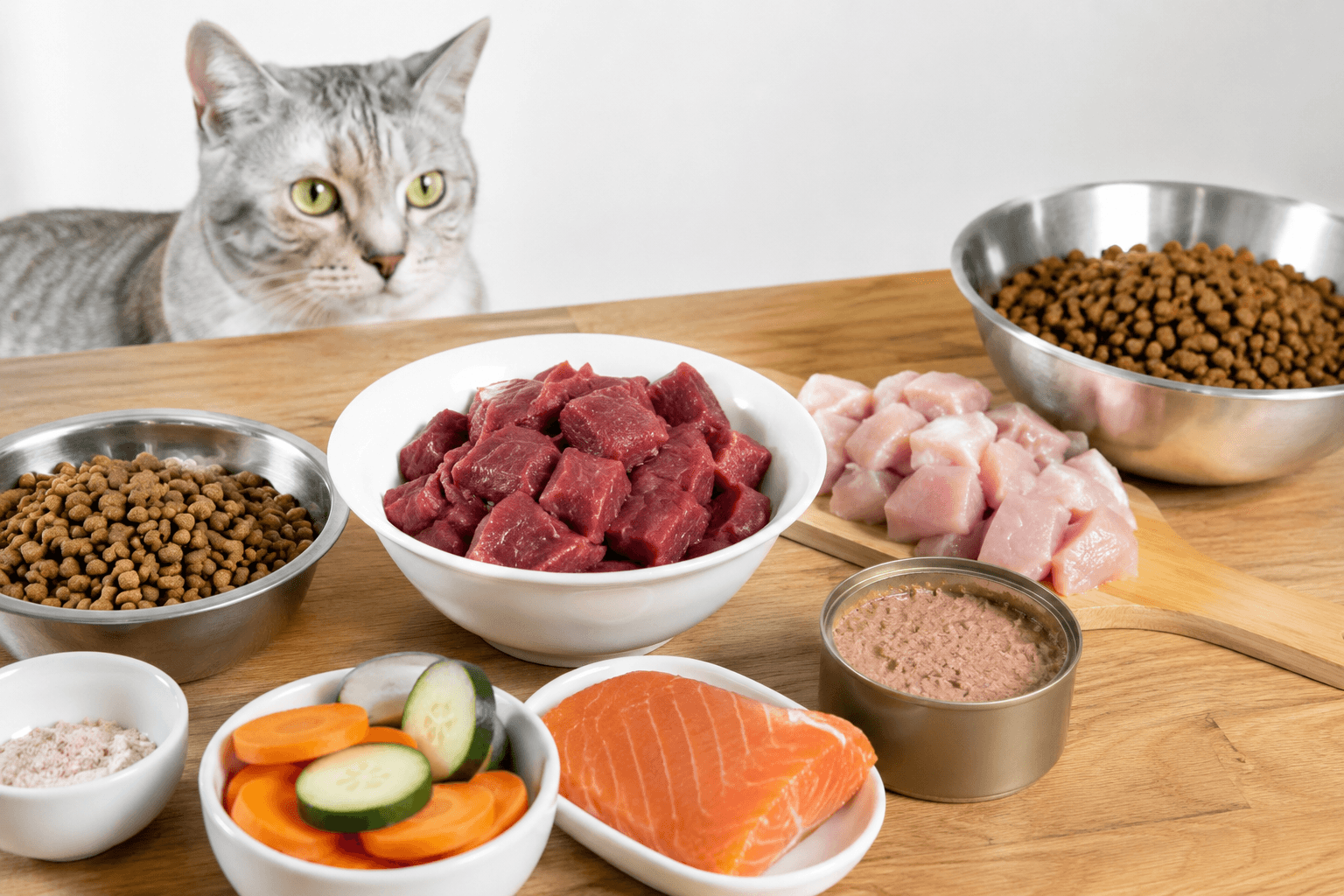
Questions Circling Your Mind
Every pet parent has those moments sitting beside their nursing cat, thinking:
"Is this normal? Am I doing the right thing?"
This section brings together the most frequently asked questions from cat parents — answered honestly and without unnecessary complexity. 🐱
⏰ How Many Times a Day Should a Nursing Cat Eat?
The short answer: more than you'd expect.
A typical non-nursing cat does well on two to three meals a day.
But for a nursing mother, it's a completely different picture:
- In the first weeks after birth: Food should be available around the clock (free feeding) — let her eat whenever and however much she wants
- As kittens grow and milk demand increases: Her hunger intensifies further, and that's completely normal
- If you prefer a structured schedule: Four to five small meals distributed throughout the day outperform two large ones
Why are smaller, frequent meals better?
A very full stomach all at once can cause discomfort, especially when mom is constantly moving between kittens. Distributing meals keeps her energy levels consistently stable throughout the day.
📌 The golden rule: Never let a nursing cat go hungry — an empty bowl during this phase is a mistake, not a diet plan. 🙅
🥛 Will a Nursing Cat Produce More Milk If She Eats More?
This is a very logical question, and the answer carries an important nuance.
Yes — but within limits.
The body produces milk primarily in response to demand. The more the kittens nurse, the more milk mom produces — that's the primary driver.
But this production process requires fuel, and fuel means food.
So the equation works like this:
- ✅ Adequate food + regular nursing = optimal milk production
- ❌ Insufficient food + regular nursing = the body draws from its reserves and weakens
- ❌ Abundant food + infrequent nursing = little benefit from increased intake
When is milk supply low despite good nutrition?
Sometimes the cause is purely medical — mammary inflammation, severe physical exhaustion, or hormonal issues. These require a veterinary evaluation.
If you notice the kittens crying persistently and not settling after nursing, that's a sign they're not getting enough
And whenever you need a specialist's perspective —
Don't hesitate to visit SCOTY, browse the profiles of verified veterinary professionals, choose the right fit for you, and book your consultation directly from the calendar in minutes.
Every detail of your cat's care — from the photos and videos you share before the session, to the certified electronic prescription you receive after, to the full case report saved permanently in her medical file — all in one place, always at your fingertips.
Because your cat deserves genuine care, and you deserve genuine peace of mind. 🐾
😟 My Cat Eats a Lot But Looks Thin ?
This scenario worries many pet parents, and it has several possible causes:
Common causes:
🔸 Internal parasites and worms This is the first thing to rule out. Parasites steal nutrients before the body can absorb them — your cat is eating, but so are her uninvited guests. Solution: deworming treatment under veterinary supervision.
🔸 Poor food quality High calories but low protein = the body can't build or maintain muscle mass. Revisit the ingredient list.
🔸 More kittens than mom can sustain If she has five or more kittens, no ordinary food quantity may be sufficient — she needs a significantly intensified feeding plan.
🔸 An underlying health issue Hyperthyroidism, malabsorption disorders, or other internal conditions — require bloodwork to diagnose properly.
What should you do?
Don't simply increase the food and hope for the best. If the weight loss persists for more than a week despite dietary changes, a medical examination is the next step — not an optional one.
💊 Does My Nursing Cat Need Nutritional Supplements?
An honest answer: Usually no — if she's eating a high-quality, complete commercial food.
Well-formulated commercial food (labeled AAFCO Complete) is designed to deliver everything a cat needs at every life stage — including lactation.
Adding supplements on top of that without guidance can actually cause excess in certain minerals like calcium, which — as we covered in Section One — is a risk in its own right.
When are supplements genuinely necessary?
- When a specific deficiency is identified through blood testing
- When relying entirely on homemade food without any commercial diet
- When explicitly recommended by a veterinarian based on your cat's individual case
📌 The rule: Never give supplements based on internet advice or pet store recommendations — excess can sometimes be more dangerous than deficiency.
And if you're looking for reliable, expert-reviewed answers to common pet health questions, browsing a vet Q&A resource where veterinarians address the most frequently asked questions directly is always a trustworthy starting point.
🦷 What About Mom's Oral Health During Nursing?
A question that rarely crosses pet parents' minds — but it matters more than you'd think.
A cat experiencing dental pain or gum discomfort may noticeably reduce her dry food intake, which directly affects how much she eats overall — and consequently, her milk production.
If you notice your cat suddenly avoiding dry kibble or eating slowly and showing signs of discomfort, take a look inside her mouth.
Pale gums, noticeably bad breath, or visible redness can all be signs of a simple issue that needs attention before it escalates. And learning the fundamentals of cat dental care and teeth cleaning is one of the best ways to prevent reaching that point in the first place.
📅 Quick Reference Feeding Schedule for Nursing Cats
| Stage | Food Type | Approximate Amount |
|---|---|---|
| Weeks 1–2 post-birth | Wet + dry food always available | Unrestricted free feeding |
| Weeks 3–6 | Wet + dry + abundant water | Double normal portion or more |
| Weeks 7–8 (weaning) | Begin gradual reduction | Start decreasing progressively |
| 2 weeks post-weaning | Return to regular diet | Normal maintenance portion |
🌟 Closing — Your Cat Is a Trust in Your Hands
Lactation is a brief chapter in your cat's life — but it's one of the most formative periods, laying the foundation for her kittens' health for years to come.
Every quality meal you provide for mom right now is an investment in her kittens' immunity, their strength, and the bond they'll build with you in the months ahead.
The best food for nursing cats isn't a secret formula or a complicated recipe — it's simply: complete, high-protein nutrition, adequate hydration, and generous, unrestricted portions.
And now you know exactly how to choose it, how to read the labels, and — most importantly — when to feel confident and when to seek expert guidance. 💙