Cat Runny Nose: Understanding Discharge 🔍
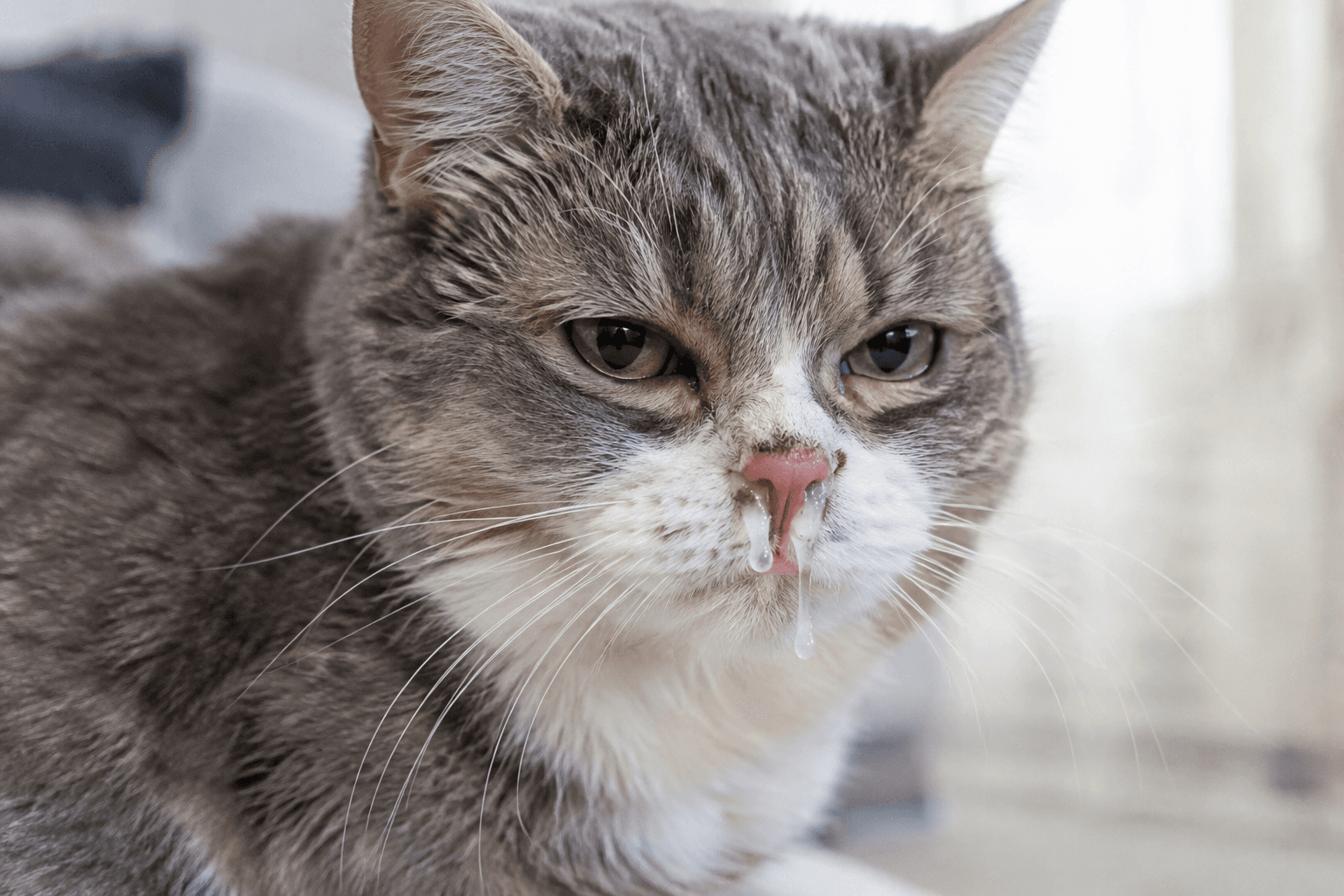
One ordinary morning, you lean in to give your cat a cuddle and notice a clear, shiny strand at the edge of her nostril. 🐱
You pause and wonder: is this a passing sniffle, or something to worry about?
The truth is, a cat runny nose is one of the most common reasons cat parents reach out for advice. Think of it like the warning light on your car’s dashboard. It doesn’t tell you exactly what’s wrong, but it says: pay attention!
We wrote this guide at SCOTY for worried cat parents like you. We’ll walk with you step by step, from understanding to making the right decision. 💛
Normal vs. Abnormal Discharge
A little moisture is completely normal. Picture a kitchen tap that drips once an hour, versus one that runs nonstop. The first is fine. The second needs a look.
That’s the key difference between normal moisture and a true cat runny nose:
- ✅ Normal: Light moisture, or a rare clear drop after sleeping or playing, with no other symptoms.
- ⚠️ Abnormal: Constant or heavy discharge that shows up daily, or comes with a change in your cat’s behavior.
- ⚠️ Abnormal: Discharge that changes color or thickness, or comes from only one nostril.
Discharge Colors and Meanings
Color is a useful clue, but it is not a final diagnosis:
- 💧 Clear and watery: Often the start of a viral cold, irritation, or allergy.
- ☁️ White or foamy: May point to mucus inflammation or congestion.
- 🟡 Thick yellow or green: Usually suggests a secondary bacterial infection that needs a vet’s assessment.
- 🩸 Bloody or pink-tinged: Needs a faster check. It could be a foreign object, a dental problem, or a deeper inflammation.
It’s like reading a traffic light: clear means keep watching, while yellow and bloody mean stop and ask the vet.
Accompanying Signs to Watch
A runny nose rarely comes alone. Watch for these companion signals:
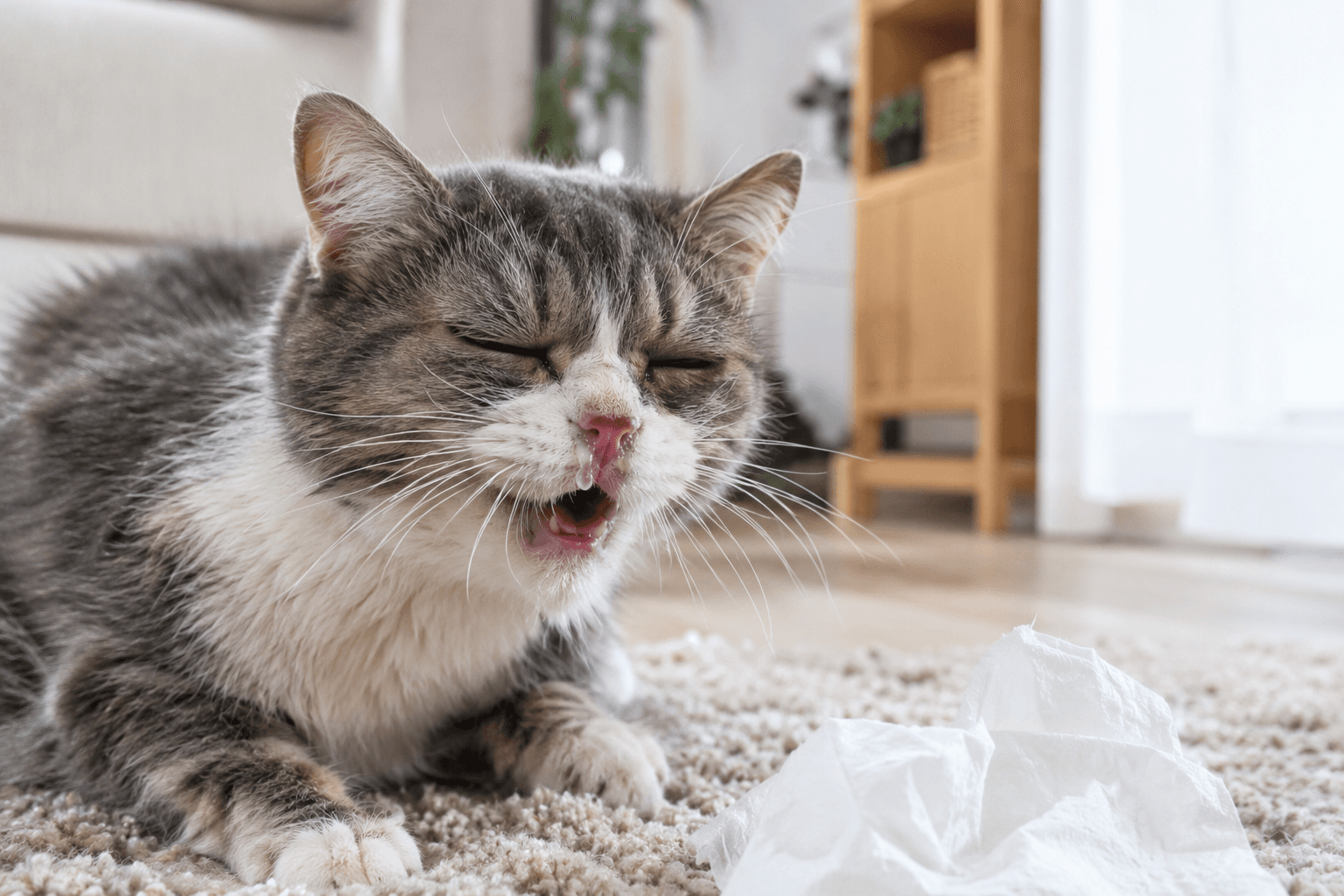
- Repeated bouts of cat sneezing, especially back-to-back fits.
- Red, watery eyes, which often happen with eye inflammation in cats alongside a cold.
- Loss of appetite. Cats “eat with their noses” before their mouths, so a blocked nose can mean a refused meal.
- Lethargy and a raised body temperature.
- Snoring or noisy, congested breathing.
- Facial swelling or unusual drooling.
Cats at Higher Risk
Not all cats face colds equally:
- 🍼 Kittens: Your little one’s immune system is still developing, which is why it helps to know the common kitten diseases.
- 👵 Senior cats: Weaker immunity and slower recovery.
- 😺 Unvaccinated cats: More exposed to the viruses behind colds.
- 🏠 Multi-cat homes and shelters: Infection spreads fast between cats.
- 😽 Flat-faced breeds like Persians: Their nasal passages are narrower by nature, so they’re affected quickly.
When to Seek Veterinary Help
There’s no need to panic, but don’t wait too long in these situations:
- 🚨 Immediate emergency: Open-mouth breathing, labored breathing, or pale or bluish gums. Go to the nearest in-person clinic right away.
- ⏰ Within 24 hours: Refusing food or water, bloody discharge, or heavy yellow-green discharge.
- 📅 Within a few days: A runny nose lasting more than 5 to 7 days without improvement, or one that keeps coming back.
If you’re unsure, you’re not alone. SCOTY’s remote veterinary clinic lets you browse doctors’ profiles and choose the one that suits your cat’s case. 🩺
You can attach detailed photos and videos before the session so the vet can review them in advance. Then you’ll talk in a 30-minute call to discuss every detail. When you’re ready, book an appointment with a vet straight from the calendar. 📅
And remember: remote consultation does not replace an in-person visit for breathing emergencies.
Causes of Cat Runny Nose 🧬
Now that you know when to worry, let’s tackle the big question: why does your cat’s nose run in the first place?
The causes are many, like a tree with one root and many branches. The symptom is the same, but behind it are very different stories. 🌳
Viruses Behind the Cold 🦠
In most cases, a virus is the culprit. The best known are feline herpesvirus and feline calicivirus. These two are behind what we call “cat flu,” or upper respiratory tract infection.
Herpesvirus is like a houseguest who never really leaves. After your cat recovers, the virus hides in her body and can wake up during stress. 🏠
- 😿 Common triggers: Moving house, a new baby or pet, travel, or even moving the food bowl.
- 🤧 Typical signs: Sneezing, watery discharge, teary eyes, and a few days of lethargy.
- 👄 Calicivirus signs: Ulcers may appear in the mouth or on the tongue, so your cat refuses food despite being hungry.
The reassuring news is that most mild cases improve with supportive care and a vet’s assessment. But the risk is higher for kittens and cats with weak immunity.
Secondary Bacterial Infections 🔬
The virus opens the door, and bacteria walk in behind it. Vets call this a “secondary infection.”
Imagine the virus broke the lock, and then bacteria moved into the house. 🚪
- 🟡 The classic sign: Discharge turning from watery to thick yellow or green.
- 👃 Sometimes a bad smell, along with congestion that affects your cat’s appetite.
- 🦠 Known germs: Bordetella, Chlamydia felis (which affects the eye and nose together), and Mycoplasma.
Here’s some heartfelt advice: never give your cat leftover antibiotics from an old prescription, or any human medicine. Some human cold remedies, like decongestants, are toxic to cats. ⛔
Antibiotics should only be given after a vet’s assessment. They don’t help a purely viral cold, and they can do harm if chosen unnecessarily.
Fungi and Cryptococcus 🍄
You may be surprised that fungi can cause a runny nose too. The best known is Cryptococcus, one of the most common fungal infections of the cat’s nose.
This fungus lives in soil and bird droppings, especially from pigeons, and a cat is infected by inhaling its spores. 🕊️
- 🔎 Telltale signs: Chronic discharge from one nostril, or swelling over the bridge of the nose that looks like a “broader nose.”
- 📆 How it differs from a cold: It doesn’t get better with time. It drags on and worsens.
Treating a fungal infection is completely different from treating bacteria. Antibiotics don’t affect fungi, and the mainstay is antifungal medication, which is why cat fungus treatment takes longer and asks for more patience from you. ⏳
Diagnosis requires lab tests and can’t be confirmed from a photo alone.
Allergies and Foreign Objects 🌾
Not every runny nose comes from a germ. Sometimes the cause is something in your home.
Allergies and irritants:
- 🌫️ Litter dust, especially scented types.
- 🚬 Cigarette smoke or incense.
- 🧴 Perfumes, cleaning sprays, and air fresheners.
- 🌼 Pollen in spring.
Foreign objects:
- 🌿 A blade of grass or plant seed your cat inhaled while playing.
- ➡️ The giveaway: sudden, intense sneezing and discharge from one nostril only.
If the object is deep inside, don’t try to remove it with your fingers or tweezers. You may push it further in and injure the delicate nasal tissue. 🙅
Teeth, Polyps, and Tumors 🦷
This branch is the least famous, but it matters, especially when a runny nose refuses to improve.
- 🦷 Tooth root abscess: The roots of the upper teeth sit very close to the nasal cavity. Inflammation can create a channel between mouth and nose, causing pus-like discharge from one nostril.
- 🎈 Nasopharyngeal polyps: Benign growths seen in young cats that block the airway and cause snoring and difficulty breathing.
- 🧪 Tumors: More common in older cats, including lymphoma and some nasal cancers. They often begin with chronic, blood-tinged discharge or facial distortion.
Don’t let this list frighten you. These conditions are far less common than viral colds. But they’re exactly why we say: a runny nose that drags on shouldn’t be left to time.
There’s also a frustrating condition called chronic rhinosinusitis. It develops in some cats after repeated herpesvirus infections, leaving them snoring and sniffling for years. These cases need a long-term plan and understanding from the cat parent. 💛
If this variety feels overwhelming, that’s normal. At SCOTY, we meet many cat parents asking, “How do I know whether my cat’s runny nose is minor or serious?” The answer is that a trained vet’s eye sees what we can’t. 👀
You can film a short clip of your cat breathing and sneezing and upload it before the session, so the vet can review it and picture the case ahead of time. Everything discussed is saved in your pet’s medical file inside the app, so you can return to it whenever you like. And when the time feels right, you can book your appointment with the vet in minutes. 🗓️
Diagnosis and Home Care 🩺
We’ve covered the causes. Now for the practical part: how does the vet find the real cause, and what can you do at home to comfort your pet?
Think of the vet as a calm detective, collecting clues one by one before announcing a conclusion. 🕵️
What Does the Vet Examine?
The vet’s first tool is questions, and your answers matter more than you’d think:
- 📝 When did the discharge start, and is it from one nostril or both?
- 💉 Is your cat vaccinated? Has she mixed with other cats recently?
- 🏠 Has anything changed at home: new litter, an air freshener, furniture, or a new guest?
- 🍽️ How have her appetite and energy been in recent days?
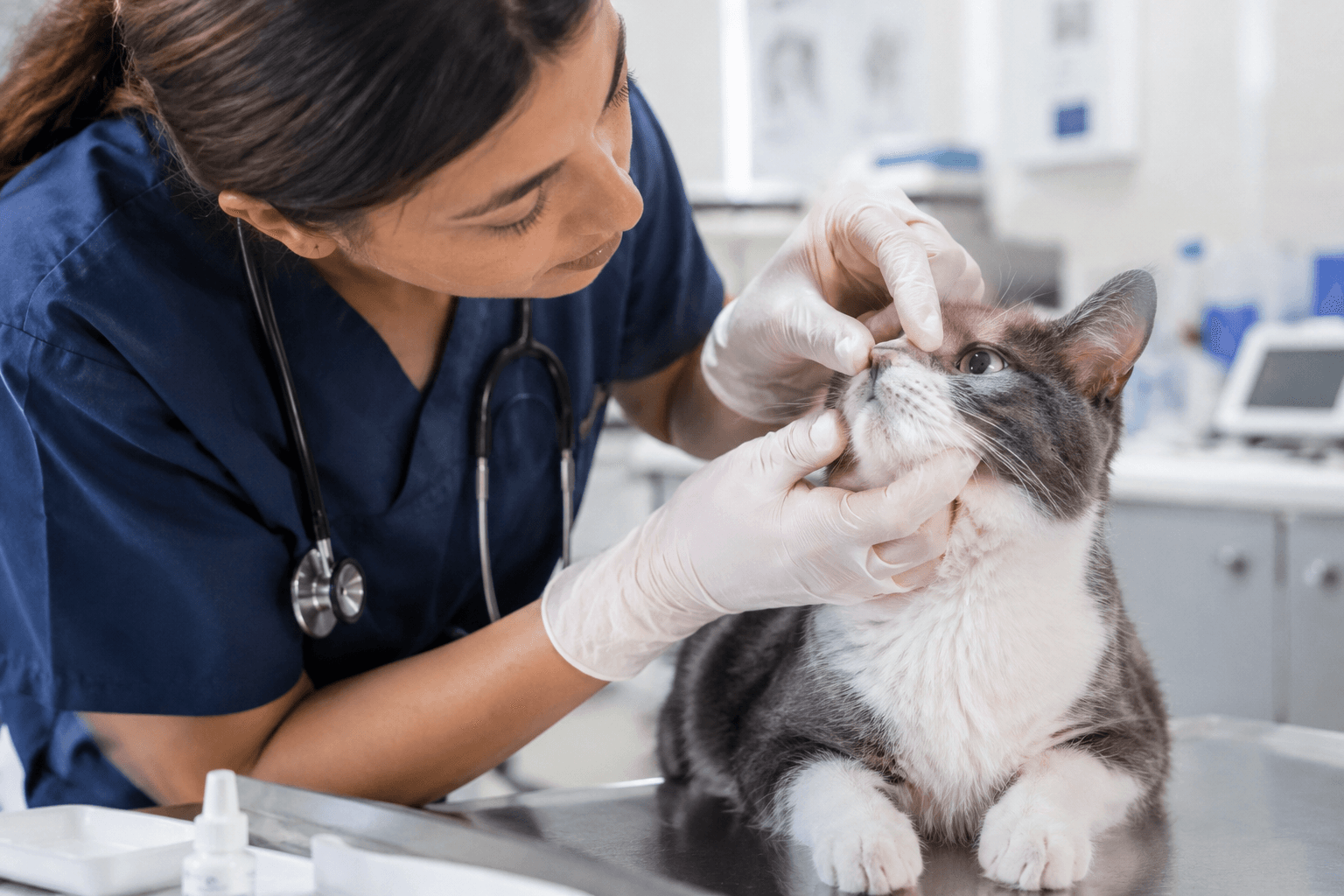
After the questions comes the physical exam: taking her temperature, listening to her chest, checking her eyes, mouth, and teeth, and feeling the face for swelling.
If the discharge persists or is complicated, the vet may recommend deeper steps:
- 🧫 PCR swab: To detect the viruses and bacteria behind the cold. Especially useful in multi-cat homes.
- 🩸 Blood tests: Including testing for feline leukemia and feline immunodeficiency viruses, which weaken immunity and prolong colds.
- 🧪 Cryptococcus test: When a fungal infection is suspected.
- 📷 Dental X-rays or a CT scan: To examine the sinuses and deeper tissues.
- 🔬 Rhinoscopy and biopsy: When polyps or tumors are suspected.
Not every cat needs all of these tests. Most mild colds are managed with observation and supportive care.
Medical Treatment Options
Treatment follows the cause, and there is no single prescription for all cats. Trust your vet to choose what suits your pet:
- 🛌 Supportive care: The foundation of treating viral colds: rest, hydration, good nutrition, and monitoring.
- 💊 Antibiotics: Prescribed for bacterial infection and completed for the full course, even if your cat looks better after two days.
- 🍄 Antifungals: For cryptococcosis, and they can take weeks or months.
- 🦠 Antivirals: Sometimes prescribed by the vet for severe or recurrent herpesvirus cases.
- 🍗 Appetite stimulants and fluids: If your cat refuses food or shows signs of dehydration.
- 🦷 Dental treatment or surgery: For abscesses, polyps, or masses.
One supplement many cat parents ask about is L-lysine. Scientific evidence has not convincingly shown a benefit, so ask your vet before buying it rather than relying on it alone.
And remember this golden rule: never give your cat paracetamol (acetaminophen) or any human cold medicine. Paracetamol is toxic to cats even in small doses. ⛔
Cleaning the Nose and Eyes Safely
Gentle home care makes a real difference to your cat’s comfort. A blocked nose is like trying to eat with a heavy cold: no taste, no smell. 😮💨
To clean the nose and face:
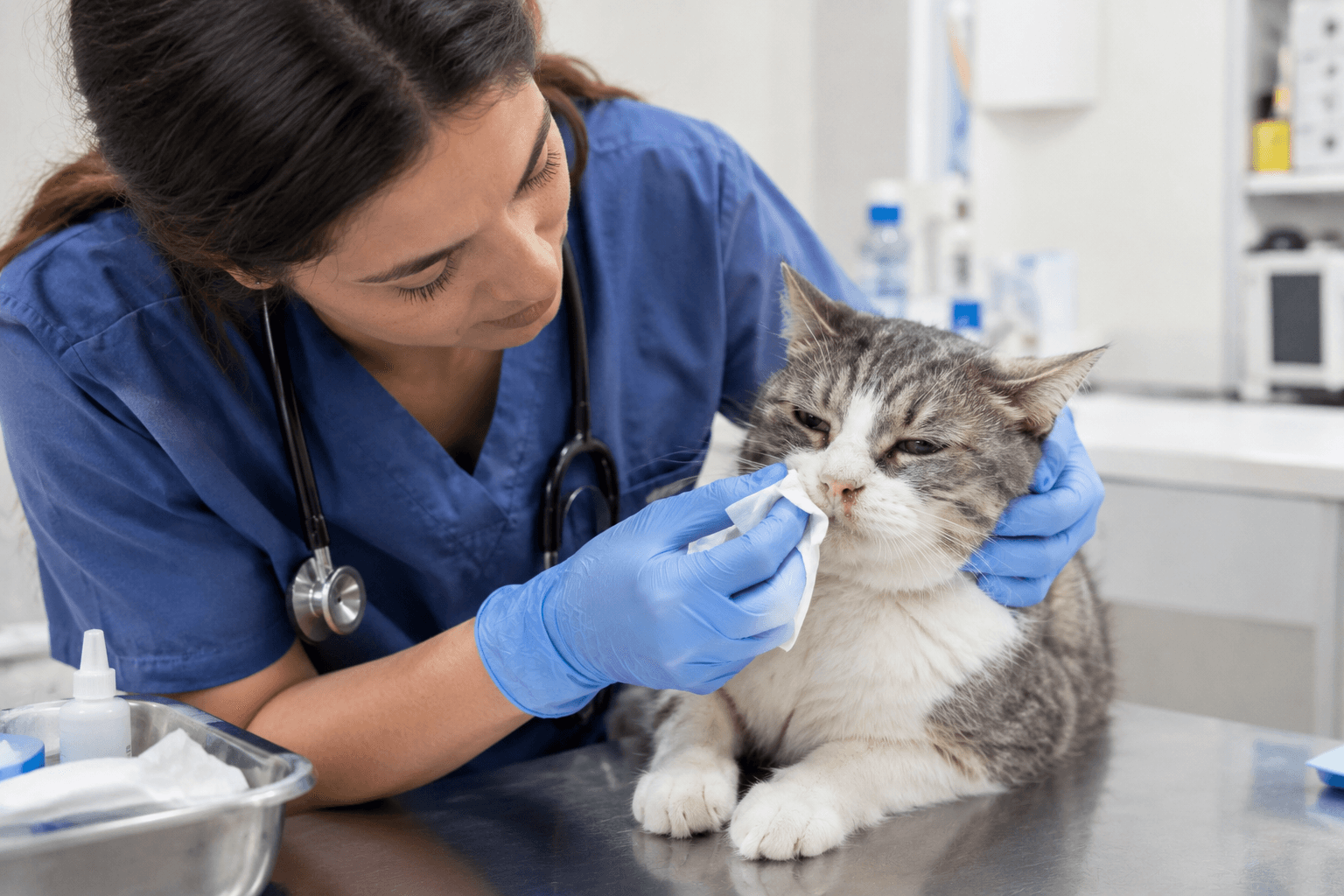
- 🧼 Dampen a cotton pad or gauze with warm water or sterile saline.
- 🌸 Wipe dried discharge around the nose gently, without pressing.
- 🚫 Never insert anything into the nostril, neither cotton nor swabs.
To ease congestion:
- 🚿 Sit with your cat for 10 to 15 minutes in a steamy bathroom, and stay with her the whole time.
- 🍲 Warm her wet food slightly so the aroma rises. This helps tempt a congested cat to eat.
- 💧 Encourage drinking by putting out more than one water bowl, or adding a little light broth free of onion and garlic.
Since a cold often brings watery eyes, eye care is part of the plan. Wipe each eye with a separate cotton pad, from the inner corner outward. For more detail on treating cat eye discharge and cleaning methods, it’s worth reviewing the specifics with your vet.
And strictly avoid essential oils and human decongestant rubs like Vicks. Menthol, camphor, and eucalyptus are dangerous to cats. ⚠️
Reading a Sick Cat’s Body Language
Cats are masters at hiding pain, an ancient instinct inherited from their wild ancestors. So learning her body language shows you what she can’t say with a meow.
Knowing cat sitting positions and what they mean can help you tell ordinary relaxation from discomfort.
Watch for these signals:
- 🍞 The hunched loaf: Body tucked in, head lowered, eyes half-closed for long periods.
- 🙈 Sudden hiding: A social cat who now retreats under the bed or behind furniture.
- 🧎 Stretching the head up and forward: A cat extending her neck to make breathing easier.
- 😾 Neglected grooming: A messy coat because she’s stopped taking care of herself.
- 🤐 Breathing through the mouth: This is an emergency sign. Don’t wait.
None of these is a diagnosis on its own, but each says: “I’m not okay.” When you notice a change in your cat’s behavior, that is exactly the information the vet needs.
Remote Veterinary Consultation
In many cases, your cat doesn’t need a stressful car ride or an hour in a waiting room that only raises her anxiety. 🚗
You can consult an online cat vet to assess the situation, understand how serious it is, and learn whether home care is enough or an in-person exam is needed.
This is where SCOTY comes in, with clear steps that put your mind at ease:
- 📅 Choose the right vet from their profile and book a slot from the calendar.
- 🎥 Attach photos and videos of your cat before the session.
- 📞 Talk in a 30-minute call and ask about everything on your mind.
- 📄 Receive an approved electronic prescription, which you can download and fill online with ease.
- 🗂️ The full case report is documented in your cat’s medical file for you to return to any time.
And the feature cat parents love most: a free follow-up period via chat, available around the clock for a full week. Ask about any change that comes up, and you also get another follow-up call at no cost. 💛
This service has one honest limit: it can’t perform swabs, X-rays, or lab tests. If the vet decides your cat needs them, you’ll be directed straight to an in-person exam. When you want to begin, you can book an appointment with the vet at any time that suits you. 🐾
Prevention and Emergency Signs 🛡️
The best treatment is the one you never need. In this section, we close the circle with steps that protect your pet from repeat episodes of a cat runny nose, and remind you when it becomes an emergency. 💛
Core Vaccines for Protection 💉
Vaccination is like a seatbelt. It doesn’t prevent every accident, but it greatly reduces the damage when one happens.
The core combination vaccine protects against the most serious causes of colds and infections:
- 🦠 Feline herpesvirus: The number one cause of colds and nose and eye discharge.
- 👄 Calicivirus: Causes respiratory infections and mouth ulcers.
- 🧬 Panleukopenia: A dangerous disease that attacks the gut and immune system.
Here is a general schedule most vets follow:
- 🍼 Kittens: Doses begin at 6 to 8 weeks of age, repeated every 3 to 4 weeks until about 16 weeks.
- 🎂 After one year: A booster dose, then the next interval is set by your cat’s lifestyle and your vet’s advice.
Don’t expect vaccination to prevent infection entirely. But it often makes symptoms milder and shorter, and that alone is worth it.
It’s also worth asking your vet about extra vaccines, such as Chlamydia or Bordetella, if you have a multi-cat home or your cat visits shared boarding facilities.
A Healthy, Safe Home 🏡
Herpesvirus wakes up with stress, so a calm home is part of preventive care. Imagine living in a noisy room with nowhere to hide. How would you feel? 😿
Start with these simple steps:
- 🧘 Reduce stress: Keep consistent feeding and play times, and provide high perches and hiding places.
- 🌬️ Good ventilation: Open the windows daily to refresh the air without exposing your cat to a cold draft.
- 🪣 Low-dust litter: Avoid scented types, since irritants make the nose more sensitive.
- 🚭 A smoke-free home: No cigarettes, incense, or strong air fresheners.
- 🍽️ Separate bowls: Each cat gets her own food and water, washed regularly with hot water and soap.
- 🙌 Wash your hands: After handling a sick cat and before touching the others.
If you bring a new cat home, isolate her for at least two weeks before she mixes with the rest. This simple step prevents many infections in multi-cat homes. 🚪
Other Symptoms and Emergency Signs 🚨
A sick cat rarely suffers from just one thing. Side symptoms often distract you from the main problem.
You might notice head shaking and constant scratching at the ear and assume it’s sneezing or cold discomfort. But it could be ear mites in cats, which leave a dark discharge like ground coffee inside the ear. 👂
Digestion can also be upset by illness or after starting medication, leading to loose stools. Knowing the causes of diarrhea in cats helps you tell a passing upset from a condition that needs a vet. 🩺
The emergency signs that cannot wait are:
- 🚨 Open-mouth breathing, or visible effort in the chest and belly.
- 🚨 Pale or blue gums.
- 🚨 Refusing food and water for more than 24 hours, especially in kittens.
- 🚨 Repeated vomiting or diarrhea with severe lethargy.
- 🚨 Heavy bloody discharge or sudden facial swelling.
- 🚨 Seizures or loss of consciousness.
If you see any of these, don’t wait for an appointment and don’t browse the internet. Go to the nearest in-person clinic immediately. In these moments, minutes matter more than any written advice.
Quick FAQs ❓
Can my cat’s runny nose spread to my other cats?
Yes. Most of the viral causes are contagious between cats through droplets, shared bowls, and contact. Isolate the sick cat as much as you can.
Can it spread to us humans?
Cat cold viruses don’t usually infect people. Still, always wash your hands, and if someone in your home has a weakened immune system, consult their doctor.
How long does recovery take?
A mild cold usually improves within 7 to 10 days, and can stretch to two or three weeks. If it doesn’t improve, or improves and then returns, bring the vet back into the picture.
Can I give her human nasal drops?
No. Some human solutions can harm cats. Ask the vet for a suitable alternative.
Can symptoms come back after recovery?
They can return in cats with herpesvirus during stress or weakened immunity. This is well known and can be managed with good care and a calm environment.
Summary and Free Follow-Up 🐾
Let’s sum up our journey with the key points:
- 💧 A runny nose has many causes. Viruses are the most common, and the most worrying are those that drag on without improving.
- 🎨 Color, thickness, and which nostril is affected are useful clues for the vet, but not a final diagnosis.
- 🏠 Gentle home care comforts your cat, but it doesn’t replace an exam when one is needed.
- ⛔ No human medicines, no essential oils, and no antibiotics without a prescription.
- 💉 Vaccination and a calm environment are your strongest lines of defense.
If you’re standing in front of your cat right now, unsure what to do, we at SCOTY are here to lend a hand. 🤝
Our remote veterinary clinic lets you choose the right vet, attach photos and videos of the case, and talk in a 30-minute call. Afterwards, you receive an approved electronic prescription, and the case report is saved in your pet’s medical file.
Best of all, your journey doesn’t end when the session does. You get free follow-up via chat around the clock for a full week, plus another follow-up call at no charge. 💛
So don’t let worry grow in your chest. Book your appointment with the vet today, and let your cat breathe easy. 😻