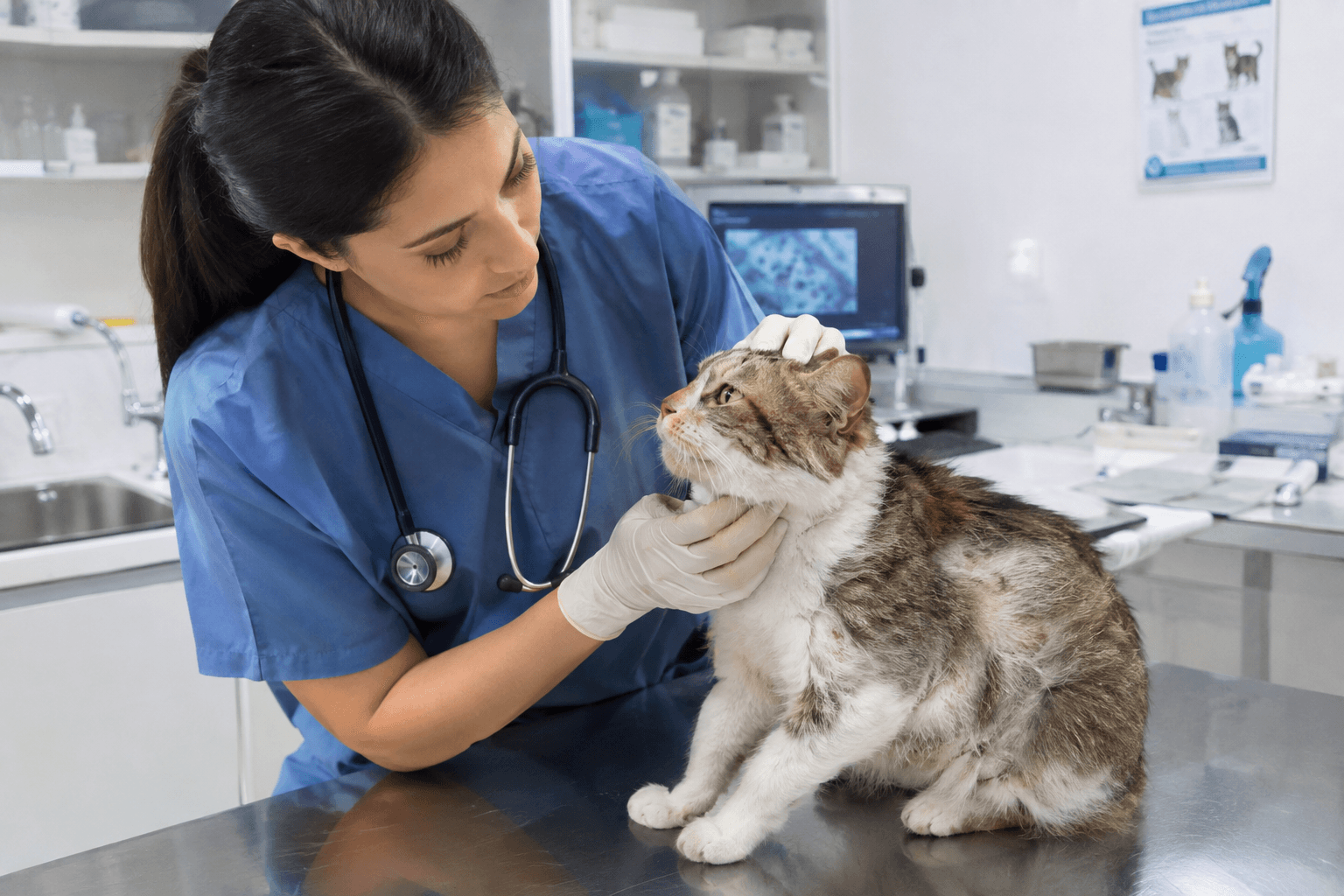
Cat Fungal Infections 🍄 — What Are They and How Do You Spot Them?
Did you notice a small bald patch above your cat's ear? Or maybe some flaky skin and relentless scratching that just won't stop? 🐾
Take a deep breath before the worry sets in — because what you're seeing is most likely one of the most common conditions in cats: a fungal infection. And the great news is that it's completely treatable when you catch it early and respond the right way.
In this comprehensive guide, you'll find everything you need to know about cat fungus treatment: from recognizing the very first symptoms, to exploring all available treatment options, to protecting your cat and home from an unwelcome recurrence.
🍄 Cat Fungal Infections — What Are They and How Do You Spot Them?
Types of Fungal Infections That Affect Cats
Not all fungal infections are the same, and your cat may be vulnerable to more than one type. The most common ones include:
- Ringworm (Dermatophytosis): By far the most widespread — and despite the name, it has absolutely nothing to do with worms! It's a fungal infection that targets the outer skin layer, fur, and claws.
- Candidiasis: Less common, typically appearing in moist areas of the body or when the immune system is compromised.
- Malassezia: A yeast that naturally lives on the skin but becomes a problem when it overgrows, causing ear infections and skin inflammation.
Think of ringworm spores like tiny invisible seeds — you can't see them with the naked eye, but they find warm, welcoming skin the perfect place to take root and spread.
How Does a Fungal Infection Spread?
This is the question every cat owner worries about — especially in households with children or multiple cats. Fungal infections spread through very specific routes:
- Direct contact with an infected cat or another sick animal 🐈
- Contaminated surfaces and objects: bedding, grooming tools, shared food bowls
- Soil and outdoor environments: particularly for cats that roam outside
- An infected mother passing the infection to her kittens during nursing
Young kittens and newborns are the most vulnerable because their immune systems aren't fully developed yet — which overlaps with many of the common kitten diseases that may seem minor but always deserve attention.
Symptoms of Fungal Infection — What Will You Actually See?
This is where your attentiveness as a cat owner truly matters. Fungal infection symptoms aren't always dramatic — they often start as subtle changes you might easily overlook.
The Most Common Skin Symptoms:
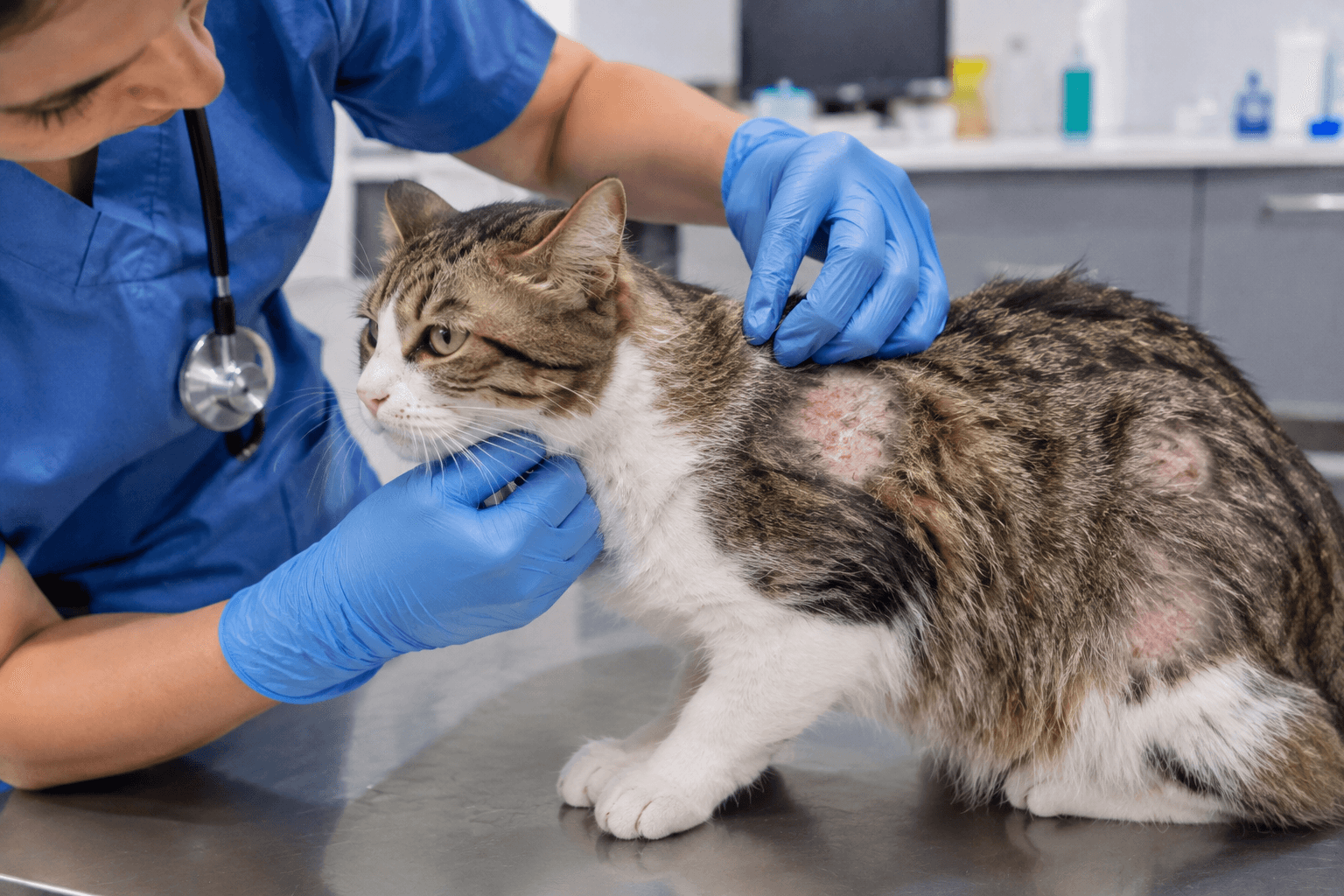
- 🔵 Circular bald patches (Alopecia): The classic sign of ringworm — a round or oval hairless spot that may appear on the head, ears, neck, or back
- 🔵 Flaky or cracked skin: Similar to very dry human skin, but localized to specific areas
- 🔵 Redness and irritation: The affected area may look red and slightly swollen
- 🔵 Persistent scratching: You'll notice your cat repeatedly scratching the same spot or biting at her skin
- 🔵 Brittle, breaking fur: Hair becomes fragile and snaps easily at the root
Symptoms That Might Surprise You:
- Some infected cats show absolutely no visible symptoms and silently carry the infection — this is the biggest reason fungal infections spread through multi-cat homes without the owner ever realizing it
- Recurring ear infections may be fungal at their core
- If you notice your cat sneezing frequently alongside skin changes, that combination warrants a thorough veterinary evaluation
Is Your Cat's Fungal Infection a Risk to You? 🚨
The direct answer: Yes, ringworm can spread to humans — this falls under the category of zoonotic diseases, meaning illnesses transmissible between animals and people.
But there's no need to panic, because the situation is far more manageable than you might think.
Who in Your Home Is Most at Risk?
- Young children (under 10 years old)
- Elderly family members
- Immunocompromised individuals (those with chronic illnesses, cancer patients, people on immunosuppressive medications)
- Anyone who frequently handles the cat without washing their hands afterward
How to Protect Yourself and Your Family:
- Always wash your hands thoroughly after touching your cat until the treatment course is complete
- Avoid touching infected areas without gloves
- Don't share bedding with your cat until she has fully recovered
- If a ring-shaped, scaly red patch appears on anyone's skin, see a doctor promptly
Remember: the best protection for your whole family starts with diagnosing and treating your cat as quickly as possible. And if you need expert veterinary advice from the comfort of home, SCOTY is available for you any time you need it.
Diagnosing Fungal Infections in Cats 🔬
Many cat owners fall into the trap of self-diagnosis — they spot a bald patch and immediately conclude "fungal infection!", or they buy an antifungal shampoo for a cat that's actually suffering from a skin allergy or mites. 😟
The cost of getting it wrong is high: incorrect treatment means wasted time, unnecessary stress for your cat, and sometimes a worsening of the actual condition. This is precisely why accurate diagnosis is half the cure.
How Does a Vet Diagnose Fungal Infections?
A veterinarian doesn't rely on a single glance to reach a conclusion — they have multiple diagnostic tools and choose based on the individual case:
Wood's Lamp Examination 💡
A special ultraviolet lamp is shone over your cat's coat in a darkened room. Certain strains of ringworm fungi — particularly Microsporum canis, the most common culprit — will glow a distinctive apple-green under this light.
However, keep in mind: not all fungal species fluoresce, so a negative result doesn't automatically mean your cat is in the clear. Additional testing is often still necessary.
Direct Microscopic Examination 🔭
The vet takes a small sample of hair or skin scaling and examines it directly under a microscope, looking for fungal filaments or spores surrounding hair shafts. This test is relatively quick and provides a useful preliminary indication.
Fungal Culture — The Gold Standard ✅
The most accurate and reliable test available. A swab of fur or skin is placed in a specialized growth medium for 7 to 21 days. If fungi are present, the medium changes color and the specific species can be precisely identified.
The only drawback? It takes time — but it gives you absolute certainty and helps pinpoint the most effective treatment.
Lab Tests That May Be Needed
Depending on the severity of your cat's condition and her age, your vet may request additional tests to complete the picture:
- Complete Blood Count (CBC): To assess immune status and check for any concurrent infection the body may be fighting
- Blood Chemistry Panel: Important before starting certain antifungal medications that can affect liver function
- Skin Scraping: To rule out mange and other skin parasites that closely mimic fungal infections in appearance
- Skin Biopsy: In persistent or treatment-resistant cases, to arrive at a definitive diagnosis
These tests may seem like a lot, but they can ultimately save you weeks of incorrect treatment and mounting frustration. 💙
Telling Fungal Infections Apart From Other Skin Conditions
Here lies knowledge that vets have and many owners don't — several conditions look remarkably similar to fungal infections on the surface:
| What You See | Could Be Fungal | Or Could Be |
|---|---|---|
| Circular bald patch | ✅ Ringworm | Mange, or stress-related over-grooming |
| Flaky skin with itching | ✅ Fungal infection | Food allergy, or contact dermatitis |
| Recurring ear infections | ✅ Malassezia yeast | Bacteria, or a foreign body in the ear canal |
| Redness around the eyes | ✅ Fungal | Viral or bacterial eye inflammation in cats |
The lesson is clear: never rely on a single symptom to diagnose your cat's skin problem.
And if you have questions you want answered right now before waiting for an appointment, browsing through vet questions and answers can offer helpful guidance from real experiences shared by owners just like you.
When Does Diagnosis Become Urgent? 🚨
Some situations simply cannot wait for a "let's see how it goes" approach — these signs mean your cat needs a veterinary assessment immediately:
- Rapid spread of patches across multiple body areas within just a few days
- Open sores or wounds developing in affected areas
- Loss of appetite or noticeable lethargy accompanying the skin symptoms
- More than one animal in the household showing similar symptoms simultaneously
- A family member developing ring-shaped red patches on their skin, especially a child
- No response to treatment after two full weeks
In any of these situations, don't hesitate — book a consultation with a vet right away. Delay means wider spread, longer treatment, and a harder road to recovery.
What makes SCOTY especially valuable here is that before your session even begins, you can upload clear photos and short videos of the affected areas directly to the platform — so your vet reviews the visuals before the call starts and arrives at the session with a complete picture of the situation. That means more time spent on solutions, less time spent trying to describe what you're seeing. 🎯
Cat Fungus Treatment 💊 — All Your Options Explained
This is the section every worried cat owner came looking for — how do we actually get rid of this fungal infection?
Here's the truth you need to know upfront: cat fungus treatment isn't a single pill and done. It's a comprehensive, coordinated approach that combines treating the body from the outside, supporting it from the inside when needed, and thoroughly disinfecting the surrounding environment — because fungal spores are remarkably patient and can survive for a long time outside your cat's body. 🍄
Topical Treatment — Shampoos and Creams
Topical treatment is the first line of defense and is often sufficient on its own for mild to moderate cases.
Antifungal Shampoo 🛁
Active ingredients typically include Ketoconazole, Miconazole, or Selenium Sulfide. The correct technique makes all the difference:
- Lather the shampoo thoroughly through your cat's entire coat
- Leave it on for 5 to 10 minutes before rinsing — this contact time is what makes the shampoo work, so don't rush it
- Repeat the bath at least twice a week for 4 to 6 weeks
- Always wear gloves during bathing to protect your own skin
Topical Creams and Ointments 🧴
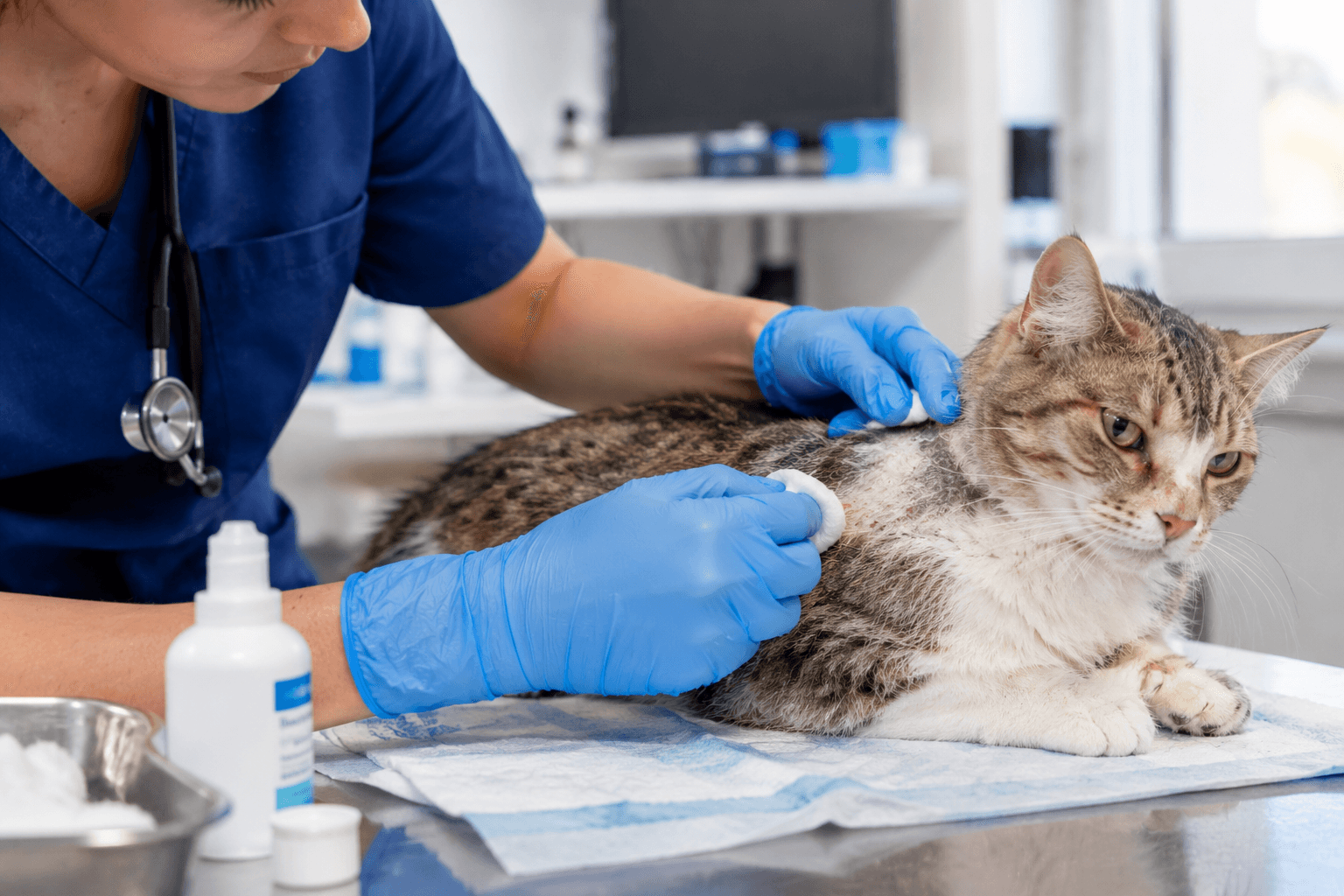
Applied directly to infected patches after gently cleaning and drying the area. The most commonly used include:
- Clotrimazole cream
- Miconazole ointment
- Terbinafine cream
⚠️ A critical warning: Never apply a cream designed for humans to your cat without explicit veterinary guidance — some ingredients perfectly safe for people are highly toxic to cats, especially when your cat licks her fur after application.
Sprays and Rinses 💧
Particularly useful for areas where creams are difficult to apply, such as the face and around the ears. Some formulations contain Lime Sulfur — notably strong-smelling, but remarkably effective.
Systemic Treatment — Oral Medications
When the infection has spread extensively, or when the skin isn't responding to topical treatment alone, your vet will turn to medications that work from the inside out.
Itraconazole 🔵
Currently the preferred first-choice treatment among most veterinarians for ringworm in cats. Typically given daily or on a pulse schedule (one week on, one week off) for 3 to 6 weeks.
Fluconazole 🔵
A solid alternative, particularly useful in situations requiring more precisely controlled dosing. Available by veterinary prescription only.
Ketoconazole ⚠️
Previously used widely, but its use in cats has declined due to a higher risk of liver toxicity compared to newer alternatives.
A Critically Important Point About Oral Medications:
These drugs require ongoing medical supervision — your vet may request periodic blood work throughout treatment to monitor liver and kidney health. Never stop the medication early just because your cat looks better — the fungal infection may still be present beneath the surface and can return with greater intensity.
If you need a verified prescription without leaving home, booking a vet consultation through SCOTY gives you a downloadable, certified electronic prescription you can fill online immediately after the session wraps up. 📋
Disinfecting Your Home Environment 🏠
This is the step most owners skip — and then wonder why the infection keeps coming back.
Fungal spores can remain viable in your environment for up to 18 full months — in carpets, upholstery, wall crevices, and grooming tools. Treating your cat while leaving the environment untouched is like putting out a fire while leaving a burning ember smoldering in the corner.
What to Do Immediately:
- 🧹 Daily vacuuming: Vacuum carpets and upholstered furniture every day during the treatment period, disposing of the bag or canister contents immediately outside your home
- 🧴 Disinfect with diluted bleach: Mix at a 1:10 ratio with water and apply to all hard, non-porous surfaces
- 🛏️ Wash all bedding and covers: At 60°C (140°F) or higher — heat kills fungal spores effectively
- 🐾 Isolate your cat's belongings: Grooming brushes, collar, food bowl — disinfect them thoroughly or replace them entirely
- 🚫 Temporarily limit your cat's roaming area during treatment to reduce spore dispersal throughout the home
If you have other cats in the household and notice similar changes in any of them — or even if they appear fine but you're concerned — remember that cats can silently carry fungal infections without showing any symptoms. The disruption of intensive cleaning and environmental changes can itself contribute to why cats get angry and stressed when their daily routine and familiar environment are suddenly altered.
Natural Remedies — What Works and What Doesn't 🌿
No discussion of cat fungus treatment would be complete without addressing this thorny topic. The internet is filled with home remedy promises — some with a degree of merit, and others that are genuinely dangerous for your cat.
What Has Some Scientific Basis:
- Coconut oil: Has limited antifungal properties and is relatively safe if your cat licks it. But it's a supplement to treatment, never a replacement
- Diluted apple cider vinegar: Sometimes used as an external cleaning rinse only — never apply to broken skin or irritated areas as it causes significant stinging
What You Must Absolutely Avoid With Cats:
- ❌ Tea Tree Oil: Highly toxic to cats even in small amounts — causes seizures and neurological damage
- ❌ Garlic and onion: Toxic to cats and cause hemolytic anemia
- ❌ Essential oils in general: A cat's liver cannot metabolize many of them safely
- ❌ Concentrated bleach: Burns irritated skin and does nothing to treat the internal fungal infection
The truth every specialist vet will tell you: natural remedies may temporarily ease symptoms, but they don't eliminate fungal infections at their root. Delaying real treatment simply gives the fungus more time to spread and entrench itself.
If you're searching for a reliable animal vet number or a fast way to reach a specialist, SCOTY lets you browse detailed veterinary profiles, choose the doctor you trust, and book your appointment directly from the calendar — all from wherever you are. 🏡
And if your cat is experiencing digestive issues alongside skin symptoms — which can happen when cats excessively lick and swallow large amounts of fur while scratching due to intense itching — it's worth understanding the potential causes of diarrhea in cats to determine whether the two issues are related or entirely separate.
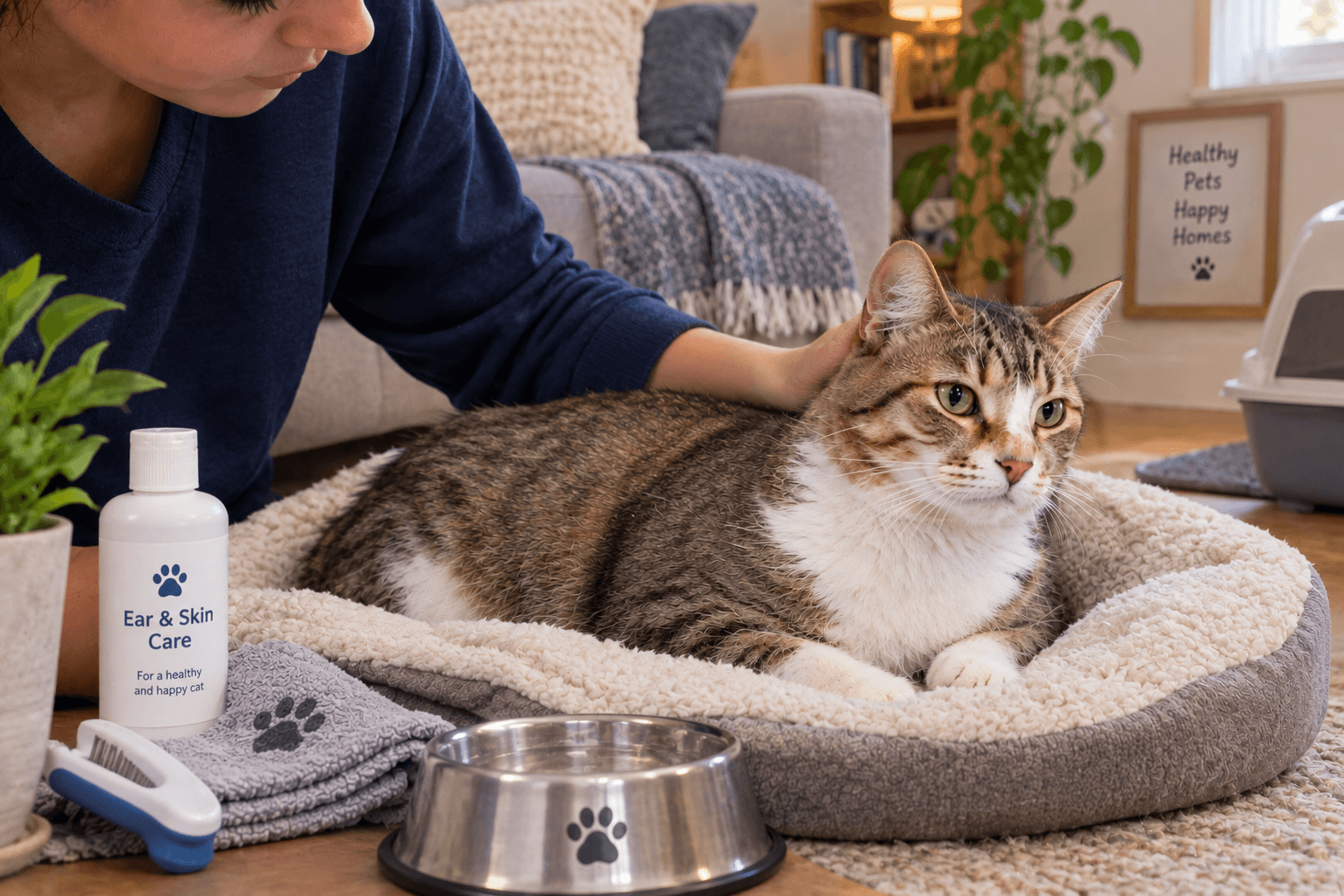
Prevention and Follow-Up 🛡️ — How to Keep Your Cat Protected
You've treated your cat, disinfected your home, and you're starting to see real improvement — that's wonderful! 🎉
But your journey toward your cat's health doesn't end here. Fungal infections are among the most likely skin conditions to recur in cats, and the most common reason they come back is almost always the same: the absence of a consistent prevention routine after treatment ends.
This section is your practical everyday guide — not theory, but real steps you can put into action with your cat starting today.
Daily Hygiene and a Prevention Routine 🧹
Protecting your cat from fungal infections doesn't require extraordinary effort — it requires consistency with simple habits:
Coat Care Routine:
- 🐾 Daily or every-other-day brushing: Removes dead fur that fungi love to inhabit, and helps you spot any skin changes early — before they have a chance to develop
- 🛁 Regular baths with appropriate shampoo: Once every one to two months is sufficient for healthy cats — just ensure the shampoo is specifically formulated for cats, not for humans or dogs
- ✂️ Regular nail trimming: Long nails trap dirt and moisture, creating an ideal microenvironment for fungal growth
A Clean Environment Equals a Healthy Cat:
- Change your cat's bedding at least once a week and wash it in hot water
- Clean the litter box daily and fully disinfect it every two weeks
- Maintain good ventilation in your cat's space — high humidity is a fungus's best friend
- Avoid overcrowding multiple cats into a tight space, as density dramatically accelerates the spread of infection
After Coming in From Outside:
If your cat ventures into the yard or interacts with other cats, gently wipe down her paws and coat with a clean cloth when she comes back inside. This simple habit significantly reduces the chance of bringing fungal spores into your home.
Proper Nutrition and Its Role in Immunity 🥩
This is an aspect many cat owners overlook entirely — but the science is clear: a cat that eats well has a stronger immune system and a significantly higher ability to resist fungal infections.
Fungi seize on immune weakness as a golden opportunity to take hold. This means that feeding your cat properly is actually one of the most powerful preventive tools you have.
What Supports Your Cat's Immune Defense Against Fungi?
- High-quality animal protein as the primary food source — cats are obligate carnivores, and their bodies depend on animal protein to build healthy tissue and a robust immune system
- Omega-3 and Omega-6 fatty acids: Maintain skin health and make it a stronger barrier against infection — found in fish oil and many quality commercial cat foods
- Zinc and Selenium: Two minerals that specifically support skin and coat health, present in well-balanced premium foods
- Fresh, clean water at all times: Dehydration weakens the skin and makes it far more susceptible to cracking and infection
If you're unsure which diet is truly best for your cat, a thorough read on cat nutrition will give you the full picture and help you make confident, knowledge-based decisions.
What to Avoid in Your Cat's Diet:
- ❌ Cheap foods loaded with grains and artificial preservatives as the primary nutritional source
- ❌ Relying entirely on dry kibble with no added moisture in the diet
- ❌ Feeding human food scraps — especially anything containing spices, garlic, or onions, which are toxic to cats
For a detailed breakdown of what's available on the market and an objective comparison of different options, the guide to the best types of cat food can help you evaluate your choices with real confidence.
When to Call the Vet Immediately 📞
Prevention is powerful, but the reality is that some situations go beyond what any owner can manage alone. These signs mean your cat needs a veterinarian right now:
🚨 Contact a vet immediately if you notice:
- Bald patches returning after completing a full treatment course
- The infection spreading to cover more than 30% of your cat's body
- Sores or discharge developing in affected areas
- Your cat has stopped self-grooming or appears notably lethargic and disengaged
- Any family member — especially a child — develops ring-shaped red patches on their skin
- A pregnant or nursing cat showing fungal symptoms — dosing protocols are very different in these cases
When Is Routine Follow-Up Enough?
If your cat has completed a full treatment course and shown consistent improvement, a routine check-up every 3 to 6 months with a vet is sufficient — particularly if you have multiple cats or young children in the home.
SCOTY — Your Support Never Stops 💙
We understand that monitoring your cat's health after treatment can feel exhausting at times — the questions keep coming, and the worry doesn't always settle easily, especially in those first days after a treatment course ends.
This is precisely where SCOTY becomes so much more than just an appointment-booking platform.
What Happens After Your SCOTY Vet Session?
Every completed session automatically comes with:
- 📋 A fully documented medical report for your cat's case, saved directly to her health file inside the app — accessible anytime, even years from now
- 💊 A certified electronic prescription ready to download and fill online immediately, with no printing or in-person pharmacy visit required
- 💬 A full week of free follow-up via 24/7 chat — any question that occurs to you at 3am while you're watching your cat, your vet is there to answer it
- 📞 A complimentary follow-up call to review your cat's progress and confirm the treatment is working as it should
And when you're ready to start, you can browse the detailed profiles of SCOTY's specialist veterinarians, choose the one you feel most comfortable all without leaving your home. Your cat is in the best possible hands. 🐾