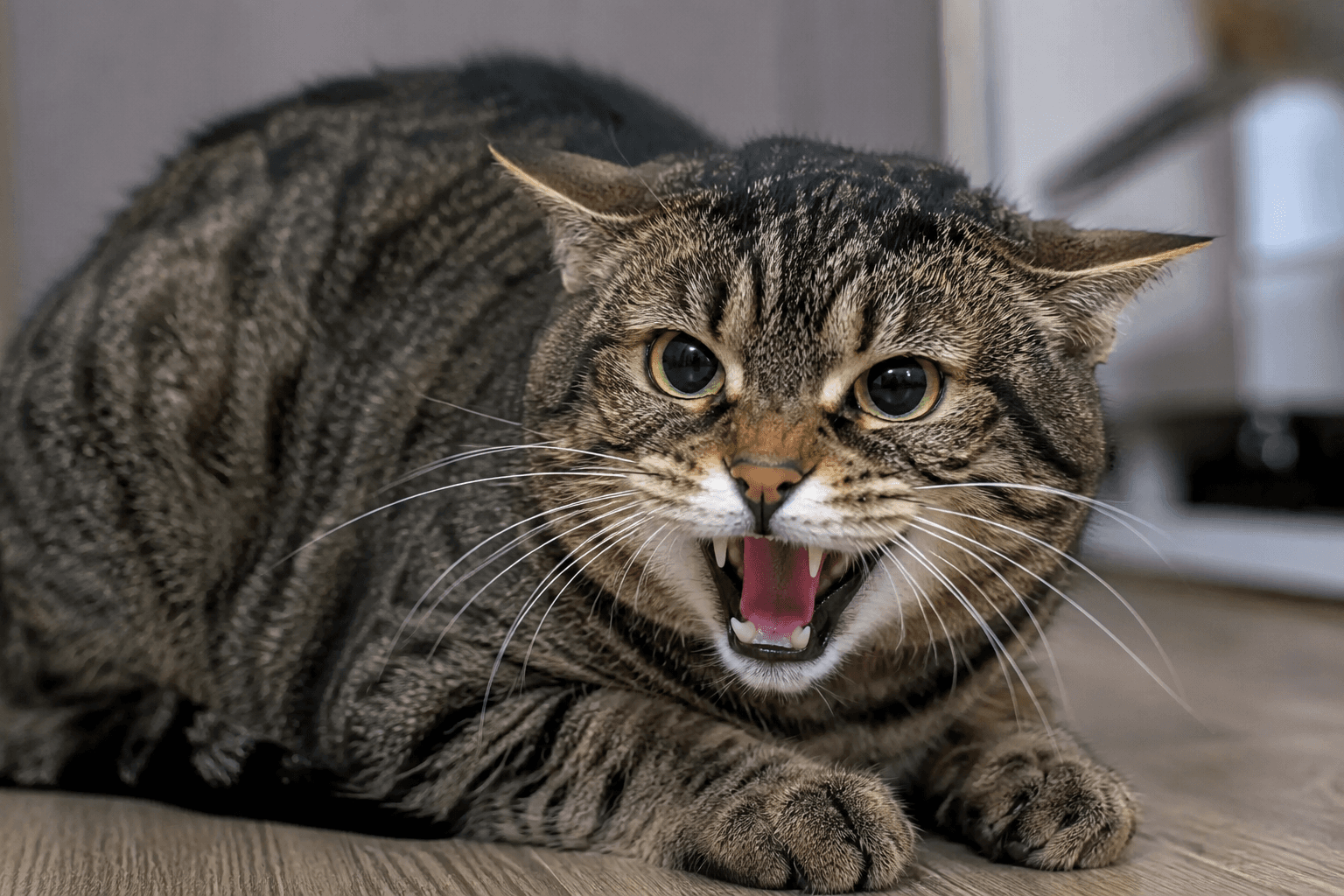
Moments ago your cat was rubbing against your legs, and now she's hissing and swiping with her claws like a different animal, leaving you puzzled about why cats get angry so suddenly.
Because understanding your pet is part of caring for them, SCOTY offers a remote veterinary clinic that puts a specialized vet, one who reads feline behavior with real expertise, within easy reach.
In this article, we explore what makes cats irritable or aggressive, from fear and pain to jealousy and changes at home, and show you how to spot the stress signals before annoyance turns into an attack.
And if you suspect a health issue behind her mood, book a consultation with a veterinarian and make sure everything is okay.
🐾 Understanding the Science Behind Why Cats Get Angry
Before we explore why cats get angry, there's one fundamental thing we need to understand: cats are not naturally aggressive animals.
By nature, cats are independent creatures that chose to coexist with humans thousands of years ago — but they were never "domesticated" in the same way dogs were. That means they opted into cooperation with us, while retaining their deep sensitivity and their need to feel in control of their environment.
What we label as "anger" in cats is most often:
- Fear that has no other outlet but aggression
- Physical pain communicating "don't touch me there"
- Stress triggered by a sudden change in their world
- Sensory overload from too much handling or noise
Imagine someone kept tickling a sensitive spot on your body and you had absolutely no way to say "enough!" — that's pretty much what your cat experiences when they reach their breaking point. 😅
That's exactly why understanding cat language is the first step above all else — because your cat is communicating constantly, it's just that we're often not listening.
🩺 Physical (Health-Related) Causes Behind Sudden Aggression
If your cat has always been calm and gentle, and has suddenly transformed into a tiny fury — the very first thing you should ask is: is she physically okay?
Pain is one of the most overlooked triggers by cat owners. Cats are masters at masking pain — an instinct inherited from their wild ancestors — and quite often, sudden anger or aggression is the only visible signal they give you.
The health conditions most commonly linked to sudden aggression include:
- Joint inflammation or hidden injuries: Your cat's left side hurts, so when you touch it, she lashes out.
- Neurological conditions: These can cause sharp, unpredictable mood swings.
- Dental or oral pain: Chronic mouth pain makes any social interaction feel unbearable.
- Hyperthyroidism: Common in senior cats and often causes agitation and anxiety.
- Severe itching or skin allergies: A cat suffering from constant irritation is a cat permanently on edge.
🔍 Important note: A sudden change in your cat's behavior always warrants a veterinary evaluation — because treating the body often resolves what appears to be a "behavioral" problem. You can easily connect with specialized veterinarians through SCOTY from the comfort of your home. 🏠
🧠 Psychological and Environmental Causes — When Home Becomes a Source of Stress
Cats are deeply territorial. Their world is your home — every corner, every familiar scent, every routine sound. Any disruption to that world can ignite stress and anger.
The most common psychological and environmental triggers include:
- Moving to a new home: New smells + new sounds + unfamiliar space = intense stress that can last for weeks.
- New furniture or rearranged rooms: Yes — even moving the sofa can genuinely bother her!
- The scent of strangers or other animals on your clothes: It signals to her that her "territory" is under threat.
- Lack of mental stimulation: A cat living a monotonous life without play or interaction accumulates negative energy that turns into aggression.
- Extended loneliness: Contrary to popular belief, cats do bond deeply with their owners and can suffer from separation anxiety.
- Loud, startling noises: Fireworks, thunder, machinery — classic triggers for panic and defensive aggression.
💡 Real-life example: One cat owner switched to a new brand of essential oil diffuser — their cat refused to enter the living room for an entire week and kept hissing at the air. The only culprit? An unfamiliar scent in her territory.
👥 Social Causes — Strangers, Other Animals, and Sudden Changes
Cats are extremely selective about their social relationships. They don't like having things forced upon them — not people, not animals, and not even interaction styles.
The main social triggers for anger and aggression:
First: Introducing a new animal to the home
This is arguably the most common "explosion" trigger. A cat who has been the sole ruler of your home — suddenly finding another cat or a dog there — feels her entire existence is under threat. The result: anger, aggression, and sometimes even refusing to eat.
Second: Visitors and strangers
Some cats are social and welcoming, but many need time to accept new faces. A small, energetic child running around loudly and trying to grab her by force? That's her actual nightmare. 😅
Third: Mishandling
- Restraining her forcefully when she doesn't want to be held
- Lifting her suddenly or unexpectedly
- Repeatedly waking her from deep sleep
- Pressing on sensitive areas (belly, base of tail)
Fourth: Past trauma or abuse
Cats who experienced difficult situations before adoption carry a powerful emotional memory. Their reactions may seem "exaggerated" — but they are deeply programmed defensive responses.
Cat sitting positions reveal yet another layer of her body language — because how your cat positions herself tells you a great deal about her inner state, long before she reaches the point of anger.
📋 Section One Summary:
Your cat's anger is a message, not a personality flaw. The causes range from physical pain that needs diagnosis, to psychological pressure that requires environmental adjustment, to social dynamics that need thoughtful management. Understanding these root causes is the very first building block of a deeper, calmer relationship with your companion. 🐾
How Can You Tell Your Cat Is Angry? — The Signs of Why Cats Get Angry That You Should Never Ignore
Before asking "how do I calm her down?" — you first need to know: is she actually angry? 🤔
Many owners confuse genuine anger with excited play, or defensive aggression with a passing grumpy mood. And the difference matters — it determines how you respond.
Your cat doesn't have words, but she has a full vocabulary of signals — in her body, her voice, and her behavior. Let's learn to read them together. 👇
👁️ Body Language — The Tail, Ears, and Eyes Never Lie
Your cat's body is a live display screen of her inner emotional state. Once you learn to read these signals, it will feel like she's speaking to you out loud.
🐾 The Tail — The Most Accurate Mood Meter:
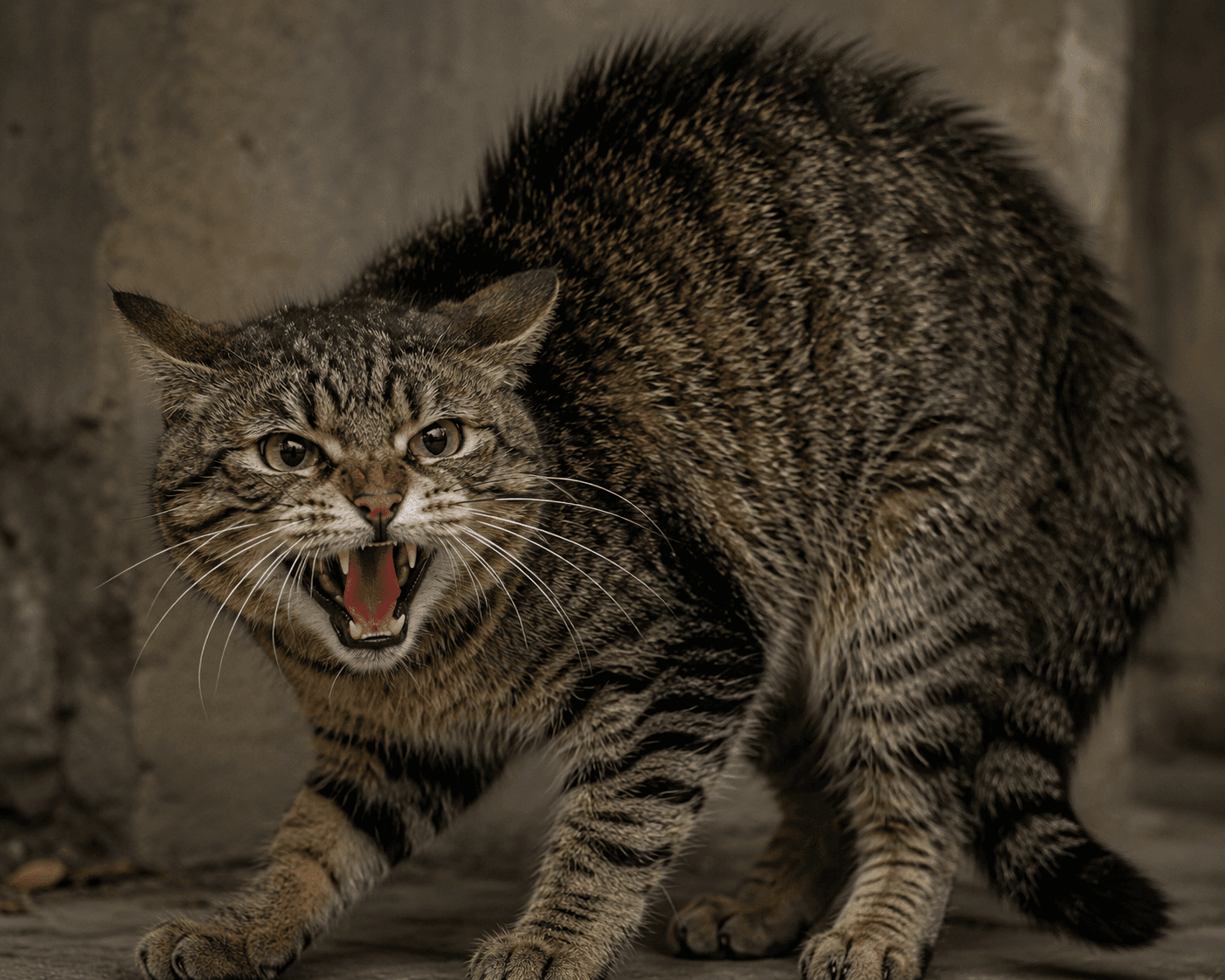
- Tail lashing hard and fast = genuine anger and a clear warning
- Tail puffed up and held stiff = fear and threat response simultaneously
- Tail wrapped tightly around the body while sitting = tension and discomfort
- Tail swaying slowly side to side = focus and anticipation (may precede an attack)
👂 The Ears — The Emotional Radar:
- Ears completely flattened backward = the biggest red flag — do not approach right now
- Ears pricked sharply forward = alertness and attention (not necessarily anger)
- Ears rotating to track sounds = anxiety and unease
👀 The Eyes — The Window to Deep Emotions:
- Pupils fully dilated in normal lighting = intense fear or overstimulation
- Unblinking, fixed direct stare = challenge and warning (in cat language, prolonged direct eye contact is an escalation, not a sign of affection)
- Half-closed eyes with head leaning back = discomfort and desire to end the interaction
💡 Golden Rule: When you see flattened ears + lashing tail + dilated pupils all at once — your cat is in the red zone. Stop all interaction immediately.
If you're unsure where to start, the first step toward getting the right guidance is to contact a veterinarian instead of resorting to guesswork to resolve the issue
🔊 Warning Vocalizations — From Hissing to Growling
Feline vocalizations are never random. Every sound carries a precise meaning, and learning them can save your hands from a lot of unexpected scratches. 😅
The Warning Sound Ladder (Mildest to Most Intense):
- A soft exhale or puff of air: "Enough — I'm uncomfortable"
- Hissing: "Stop right now — this is a serious warning"
- Low, resonant growling: "I'm in full defensive mode"
- Yowling or sharp crying: Peak distress, severe pain, or an existential threat
- Chattering (rapid clicking sound): Usually frustration or extreme overstimulation
🎯 Something many owners miss: Hissing is not "viciousness" — it's actually a sign your cat is still choosing to warn you rather than attack. Respect that warning and back off, and she'll thank you for it later.
⚡ Direct and Indirect Aggressive Behaviors
Cat aggression comes in two forms — and each one calls for a different response:
Direct Aggression — Obvious and Visible:
- Scratching or biting without clear provocation
- Jumping aggressively at legs or hands
- Chasing family members with hostile intent
- Attacking other cats or animals in the household
Indirect Aggression — Harder to Spot:
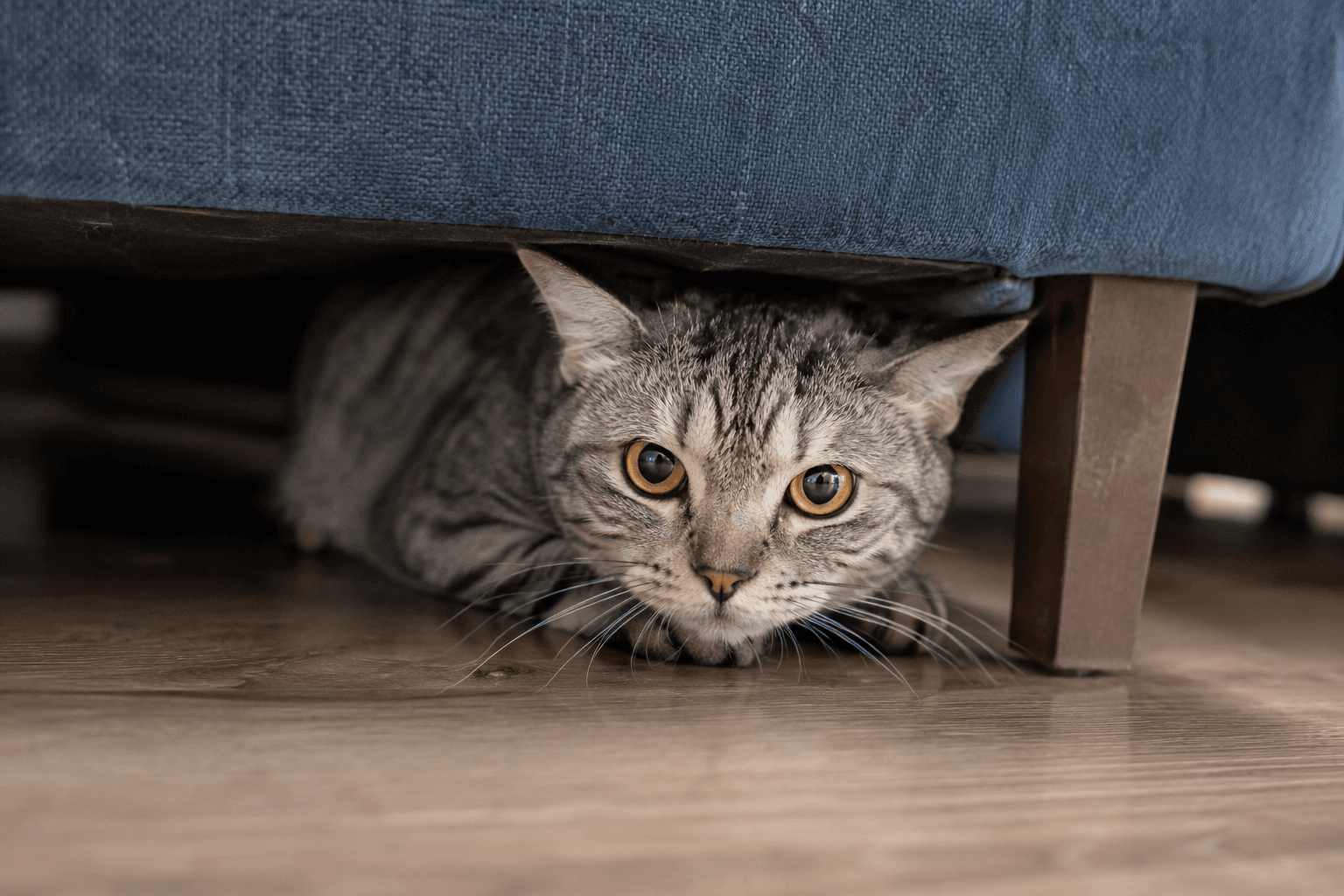
- Hiding for extended periods and completely avoiding interaction
- Refusing to eat or drink water in the presence of certain people
- Urinating outside the litter box (often a clear protest message)
- Suddenly and increasingly destroying furniture
As a reminder, what looks like aggression is sometimes a sign of an underlying health issue. For example, causes of diarrhea in cats include chronic stress as one of the most significant factors — meaning your cat's gut and mood are more deeply connected than you might think.
🔁 The Difference Between Passing Anger and Chronic Aggression
This distinction is crucial — because it determines whether the situation calls for patience and understanding, or professional intervention.
Passing Anger (Normal and Acceptable):
- Triggered by a clear, identifiable cause (sudden disturbance, loud noise, touching a sensitive area)
- Resolves quickly once the trigger is removed (within minutes or less)
- Cat returns to normal and approaches you again shortly after
- Does not follow a consistent, recurring pattern
Chronic Aggression (Requires Intervention):
- Occurs without any clear or identifiable reason
- Gradually escalates over time
- Significantly affects the quality of life for both the cat and her owner
- Accompanied by other changes: loss of appetite, withdrawal, altered sleep patterns
- Does not respond to standard calming techniques after weeks of trying
Cats who experienced difficult circumstances before adoption often need more time and patience — and may benefit from specialized support to understand when cat get used to you and what healthy progress along that journey actually looks like.
🚨 When to seek immediate help:
If aggression becomes frequent, escalating, and disconnected from any logical trigger — don't hesitate to book an appointment with a veterinary specialist. Many of these cases have clear, treatable solutions once the true root cause is properly diagnosed.
📋 Section Two Summary:
Your cat is communicating constantly — through her tail, ears, eyes, and voice. Learning this language protects your hands from scratches and protects your relationship from misunderstanding. And the difference between passing anger and chronic aggression is the defining line that determines your next right step. 🐾
How to Calm Down an Angry Cat — Practical Solutions Step by Step
Now that you understand why cats get angry and how to read their signals — it's time for what matters most: what do you actually do? 🛠️
The right solutions aren't magic, but they do require patience, genuine understanding, and sometimes a real shift in how you interact with your companion. The good news? Most of them are simple and can be put into practice today.
🚨 What to Do in the Moment — Immediate Response Rules
The moment of anger is not the time for teaching or correction — it's purely crisis management mode. 🧯
Do this immediately:
- Freeze all sudden movement — quick movements escalate the situation rapidly
- Don't raise your hand to protect yourself in a way that looks threatening — lower it slowly and step back
- Back away slowly without making loud sounds or verbal reactions
- Give her complete space — don't follow her, don't call her name, don't try to soothe her with touch right now
- Full, temporary ignoring — a cat in a state of agitation needs time to return to her baseline
Never do this during a moment of anger:
- ❌ Yelling or raising your voice — it multiplies the fear and aggression
- ❌ Physical punishment or spraying her with water — it destroys trust and worsens aggression long-term
- ❌ Trying to "hug her calm" — that's the last thing she wants in that moment
- ❌ Bringing another person into the situation — more faces = more pressure
⏱️ Normal calming time: Most cats need between 15 and 30 minutes after an angry episode to fully return to their normal state. Respect that window.
🏡 Adjusting the Home Environment to Reduce Stress Triggers
The environment is the most powerful tool in your hands. Your cat can't change her surroundings — but you can. 🌿
Essentials of a Balanced Cat Environment:
- Vertical spaces: Cats feel safe when they're elevated. Give her a shelf or a high surface to perch on and observe from above — this significantly reduces baseline anxiety.
- Safe hiding spots: An open box, a section of a wardrobe, a quiet corner — your cat needs a place where she can feel invisible when she chooses to be.
- Litter box in a quiet, private location: Nobody wants their bathroom in the middle of a busy hallway! 😄
- Litter box count: The golden rule = number of cats + 1 (if you have two cats, you need three boxes).
- Daily mental stimulation: Hunting toys, interactive feeders, feather wands, jingle balls — a cat who expends her predatory energy through play has nothing left to channel into aggression.
- Pheromone diffusers (Feliway): Products that mimic the natural calming pheromones cats produce. Highly effective during periods of stress, change, or multi-pet introductions. 🌸
- Reducing noise triggers: If your cat is sensitive to specific sounds, try insulating her space or providing a quiet indoor refuge during those times.
🎓 Behavioral Conditioning and Positive Reinforcement
Cats do learn — but in their own way, on their own terms. And the entire secret lies in patience and positive reinforcement. 🏆
The Positive Reinforcement Principle:
Simply put — reward the good behavior, and ignore the unwanted behavior (instead of punishing it).
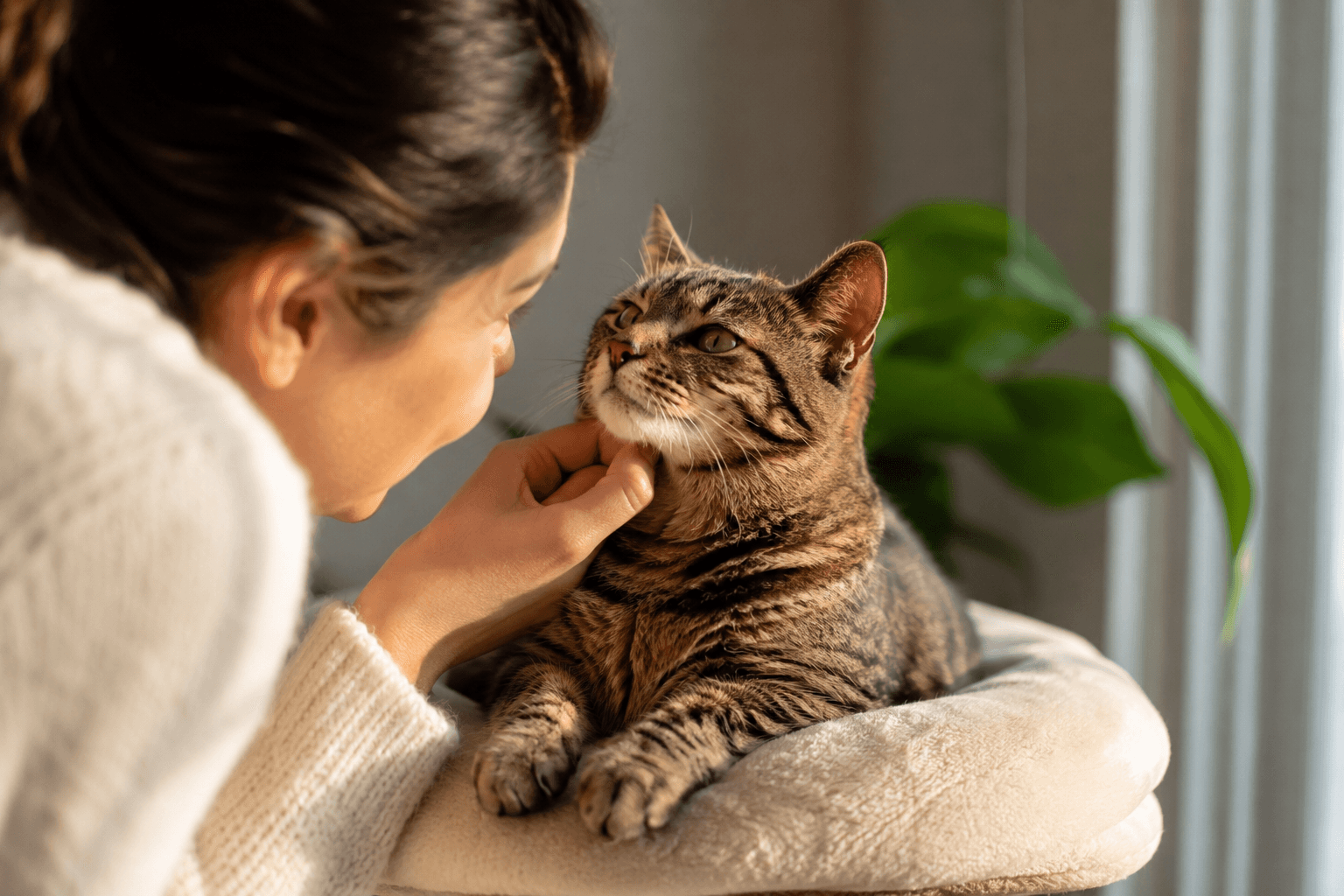
- When your cat approaches you calmly after a tense moment → reward her with a treat or soft, gentle words
- When she allows you to touch a sensitive area without reacting → that's genuine progress worth celebrating
- When she plays with her toys instead of scratching your hand → encourage that choice immediately
Redirection:
If you feel your cat is becoming overstimulated during play, redirect her energy immediately toward a toy or stuffed animal. This teaches her that "things" are the prey target — not your hand. 🎯
Building Trust Gradually:
- Start with very short interaction sessions (two minutes) and increase them slowly over time
- Always let her be the one to approach first — never impose yourself
- Use food as a bridge of trust — offer treats from your hand until she associates your presence with something positive
- Speaking in a calm, low voice and avoiding wide, sudden arm movements helps her relax in your company
For those raising a young cat, kitten training from an early age establishes calm, well-adjusted behavior that lasts a lifetime.
🩺 When Should You Seek Professional Help?
Some situations go beyond what patience, environment adjustments, and behavioral techniques alone can resolve. In these cases, professional intervention isn't just an option — it's a necessity. 🚨
Consult a veterinarian immediately if:
- Aggression has escalated suddenly and without any clear cause (may indicate hidden pain)
- Anger is accompanied by physical symptoms: loss of appetite, lethargy, repeated cat sneezing, or any other noticeable physical changes
- Your cat has become a genuine safety concern for household members or children
- You've tried all behavioral techniques with no improvement after several weeks
- You suspect the issue is deeply psychological, rooted in trauma or a difficult past
In these situations, SCOTY puts specialized veterinarians right in your hands — you can browse their professional profiles, choose the right fit for you and your cat, and book directly from the calendar. Before the session, you can upload photos or short videos of your cat's behavior so the vet reviews them in advance and comes fully prepared.
📋 Section Three Summary:
Managing anger starts with a smart, composed withdrawal in the heat of the moment — then evolves into thoughtful environmental adjustments, followed by gradual behavioral conditioning. And when things go beyond these stages, a specialist is the answer — and closer to you than you might think. 🐾
Prevention Is Better Than Cure — How to Build a Lifelong Bond of Trust With Your Cat
Everything we've learned so far about why cats get angry and how to handle it leads us to the deeper question: how do we build, from the very foundation, an environment and a relationship that doesn't constantly need "fire extinguishing"? 🔥
The answer is in this section. 🐾
🌱 Healthy Early Socialization — The Foundation of a Calm Personality
As the saying goes: "raise the young as you wish them to be" — and this applies perfectly to cats. 😊
The early socialization window (from two to seven weeks of age) is the golden period in a cat's life. What she's exposed to during this time essentially draws the map of her personality forever.
Foundations of Healthy Early Socialization:
- Gradual introduction to humans: Let her interact with different people regularly from a young age — calmly, without pressure or force.
- Desensitization to sounds: Gradually introduce her to the ordinary sounds of home life (vacuum cleaners, television, children) so they don't become sources of terror later on.
- Regular, safe handling: Getting comfortable with being touched in various areas (ears, paws, mouth) from a young age makes veterinary exams far less stressful
- Disciplined play: Teach her from the start that hands are not toys — always use play wands, toys, and stuffed animals instead.
- Carrier familiarization: Don't let the carrier be a frightening object that only appears before vet trips. Make it a permanent, comfortable part of her everyday environment.
- Acclimating your cat to a teeth-cleaning : routine from an early age turns what could be a daily struggle into a simple, stress-free experience
🗓️ A Consistent Daily Routine — Your Shield Against Anxiety and Anger
Cats are creatures of habit who love stability and predictability. Their ideal world is one they can anticipate and rely on. 🕰️
When they live in constant flux and ongoing changes — they exist in a permanent state of alertness. And chronic alertness drains their nervous system, making them more sensitive and quicker to ignite.
The Ideal Daily Routine Includes:
- Fixed meal times: Hunger itself is a stressor — and chronic waiting for food builds frustration that has nowhere to go.
- A daily dedicated play session (10–15 minutes): Channels their natural predatory energy in a healthy, positive direction.
- Calm social interaction time: Not necessarily cuddles — it can simply be sitting near her while she lounges beside you.
- Adequate, undisturbed sleep: Cats need 12–16 hours of sleep per day. Repeatedly disrupting their rest accumulates irritability over time.
- Protected "alone time": Even the most social cats need periods where no one bothers them. Honor that need.
🌟 The greatest benefit of routine: When your cat feels safe, stable, and able to predict her world — her need for defensiveness and anger decreases dramatically. Psychological security is the most effective calming agent in existence.
💉 Proactive Healthcare — The Secret to a Balanced, Happy Cat
Many episodes of anger and aggression that appear purely "behavioral" actually have physical roots. And the best way to prevent these episodes is proactive care — addressing things before they escalate into a problem.
Pillars of Preventive Healthcare:
- Regular veterinary checkups: At least once to twice a year — catching hidden issues before they become chronic pain or behavioral problems.
- Keeping vaccinations up to date: Protects your cat from illnesses that cause pain and behavioral changes.
- Internal and external parasite control: Parasites cause chronic itching and discomfort — and a constantly itchy cat is a constantly stressed cat.
- Weight and nutrition monitoring: Obesity in cats causes joint pain, which is one of the most common hidden triggers for aggression during handling.
- Spaying/neutering: Scientifically proven to significantly reduce hormonal and territorial aggression — especially in male cats.
- Dental health: Chronic oral pain keeps your cat on edge 24 hours a day — without you ever knowing that's the reason.
💡 Golden tip: A cat raised with calm, consistent, and varied experiences develops a far more flexible personality — and a much lower tendency toward anger and panic. This is precisely the philosophy behind the right way to raise cats — building from the ground up.
💙 SCOTY Is With You Every Step of the Way
After everything you've read — the strongest feeling you likely have right now is: I want to do right by my cat. And that's exactly what SCOTY was built for.
SCOTY isn't just a veterinary app — it's a fully integrated online veterinary clinic that fits in your pocket, available to you any time you need it. 📱
What SCOTY gives you when you're worried about your cat:
🔍 Choose your own vet: Browse the professional profiles and specializations of our veterinarians, read their qualifications and reviews, and book directly from the calendar at whatever time works best for you.
📸 Document the condition before the session: Upload photos or short videos of your cat's behavior or any symptoms you've noticed — the vet reviews everything before the call even begins, arriving fully prepared and informed.
🎙️ 30 minutes with a specialist: A full, unhurried consultation to discuss everything — the causes, the solutions, and a personalized care plan tailored specifically to your cat.
📄 A certified digital prescription: Downloadable and dispensable online with complete ease — no travel, no waiting rooms.
📁 A complete medical record: Every report, every session, every prescription — stored in your cat's profile inside the app, accessible whenever you need it.
🌟 And the best part: After every consultation, you receive a full week of free follow-up support via chat, available around the clock — plus a complimentary follow-up call. Because we know your worry about your cat doesn't simply end when the first call does.
Start today and book your appointment with a SCOTY veterinarian— because your cat deserves the very best care, and you deserve genuine peace of mind. 🐾💙
📋 Section Four Summary — and the heart of everything in this guide:
Your cat's anger isn't an enemy to defeat — it's a message to understand.
When you truly grasp why cats get angry at its roots, learn to read their signals, improve their environment, and build a relationship grounded in trust and a predictable sense of safety — you'll find yourself with a calm, happy, deeply bonded companion.
And at every step of that journey — SCOTY is right there with you. 🐱💙