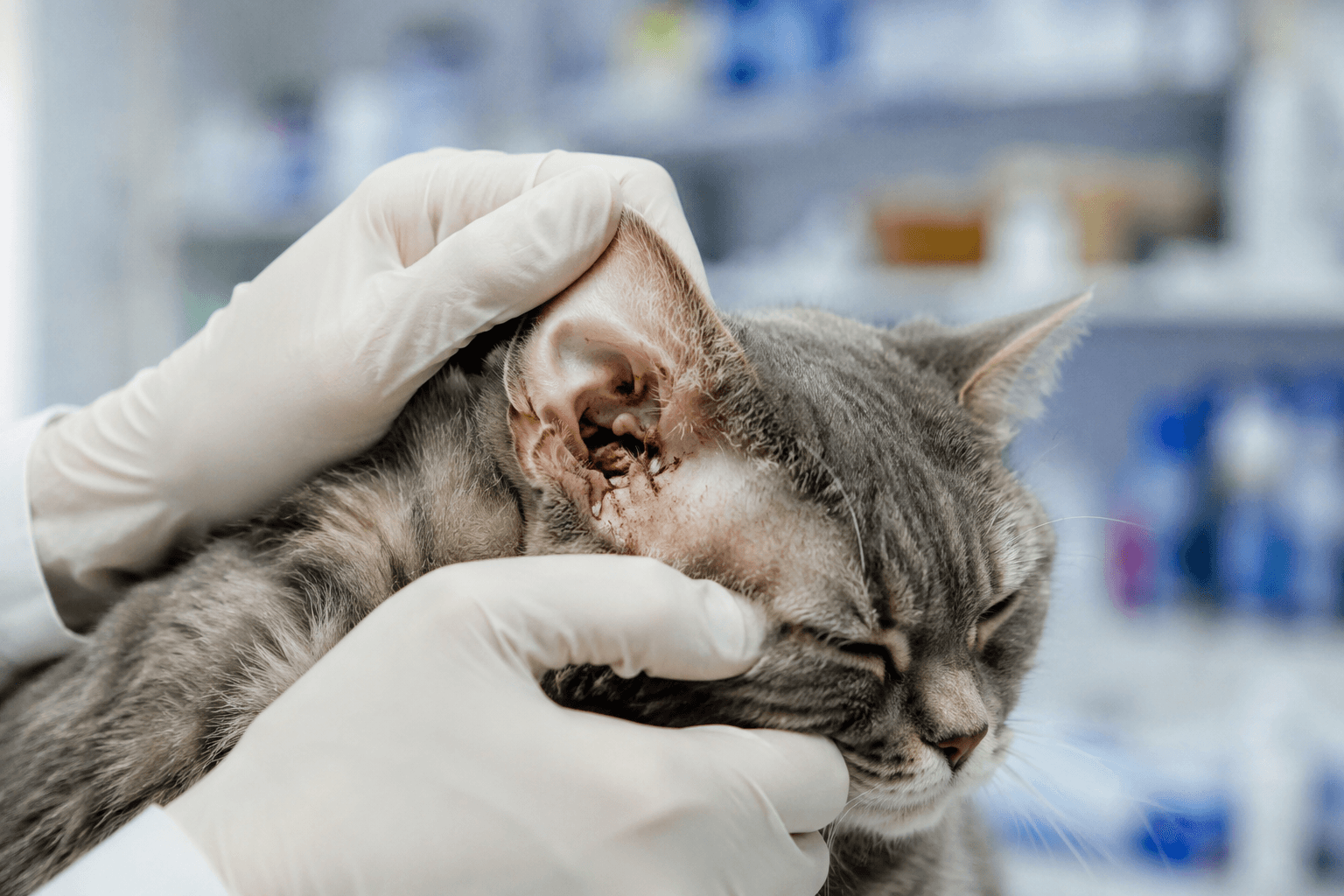
What Are Ear Mites in Cats? Your Complete Guide to Understanding the Tiny Enemy 🦠
Ear mites in cats isn't just a general term — it refers primarily to a specific species known scientifically as Otodectes cynotis, one of the most widespread parasites found in household pets around the world.
Picture tiny organisms, roughly the size of a pinhead, living, breeding, and feeding inside your cat's ear canal... that's exactly what these microscopic creatures do.
The alarming part? They cause intense, maddening itching and non-stop irritation.
The reassuring part? They can be completely eliminated if caught early and treated correctly.
Where Does This Pesky Parasite Come From?
The most common route of transmission for ear mites is direct contact between animals.
If your cat brushes up against an infected stray, or shares a sleeping spot or play area with another infected pet, the parasite transfers with surprising ease. Transmission can also happen through:
- 🐾 Contact with infected pets (dogs, cats, rabbits)
- 🛏️ Sharing bedding or cushions with an infected animal
- 🌿 Exposure to contaminated outdoor environments or grass
- ✂️ Grooming salons or boarding facilities with inadequate hygiene standards
This is exactly why cats that go outdoors or live alongside other animals are at the highest risk of picking up an infestation.
How Do Ear Mites Live Inside Your Cat's Ear? (The Life Cycle)
Fair warning — this is a little unsettling, but knowing it is genuinely important! 🔬
The ear mite life cycle passes through 5 distinct stages, from egg to adult:
- Egg: Laid directly on the wall of the ear canal
- Larva: Hatches after approximately 4 days and begins feeding
- First & Second Nymphal Stages: Gradual growth continues alongside ongoing feeding
- Adult: Reaches reproductive maturity and begins the cycle anew
The entire cycle takes only about 3 weeks, meaning large populations can build up with alarming speed inside your cat's tiny ear.
The mite feeds on skin cells and the oily secretions lining the ear canal, which triggers constant irritation and causes the ear to produce excessive dark wax as a natural defensive response.
Can Ear Mites Spread to Humans or Other Pets at Home?
This is one of the first questions every pet parent asks — and the answer matters a great deal 👇
For humans: Technically, ear mites can transfer to people, but it's extremely rare. When it does occur, it causes temporary skin irritation rather than a true ear infestation, since the parasite cannot properly adapt to the human body.
For other household pets: This is where the real risk lies. Ear mites spread effortlessly between:
- 🐱 Cats (the most commonly affected)
- 🐶 Dogs
- 🐇 Rabbits
- 🐹 Ferrets and some small rodents
So if your cat has ear mites, checking every other pet in your home is absolutely essential — even those that appear healthy and show no obvious symptoms.
This is precisely why consulting a veterinarian specializing in cats becomes indispensable — to develop a comprehensive treatment plan that covers every furry member of your household at once.
Which Cats Are Most at Risk?
Not all cats carry the same level of risk, and these groups deserve the closest attention:
🐱 Kittens and young cats: Their immune systems aren't fully developed yet, making them far more vulnerable to parasitic infestations.
🌿 Outdoor cats: Regular exposure to streets and other animals significantly raises the chances of picking up the parasite.
🏠 Cats living with other pets: Especially if one animal in the household is already infected and hasn't been treated yet.
😿 Immunocompromised cats: Whether due to a chronic illness or poor nutrition.
💇 Cats with folded or heavily furred ears: Breeds like Scottish Folds and Persians tend to accumulate moisture and wax more rapidly in their ear canals, creating ideal conditions for mites to thrive.
Just as cat sneezing can serve as an early warning sign of a deeper underlying health issue, persistent ear scratching is a signal no responsible pet parent should ignore or postpone addressing.
💡 SCOTY Tip:
If you notice any change in how your cat behaves around her ears, don't wait for things to get worse. SCOTY connects you with a qualified veterinarian from the comfort of your home, at a time that works perfectly for you — no waiting rooms, no stress, no hassle.
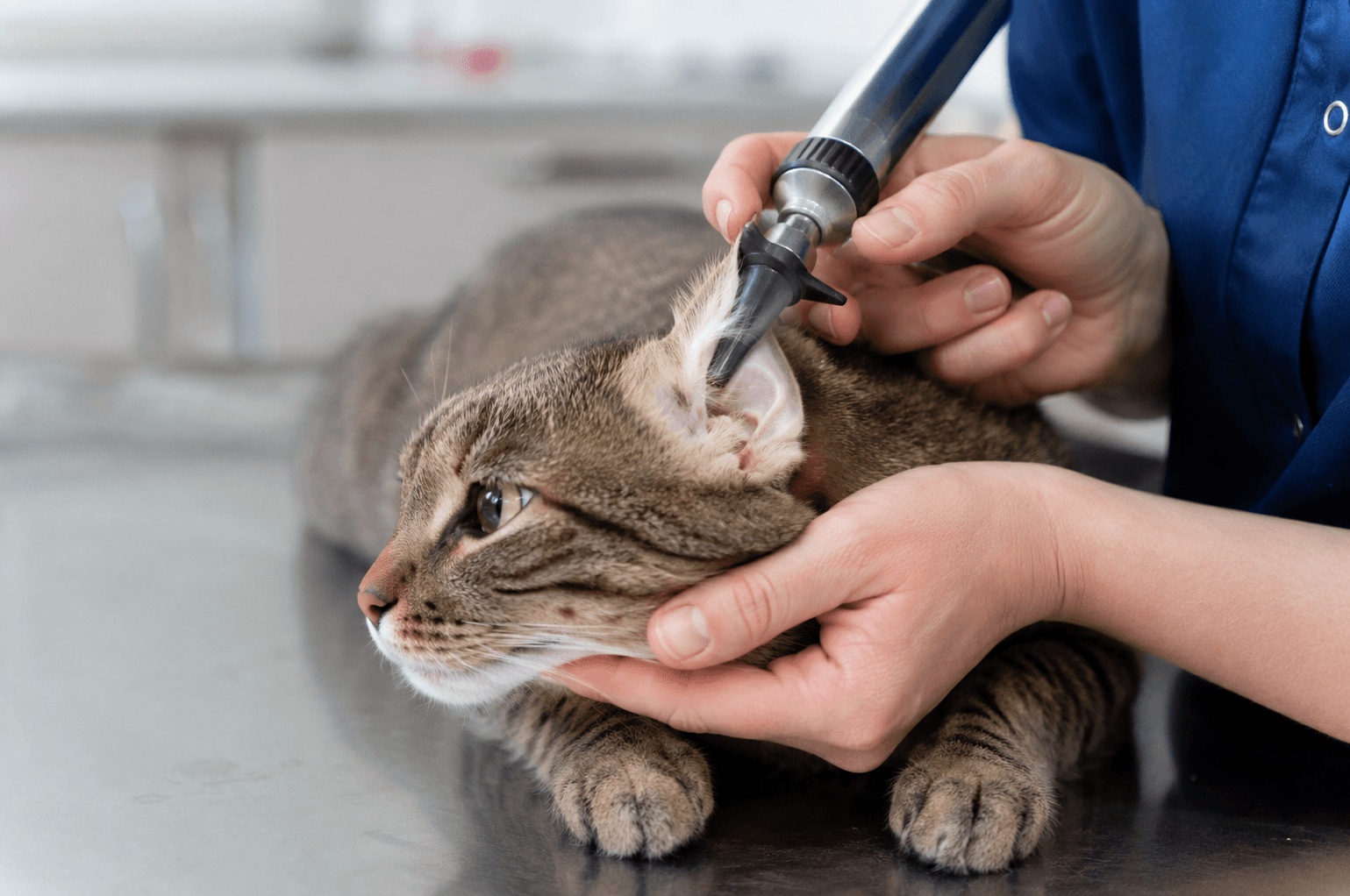
How to Spot an Infestation in Your Cat: Symptoms and Diagnosis Step by Step 🔍
Many pet parents sense that something is off with their cat but aren't quite sure what to look for.
The truth is, ear mites in cats leave a very distinct set of signs — if you know how to read your cat's body language correctly. This section will teach you exactly how to do that 👇
Early Symptoms You Should Never Ignore
Your cat can't tell you what's wrong, but her body absolutely will! 🐾
These are the early warning signs you need to watch for immediately:
- 👂 Persistent ear scratching: Your cat claws at her ears forcefully and repeatedly throughout the day — sometimes so intensely that the skin around the ear becomes visibly scratched or raw.
- 🔄 Frequent head shaking: As though she's trying to dislodge something stuck inside her ear — which is precisely how it feels to her.
- 😣 Flinching when the ear is touched: If your cat pulls away or vocalizes when you gently touch her ear, that's a clear red flag.
- 🙆 Persistent head tilting to one side: Especially noticeable when the infestation is more severe in one ear than the other.
- 😴 Lethargy and reduced activity: Constant itching is exhausting, and your cat is burning energy trying to relieve the relentless discomfort.
And much like treating cat eye discharge, ear mites reinforce one universal lesson: the earlier you intervene, the simpler, faster, and more affordable the treatment will be.
Dark Discharge in the Ear: What Does It Mean?
This point is critically important, because it's the most distinctive hallmark of ear mites specifically 🔎
If you look inside your cat's ear and notice a dark substance resembling:
- Coffee grounds or coarsely ground black pepper
- Or a brown-to-black buildup accompanied by an unusual odor
You are most likely looking at discharge caused by an ear mite infestation.
This dark material is actually a combination of excess wax, mite waste, and dried blood resulting from the constant irritation of the delicate inner ear walls.
⚠️ Important warning: Do not attempt to remove this discharge yourself using cotton swabs or ear picks before consulting a vet. Doing so can push the material deeper into the canal or cause injury to the sensitive ear lining.
How Does a Veterinarian Diagnose the Infestation?
You might wonder: how does the vet confirm it's ear mites and not something else entirely?
An accurate diagnosis typically involves the following steps:
1. Clinical Examination with an Otoscope:
The vet uses an otoscope to clearly visualize the inside of the ear canal. In some cases, mite movement is actually visible to the naked eye through the scope.
2. Taking a Sample from the Discharge:
The vet collects a small sample of ear contents and examines it under a microscope to confirm the presence of the parasite and identify its type with precision.
3. Full Ear Assessment:
The vet examines the entire ear to rule out secondary bacterial or yeast infections, and to check whether the eardrum has sustained any damage from a prolonged infestation.
The great news is that all of these steps are now possible remotely. You can book an appointment through SCOTY, send clear photos and short video clips of your cat's ear before the session begins, and allow the doctor to form a thorough initial assessment before your consultation even starts.
Serious Complications That Arise When Left Untreated
This is where things get genuinely serious — and we want you to have the full picture 🚨
Neglecting to treat ear mites doesn't just mean ongoing itching and discomfort. It can lead to:
- Otitis Media and Interna (Middle and Inner Ear Infection): A deep-seated infection that reaches the sensitive structures responsible for your cat's hearing and balance.
- Ruptured Eardrum: Caused by the relentless friction, pressure buildup, and accumulating discharge inside the ear canal.
- Balance Disorders and Dizziness: Your cat may begin walking in erratic circles or stumbling into objects — a deeply distressing thing to witness.
- Aural Hematoma: Blood accumulates between the layers of the outer ear cartilage as a result of excessive scratching, sometimes requiring surgical intervention.
- Partial or Complete Hearing Loss: In chronic, long-neglected cases.
Because cats instinctively conceal their pain and vulnerability — as understanding cat language teaches us about their deeply ingrained instinct to mask weakness — the problem may be far more advanced than it appears on the surface.
💡 A Moment to Reflect:
Did you recognize more than one of the symptoms we described in your cat? Don't delay. Waiting won't make things better, and the parasite will not go away on its own. The next section covers exactly what you need to do right now.
The Right Treatment for Ear Mites in Cats: From Home Care to Veterinary Intervention 💊
This is the section every worried pet parent has been waiting for... how do we get rid of this stubborn parasite once and for all?
The answer is not "grab any product off the shelf and hope for the best." It's a structured, comprehensive treatment plan that begins with proper cleaning, moves through the right medication, and ends with careful follow-up to ensure the mites don't come back.
That's exactly what you'll find here 🎯
How to Clean Your Cat's Ear Correctly Before Treatment
Cleaning before treatment is a step that cannot be skipped. Medications simply won't reach their target effectively if the ear canal is packed with accumulated discharge and debris.
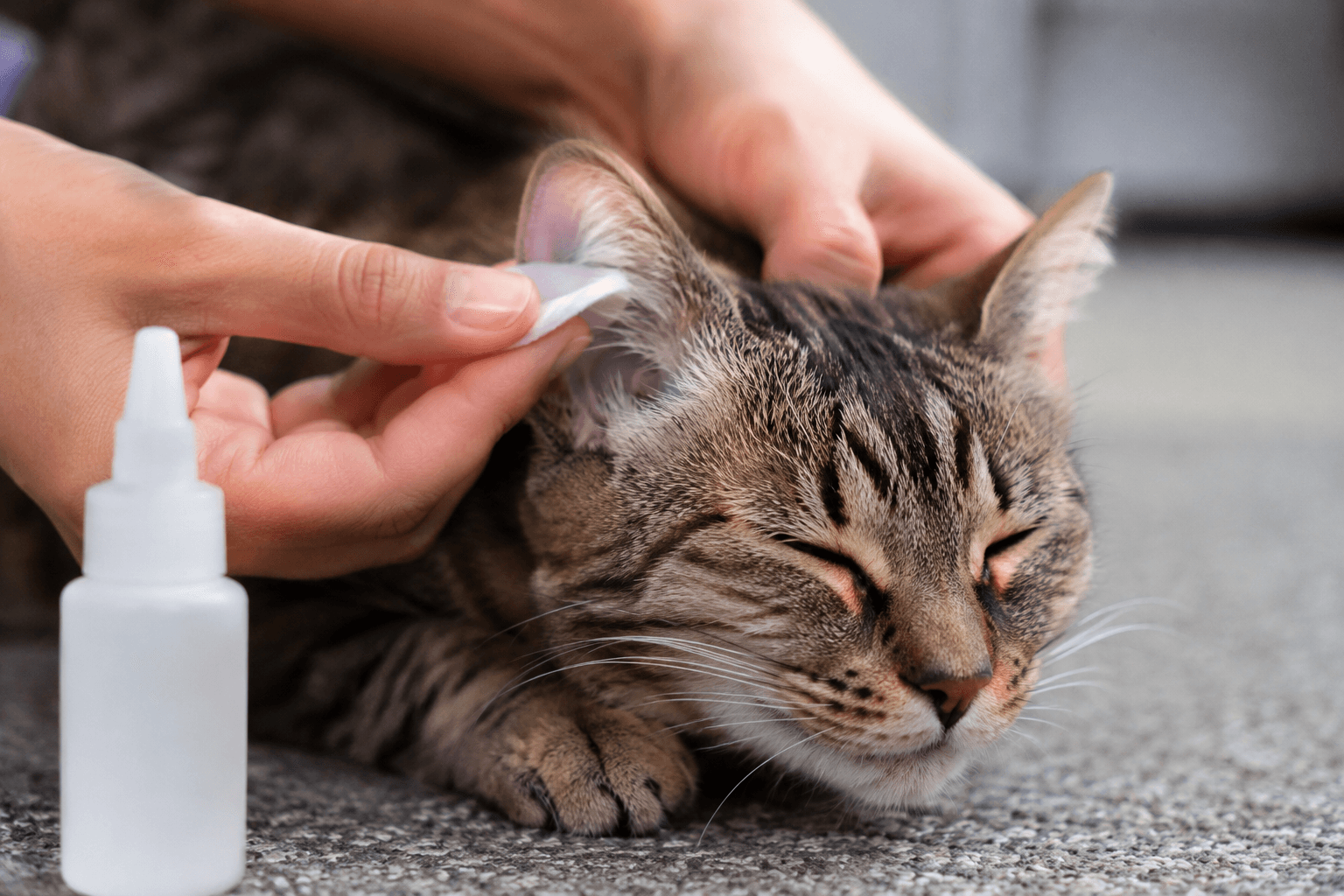
Here's the safe, step-by-step method:
🛠️ What You'll Need:
- A veterinary-grade ear cleaning solution formulated for cats (ask your vet for the right product)
- Soft medical cotton pads
- A small, warm towel
- A helper to hold your cat calmly during the process
📋 The Steps:
- Settle your cat comfortably in your lap or on a stable, familiar surface
- Gently hold the outer ear and fold it back slightly to open the canal
- Apply a few drops of the cleaning solution into the canal
- Massage the base of the ear softly from the outside for 20–30 seconds until you hear a gentle squelching sound
- Allow her to shake her head freely — this is perfectly normal and helps expel the solution and loosened debris
- Wipe only the visible outer portion with the cotton pad — never insert cotton deep into the canal
⚠️ Golden rule: If you notice blood, or if your cat cries out in pain during cleaning, stop immediately and contact your vet.
Just as eye inflammation in cats demands prompt medical attention to prevent lasting damage, ear mites should never be left to time or random, unverified remedies.
Types of Medications for Treating Ear Mites (In Detail)
The medications used to treat ear mites in cats fall into several categories, each working through a different mechanism:
💧 Antiparasitic Ear Drops:
These are the first line of treatment, containing active ingredients such as:
- Selamectin
- Ivermectin
- Milbemycin oxime
These drops eliminate the mite across its various life stages and halt the reproductive cycle entirely.
💉 Systemic Treatments:
In severe or recurring cases, the vet may prescribe medications administered subcutaneously or applied topically as spot-on treatments — such as Revolution or Advocate. These work at the whole-body level, simultaneously treating the mites and protecting against other parasites.
🔴 Corticosteroids:
The vet may add an anti-inflammatory medication to relieve intense itching and irritation while the primary treatment works to eliminate the parasite.
🦠 Antibiotics:
If a secondary bacterial infection is present — which is very common in neglected cases — an appropriate antibiotic will be prescribed alongside the mite treatment.
⏱️ Treatment Duration:
Most treatment protocols run for 3 to 4 weeks to ensure complete elimination of the mite across all life stages, particularly the eggs, which are the most resistant to medication.
Are Home Remedies Safe? The Complete Truth
This is something countless pet owners search for online — and we want to be completely honest with you 🙏
Popular home remedies that circulate online include:
- Olive oil or coconut oil
- Apple cider vinegar
- Diluted garlic
- Tea tree oil
At best, these remedies are completely ineffective. At worst, they are genuinely dangerous for your cat.
Apple cider vinegar, for instance, further inflames already irritated skin. Tea tree oil is toxic to cats — even in small amounts.
The simple truth: Ear mites are living organisms that require specific chemical compounds at precise concentrations to be killed. Those compounds exist only in licensed veterinary medications.
Home remedies may give you the temporary comfort of feeling like you're "doing something," but they waste precious time while the parasite continues to multiply and the damage continues to accumulate.
When Does Your Cat Need Urgent Medical Attention?
There are situations where hesitation is simply not an option 🚨
Seek veterinary care immediately or book an urgent consultation if you notice:
- 🩸 Visible blood inside or around the ear
- 😰 Severe pain when the ear or surrounding area is touched
- 🌀 Loss of balance or dizziness, including walking in circles or stumbling
- 😵 Significant swelling of the outer ear (possible aural hematoma)
- 🤢 Vomiting and pronounced lethargy accompanying ear symptoms
- 👁️ Persistent, fixed head tilt that shows no improvement
- 🐾 Kittens under 8 weeks of age displaying any of the above signs
In any of these situations, you can book an appointment on SCOTY right away. Attach photos or a short video of the ear so the doctor can review the case beforehand and arrive at your 30-minute consultation fully prepared — ready to discuss everything in depth and provide a certified electronic prescription you can download and fill online with complete ease.
All of this, from the comfort of your own home. No anxiety, no rushed clinic visits, no middle-of-the-night emergencies 🏠❤️
Smart Prevention: How to Protect Your Cat from Ear Mites for Good 🛡️
There's an old saying: an ounce of prevention is worth a pound of cure.
It applies perfectly to ear mites in cats — because preventing an infestation is infinitely easier, less costly, and far less painful for your cat than going through a full treatment cycle.
In this final section, you'll find a clear, practical routine that keeps your beloved companion protected over the long term 🐾
A Weekly Ear Cleaning Routine (Practical Step-by-Step Guide)
The concept is beautifully simple: a clean ear is a hostile environment for parasites.
Ear mites thrive in warm, moist environments rich in accumulated wax. Deprive them of those ideal conditions, and their chances of settling and multiplying drop dramatically.
📅 Recommended Schedule:
- Indoor-only cats: A light cleaning every two weeks
- Cats that go outdoors or live with other animals: Weekly cleaning
- Breeds with folded or heavily furred ears: Weekly cleaning is non-negotiable
✅ The Preventive Routine Steps:
- Choose the right moment: Right after play or feeding, when your cat is at her most relaxed
- Visually inspect the ear first: Look for any change in color or an unfamiliar odor
- Apply the veterinary ear cleaning solution: Two to three drops is all you need
- Massage gently and let her shake her head
- Wipe only the visible outer portion with a clean cotton pad
- Reward her after every session with a small treat or her favorite toy — this helps her associate the routine with a positive experience
- Healthy nutrition: Some poor-quality food can worsen your cat's condition rather than aid in recovery. During the treatment period, your cat requires the highest-quality cat food. Similarly, if the cat is nursing, she must be provided with food specifically for nursing cats.
💡 A small secret: If you start this routine when your cat is still a kitten, she'll gradually accept it and become far more cooperative over time.
Environmental Factors That Promote Infestation and How to Control Them
Your home environment plays a far bigger role in infection risk than most pet parents realize 🏠
🛏️ Your Cat's Bedding:
Wash your cat's bedding and blankets in hot water at least once a week. Ear mites can survive on fabric surfaces for short periods and transfer back to your cat's body.
🐾 Managing Multi-Pet Households:
If you have more than one pet, make sure all of them are checked regularly. Isolate any animal suspected of infection immediately until a vet confirms they're clear.
🌿 Cats with Outdoor Access:
Consider using periodic preventive antiparasitic treatments prescribed by your vet. These protect your cat from mites, fleas, and other parasites she might encounter outdoors.
🧹 General Home Cleanliness:
Regular vacuuming of carpets and floors reduces the likelihood of parasites accumulating in your cat's living environment.
💨 Ventilation:
A well-ventilated, non-excessively humid space is far less hospitable to parasites of all kinds.
The Importance of Regular Check-Ups and Early Detection
This is a point many pet parents overlook simply because their cat "seems fine" — but the reality tells a different story 👇
Routine check-ups aren't reserved for sick animals. They are your early detection tool — the thing that catches a small problem before it becomes a major crisis.
What Does a Smart Routine Ear Check Include at Home?
- 👁️ Weekly visual inspection: Look for dark discharge or redness
- 👃 Smell inside the ear: An unusual or unpleasant odor is often an early warning
- 🤲 Feel gently around the ear base: Excess warmth or swelling deserves attention
- 📋 Veterinary check-up every 6 months: Even if your cat appears to be in perfect health
For pet parents who want quick access to trusted veterinary professionals whenever they need them, exploring cat vet contact options is a great way to know your options and reach a specialist as quickly as possible.
SCOTY Is With You Every Step of the Way 📱
Now that you know everything about ear mites in cats — from identifying them to treating and preventing them — one important question remains:
Who will be by your side whenever a worry or question arises?
That's where SCOTY comes in — a complete remote veterinary consultation platform designed specifically for pet parents like you who want the best care for their companion without the complications.
🌟 What Makes SCOTY Different?
- Browse and choose your own vet: Review detailed profiles of specialized veterinarians, choose the one you trust, and book your appointment directly from the calendar — all in a matter of seconds.
- Send photos and videos before the session: Capture clear images of your cat's ear or any symptoms you've noticed and send them to your vet before the call begins, so they arrive fully prepared to make the most of every minute together.
- 30 full minutes with your vet: A video or voice call where you can discuss everything in depth — no rushing, no cutting corners.
- A certified digital prescription: At the end of your session, you receive an official, downloadable prescription that can be filled online with complete ease.
- A complete medical record, always saved: Every diagnosis, treatment plan, and prescription is documented in your cat's dedicated health file inside the app — available to reference at any time.
- And most importantly: After every consultation, you receive a full week of free follow-up via chat, available around the clock, plus a complimentary follow-up call to make sure your cat is recovering exactly as she should be.
- Dietary Management During Treatment: The importance of scientifically correct cat nutrition during the treatment period is an integral part of recovery. Certain medical conditions require a comprehensive approach that combines healthy nutrition with prescribed medications.
Because real care doesn't end when the first call does 💛
Ready to get started?
Don't wait for symptoms to worsen or problems to grow. Whether your cat is showing signs of ear mites or you simply want a routine preventive consultation, booking an appointment with a vet on SCOTY takes less than a minute — and your little companion deserves every bit of this care, and so much more 🐱✨