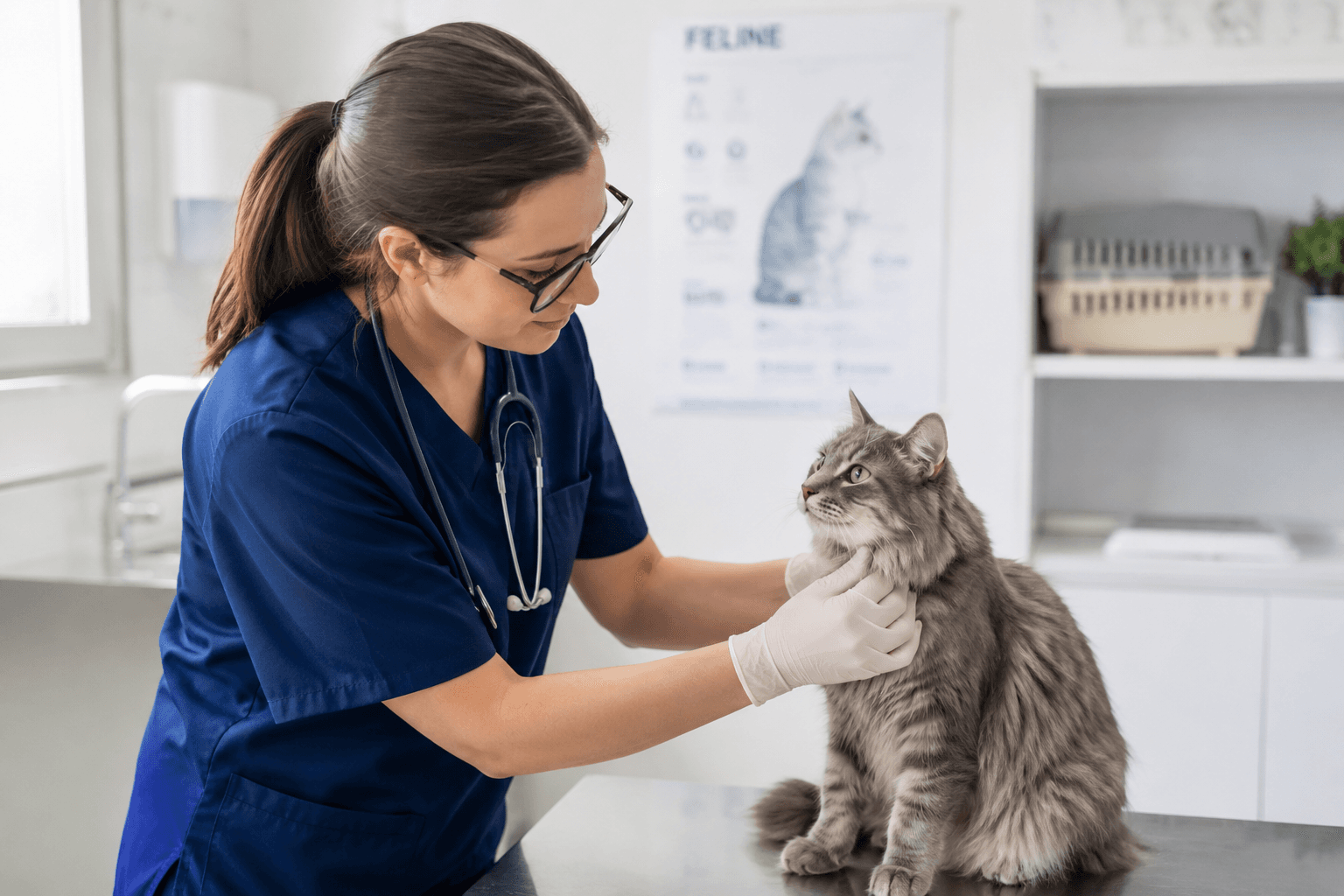
Imagine being the sole person responsible for a living creature that cannot tell you "my stomach hurts" or "I've been feeling tired since yesterday." That's exactly your reality with your cat — every single day.
Cats are masters of concealment 🐱 — they suffer in silence, change their behavior gradually, and send signals that only those who know what to look for can detect. This is precisely why understanding what a veterinary clinic for cats truly offers — from preventive care to accurate diagnosis and treatment — becomes the real difference between a cat thriving in good health and one suffering quietly.
In this comprehensive guide, you'll find everything you need as a responsible pet owner: from clinic services you may not know half of, to emergency symptoms that cannot wait, all the way to your golden annual preventive care schedule.
And if you're one of those people who find traditional clinic visits a challenge — whether due to a busy schedule or because your cat transforms into a "tiny furry monster" the moment she enters the carrier — you're in the right place. SCOTY offers a fully integrated veterinary clinic experience from the comfort of your home. But we'll get to that in due time. 😊
Take the first step today and talk to a specialist vet, so your cat is in safe, caring hands.
Your Cat Deserves More Than A Vet Only When Sick
What Does a Veterinary Clinic for Cats Actually Offer? (Not What You'd Expect!)
Many of us picture a vet visit as: sick cat + injection + medicine + home. The truth? That mental image makes us miss out on 70% of what a veterinary clinic for cats can genuinely do for our companions throughout their lives.
🩺 More Than a Routine Check-Up: Services You Didn't Know Existed
When you walk into a specialized cat clinic, you're not entering a "pet pharmacy." You're stepping into a fully integrated medical center capable of providing your cat with:
- Dental and Oral Examination 🦷: More than 85% of cats over 3 years old suffer from gum or dental issues — and most of it goes completely unnoticed by owners because the cat simply doesn't complain.
- Ultrasound and X-Ray Imaging: Reveals what external symptoms cannot, such as kidney stones, ovarian cysts, or partial intestinal blockages.
- Early Detection of Chronic Diseases: Like hyperthyroidism, which is extremely common in older cats, and chronic kidney disease that may begin with very subtle signs.
- Weight Management and Nutrition Programs: Because an overweight cat isn't "pampered and happy" — she's a cat at real risk of diabetes, arthritis, and liver disease.
- Skin and Coat Treatment: From fungal infections and lice to food allergies that sometimes appear as abnormal shedding or persistent scratching.
The takeaway here? A veterinary clinic for cats isn't just a place you turn to when something feels wrong — it's a regular partner in your cat's lifelong health.
🔍 The Comprehensive Physical Exam: What the Vet Does Step by Step
When the veterinarian places their hands on your cat, a systematic diagnostic journey begins — one that resembles reading a book from cover to cover:
1. General Appearance and External Assessment:
The vet examines your cat's eyes (are they clear? any discharge?), checks her ears (unusual odor? dark residue? this could be ear mites in cat that many owners overlook entirely), and notes coat condition and skin health.
2. Measuring Vital Signs:
- Temperature (normal range for cats: 101–102.5°F / 38–39.2°C)
- Heart rate (160–240 beats per minute)
- Respiratory rate (20–30 breaths per minute)
Any deviation in these numbers opens the door to a full investigation.
3. Palpation and Auscultation:
The vet gently presses on your cat's abdomen — feeling the liver, spleen, and intestines. They place a stethoscope on her chest, listening carefully to the heart and lungs. These steps may seem simple, but they can reveal in minutes what your cat has been hiding for weeks.
4. Lymph Node Examination:
Swelling may indicate an infection or — in more serious cases — tumors. Early detection here changes everything.
5. Teeth and Gum Assessment:
Gum disease in cats is agonizingly painful, but your cat won't tell you. You'll only notice she "seems to eat differently or less" — and that alone is enough reason to visit the clinic.
💉 Vaccinations and Preventive Schedule: Your Cat's Annual Shield
Prevention in feline medicine isn't a luxury — it's literally what extends your cat's life and saves you thousands in treatment costs.
Core Essential Vaccines:
| Vaccine | Protects Against | First Dose | Frequency |
|---|---|---|---|
| FVRCP | Rhinotracheitis, calicivirus, panleukopenia | 6–8 weeks | Annually or every 3 years |
| Rabies | Fatal rabies virus | 12 weeks | Annually or every 3 years |
| FeLV | Feline leukemia virus | 8 weeks | Annually for outdoor cats |
Additional Preventive Care Not to Skip:
- 🪱 Deworming: Every 3 months for indoor cats, monthly for cats with outdoor access.
- 🦟 Flea and Tick Prevention: Especially during spring and summer.
- 🔬 Annual Fecal Test: For early detection of parasites that show no symptoms.
💡 Golden tip: Keep your cat's vaccination records somewhere safe — you'll need them if you plan to travel with her, board her at a pet hotel, or relocate to another city.
🩸 Blood and Urine Tests: When Numbers Say What Your Cat Cannot
This is what separates a truly exceptional veterinary clinic for cats from an average one — the ability to analyze what the naked eye simply cannot see.
Complete Blood Count (CBC) Reveals:
- Anemia (very common in older cats)
- Bacterial or viral infections
- Platelet disorders and clotting abnormalities
Biochemistry Panel Reveals:
- Kidney function (Creatinine, BUN) — the essential compass for monitoring cats over 7 years old
- Liver enzymes (ALT, AST) — elevated when the liver is under any stress or toxic exposure
- Blood glucose — an early indicator of diabetes in overweight cats
- Thyroid hormone (T4) — an indispensable test for any cat over 8 years old
Urinalysis Reveals:
- Urinary tract stones (a genuine nightmare, especially for males!)
- Urinary infections
- Chronic kidney disease in its very early stages
Section One Summary 🎯
A veterinary clinic for cats isn't only a place for emergencies — it's your most powerful annual ally in building a long, healthy life for your companion. From thorough physical exams to vaccinations to precise lab testing — every step adds a new layer of protection for this remarkable creature in your care.
If you're looking for cat vet contact information or want to consult a specialist without leaving your home, SCOTY is ready to be your digital veterinary clinic anytime you need it. 🐾
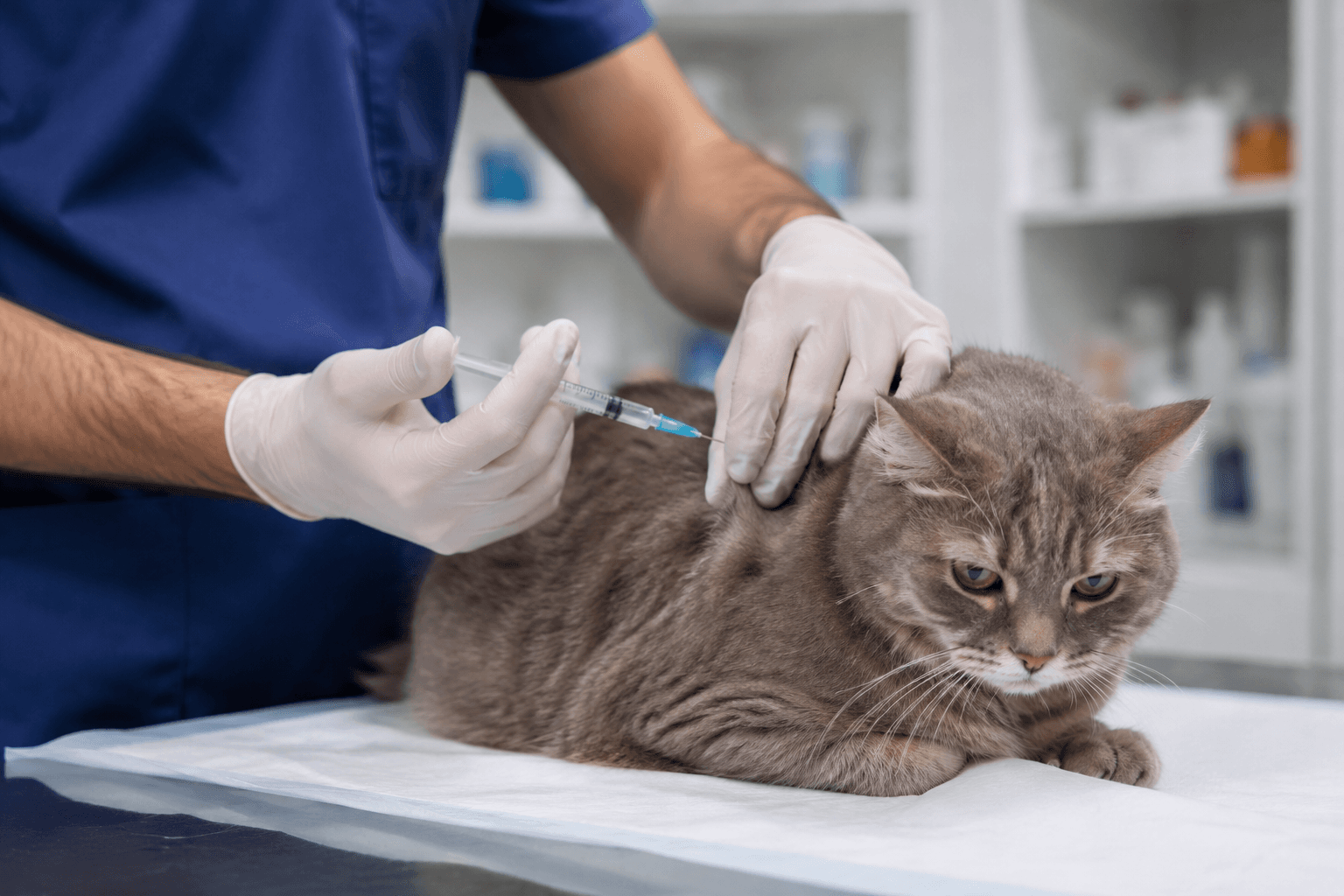
Symptom Guide — When Is a Vet Visit Truly Urgent?
Cats are natural concealers — it's an inherited survival instinct from their wild ancestors. In nature, a sick or weakened animal is an easy target for predators. So cats evolved to mask pain and illness with remarkable precision, even when suffering tremendously.
Your job as a responsible owner? Learning to read their silent language before things escalate to a genuine emergency.
🔇 The Silent Signals: What Your Cat Is Hiding From You
These changes don't seem alarming at first glance — but in the world of cats, they're the equivalent of screaming "I need a doctor right now!":
- Change in Eating or Drinking Habits: A cat that has stopped eating for more than 24 hours, or conversely has started drinking water in unusually large amounts — both situations warrant an immediate visit to a veterinary clinic for cats.
- Change in Litter Box Habits: Either stopped using it altogether, or started entering it repeatedly without producing anything — the latter is a classic sign of urinary blockage, an extremely dangerous condition especially in male cats.
- Withdrawal and Hiding: Your normally social cat has disappeared under the bed or into a dark corner and refuses to be approached? Her body is saying "I'm not okay."
- Change in Coat Texture: Dull, matted, or abnormally shedding fur — a healthy cat grooms herself with meticulous precision. When she stops, she's either sick or in pain somewhere that prevents her from reaching it.
- Noticeable Weight Loss: If you can feel your cat's ribs more prominently than usual under your hand, this isn't "natural slimming" — it's an early warning signal.
💡 The golden rule: You know your cat better than anyone. Any noticeable change in her daily routine deserves to be taken seriously — even if you can't quite name what's happening.
👁️ Respiratory and Eye Symptoms: Don't Wait a Single Moment
Some symptoms appear "minor" but absolutely cannot be delayed:
🫁 Respiratory System:
Your cat sneezing occasionally? It might be just passing dust — but when sneezing is accompanied by nasal or oral discharge, or when you hear a wheezing sound as she breathes, the situation is entirely different.
Persistent cat sneezing lasting more than two days, accompanied by lethargy or loss of appetite, may indicate an upper respiratory tract infection — extremely common in unvaccinated cats.
Respiratory symptoms requiring immediate emergency care:
- Breathing with mouth open (completely abnormal for cats)
- Blue or pale gums or tongue
- Elbows pushed outward while breathing (sign of severe respiratory distress)
👁️ Eyes:
Your cat's eyes speak volumes. Yellow or green discharge, persistent redness, swelling, or keeping one eye consistently closed — these are all symptoms of eye inflammation in cats that, if left untreated, can permanently affect vision.
Unequal pupil sizes? This is a neurological emergency requiring a vet as quickly as possible.
🤢 Digestive Issues: Between Normal and Dangerous
Cats do vomit occasionally — this is normal, especially when expelling hairballs. But there's a fine line between "completely normal" and "call the vet now":
When Is Vomiting Normal?
- Once or twice a week, after which she returns to eating and playing normally.
- Vomit contents are a visible hairball or undigested food.
When Does It Become Dangerous?
- More than 3 times within 24 hours.
- Contains blood (dark brown or red coloring).
- Accompanied by severe lethargy or abdominal bloating.
- The cat is retching repeatedly without producing anything (possible blockage).
Complete Digestive Emergency Signs:
- 🚨 Bloated, rigid abdomen
- 🚨 Continuous vomiting or diarrhea beyond 24 hours
- 🚨 Blood in stool or vomit
- 🚨 Complete lethargy combined with refusal to eat and drink
😾 Sudden Behavioral Changes: Anger and Fear Are Medical Messages
"My cat suddenly became aggressive!" — many owners write this assuming their problem is purely behavioral. The truth? In most cases, there's a real physical pain underlying that behavior.
A cat that attacks when you touch a specific area of her body is saying "that place hurts — don't touch it."
A cat that starts yowling at night for no apparent reason may be experiencing a thyroid disorder, high blood pressure, or even a neurological disturbance.
To understand why cats get angry suddenly without an obvious trigger, medical causes must be ruled out first before resorting to any behavioral training — because treating the hidden pain is always the essential first step.
Behavioral Changes That Warrant Medical Consultation:
- 🐾 Sudden aggression toward people or animals that were previously accepted
- 🐾 Persistent yowling or unusual nighttime vocalizations
- 🐾 Excessive licking of one specific body area until fur falls out
- 🐾 Sudden fear of things that were completely normal before
- 🐾 Complete withdrawal from play and interaction in a previously active cat
Section Two Summary 🎯
Your cat's body is always communicating — silence doesn't mean health. When you notice any of these signals, don't wait and hope "she'll get better on her own." Cats do sometimes recover on their own — but they deteriorate silently far more often.
And if you're in a moment of worry and genuinely unsure whether something is urgent or not, you can book a consultation with a specialist within minutes, send photos or a short video of your cat, and receive a clear answer — without ever having to leave home. 🏠🐱
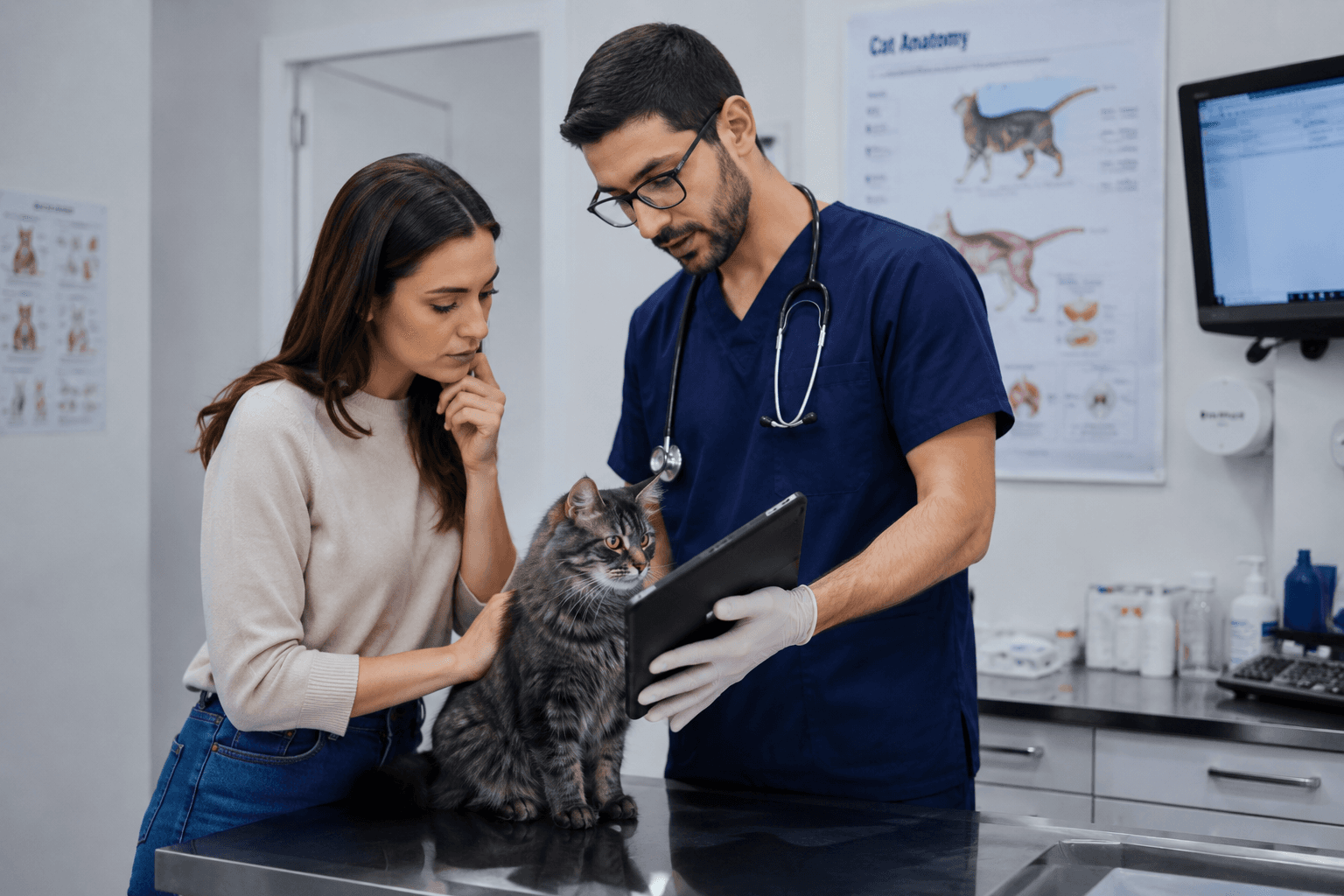
How to Choose the Right Veterinary Clinic for Your Cat
Not all veterinary clinics are equal — and that's no exaggeration. Choosing the wrong place can mean an inaccurate diagnosis, a cat traumatized by a distressing experience, or — in the worst cases — treatment that simply doesn't suit her condition.
In this section, you'll learn exactly what makes a veterinary clinic for cats genuinely worthy of your trust and your cat's wellbeing.
🏥 Cat Specialist vs. General Vet? A Difference That Truly Matters
Veterinary medicine has specializations — just like human medicine. And your cat is not a small dog, a rabbit, or a bird. Cats have unique anatomy, a distinct metabolism, species-specific diseases, and medications that are strictly forbidden for them (paracetamol, for instance, is literally lethal to cats!).
What's the Difference Between a General Vet and a Cat Specialist?
- General Veterinarian: Treats all animals and is perfectly adequate for routine care, vaccinations, and straightforward cases.
- A vet who specializes in cats: Possesses deeper knowledge of feline behavior and physiology, knows how to handle cats in ways that minimize stress, and is the ideal choice for complex or chronic conditions.
Cat-exclusive clinics have an added advantage: no dog smells or sounds — and this alone significantly reduces your cat's anxiety levels during the visit.
Signs of a Quality Cat Clinic:
- ✅ A dedicated waiting area or visual barrier separating cats from dogs
- ✅ Staff trained in gentle, feline-friendly handling techniques
- ✅ Equipment appropriately sized and suited to cats' nature
- ✅ Organized medical records and clear, open communication with the owner
❓ Questions You Must Ask Before Entering Any Clinic
You have every right as an owner to ask — and a good clinic will answer with confidence and openness:
1. "Do you have specific experience with cats?"
A clinic that works with cats daily is a fundamentally different experience from one that sees a cat once a month.
2. "How do you handle an anxious or aggressive cat during examination?"
A reassuring answer: "We use low-stress handling techniques and give the cat time to settle." A concerning answer: "We just hold her down firmly and get it done quickly."
3. "Do you have in-house lab and imaging capabilities?"
Traveling between external labs and imaging centers is exhausting for your cat and time-consuming for you.
4. "How does communication work after the visit? Can I contact you if I have questions?"
Good care doesn't end at the clinic door.
5. "Do you maintain a complete medical file for each patient?"
A comprehensive medical record means the vet has your cat's full history at every visit — not starting from scratch each time.
💻 The Online Veterinary Clinic: A Quiet Revolution in Cat Care
Let's talk about something that has genuinely changed the rules of the game for pet owners in recent years.
The options used to be just two: either take your cat to the clinic (with all the stress, the carrier battle, the yowling, and the scratches that follow!), or sit at home anxious and without answers. Today, a smart third option has emerged — one that elegantly balances both.
SCOTY offers a fully integrated online veterinary clinic, designed so that the specialist comes to you — rather than you having to reach them.
How the Full Experience Works:
- 📋 Browse and Choose: You browse detailed professional profiles of available veterinary doctors, read their specializations and experience, and select the one who best fits your cat's specific situation.
- 📅 Instant Booking: You book your appointment directly from the calendar at a time that works for you — morning, evening, even on weekends.
-
📸 Pre-Session Documentation: Before the session begins, you send photos or short video clips of your cat's condition — the limping you noticed, the skin lesion, the unusual breathing pattern — for the vet to carefully review before the call.
- 📞 A Full 30-Minute Session: A video consultation lasting half an hour where you discuss everything without being rushed — symptoms, medical history, medications, nutrition, and any question on your mind.
- 💊 Electronic Prescription: If needed, you receive a certified digital prescription that can be downloaded and filled online with ease.
- 📁 Fully Documented Medical Report: Everything discussed is automatically recorded in your cat's medical file inside the app — accessible to you at any time, from anywhere.
- 🔄 Free Follow-Up for a Full Week: The biggest advantage — after every session, you receive free follow-up support via chat around the clock for seven full days, plus a complimentary follow-up call. Because genuine care doesn't end when the consultation does.
⚖️ When Is an Online Consultation Enough? And When Can't It Replace an In-Person Visit?
Honesty is the foundation of good advice — so let's be completely straightforward:
Online Consultations Excel At:
- Preventive care advice and vaccination or nutrition schedules
- Evaluating mild or unclear symptoms ("Is this normal or not?")
- Follow-up on previously diagnosed chronic conditions
- Medication questions and drug interaction concerns
- Behavioral guidance and addressing common vet questions and answers
- Peace of mind on a worried night when you notice something unusual and no clinic is open
Cases That Require In-Person Attendance — No Exceptions:
- 🚨 Physical trauma and injuries (falls, fractures, deep wounds)
- 🚨 Acute breathing difficulty
- 🚨 Fainting or loss of consciousness
- 🚨 Inability to urinate for more than 24 hours (especially in males)
- 🚨 Severe bleeding
- 🚨 Complicated labor or birthing difficulties
In these situations, an online vet will guide you on where to go and what to do — but there's no substitute for hands-on emergency care.
Section Three Summary 🎯
Choosing the right veterinary clinic for your cat is not a random decision — it's an investment in her health and your own peace of mind. The smart combination: a trusted physical clinic for cases that require an in-person presence, paired with specialized online consultations through SCOTY for everyday care and follow-up. That's the intelligent formula that savvy cat owners rely on today. 🐾
Year-Round Preventive Care — Your Golden Schedule With Your Cat
Prevention is cheaper than treatment — this is a medical truth, not a tired cliché. A single preventive visit at minimal cost, where an early condition is caught and treated simply and successfully, is immeasurably better than reaching the emergency stage when complications and costs have both multiplied.
In this section, you'll find your comprehensive practical care schedule — from your kitten's very first day all the way through her golden senior years.
🍼 Your Kitten's First Month: The Foundation Everything Is Built On
If you've just brought a new kitten home, the first few weeks are the most critical period in her entire health journey.
What Needs to Happen in the First Two Months?
- Initial Comprehensive Examination: As soon as your kitten arrives home (within 48–72 hours), take her to a veterinary clinic for cats for a full physical exam. The goal: confirm she's free of illness, parasites, or congenital abnormalities.
- First Deworming Dose: Kittens are almost universally born with worms inherited from their mother. The first dose is given from 2–3 weeks of age and repeated on schedule.
- Starting the Vaccination Schedule: First FVRCP dose from 6–8 weeks of age, then a booster every 3–4 weeks until 16 weeks old.
- Early Socialization and Handling: The first month is the "socialization window" — exposing your kitten to varied experiences (her carrier, being examined, new sounds) makes her significantly less anxious at future clinic visits.
Creating a Safe Home Environment:
- 🌿 Remove toxic plants (white lilies are literally lethal to cats!)
- 🔌 Secure all electrical cords and cables
- 🪟 Safe, secured windows — cats fall and get injured despite their agility
- 🍗 No human food at this stage — her digestive system is extremely sensitive
💡 The causes of car diarrhea are quite diverse—ranging from sudden dietary changes, parasites, and viral infections, all the way to chronic inflammatory bowel disease.
However, if diarrhea persists for more than 48 hours, contains blood, or is accompanied by other concerning symptoms, it warrants an urgent appointment booking with our Scoty veterinarians.
📅 Routine Visits by Life Stage: A Practical Timeline
🐱 Kittens (Under One Year):
| Age | What to Do |
|---|---|
| 6–8 weeks | First exam + first FVRCP dose + deworming |
| 10–12 weeks | FVRCP booster + rabies vaccine |
| 16 weeks | Final FVRCP dose + FeLV vaccine if indicated |
| 5–6 months | Spaying or neutering (discuss timing and benefits with your vet) |
🐱 Adult Cats (One to Seven Years):
- Annually: Comprehensive exam + vaccination updates + deworming.
- Every 6 months for outdoor cats or those living with multiple cats: fecal parasite testing.
- At any noticeable change: Don't wait for the annual appointment.
🐱 Senior Cats (Seven Years and Older):
This is the most critical stage — and the one requiring the closest, most attentive monitoring.
- Every 6 months: Comprehensive exam + blood panel including kidney function, liver enzymes, and thyroid hormone.
- Annually: Chest and abdominal X-rays to detect any internal changes.
- Monthly weight monitoring: Weight loss in senior cats is faster and significantly more dangerous.
- Dental health: Professional dental cleaning under anesthesia every 1–2 years.
💡 If you are currently looking for the nearest veterinarian in your area for emergencies, save the contact number and address on your phone right now—before you actually need them.
🏠 Daily Home Care: What Completes the Vet's Role
Regular visits to a veterinary clinic for cats matter enormously — but they represent only a handful of hours each year. Everything else? That's your daily responsibility at home.
🍽️ Proper Nutrition:
- Wet food (pâté or canned) is better for kidney health than dry food alone — cats are naturally poor drinkers by design.
- Food transitions should be gradual over two weeks to avoid digestive upset.
- Cow's milk is not suitable for cats despite the classic image — most cats are lactose intolerant.
- Avoid cooked bones, onions, garlic, grapes, and raisins — these are genuine toxins for cats.
💧 Water and Hydration:
- A cat water fountain encourages more drinking — cats are instinctively drawn to moving water.
- Change water daily and clean the bowl regularly — cats are highly sensitive to the smell of stale water.
🪮 Coat and Ear Care:
- Daily or near-daily brushing reduces hairballs and genuinely strengthens the bond between you and your cat.
- Check ears weekly to ensure they're clean and free of unusual odors or dark discharge.
- Trimming claws every 2–3 weeks protects both your furniture and your skin.
🦷 Dental Care:
- Brush teeth 2–3 times per week using toothpaste specifically formulated for cats (never use human toothpaste!).
- Dental diet kibble or veterinary dental treats help reduce tartar buildup between professional cleanings.
🧠 Environmental Enrichment and Activity:
A cat deprived of mental stimulation becomes bored, and boredom can lead to destructive behaviors or genuine psychological distress:
- Interactive play sessions daily — at least 15–20 minutes
- A high perch or cat tree gives her a sense of control over her space
- Puzzle feeders that conceal food stimulate her natural hunting instincts
📁 Your Cat's Medical File: A Record You Cannot Live Without
This is a point many owners neglect — until they deeply regret it at the worst possible moment.
What Should Your Cat's File Contain?
- 📌 Date of birth and source (breeder or rescue shelter?)
- 💉 Dates of all vaccinations and booster doses
- 🔬 Results of every test and panel performed
- 💊 Current medications list with dosages
- 🏥 Summary of every vet visit (diagnosis and treatment)
- ⚠️ Documented allergies to any medication or food
- ⚖️ Weight history tracked over time
Why Does This Matter So Much?
When you change your veterinarian, travel, or face an emergency with a vet who doesn't know your cat — this file is the difference between precise, informed treatment and starting from absolute zero.
SCOTY solves this problem automatically — every consultation, every prescription, every report is automatically documented in a neatly organized digital medical file for your cat, accessible from your phone at any moment. No lost paperwork, no fragmented memory, no gaps.
And if you're ready to start this journey the right way — book a consultation with a specialist today, and build a complete, lifelong health record for your cat from day one. 🐾
Section Four and Article Summary 🎯
Your cat isn't just a pet — she's a family member who quietly chose to be in your life. And in return for that choice, she deserves systematic, thoughtful healthcare that begins on day one and continues throughout her lifetime.
Four Pillars of the Informed Cat Owner:
- 🏥 Understanding what a veterinary clinic offers — far deeper than most of us imagine.
- 🚨 Knowing emergency symptoms — because timing makes all the difference.
- 🎯 Choosing your vet and clinic deliberately — not all white coats are equal, and not all clinics are the same.
- 📅 Committing to annual preventive care — the smartest investment you can make in your cat's health.
And SCOTY is here to be your partner throughout every step of this journey — a veterinary clinic for cats in your pocket, available around the clock, with specialized doctors and uninterrupted follow-up care. 🐱💙