The Foundation of Bird Body Language 🐦⬛
Imagine living in a jungle full of predators. Would you announce your weakness to everyone around you? Of course not!
That is exactly what goes on in your bird’s mind, even in the warmest home and the gentlest hands. That’s why tiny signals have become his first language.
Why Do Birds Hide Pain?
In the wild, birds are prey animals. A sick or weak bird attracts attention and can quickly become an easy target.
So your companion has mastered the art of camouflage. He may eat and sing in front of you while struggling with a real illness, then collapse suddenly a few days later. 😟
This is where understanding bird body language becomes so valuable. You don’t wait for loud symptoms. You catch the first whispers.
It’s like a friend who says “I’m fine” in a tired voice with a pale face. The words say one thing, and the body says something else entirely. You always believe the body.
That’s why noticing everyday details is a genuine life-saving skill:
- How much does he usually eat, and how does he behave in the morning?
- How does he stand on the perch while resting?
- What do his feathers and eyes look like on a calm day?
Once you know his “normal,” you’ll spot any change quickly.
Feathers: A Mood Mirror
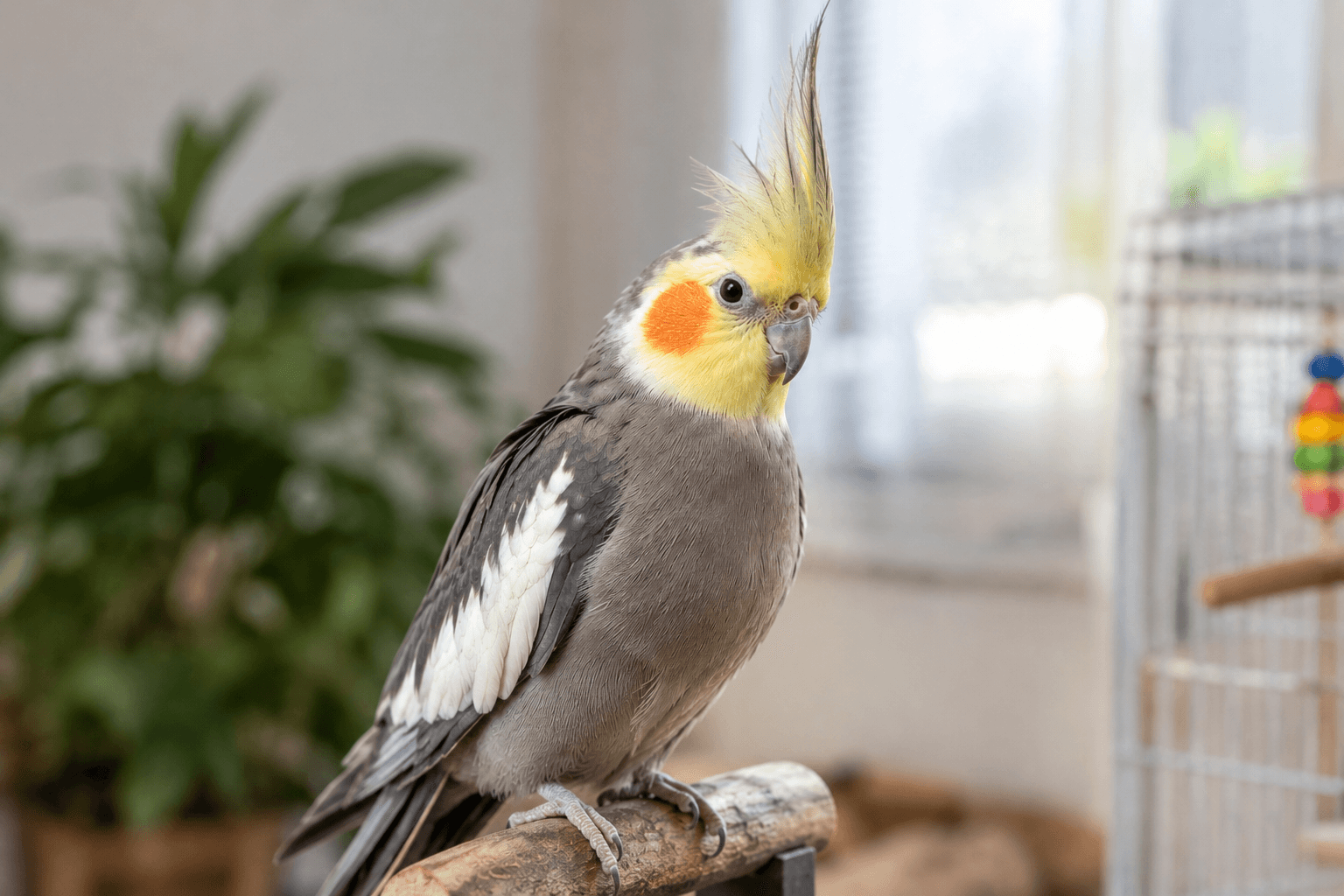
Feathers are the most honest mirror of a bird’s feelings. They move at his command, just like your hair stands on end when you’re frightened.
Here are the most common signs:
- Smooth, glossy feathers: a comfortable, healthy bird ✨
- Slightly fluffed feathers with half-closed eyes: relaxation and calm, usually before sleep
- Feathers pressed tightly against the body: fear or intense stress, as if he’s trying to make himself smaller
- Feathers constantly fluffed all day long: a warning bell! His body may be trying to conserve heat because of illness
And don’t forget that feather shine is linked to what your bird eats. A balanced diet, like the one we describe in our guide to bird nutrition, shows directly in the softness and color of his feathers.
Eyes and Pupils: The Pulse of Emotion
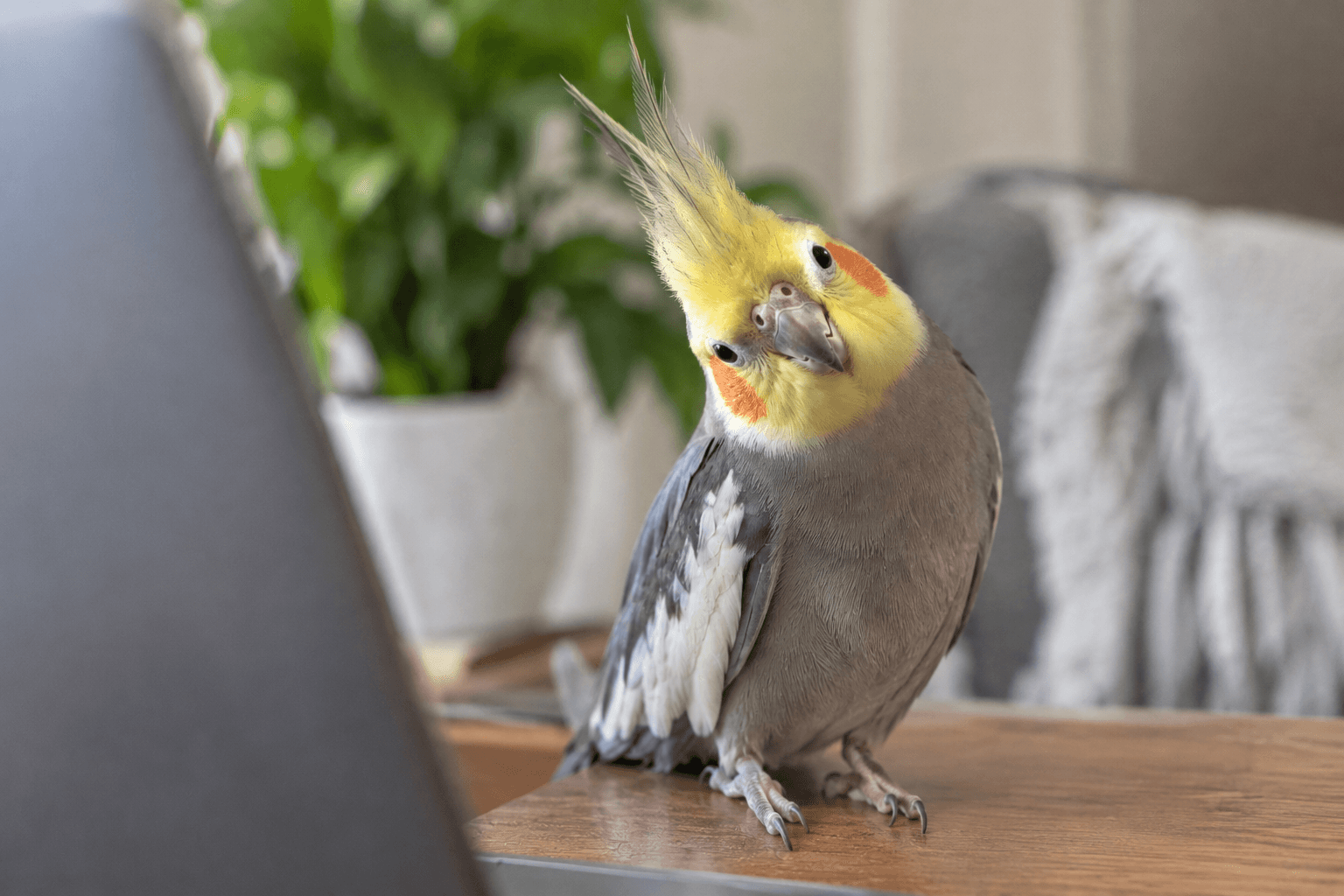
A bird’s eyes are a small window into his heart 👀 and the most striking feature is the movement of the pupil.
In parrots, the pupil widens and narrows at lightning speed (known as “pinning”) depending on emotion. It isn’t only a reaction to light.
That means rapidly pulsing pupils can signal intense excitement, curiosity, or even aggression, while relaxed eyes mean he feels safe.
Anyone who understands parrot behavior knows this golden rule: never judge the situation from a single signal. Combine the eyes with the feathers and the overall posture, then decide.
For example, pupils pinning with a tense body and a slightly open beak mean the bird is on high alert, so give him space. But pupils pinning with playful swaying and singing mean a moment of fun and joy. 🎶
Also watch for these signs:
- Eye half-closed all day with lethargy: possibly a sign of fatigue
- Swelling or discharge around the eye: needs a veterinary exam
- Eye wide open with a rigid body: sudden fear
Beak and Tail: Silent Messages
The beak isn’t just for eating. It’s a clever communication tool.
When your bird grinds his beak softly before sleep, that’s a sign of comfort and contentment. Picture someone sighing with relief after a long day 😌
An open beak with a hissing sound, on the other hand, is a clear warning to back away. And if you notice an open beak with fast breathing in normal temperatures, it may be worrying, and we’ll come back to it later.
The tail speaks too:
- Tail wagging quickly and cheerfully: a happy, excited bird 🎉
- Tail bobbing up and down with every breath: may indicate difficulty breathing
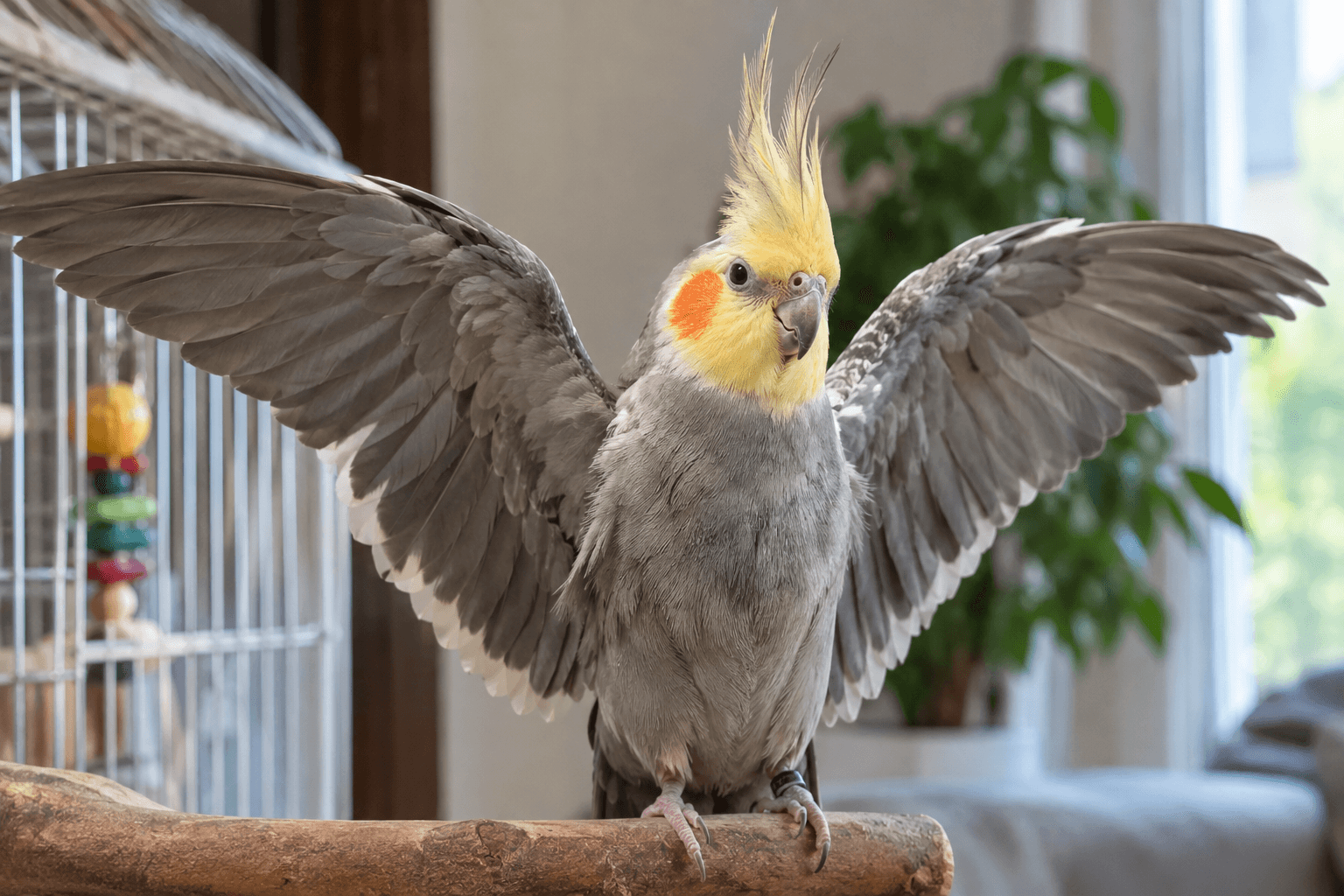
- Tail fanned out like a fan: either intense excitement, a warning, or admiration for you (depending on context!)
The beautiful part is that every bird has his own “accent.” A canary differs from a cockatiel, and a cockatiel from an African grey. Over time, you’ll discover his personal dictionary.
When Do You Need Veterinary Advice?
Sometimes you sense that something is “off,” but you can’t tell exactly what. That feeling is real, so don’t ignore it ❤️
This is where SCOTY comes in: a remote veterinary consultation clinic that puts a doctor in front of you wherever you are.
Instead of worrying and guessing, you can:
- Browse the doctors’ profiles and choose the best fit for your bird’s condition
- Book your appointment directly from the calendar
- Attach detailed photos and videos for the doctor to review before the session 📹
- Talk with the doctor in a 30-minute call to discuss everything
And if you feel your bird needs a specialist’s opinion, you can book an appointment with a veterinarian in minutes and get peace of mind before things get worse.
Everyday Emotions in Bird Body ❤️
Now that we’ve covered the basics, it’s time to explore your companion’s “mood” in the details of his day. A bird isn’t just a creature that eats and sings. He has changing feelings, just like us 🌈
Here you’ll learn to tell joy from fear from jealousy, before a misunderstanding turns into a painful bite or endless screaming.
Signs of Joy and Relaxation
A happy bird? You’ll know it at first glance once you’ve mastered the reading.
Picture a child running through the garden, laughing without a care. That’s your bird when he sways and sings freely 🎶
The top signs of happiness:
- Bobbing his head and body to music: a little dance means a good mood
- Fluffing then shaking his feathers (rousing): his way of saying “I’m comfortable, and I’m tidying up now” ✨
- Standing on one foot: complete security and relaxation, especially with slightly fluffed feathers
- Coming to you by his own choice: he wants your company and trusts you
- Soft, quiet humming: like someone humming while tidying their room
If you see him turning a toy over with curiosity, relax. Play is a sign of good mental and physical health 💚
Remember too that a relaxed bird eats with appetite, bathes with enthusiasm, and engages with those around him. When you see this whole picture, you’re looking at a truly happy companion.
Fear and Stress: How They Show
Fear in birds is very fast. It can start from a passing shadow, a door noise, or a new color in the room.
Stress signals you shouldn’t miss:
- Feathers pressed to the body and a statue-stiff posture
- Wide eyes with a fixed stare
- Trembling or cowering in a corner of the cage
- Panicked flight and crashing into the bars
- Slightly spread wings while backing away 😨
The danger is that chronic fear weakens a bird’s immunity, just as psychological stress does in humans. A bird living in constant tension may fall ill faster than others.
There’s also a condition called “night frights,” when a bird suddenly thrashes in the dark and crashes into the cage. A dim night light can solve the problem easily 🌙
If your bird’s stress continues and you can’t find the cause, don’t stay puzzled. With SCOTY, you can attach a short video of his movements before the session, so the doctor can analyze it and help you find the source of the fear.
After the session, you also get a free follow-up period via chat for a full week, so you can ask about any new detail without worry 📱
Aggression and Silent Jealousy
Not every bite means dislike! Sometimes it’s a message we didn’t understand in time.
An aggressive bird is usually protecting his space, his mate, or his food. His edginess rises in breeding season because of hormones, turning a gentle bird into a strict “guard” 🛡️
Warning signs before a bite:
- Pupils pinning rapidly with raised head feathers
- Open beak with clear hissing
- Fanned tail and a body leaning forward
- Slightly raised wings with a sudden move toward your hand
Jealousy is real too! Your bird may be jealous of your partner or of another bird who gets your attention, so he screams, ignores you, or attacks the rival.
It’s like a child who feels his baby brother has stolen his mother’s lap 😢
The solution is never punishment. Stay calm, step back a little, and reward him when he settles. Punishment increases fear, fear increases aggression, and the cycle goes on.
And if bites become frequent or unusual, there may be physical pain behind them rather than territorial defense. That deserves a specialist’s attention, because a bird in pain sometimes bites to defend himself.
Sounds That Complete the Movements
Sound and movement are two sides of the same coin. The message isn’t complete without both 🎤
- Loud, repeated chirping: a “where are you?” call asking for your company
- Sharp, continuous screaming: boredom, fear, or a wish for attention
- Sudden, unusual silence: may be more dangerous than screaming, especially with lethargy
- Imitating your voice or words: affection and emotional closeness
- Hissing or low clicking: “please, give me a little space!”
It’s important to know that each species has its own dialect. The African grey differs from the cockatiel, and the canary differs from the pigeon. So don’t compare your bird to your neighbor’s. Compare him to himself yesterday.
One of the most frequent questions in any vet Q&A about birds is: “My bird suddenly stopped singing. Is that normal?” The answer is that a sudden change in voice deserves attention, whether it’s an increase or a decrease.
And in a moment of late-night worry, many keepers search for an animal vet number that can reassure them quickly. Better still, prepare your option in advance. You can book an appointment with the doctor from the calendar directly, then talk with him for a full 30 minutes about everything that worries you ❤️
And if medication is needed, you receive a certified electronic prescription that you can download and fill online, and your bird’s case report is saved in his medical file inside the app for you to revisit whenever you like.
Signs of Illness In Bird Body Language👨🏻⚕️
We’ve reached the most important part, the one that can truly save your companion’s life 🚨
A sick bird tries with all his strength to look healthy, but his body lets a few small messages slip. Your job is to catch them early, because the first hours in the bird world count as days in others.
Fluffed Posture and Lethargy
Imagine you have a severe cold. You wrap yourself in a thick blanket and sit silently in a corner. That’s exactly what a bird does when he fluffs up his feathers 🤒
Fluffed feathers trap warm air close to the body, an attempt by the bird to compensate for lost heat when he’s unwell. If this posture lasts for hours, it isn’t relaxation.
The difference between relaxation and illness lies in the details:
- A relaxed bird: fluffs slightly, then returns to activity, eating and moving
- A sick bird: stays puffed up with half-closed eyes and interacts less with you
- A sign worth worrying about: head tucked under the wing in broad daylight 😟
- A dangerous sign: sitting on the cage floor instead of the perch
Sitting on the floor in particular means the bird may be too weak to hold on to the perch. There’s no room to wait until morning here.
At moments like this, keepers look for a bird vet who understands these delicate creatures, because a sick bird needs a quick assessment from a specialist who knows his nature.
Breathing: The Bobbing Tail
Tail movement during breathing is one of the most honest medical signs in birds 🔍
A healthy bird breathes calmly, and you can barely notice his chest moving. But if you see his tail moving up and down with every breath, his body is working extra hard to get air.
A simple comparison: have you ever run up five flights of stairs? You pant, and your shoulders move with every breath. A bobbing tail is a bird’s “panting.”
Signs of breathing difficulty you must not ignore:
- Open beak at rest in moderate temperatures
- Wheezing or clicking sounds with each breath
- Visible chest heaving while sitting restlessly
- Sudden voice change or loss of voice
- Neck stretched forward as if searching for air 😰
There’s also a silent household hazard to watch for: fumes from PTFE (Teflon)-coated cookware, aerosol sprays, and cigarette smoke. A bird’s respiratory system is extremely sensitive, and he can be affected by things we don’t even notice.
When any breathing sign appears, having an avian veterinarian within reach is critical. Keep the bird in a warm, quiet, slightly dim place, and avoid handling him too much so his stress doesn’t increase.
Droppings and Their Hidden Meaning
Talking about droppings may sound odd, but they are a free “daily health report” 📋
A healthy bird’s droppings have three parts: a green or brown solid portion (the feces), a creamy white material (the urates), and a little clear liquid (the urine).
What deserves attention?
- Suddenly very watery droppings: may be a digestive upset, though lots of fresh vegetables can also cause it, so note what he ate today
- Dark black or bloody color: a possible sign of bleeding 🩸
- Bright green with loss of appetite: may mean the bird isn’t eating well
- Whole undigested seeds: a digestion problem worth examining
- Lots of yellow urates: may be linked to liver or kidney problems
A practical tip: spread white paper at the bottom of the cage, and photograph the droppings with your phone whenever you see a change. That picture is worth a thousand words when you show it to the doctor.
Droppings color is also affected by food quality, which is why veterinarians see a close link between digestive symptoms and diet.
Feather and Beak Changes
Feathers and beak are like skin and nails in humans, reflecting what’s happening inside the body 🪶
Many keepers panic when they see feathers falling out. But the picture isn’t always frightening, because birds go through an annual “molt,” which is completely normal.
How do you tell the two apart?
- Normal molting: feathers fall evenly on both sides, with new feathers appearing as small pin-like tubes
- A medical problem: uneven bald patches, or broken, ragged feathers
- Feather plucking: the bird tears out his own feathers because of boredom, anxiety, pain, or parasites 😢
The causes of plucking are many and intertwined, from psychological stress to poor nutrition and skin infections. That’s why the treatment of feather loss in birds always begins with identifying the real cause, not with buying a random supplement.
The beak changes too:
- Overgrowth or a crooked shape: may be linked to the liver or poor nutrition
- Flaking layers or color changes: calls for an exam
- A wrinkled or brittle look with abnormal feathers: may indicate a viral disease and needs an accurate diagnosis
So what do you do in practice when you notice all this?
Don’t wait until you’re certain, because delay is the number one enemy. Look for the nearest vet if the case is an emergency that needs a hands-on exam, such as bleeding, a fall, or severe breathing difficulty.
If the case needs assessment and guidance, SCOTY makes it easy with a remote veterinary clinic. You browse the doctors’ profiles, choose the best fit, then book an appointment with the doctor and attach photos of droppings and feathers and a video of your bird’s movements before the session 📸
After the session, you receive a certified electronic prescription you can download and fill online. If you need a review, a free follow-up call is available, along with an open chat around the clock for a full week. You never face treatment alone 💚
Signs of Building Trust In Bird Body 🐥
Now that you’ve learned to read your companion’s messages, it’s time for the loveliest part: answering him in his own language 💬
Trust between you and your bird isn’t built on commands or gifts alone, but on patience and understanding the small signals. Every calm step brings you closer.
Approaching in His Language
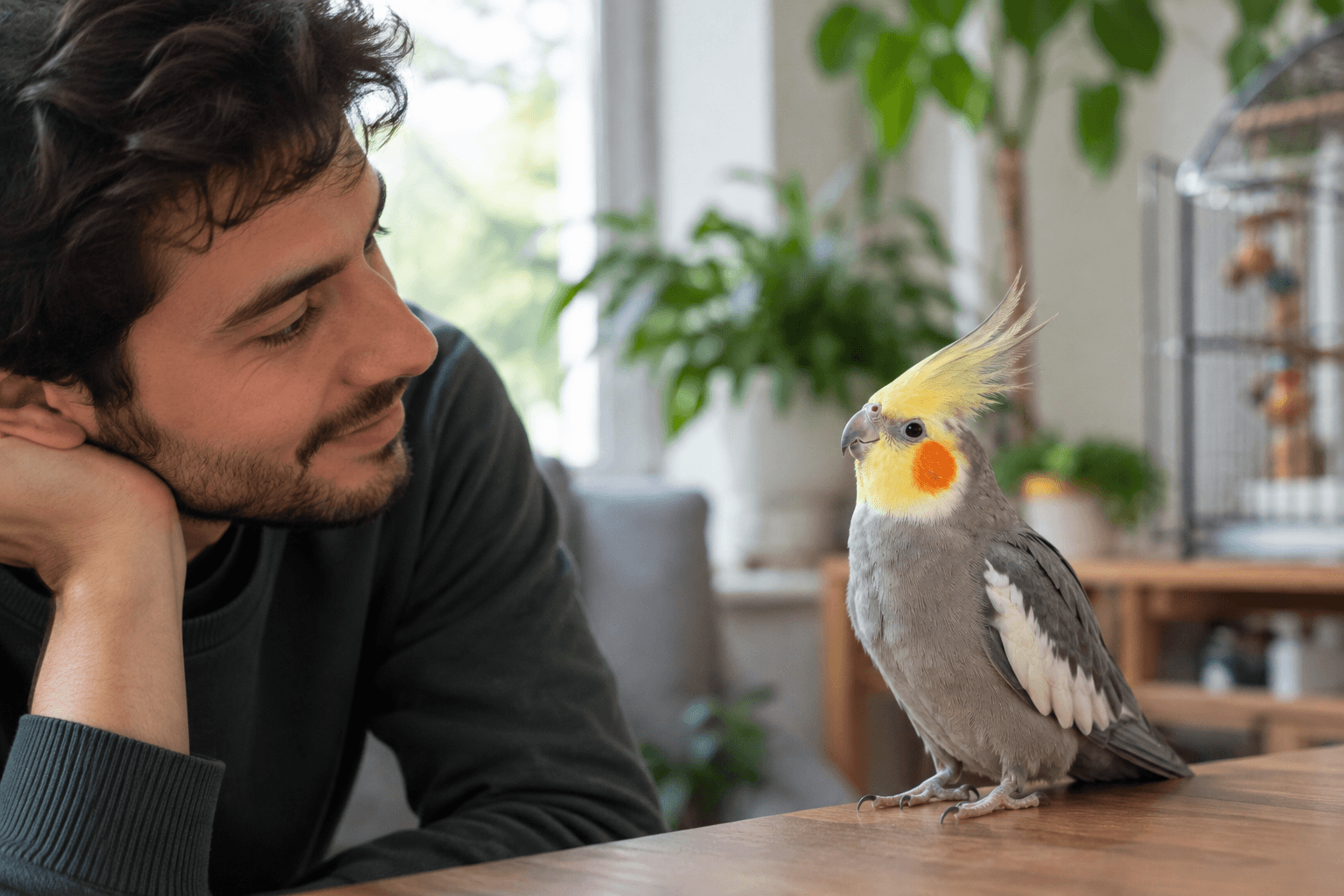
A bird reads your movements as you read his. He judges you within seconds: friend or threat?
Imagine a huge stranger suddenly approaching and reaching toward your face. You’d instinctively pull back, and that’s what your bird feels when you take him by surprise.
So try these gentle steps:
- Approach from the side, not the front: a direct approach resembles a predator’s stare
- Move slowly and speak softly: sudden movements signal danger 🐢
- Sit at his eye level or lower: a tall figure feels threatening
- Lower your gaze or blink slowly: a peace message many birds understand
- Speak in a warm, steady tone: your voice alone can become a source of comfort
If you want a long-lasting bond, taming birds rests on one simple rule: let the bird set the pace. Trust imposed by force collapses at the first fright.
And reward every small step. If he comes even one centimeter closer to your hand, offer him a favorite treat and a kind word 🌻
Mistakes That Scare Your Bird
Many keepers love their companions sincerely, yet make mistakes that push them away unintentionally. The good news is that they’re fixable.
Here are the most common:
- Chasing him inside the cage: turns his safe place into a chase arena 😰
- Gripping him tightly: makes him feel captured and helpless, and may hurt his delicate chest
- Punishing or yelling when he bites: increases his fear and deepens the problem
- Moving the cage often: robs him of a sense of stability
- Covering or waking him suddenly: steals his sleep, and sleep is the foundation of his health
- Leaving him alone for long hours: birds are social by nature and wilt in loneliness
There’s also a common mistake nobody notices: responding to screaming with attention. When you run to him every time he screams, he learns that screaming works. It’s better to reward him when he’s quiet, not when he screams.
The opposite is also true, so don’t ignore him completely. The goal is to meet his need for connection in a healthy way, not to deprive him of it.
And if a new behavior suddenly appears, such as aggression that wasn’t there before or unexplained fear, remember what we learned: a sudden change in behavior may hide a physical cause. Don’t try to guess on your own.
A Daily Routine That Reassures
Birds love routine and need it! A steady schedule gives them a sense of safety, because they know what will happen next ⏰
Imagine your meal and sleep times changing every day with no system. You’d feel stressed, of course, and so does your bird.
A simple, comfortable routine suggestion:
- Morning: uncover the cage at a fixed time, with a quiet greeting and fresh food ☀️
- Midday: play and interaction time, with varied toys rotated regularly
- Afternoon: a bath or light water mist if your bird enjoys it 🚿
- Evening: quiet time with you, with gentle talk or soft music
- Night: enough sleep in a dark, quiet place, roughly 10 to 12 hours 🌙
Don’t forget the nutrition side. A hungry bird, or one eating an unbalanced diet, becomes more stressed and irritable. A varied diet supports health and mood together.
And add to his day things that satisfy his curiosity:
- Toys to chew and shred that burn off his energy
- Safe natural branches to peck and play with
- Mirrors and bells, with caution, since some birds become overly attached to them
- Time outside the cage under your full supervision 🪴
Most importantly, a routine gives you the chance to notice any change early. Whoever knows his companion’s ordinary day precisely will catch any deviation the moment it happens.
Summary and Your Next Step
We’ve come a long way together, from feathers and eyes to droppings and breathing, and from joy and fear to building trust 🦜
The summary in four points:
- Observe the details daily: small changes foretell big ones
- Combine signals, and never judge from one: feathers, eyes, tail, and voice form one picture
- Stay calm and patient: trust is built gradually
- Don’t hesitate to ask for help: a bird hides his pain until the last moment
If you feel any real worry, you’re not alone. SCOTY offers a complete remote veterinary clinic that puts the doctors’ expertise in your hands, so you can browse their profiles and choose the best fit for your companion’s case.
You can then book a consultation with the doctor directly from the calendar and attach detailed photos and videos before the session so the doctor can study them well. Then you’ll talk in a half-hour call to discuss everything on your mind 📞
Afterward, you receive a certified electronic prescription and a full report saved in your companion’s medical file. Best of all, the free follow-up period gives you an open chat around the clock for a week, plus an additional follow-up call at no cost.
Your bird speaks to you every day, and now you have the tools to listen. So listen with your heart, observe with your eyes, and rest assured that someone has your back when you need it.