What Is Gas in Cats and Why Does It Happen?
You're sitting comfortably with your cat, and then — out of nowhere — you hear a strange rumbling from her belly, or catch a whiff of something unexpected 😅
Don't worry. You're definitely not alone in this, and your cat certainly isn't doing it on purpose!
Gas in cats is one of the most common concerns that leaves pet owners scratching their heads, wondering: Is this normal? Is my little furball okay? Do I need a vet?
The truth is, cat flatulence isn't always just a minor inconvenience — sometimes it's your cat's clever way of telling you to pay closer attention.
In this comprehensive guide, we'll walk you through everything: understanding why gas happens in the first place, recognizing when it warrants a vet visit, and discovering the best home remedies and medical treatments available. And whenever you need a trusted veterinary opinion, SCOTY is always right there with you — just one tap away.
Let's dive in! 🐾
How Does a C at's Digestive System Work?
Before we judge the gas, let's understand how our cats work on the inside 🙂
Cats are obligate carnivores — their digestive systems are specifically designed to process animal protein with exceptional efficiency, and are significantly shorter than those of humans or dogs.
This shorter digestive tract means:
- 🔹 Food moves through more quickly
- 🔹 Limited ability to digest complex carbohydrates and starches
- 🔹 Higher sensitivity to any sudden change in diet
When food that's difficult to digest reaches the intestines, gut bacteria begin fermenting it — and that fermentation is the primary "factory" producing gas inside your cat's belly.
Think of it like putting the wrong fuel in a car engine — it'll still run, but you'll hear strange noises and see smoke where there shouldn't be any!
The Main Causes of Gas in Cats — From Food to Behavior
The causes are many and varied. Here are the most important ones, laid out clearly:
🍽️ Dietary Causes:
- Sudden food changes: If you switch brands all at once, your cat's digestive system needs at least a week to adapt. Choosing the best types of cat food and transitioning gradually can save you a lot of trouble.
- Inappropriate foods: Such as dairy products, legumes, and raw vegetables.
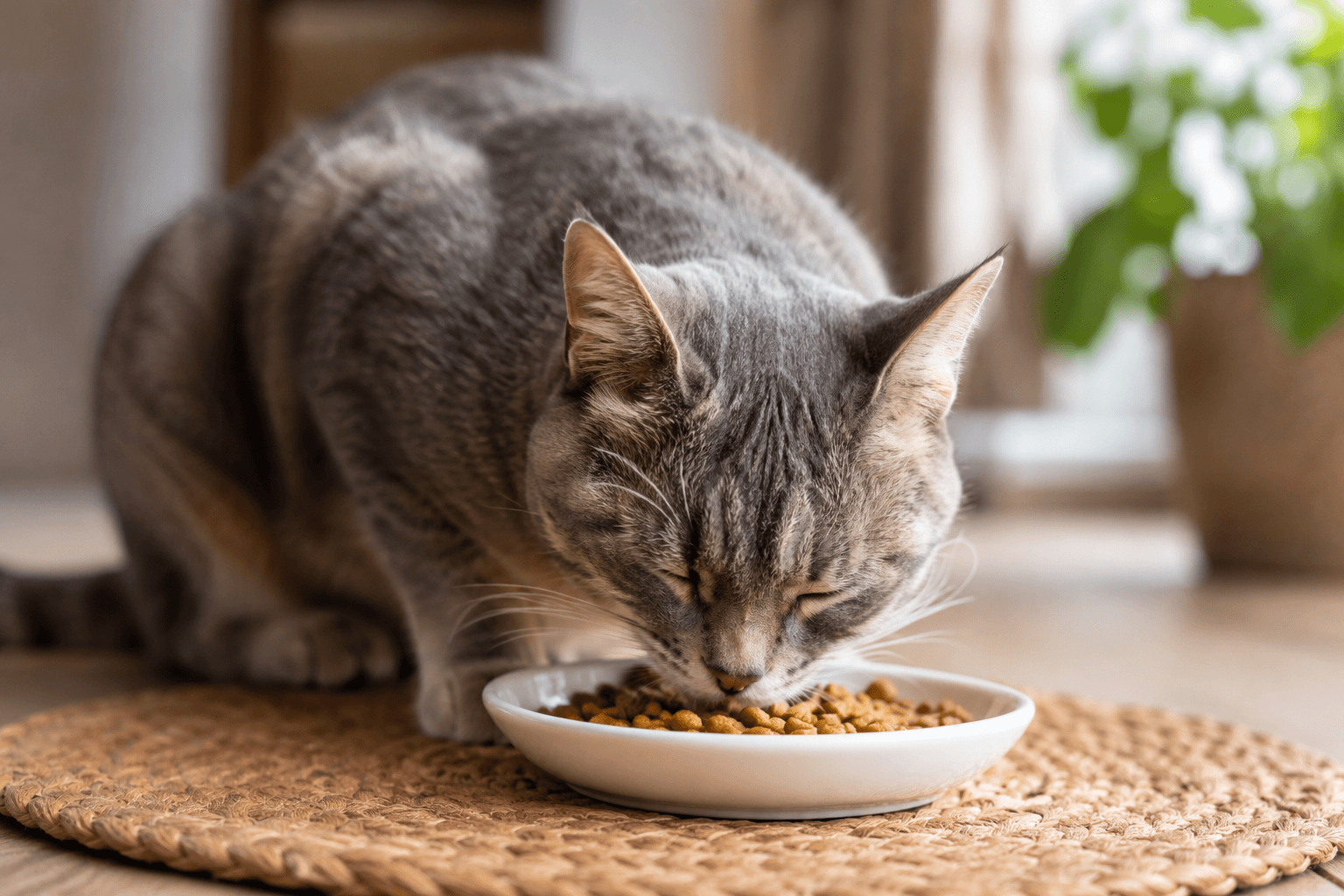
- Eating too fast: When your cat gulps her food down greedily, she swallows large amounts of air along with it — and that air becomes gas.
🦠 Health-Related Causes:
- Gastrointestinal infections: Bacterial or viral infections that disrupt the natural balance of beneficial gut bacteria.
- Accompanying diarrhea: Gas and intestinal disturbances very often go hand in hand. Understanding the causes of diarrhea in cats helps you see the full picture of what's happening inside your cat.
- Intestinal parasites: Worms and certain parasites wreak havoc in the intestines and produce gas as a byproduct of their activity — and your cat may show no other symptoms at all.
- Irritable bowel syndrome and Inflammatory Bowel Disease (IBD).
🏃 Behavioral Causes:
- Stress and anxiety directly affect intestinal motility.
- Inactivity and lack of movement slow down the entire digestive process.
- Eating from narrow or deep bowls forces cats to crane their necks awkwardly, causing them to swallow more air.
Is Gas Normal or Concerning? — The Difference Between Occasional and Chronic
This is the question on every pet owner's mind! 🤔
Normal, occasional gas tends to be:
- Rare (once or twice a week at most)
- Not accompanied by any visible pain or discomfort
- Clearly linked to a dietary change or a specific meal
- Self-resolving within a day or two
Concerning gas that warrants closer attention:
- 🚨 Occurring daily or continuously
- 🚨 Accompanied by noticeable abdominal bloating
- 🚨 Causing obvious discomfort (your cat avoids being touched on her belly)
- 🚨 Associated with changes in appetite or unexplained weight loss
- 🚨 Paired with recurring diarrhea or vomiting
The simple rule: if gas persists for more than 48 hours alongside any of the above symptoms, your cat's body is sending you a message you shouldn't ignore.
Foods That Cause Gas in Cats — A Detailed List
Some foods are genuine "gas factories" for your cat! 🏭 Here are the biggest offenders:
❌ Foods to Avoid or Minimize:
| Food | Reason |
|---|---|
| Dairy products (milk, cheese) | Most cats are lactose intolerant |
| Broccoli and cauliflower | Sulfur compounds that produce gas |
| Legumes (lentils, beans) | Complex carbohydrates that are hard to digest |
| High-starch foods | Incompatible with the cat's digestive system |
| Seasoned human food scraps | Spices and seasonings irritate the gut lining |
| Fatty fish in large quantities | Accelerates intestinal movement excessively |
✅ Foods That Are Gentler on the Digestive System:
- High-quality animal protein (chicken, turkey, white fish in moderate amounts)
- Wet food, which makes digestion significantly easier
- Prescription or specialized diets formulated for cats with digestive sensitivities
💡 Golden tip: If you're switching your cat's food, do it over 7–10 days by gradually mixing the old and new food together — start at 25% new / 75% old, and slowly increase the ratio each day.
Symptoms of Gas in Cats — When Should You Worry?
Your cat can't tell you in words that her tummy is bothering her 🐱
But she communicates in other ways — and all you need to do is learn how to "read" what she's telling you!
Physical Signs That Reveal Your Cat's Discomfort
The body doesn't lie, and your cat shows clear signs when she's struggling with gas:
🔍 Direct Digestive Symptoms:
- Gurgling sounds: You hear a bubbling or rumbling noise coming from her belly, especially right after eating
- Visible bloating: Her abdomen looks larger than usual and feels firmer to the touch
- Frequent passing of gas: Whether from the mouth (burping) or the other end 😅
- Loose stools or diarrhea: When gas is accompanied by intestinal irritation
- Repeated vomiting: Especially if she's swallowing excessive amounts of air with her food
😟 General Signs of Discomfort:
- Loss of appetite or a sudden reluctance to eat
- Sitting in unusual positions in an attempt to relieve abdominal pressure
- Unusual lethargy and low energy
- Resisting belly touches or pulling away when you try to pet her abdomen
Body Language — What Is Your Cat Telling You in Silence?
Cats are masters at concealing pain, but their body language gives them away! 🕵️
Understanding cat sitting positions and meanings gives you a golden key to decoding their internal state.
🐾 Postures That Signal Stomach Discomfort:
- Tense "loaf" position: She sits with her paws tucked tightly beneath her in a strained rather than relaxed way — this muscular tension means she's trying to relieve abdominal pressure
- Hunching over the belly: She arches her back inward and raises her hindquarters — the classic feline pain-relief posture
- Constant restlessness: She can't find a comfortable position and keeps moving from spot to spot
- Looking back toward her belly: As if she's "checking on" the source of her discomfort
👀 Facial Expressions That Don't Lie:
- Half-closed eyes with a slight forehead crease = ongoing discomfort
- Flattened ears pressed back with a hunched body = pain or stress
- Avoiding eye contact when she normally enjoys it = something is bothering her
Danger Signs That Require Immediate Attention
This section is critically important — keep it in mind 📌
Some symptoms that accompany gas go beyond "mild discomfort" and point to more serious conditions requiring urgent medical evaluation:
🚨 Contact a vet immediately if you notice:
- ✴️ Sudden, severe abdominal bloating accompanied by breathing difficulty
- ✴️ Complete refusal to eat or drink for more than 24 hours
- ✴️ Persistent, repeated vomiting (more than 3 times a day) alongside gas
- ✴️ Blood in the stool or urine — a red flag you must never ignore
- ✴️ Difficulty urinating with bloating — this may indicate a dangerous obstruction
- ✴️ Cold body temperature, staggering, or extreme weakness — very serious warning signs
- ✴️ Severe pain when the belly is touched, even very gently
💡 The golden rule: Gas + any of these symptoms = don't hesitate, act now.
In these moments, booking a consultation through SCOTY saves precious time — you can attach photos or videos of your cat's condition before the session even starts, so the vet can review and assess everything right away.
Gas and Its Connection to Other Conditions
Gas isn't always the root problem — sometimes it's simply a symptom of something deeper beneath the surface.
🔗 Conditions That Often Accompany or Cause Gas:
Upper Respiratory Infections:
You might wonder: what does breathing have to do with gas? The answer: when a cat is struggling with a nasal or throat infection — as seen with repeated cat sneezing — she swallows significantly more air while eating, which multiplies the amount of gas produced.
Hormonal Changes:
Pregnant cats or those nearing labor frequently experience digestive disturbances and bloating — largely due to uterine pressure on the intestines and shifting hormone levels. If your cat is expecting and experiencing gas, it's worth reviewing pregnancy symptoms in cats to determine whether what you're seeing is normal or requires intervention.
Kidney and Liver Disease:
In their more advanced stages, these conditions affect the entire digestive system and may manifest as chronic bloating and gas.
Intestinal Parasites:
Worms, Giardia, and other parasites disrupt intestinal function and produce gas as a side effect of their activity — and remarkably, your cat may display no other obvious symptoms.
Food Intolerance or Allergy:
Distinct from food poisoning — this is an immune or digestive response to a specific ingredient (such as gluten or a particular protein) that recurs every time your cat consumes that food.

Treating Gas in Cats — From Home Remedies to the Vet
The good news? Many cases of cat gas can be resolved at home with simple, smart steps 🏠
The even more important news? Knowing when to stop self-treating and call the vet — that's always the winning formula!
Immediate Steps You Can Take Right Now at Home
You don't need a prescription or a vet visit to start helping your cat today:
🏃 Movement First:
Exercise is the fastest natural remedy for gas!
- Encourage your cat to engage in light play at least 30 minutes after eating
- Don't let her sleep immediately after a meal — simple toys like a feather wand or laser pointer can accelerate intestinal movement
- Even just walking with her around the room helps if she's particularly lethargic
🤲 Gentle Belly Massage:
- Get your cat comfortable lying on her side in a relaxed position
- Using the tips of your fingers, gently massage her abdomen in small clockwise circles
- Start from the right side moving downward, then cross to the left and upward (following the natural direction of intestinal movement)
- Just 5 minutes can make a noticeable difference
⚠️ Stop immediately if: your cat resists or shows signs of pain when touched.
🍽️ A Brief Dietary Break:
- Offer a lighter meal than usual (reduce portion size by about 25%)
- Avoid any new foods for the next 48 hours
- Make sure she always has access to clean, fresh water — dehydration worsens gas considerably
🐾 Change the Food Bowl:
Did you know the bowl itself might be the culprit?
- Deep, narrow bowls force cats to dip their entire heads in, causing them to swallow far more air
- Switch to wide, shallow bowls or flat dishes designed for cats with flat faces
- Or try a slow feeder bowl if your cat tends to eat at lightning speed
Dietary Changes That Make a Real Difference
Food is both the most powerful medicine and the most dangerous weapon — sometimes simultaneously 🍖
✅ Gradually Introduce Wet Food:
- Higher moisture content makes digestion considerably easier
- Lower in carbohydrates compared to dry kibble
- Excellent for cats with sensitive stomachs
✅ Reduce High-Starch Dry Food:
Many kibble varieties contain surprisingly high levels of grains and starch — these are a primary source of fermentation and gas in cat intestines.
✅ Use Fiber Wisely:
- A small amount of plain cooked pumpkin (no spices or additives) can be mixed into food
- It helps regulate bowel movements and relieves both gas and constipation simultaneously
- But don't overdo it — too much causes diarrhea!
✅ Cat-Specific Probiotics:
- Restore the natural balance of beneficial gut bacteria
- Available as a powder that's mixed into food, or as a lickable paste
- Always consult a vet before starting to choose the right strain and dosage
For cats in special life stages like nursing, the ideal dietary approach changes entirely — you can learn more about the best food for nursing cats to address their unique nutritional needs correctly.
When Does Your Cat Need a Prescription or Veterinary Intervention?
Home solutions are wonderful — but they have clear and definite limits 🏥
These situations require professional veterinary evaluation — don't delay:
- 📍 Gas persisting for more than 3 days despite dietary changes
- 📍 Accompanying weight loss without an obvious cause
- 📍 Vomiting or diarrhea lasting beyond 24 hours
- 📍 Severe bloating that doesn't subside
- 📍 Your cat refusing to eat for more than a full day
- 📍 Any of the danger signs discussed in the previous section
What Will the Vet Actually Do?
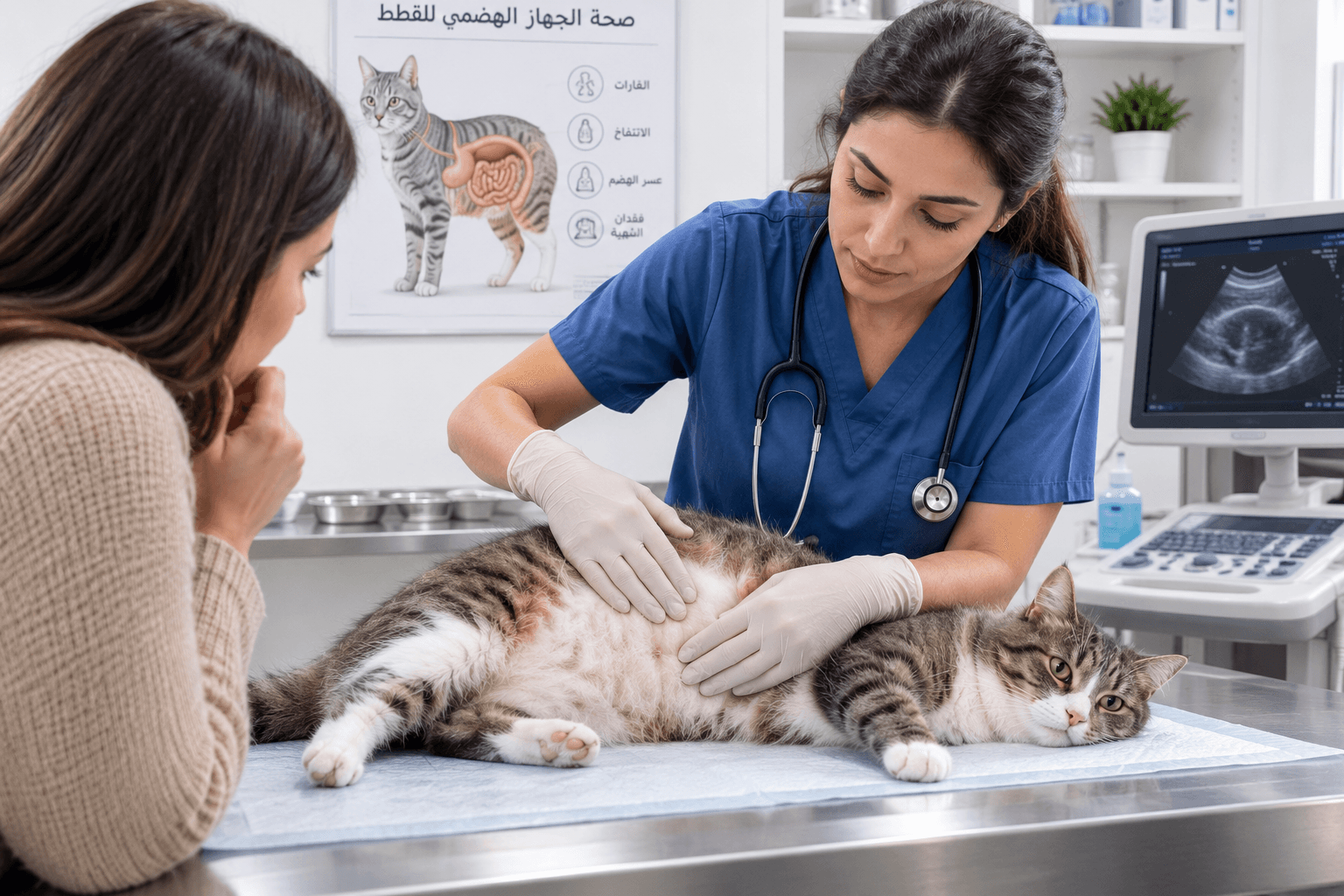
When visiting a cat veterinary clinic, the veterinarian may resort to:
- Physical examination: Palpating the abdomen to detect any masses or areas of pain
- Blood and stool tests: To identify parasites or infections
- X-rays or ultrasound: To rule out obstruction or dangerous gas dilation
- Prescription treatment: Which may include anti-gas medication (Simethicone), antibiotics, antiparasitic treatment, or specialized prescription diets
However, with an online specialized cat veterinarian, you can get an accurate initial assessment right from your home and treatment prescriptions for simple cases.
How SCOTY Helps You Diagnose and Treat Gas Remotely
Picture this scenario: It's 11 PM, your cat looks bloated and clearly uncomfortable, and every clinic is closed 😟
This is precisely where SCOTY makes a real difference in the lives of pet owners.
What exactly does SCOTY offer you?
🔹 Immediate consultation with a specialized vet:
Browse detailed vet profiles, choose the one you trust most, and book an appointment directly from the calendar — all within minutes.
🔹 Attach photos and videos before your session:
Capture a photo of your cat's swollen belly or a video of her movement and behavior — send it to the vet before the call begins so they can review and analyze everything in advance.
🔹 A full 30-minute session with your vet:
Not a rushed question with a half-answer! A complete half hour to discuss everything calmly and in full detail.
🔹 A certified digital prescription:
If your cat needs medication, you'll receive a downloadable, verified prescription that can be filled online — no repeat visits necessary.
🔹 A complete documented medical file:
Every detail of the consultation is saved in your cat's profile within the app — accessible anytime and shareable with any vet in the future.
🔹 A full week of free follow-up:
The best feature of all — after your session, you get an entire week of free follow-up via chat around the clock, plus a complimentary follow-up call — because your cat's health doesn't end when the first call does.
Start now and give your cat the care she truly deserves — book an appointment anytime you need it.
Long-Term Prevention — A Lifetime of Digestive Health for Your Cat
Treatment matters — but prevention is smarter, kinder to your cat, and easier on your wallet too! 🛡️
Chronic gas in cats isn't an inevitable fate — in most cases, it's the result of daily habits that can absolutely be changed with patience and the right knowledge.
A Balanced Diet Is the Foundation
The right food is the single most important pillar of a calm, healthy digestive system 🌿
Principles of Smart Cat Nutrition:
- Protein first and always: Make sure the first ingredient listed on any cat food label is an animal protein (chicken, fish, turkey) — not grains, starch, or protein concentrates.
- Reading the label is a golden habit: Learn to read cat food ingredient lists the way you read the ingredients on your own food — high carbohydrate and grain content is often hidden behind complex-sounding names.
- Variety with wisdom: Relying on a single food type for extended periods can eventually trigger food sensitivities — but any change must always be gradual over at least one week.
- Functional Foods: Some prescription and specialized diets contain built-in prebiotics and probiotics — an excellent option for cats with chronic digestive sensitivities.
🚫 The Golden "Never" List for Cat Nutrition:
- No cow's milk or large amounts of dairy products
- No onions or garlic in any form (both are highly toxic to cats)
- No chocolate or caffeine
- No cooked bones (they splinter and can cause internal injuries)
- No heavily seasoned or spicy food from your kitchen
- No "sharing" from your plate — even when they look at you with those irresistible eyes! 😄
Healthy Feeding Habits That Many Owners Overlook
The food matters — but how your cat eats is equally important 🍽️
⏰ Regular Feeding Schedules:
Cats are creatures of routine at their core — their digestive systems genuinely prefer consistent mealtimes over random or unpredictable feeding:
- Two to three meals daily at fixed times is far superior to leaving food out all day
- Free feeding often leads to irregular eating patterns and, frequently, eating far too fast
🐱 Separate Feeding in Multi-Cat Households:
If you have more than one cat, feeding them together can cause:
- Competition and frantic speed-eating (= swallowed air = gas!)
- Stress that directly and negatively impacts digestion
The solution: separate bowls, different locations, and a calm, quiet atmosphere at mealtimes.
💧 Water — The Forgotten Hero:
- Many cats don't drink enough water, especially when eating primarily dry food
- A flowing water fountain encourages cats to drink significantly more than a still water bowl
- Adequate hydration softens stools, helps gas pass more easily, and reduces intestinal fermentation
🧼 Daily Bowl Hygiene:
The bacteria that form a biofilm from leftover food in an unwashed bowl directly disrupt your cat's gut microbiome — wash bowls with soap and water every single day.
The Role of Physical Activity in Digestive Health
A lazy cat means a lazy gut! 🏃♀️
Physical activity isn't a luxury — it's a genuine digestive necessity:
Benefits of Daily Play on Digestive Health:
- Stimulates involuntary intestinal muscle movement (peristalsis)
- Reduces gas accumulation in the large intestine
- Helps hairballs pass more easily (hairballs are another common cause of bloating!)
- Lowers stress levels, which directly harm the digestive system when elevated
🎮 How Much Play Does Your Cat Need Daily?
- Adult cats: 15–20 minutes of active play, twice a day
- Kittens and young cats: More is needed — up to 30–40 minutes daily
- Senior cats: Shorter but more frequent sessions work better than one long session
Ideas for Environmental Enrichment:
- Cat trees and climbing structures encourage independent movement throughout the day
- Interactive hunting toys (feather wands, toy mice, laser pointers)
- Puzzle feeders that hide food inside — combining play with the benefits of slow feeding!
When Should You Schedule Routine Vet Visits?
Preventive care is the smartest investment you can make in your cat's health 📅
Suggested Routine Visit Schedule:
- Kittens (under 1 year): Every 3–4 months
- Adult cats (1–7 years): Once or twice a year
- Senior cats (7+ years): At least every 6 months
What Does a Routine Digestive Health Check Include?
- Weight measurement and Body Condition Score assessment
- Dental and gum examination (directly linked to gut health!)
- Stool analysis for early parasite detection
- Dietary review and adjustments based on age and weight
- A thorough ear examination as well — infections like ear mites in cats can sometimes indicate a broader weakening of the immune system
Digestive health isn't a separate chapter — it's a mirror of your cat's overall wellbeing.
A Final Word From the Heart 💙
Caring for your cat doesn't simply mean filling the food bowl and refreshing the water daily — it means knowing her body, understanding her signals, and acting at exactly the right moment.
Occasional gas will pass on its own. But consistent, mindful attention to her digestive health is what extends her life and makes every moment you share together happier, healthier, and more meaningful.
And whenever you're unsure or worried, remember that SCOTY is more than just an app — it's your personal veterinary companion that knows your cat by name, keeps her complete medical history, and is right there beside you whether it's dawn or the middle of the night.
Your cat deserves the very best care possible and booking a consultation today is the first step toward giving her exactly that. 🐾