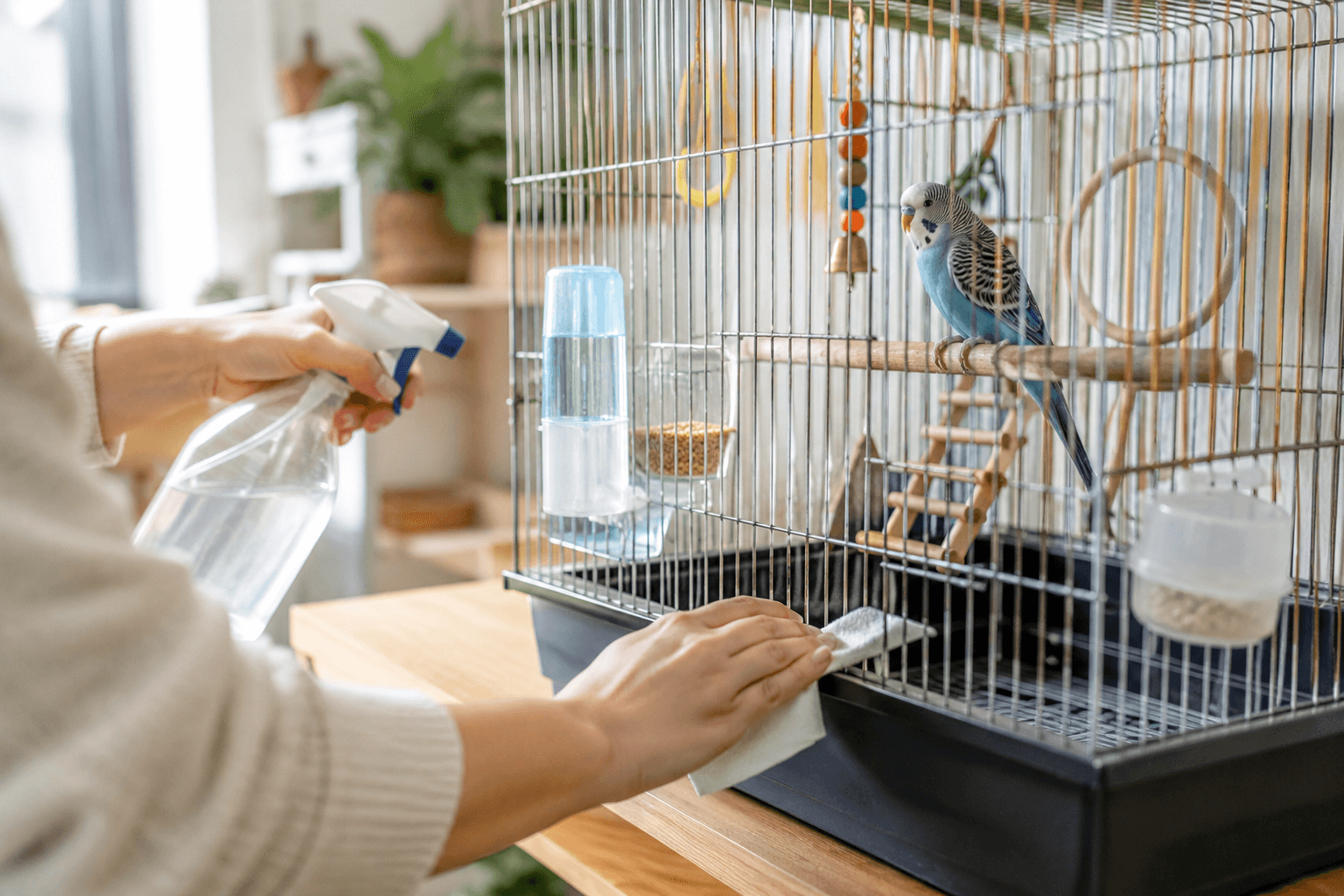
The Right Start to Caring for Your Pet Bird 🦜
Have you ever woken up to a tiny song that made your whole morning better? That’s what your pet bird does. They are more than a lovely voice in the corner of the living room. They are a small soul who depends on you for food, safety, and happiness.
But here is something many bird owners don’t know: birds are masters at hiding illness. They do it by instinct, because in the wild a weak bird is an easy target for predators. So your bird can look perfectly fine while actually needing your help.
In this guide, we’ve gathered the essentials of veterinary experience into simple steps, with examples from everyday life. And at every step, you have the team at SCOTY, your veterinary clinic in your pocket.
If you want to understand pet bird care from the ground up, let’s start with the foundation: the home your bird will live in 🏡
Choosing the Right Bird
Choosing a bird is a bit like choosing a roommate. Some birds are calm and independent, while others need company all day long.
- Canary: A wonderful singer who likes their own space, and a good fit if your time is limited.
- Lovebirds: Very social and in need of daily attention. They get stressed if left alone.
- Cockatiel: Friendly and easy to handle, and may live more than 15 years.
- African grey parrot: Very intelligent and needs time and mental stimulation every day. May live for decades.
Before you buy, watch the bird carefully. Bright eyes, smooth clean feathers, and obvious energy are good signs. A wet nostril, a dirty vent under the tail, or lethargy are warning signs.
In the first week, take your new bird to a veterinarian for birds for a full checkup. This step can catch a hidden illness before it becomes a real problem.
The Ideal Cage and Size
Imagine living in a room where you can’t stretch out your arms. That’s how a bird feels in a cage that’s too small.
The golden rule: your bird must be able to spread both wings fully and move around without touching the bars.
- Choose a cage that is wide, not just tall, because birds move horizontally more than they climb.
- The bar spacing must suit your bird’s size so their head can’t get stuck.
- Prefer stainless steel, and avoid cheap painted cages, because flaking paint can cause heavy metal poisoning.
- Provide perches of different diameters. This exercises the feet and prevents sores.
Where to Place the Cage
The best spot is where your bird can see the family without constant noise. A cage in the living room is better than one in a forgotten room, with the cage at about chest height so your bird feels secure.
But some places should be avoided completely:
- The kitchen: Fumes from Teflon-coated cookware can kill a bird within minutes.
- Direct drafts from the air conditioner or a window.
- Harsh sun all day. Your bird needs both light and shade.
- Incense, scented candles, and insect sprays. A bird’s lungs are extremely sensitive.
At night, your bird needs 10 to 12 hours of quiet and darkness. Cover the cage with a light cloth that lets air through, and your bird will thank you with better energy and health 🌙
The First 48 Hours at Home
A new bird is like a guest who has just arrived in a strange house. Don’t push touching and playing. Give them two days to settle in.
- Keep the room quiet and limit movement around the cage.
- Make sure your bird is eating and drinking within the first few hours.
- Watch the droppings, since they are the first indicator of health.
This is also where an important skill begins: learning bird body language. Your bird tells you everything, just in their own language:
- Slightly fluffed feathers with soft beak grinding: Relaxation and sleepiness. This is a sign of contentment.
- Fluffed feathers all day: Your bird may be sick or feeling cold.
- Tail bobbing up and down with every breath: Difficulty breathing.
- Sitting on the cage floor: A condition that needs urgent attention.
Signs You Need a Vet Now
Remember, a bird hides illness until it becomes severe. So don’t wait and hope it passes. If you notice any of these signs, act right away:
- Refusing food for more than 24 hours, especially in small birds.
- Difficulty breathing, or breathing with an open beak.
- A clear change in the color or consistency of droppings.
- Discharge from the eyes or nostrils.
- Lethargy and constant sleeping.
If you feel worried and there’s no clinic nearby, that’s exactly what our digital clinic was built for, so reassurance is only a few taps away 💚
- Browse the doctors’ profiles and choose the best fit for your bird’s case.
- Book your appointment directly from the calendar.
- Attach photos and videos of the symptoms before the session, so the doctor can review the case in advance.
- Talk with the doctor in a full 30-minute call to discuss everything.
- Receive an approved electronic prescription you can fill online with ease.
- Have the full case report saved in your bird’s medical file inside the app.
- And the best part: free 24/7 chat follow-up for a full week, plus another free follow-up call.
Don’t put your worry off until tomorrow. Book your consultation with the doctor now and get peace of mind for your pet.
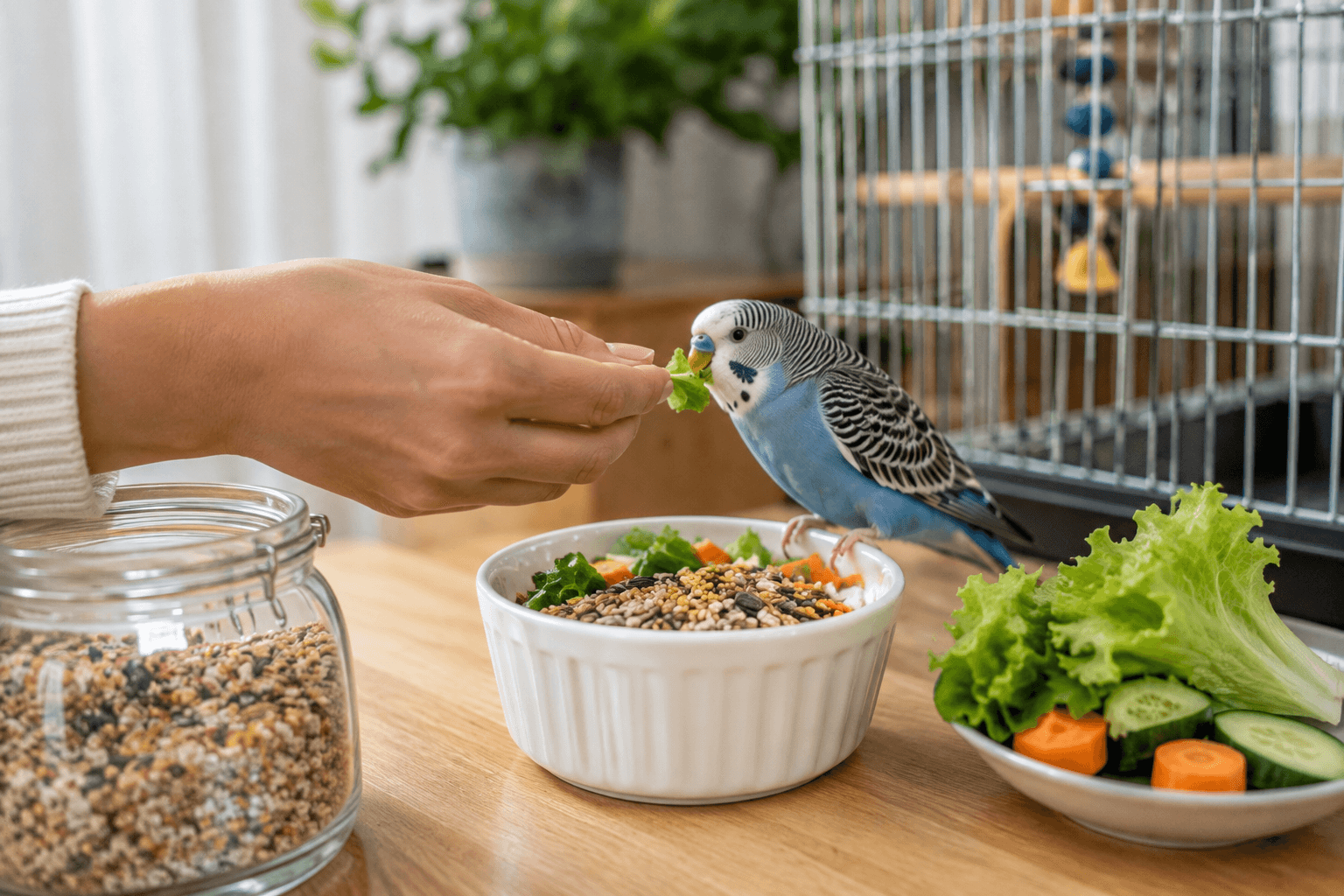
Essential Nutrition and Hygiene for Your Pet Bird
A Balanced Diet
Many people assume a bag of seeds from the market is enough. That’s like living on french fries every day: you feel full, but your body pays the price years later.
The ideal diet for most parrots, such as cockatiels and lovebirds, is roughly:
- 60 to 70% pellets, the balanced manufactured kibble.
- 20 to 30% fresh vegetables and fruit.
- Less than 10% seeds, as a treat and encouragement.
Canaries and finches are different, because seeds are a core part of their diet, so ask your vet about the right mix for your species.
The most important point in bird nutrition is that seeds alone are high in fat and low in vitamin A and calcium. Over time they can cause fatty liver disease, a weakened immune system, swelling around the eyes, and repeated respiratory infections.
Dark leafy greens, carrots, broccoli, and cooked sweet potato are excellent choices. Offer small amounts daily, and remove leftovers after a few hours so they don’t spoil in the cage.
Seeds or Pellets?
Seeds are the “dessert” of the bird world. Your bird loves them, but given the choice, they’d eat only seeds and skip everything else, just like a child who refuses everything but chips.
That’s why switching to pellets takes patience and a plan, not a sudden decision:
- Start by mixing a small amount of pellets into the usual seeds.
- Increase the pellet share gradually over 3 to 4 weeks.
- Watch eating, droppings, and energy at every stage.
- Never withhold food to “teach” your bird. Small birds can deteriorate within days.
You can also provide a calcium source such as a cuttlebone or mineral block, which supports bones and beak.
Forbidden Foods
Your bird shares your table with innocent eyes, but some of our foods are poison to them. This list is not up for experimentation:
- Avocado: Causes heart and breathing problems that can end in death.
- Chocolate and caffeine: Coffee, tea, and soda are all dangerous.
- Alcohol: Even very small amounts can be fatal for a tiny body.
- Apple seeds and fruit pits: They contain toxic compounds, so remove them before serving.
- Large amounts of onion and garlic: They damage red blood cells.
- Raw beans: Toxic, and only safe after thorough cooking.
- Salt, fried foods, and processed foods: They quickly burden the liver and kidneys.
If your bird swallows anything from this list, don’t wait for symptoms. Contact a vet right away.
Water and Daily Cleaning
Stagnant water in a dirty bowl is a perfect environment for bacteria, and your bird dips their beak into it dozens of times a day 🧼
- Change the water at least once a day, and twice in hot weather.
- Wash food and water bowls with hot water and soap, and rinse well.
- Replace the cage floor paper daily, and check the droppings at every change.
- Do a thorough cleaning of the cage and perches once a week, and let everything dry completely before returning your bird.
- Avoid harsh cleaners and scented sprays, since your bird’s lungs react quickly to their fumes.
Healthy droppings have three parts: a green or brown firm portion, a white portion, and clear liquid. Any sudden change in color or consistency is a message from your bird that you shouldn’t ignore.
Some birds love bathing. Offer a shallow dish or a fine, lukewarm mist two or three times a week, in a warm room and early in the day so the feathers dry before evening.
Feathers and Natural Molting
Once or twice a year, your bird goes through molting. It can look scary, but it’s a natural renewal, just as we change our clothes with the seasons.
During this time you may see feathers dropping in the cage and small tubes called “pin feathers” on the head. Your bird may also be more sensitive and dislike being touched. Add more protein and vegetables, and give extra quiet.
But it deserves attention if you see these signs:
- Clear bald patches on the body.
- Constant itching, or redness and flaking of the skin.
- Dull, broken, or ragged feathers.
- Your bird plucking their own feathers.
The causes are many: poor nutrition, parasites or fungi, or boredom and stress. That’s why successful treatment of feather loss in birds starts with finding the cause first, not with buying just any medicine from a store.
And if you’re worried about a change in diet, feathers, or droppings, you don’t have to wait alone. With SCOTY, you can attach photos and video before the session, talk with the doctor for a full half hour, and receive an electronic prescription you can fill online. Then you follow up through chat for free for a week, with an extra follow-up call 💚
Book your appointment with the doctor now and keep peace of mind one tap away.
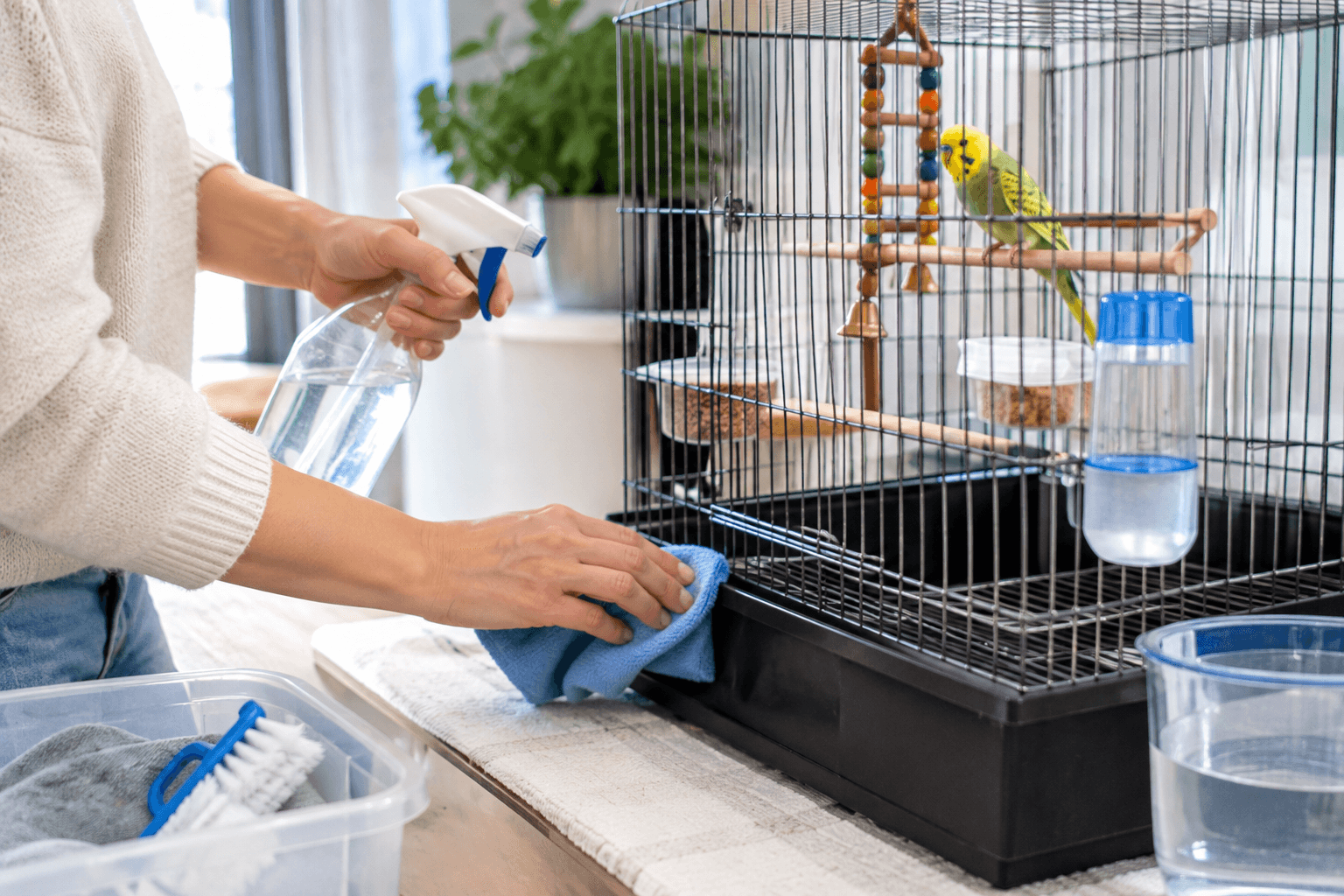
Proper Behavior and Training for Pet Birds
Earning Your Bird’s Trust
Trust in a bird is like a new friendship. It isn’t built by pushing, but through patience, calm, and repetition.
The foundation of taming your bird is letting your bird choose to come closer, without forcing it. Try these steps in order:
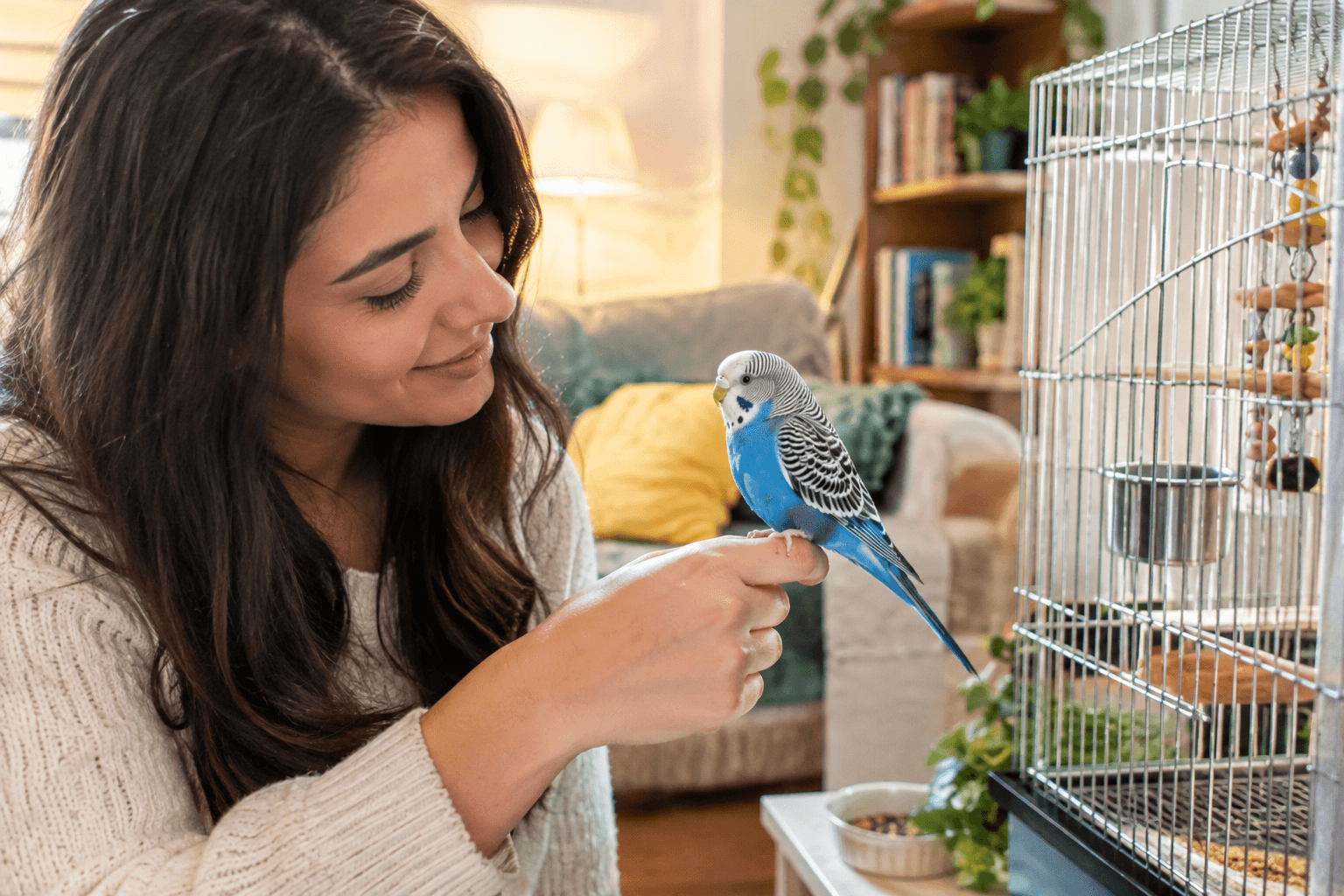
- Sit near the cage daily and speak in a low, warm voice, without trying to touch.
- After a few days, offer a seed or a piece of vegetable through the bars and wait.
- Once your bird accepts food from your hand, open the door and hold your hand still inside the cage.
- Encourage your bird to step onto your finger with a consistent cue like “step up,” and reward right away.
- Keep sessions short, 5 to 10 minutes, twice a day.
Avoid sudden movements from above, because a bird reads them as a predator’s attack. Always approach at eye level and move slowly.
And if your bird backs away, don’t count it as failure. Take a step back and try again tomorrow. Training is a marathon, not a sprint.
Understanding Screaming and Biting
First, know this: loud calling in the early morning and at sunset is completely normal. It’s the “flock call” that birds make in the wild.
But constant screaming all day has other causes. One of the key lessons in parrot behavior is that every scream usually hides an unmet need:
- Loneliness: Your bird is calling to know you’re nearby.
- Boredom: No toys, no activity, nothing to occupy their mind.
- Tiredness: Lack of sleep makes birds irritable and loud.
- Attention seeking: If you run over every time your bird screams, they learn that screaming works.
The solution is never punishment. Yelling at your bird or covering the cage during the day only raises their stress. Instead:
- Ignore the screaming, and reward your bird with attention only when calm.
- Set fixed times for play, talking, and meals.
- Teach calm sounds, like whistling or a short word your family enjoys.
As for biting, it is usually a form of communication, not aggression. A biting bird is saying, “I don’t want this right now,” or “I’m scared.” And if the biting is sudden from an always-gentle bird, take them to the vet, because pain can change temperament.
Boredom and Feather Plucking
Imagine being locked in a small room all day with no phone, no book, and no one to talk to. After a few days you’d develop strange habits, and that’s exactly what happens to a bored bird.
Feather plucking is one of the most worrying problems, and a common mistake is to assume it’s always psychological. In truth, the causes range from physical to emotional:
- Physical: Skin parasites, fungal infections, fatty liver, vitamin deficiencies, or dry air.
- Psychological: Boredom, loneliness, stress, changes in the home, or lack of sleep.
That’s why the golden medical rule is: rule out a physical cause first before assuming it’s behavioral. The vet examines the skin and feathers and runs tests, and then we address the psychological side if needed.
In the meantime, help your bird with simple steps:
- Increase supervised out-of-cage playtime.
- Offer toys to chew and shred in place of feathers.
- Keep sleep and wake times consistent.
- Don’t punish or comment on the plucking in front of your bird, since attention can reinforce it.
Daily Games and Activities
A smart bird needs a busy mind. In the wild they spend hours searching for food, while in a cage they find a full bowl with no effort at all.
So turn mealtimes into a game:
- Hidden food: Wrap seeds in clean paper or place them inside a small cardboard box for your bird to open.
- Chew toys: Safe natural wood, unprinted paper, or coconut.
- Mirrors and small bells: Entertainment for small birds, but use with great caution.
- Weekly rotation: Swap toys every week, because new things attract more than old ones.
For safety, always think before buying any toy:
- Avoid frayed ropes that can tangle a foot, and small parts that can be swallowed.
- Stay away from cheap metals that may contain zinc or lead.
- Check toys regularly and remove anything that has broken.
When your bird is out of the cage, close windows and doors, switch off fans, and make sure no kitchen is in use and no hot water is nearby. Two hours outside the cage daily makes a huge difference to mood and health.
And when it’s hard to tell normal behavior from a sign of illness, don’t hesitate to get a doctor’s help. Through SCOTY, you can film your bird plucking feathers or screaming and attach the video before the session, so the doctor sees the problem firsthand. Then you discuss everything in a 30-minute call, and the full report is saved in your bird’s medical file. After that, you follow up through chat for free for a week 💚
Don’t let worry pile up. Book your appointment now and begin the journey of understanding your bird.
Caring for Your Pet Bird in Emergencies
Preventive Checkups
Imagine a car that only goes in for maintenance after it breaks down. That’s the bird who only sees the vet when sick.
The annual full checkup is your bird’s regular maintenance. The vet examines the beak, nails, feathers, heart, and chest, and may request a stool or blood test when needed.
And there’s one simple habit that can save your bird’s life: weigh your bird weekly.
- Use an accurate digital kitchen scale, and measure in grams.
- Record the weight on paper or in your phone, at the same day and time.
- Losing 5 to 10% of body weight without a clear reason calls for a vet visit.
Thick feathers hide a thin body, and the scale doesn’t flatter anyone.
Common Illnesses and Symptoms
You don’t need to memorize disease names. It’s enough to know the most common ones and how to suspect them:
- Vitamin A deficiency: Caused by a seeds-only diet. Leads to repeated eye and respiratory infections and white plaques in the mouth.
- Respiratory diseases: Constant sneezing, discharge from the nostrils, and a wheezing sound while breathing.
- External parasites: Intense itching and gray scaly crusts on the face and beak, especially in budgies.
- Fungal and yeast infections: White patches in the mouth, or repeated vomiting and bloating.
- Egg binding: Females sit fluffed up and strain on the cage floor. This is an emergency that needs a vet immediately.
- Teflon fume poisoning: Sudden shortness of breath after cooking, and it can be fatal within minutes.
- Psittacosis (parrot fever): Lethargy, diarrhea, and eye discharge. It can pass to humans, so always wash your hands after touching your bird or their equipment.
Remember that many diseases share similar symptoms. Don’t try a home remedy, because a wrong diagnosis wastes precious time.
Home First Aid
When your bird suddenly declines, calm is the first aid. Move quickly but without panic, because your stress transfers to your bird.
For a weak or fluffed-up bird:
- Warmth first: Place your bird in a quiet, warm spot, around 29 to 32°C (85 to 90°F).
- Use a bottle of warm water wrapped in cloth beside the cage, without touching your bird directly.
- Lower the light and noise, and cover part of the cage so your bird feels secure.
- Don’t force food or water by syringe if your bird isn’t alert, as they may choke.
For a bleeding nail or blood feather:
- Press gently with a clean tissue, and apply cornstarch or styptic powder to the spot.
- If the bleeding doesn’t stop within a few minutes, this is an emergency.
After inhaling toxic fumes:
- Move your bird to fresh air immediately, open the windows, then contact a vet.
What never to do:
- Never give human medicines or leftover antibiotics from another treatment.
- Never squeeze the chest hard when holding your bird, because birds breathe through chest movement.
In any of these situations, don’t delay in contacting a bird veterinarian. Home first aid buys you minutes, and real treatment comes from a specialist.
Emergency Kit and Numbers
Emergencies don’t happen during business hours, so prepare your kit in advance, just as you would a first aid kit for your family.
- A small carrier covered with a cloth, ready for any urgent trip.
- Cornstarch or styptic powder, gauze, and sterile saline solution.
- A bottle of warm water or a small heating pad.
- A clean towel and a small flashlight.
- A digital kitchen scale and a log of your bird’s weights.
- Your bird’s medical file: latest test results, medication names, and vaccinations.
Also keep a list of nearby emergency vet numbers in your phone, so you can find a number in seconds rather than in confused minutes. Ask in advance whether they see birds, because not every clinic is equipped for them.
And when the vet isn’t nearby, or it’s late and your heart is racing, SCOTY brings you a complete clinic on your phone 💚
- Choose the best doctor from their profile and book directly from the calendar.
- Attach photos and videos of your bird’s condition before the session.
- Talk with the doctor for a full 30 minutes and discuss everything that worries you.
- Receive an approved electronic prescription you can fill online.
- Have the full report documented in your bird’s medical file for future reference.
- Most importantly: a full week of free 24/7 chat follow-up, with another free follow-up call.
In conclusion 🐦💚
caring for a pet bird involves much more than providing food, water, and a clean cage. It requires daily attention, preventive care, and a commitment to protecting its health.
Remember that birds naturally hide signs of illness, and noticing even a small change in their behavior can make a significant difference. Never wait for symptoms to worsen; make regular veterinary checkups and professional advice part of your bird’s care routine.
Your bird cannot tell you when something hurts, but it communicates through signs that deserve your attention.
Give your bird the care it deserves, stay prepared to protect its health, and remember that every little detail matters when it comes to keeping your feathered companion happy and healthy.