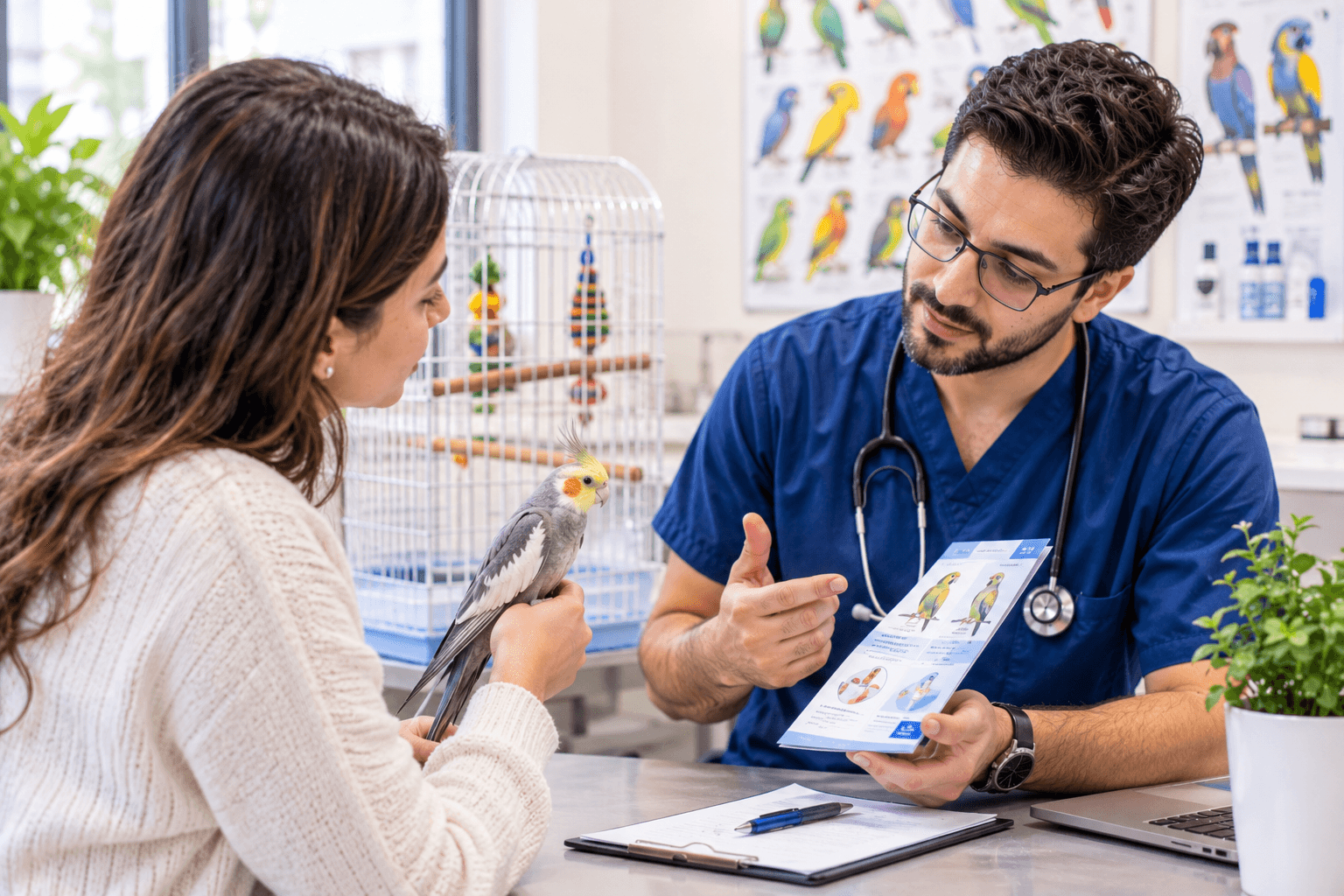
Bird Veterinary Clinic: Why It Matters
It’s an ordinary morning, and your little companion is hopping between perches as usual. Then comes the morning you find them fluffed up, quiet in the corner of the cage, with eyes half closed.
Your heart races, and you ask the question every bird parent eventually asks: where can I find a bird veterinary clinic that truly understands this tiny, delicate creature?
Birds are among the best animals at hiding pain, and the longer an illness goes unnoticed, the fewer treatment options remain.
In this guide we’ll walk you through the early warning signs, what happens during an exam, the most common diseases, and a daily routine that keeps your feathered friend singing for years. And at SCOTY, you’ll find that a specialist vet can be just one call away. 💚
A bird isn’t “a small cat with wings.” Its body runs on completely different rules. Its heart beats hundreds of times a minute, and its metabolism is lightning fast.
Its respiratory system relies on delicate air sacs, so kitchen fumes and aerosol sprays affect it faster than any other pet in your home. That’s why birds need a vet who knows their anatomy and diseases in detail.
The foundation of good pet bird care isn’t a stylish cage or premium food. It’s an attentive eye that catches small details before they become a crisis.
Birds Hide Illness Brilliantly
In the wild, a sick bird is an easy target for predators. So birds evolved to hide any weakness for as long as they can, even in the arms of their favorite person.
Imagine an employee with a pounding headache who smiles through the whole meeting so nobody notices. Your bird behaves exactly the same way.
By the time symptoms are obvious, the illness has usually progressed a long way. That’s why early advice matters so much.
Early Warning Signs
Pay close attention if you notice one or more of these:
- 🪶 Fluffed-up feathers for long periods, not just a few minutes
- 😴 Sleeping continuously during the day or sitting on the cage floor
- 🍽️ A clear change in appetite or in how much water your bird drinks
- 🔇 Less singing, or a loss of usual activity
- 💨 Tail bobbing up and down with every breath
- 💧 Discharge from the beak, eyes, or nostrils
- ⚖️ Weight loss, where dropping around 10% of body weight is a genuine red flag
Golden tip: weigh your bird weekly on an accurate kitchen scale in grams and write the number down. A change in weight is often the first alarm bell.
Reading Silent Signals
Your bird is always talking, just in a language we don’t hear easily. Learn bird body language and you’ll discover that wing position, head movements, and the way your bird stands on a perch say it all.
Another important message lies in what’s left in the cage. Healthy droppings have three parts: a dark, firm portion (feces), a white portion (urates), and a clear liquid (urine).
Any change in color, texture, or amount deserves a photo. One picture can save your vet many questions.
Red-Flag Emergencies
Some situations can’t wait even a few hours:
- 😮💨 Open-beak breathing while resting
- 🩸 Bleeding from anywhere on the body
- 🦶 Being unable to grip the perch, or repeated falls
- ⚡ Seizures or tremors
- 🥚 Trying to lay an egg with obvious straining
- ☠️ Exposure to fumes from non-stick cookware or any toxic substance
Fumes from non-stick coatings like Teflon can kill birds quickly, even when you can’t smell anything. Move your bird away from the kitchen immediately and open the windows.
In these moments, place your bird in a warm, quiet, slightly dim spot. Don’t force food and don’t give home remedies. Then act fast.
Ideally you already have a trusted bird veterinarian before you need one, rather than starting your search in a moment of panic.
Early Advice Saves Lives
Many worries aren’t emergencies at all. They’re small observations that nag at you, and you can’t tell whether they justify a visit. This is where a remote consultation becomes a fast, practical solution. 📱
You can browse the vets’ profiles, choose the one best suited to your bird’s case, and pick a time straight from the calendar.
Before the session, you attach detailed photos and videos so the vet can review them in advance. Then comes a full 30-minute call to discuss everything on your mind without rushing.
To be honest, a remote consultation doesn’t replace an in-person clinic in critical cases like severe breathing difficulty or bleeding. In those situations, go straight to the nearest emergency clinic and follow up with your vet afterward.
But if your concern needs a specialist’s opinion before it gets worse, you can book an appointment with the vet, a simple step that may save you a lot. 🩺
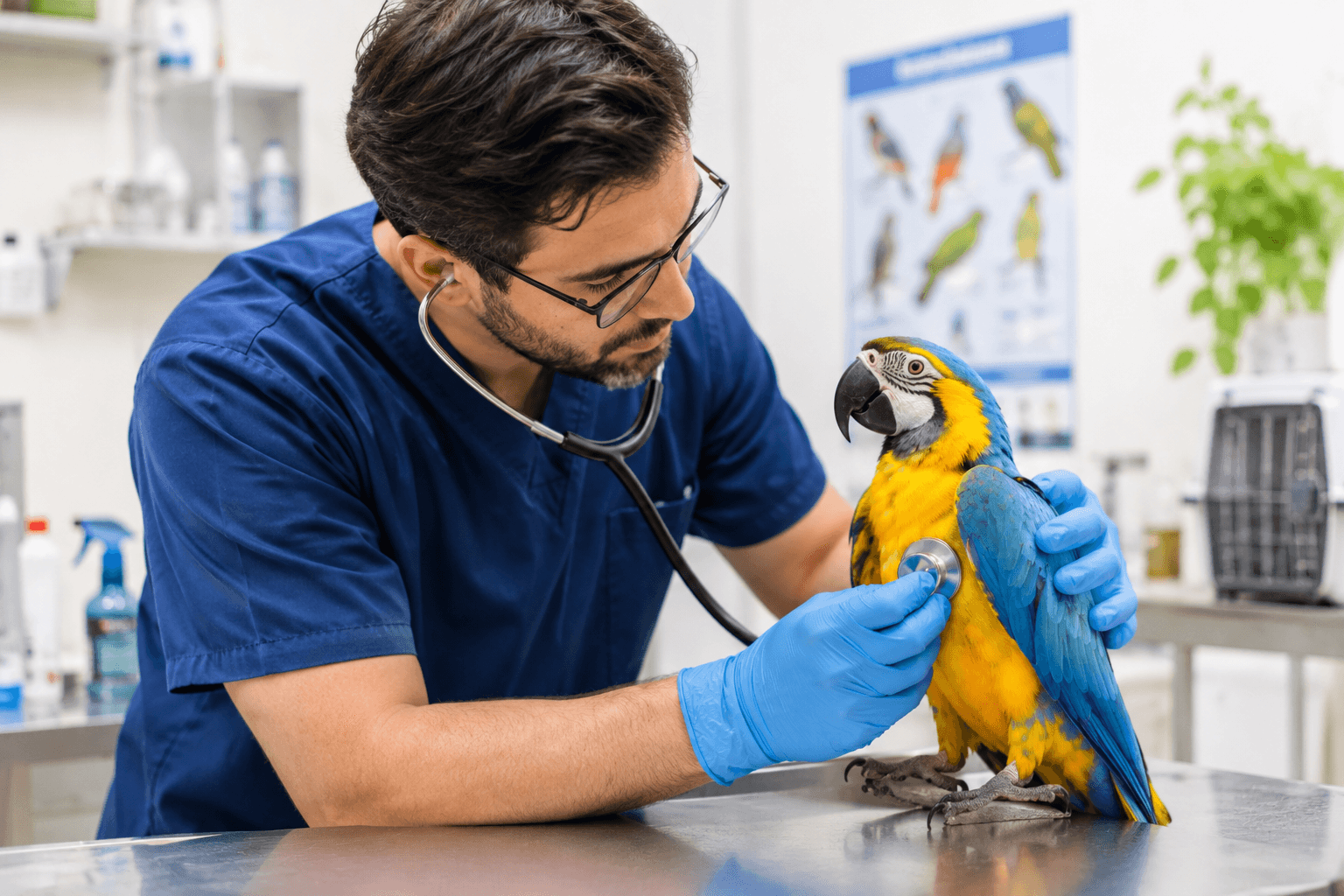
Bird Veterinary Exams: What to Expect
Many bird parents put off the visit because they imagine the exam as a frightening ordeal for their tiny friend. In reality, an experienced vet knows how to keep it quick, calm, and as stress-free as possible.
When you know what happens step by step, you become the first to feel reassured, and your bird senses that. 💚
Preparing Your Bird for the Exam
Good preparation saves half the session and gives the vet the full picture. Get these ready before the appointment:
- 📝 Symptom log: When did it start? Is it getting worse or holding steady?
- 🍽️ Diet details: The seeds, pellets, vegetables, and fruit your bird actually eats, not just what you offer
- ⚖️ Recent weights: Among the first things a vet will ask about
- 📸 Photos and videos: Of droppings, breathing, and how your bird stands on the perch
- 🏠 Environment description: Cage location, ventilation, lighting, and any sources of smoke or strong odors
If you’re visiting a clinic in person, don’t clean the cage beforehand. Leave fresh droppings on clean paper, because analyzing them reveals a lot about parasites, bacteria, and digestion.
Carry your bird in a small travel carrier covered on three sides, and keep it warm. A sick bird loses body heat quickly.
Remote Bird Consultations
Many people don’t realize how strong an impression a vet can form from photos and video alone. Body posture, breathing rate, feather condition, dropping appearance, and eating behavior are all clearly visible on camera.
Here’s how it works at SCOTY:
- 📎 You attach your bird’s photos and videos before the session, so the vet can review them in advance
- 📞 You join a full 30-minute call to discuss everything on your mind without rushing
- 💊 You receive an approved electronic prescription, downloadable and fillable online
- 🗂️ The full case report is saved in your bird’s medical file inside the app, so you can return to it any time
And you’re not left alone after the call ends. You get a full week of free follow-up through 24/7 chat, plus another follow-up call at no extra cost. 🤝
Honesty matters, though: a remote consultation can’t run blood tests or X-rays, or examine your bird by hand. When your vet needs those, they’ll tell you clearly what to do and where, so you’re never left guessing.
Choosing the Right Vet
Not every veterinarian has the same experience with birds. Parrots, canaries, pigeons, and sparrows each have their own diseases and needs.
So look for a veterinarian for birds whose real experience with your bird’s species you can confirm. These questions will help you find out:
- 🦜 How many birds of my bird’s type have you treated in recent months?
- 🔬 Which tests do you usually request when a particular illness is suspected?
- 🏡 Do you handle nutrition and behavior cases, or only illnesses?
In the app you can browse vets’ profiles, compare their specialties, then choose the best fit and book straight from the calendar. It’s just like choosing a coach for your child after you learn about their experience.
What the Vet Examines
An in-person exam usually starts with observation. The vet stands a little way off to see your bird in its natural state without touching it, because breathing and posture are most revealing before stress sets in.
Then the vet gently wraps your bird in a towel with a quick, calm movement and checks, in order:
- 👁️ The eyes, nostrils, and beak
- 🪶 The feathers, skin, and preen gland
- 🫁 The chest, listening to breath sounds
- 🦴 The keel bone, to judge muscle mass and body condition
- 🌾 The crop, abdomen, and vent
If needed, the vet may request a stool test, bloodwork, or X-rays. These pinpoint the exact cause instead of guessing, and they matter especially for diseases you can’t see, such as some viral and bacterial infections.
Everything is done quickly, because birds can’t tolerate long periods of restraint.
Emergencies and Contact Numbers
Emergencies don’t pick convenient times. They can strike at night or on a holiday, so prepare a list in advance and save it on your phone:
- 🏥 The nearest clinic that accepts birds in emergencies
- 📱 A quick way to reach your regular vet
- 🧣 A ready travel carrier and a cloth to cover it
And don’t wait for the critical moment to hunt for a reliable animal vet number, because the first few minutes can be the most valuable in saving a small bird.
If the situation is less severe but still worries you, schedule an early consultation. Book an appointment with the vet so the vet can see the case quickly and decide with you whether home care is enough or a clinic visit is needed. 🩺
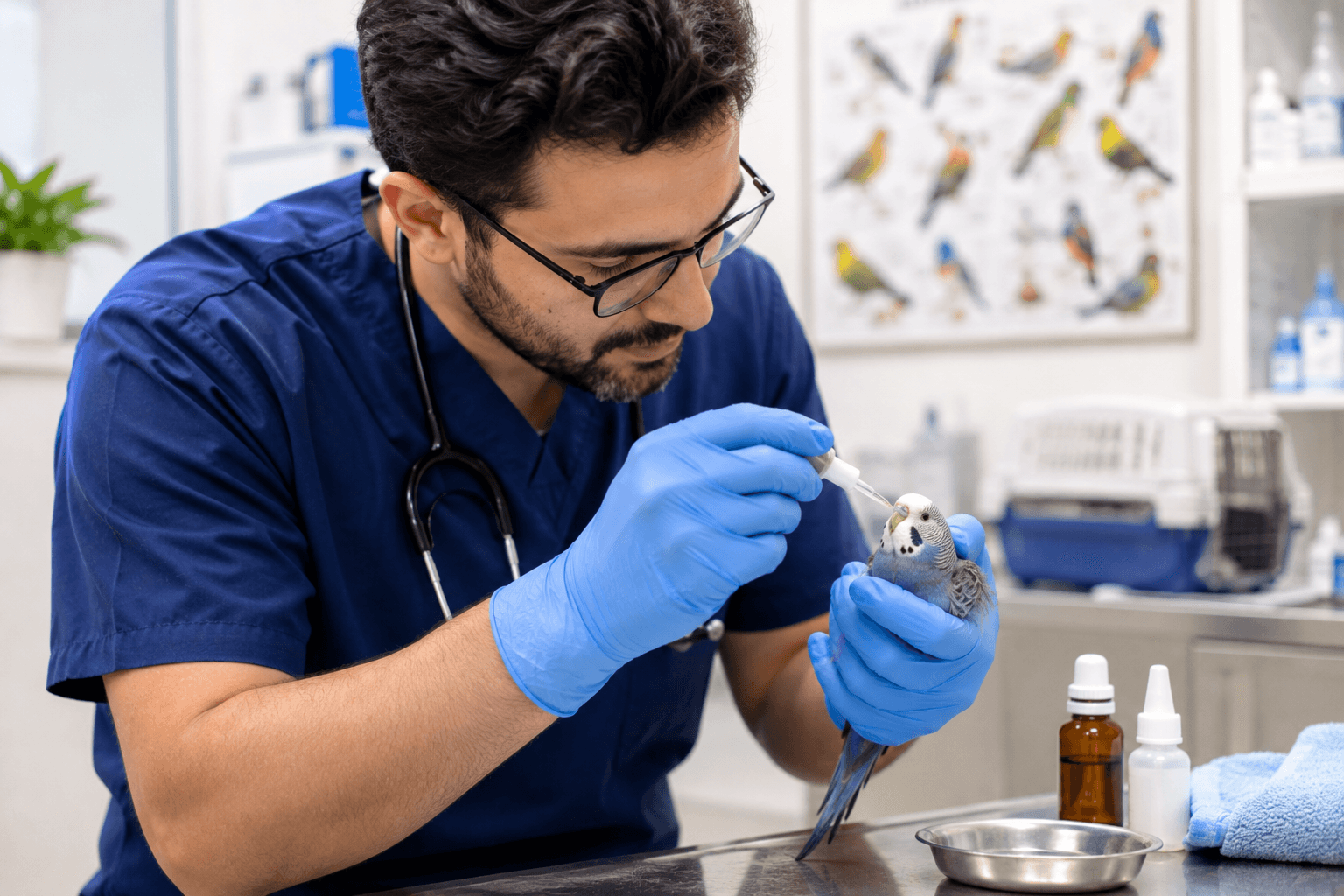
Common Bird Diseases and Treatment
You don’t need to memorize every disease name, but knowing the most common ones gives you a sharper eye. The better you understand what’s happening inside your bird’s body, the faster and calmer your decisions will be. 🧠
And remember one important rule: never give your bird antibiotics or human medicine on your own. A small wrong dose in a body weighing only a few dozen grams can do more harm than the illness itself.
Respiratory Diseases
The respiratory system is a bird’s number-one weak point. Its delicate air sacs pick up any irritant in the air quickly. Picture a person running in a smoke-filled room while breathing through a thin straw.
These are the most common problems:
- 🍄 Aspergillosis: A fungal infection that often starts from moldy grain or damp bedding, showing up as labored breathing and a hoarse voice
- 🦠 Chlamydiosis (psittacosis): A bacterial infection causing watery eyes and nose and obvious lethargy. It can pass to humans, so wash your hands well and tell your own doctor if you develop flu-like symptoms
- 🔍 Air sac mites: Especially in canaries and finches, causing a clicking sound or a change in song
- 🥕 Vitamin A deficiency: Causes sinus inflammation and swelling around the eyes, and is common in birds fed seeds alone
One observation is enough to make you act: a tail that bobs with every breath, or an open beak while resting.
Here, video helps more than description. Film your bird for thirty seconds while it sits still, and the vet can count its breathing rate and judge its effort. 🎥
Feather and Skin Problems
Feathers are a mirror of health. But not every shedding episode is an illness, since birds molt yearly. During a normal molt you’ll see new pin feathers that look like tiny quills, with even loss across the body.
The trouble begins when bald patches appear, or when your bird plucks its own feathers. The causes vary:
- 🧬 Psittacine beak and feather disease (PBFD): A viral infection affecting cockatoos, African grey parrots, and lovebirds, confirmed by lab testing
- 🐜 External parasites: Such as mites, which cause constant itching
- 🍽️ Nutritional deficiency: Poor food leaves feathers dull and brittle
- 😟 Boredom and stress: Among the most common causes in intelligent parrots
Feather plucking is like nail-biting in humans. It’s behavior that lets a bird release anxiety, and treatment starts by ruling out medical causes first.
So before you blame your bird, read about the treatment of feather loss in birds to see how a vet tells physical causes from psychological ones, step by step.
Digestive and Dropping Issues
Watching droppings tells you what your bird’s voice can’t. But don’t panic over every change, because water-rich fruit makes the liquid part larger, which is perfectly normal.
Real concern begins with these signs:
- 🟢 Dark green droppings with reduced eating, a sign of hunger or illness
- ⚫ Black, tarry droppings, which may mean bleeding in the digestive tract
- 🌾 Whole, undigested seeds in the droppings
- 🤢 Repeated vomiting or regurgitation with a sour smell
- 🎈 A swollen crop, or sitting fluffed up after eating
Causes range from internal parasites and coccidia, to yeast such as Candida, bacterial infections, and some chronic diseases like proventricular dilatation disease (PDD).
Watch out for food toxins too. Avocado, chocolate, caffeine, and onion are a real danger to birds, even in amounts that seem small to you.
Keep a clear photo of the droppings on white paper, which helps your vet a great deal. And noting what your bird ate over the last 24 hours shortens the diagnosis.
Stress and Behavior Problems
Not everything we see in birds is a physical illness. Constant screaming, sudden aggression, and loss of appetite can be emotional messages, and they can also hide organic pain.
A bird that screams all day is like a child with no toys and nobody to play with. It isn’t annoying you on purpose, it’s asking for something.
Common causes include:
- ⏰ Boredom: A cage with no toys or challenges
- 🌙 Lack of sleep: Birds usually need around 10 to 12 hours of quiet, dark sleep
- 💞 Hormones: In breeding season they show up as aggression or attempts to lay eggs
- 🏠 Sudden change: A moved cage, a new guest, or loud noises
Understanding parrot behavior starts with a simple question: what is my bird trying to tell me? The answer changes the way you deal with them completely.
And if symptoms keep recurring, or you suspect a medical cause behind the behavior, don’t wait. Book a consultation with the vet so they can hear all the details, watch your video, and determine whether the issue is behavioral or organic.
After the session you receive an approved electronic prescription if treatment is needed, and the report is saved in your bird’s file inside SCOTY so you can return to it with any change. Your follow-up continues through free chat for a full week. 💚
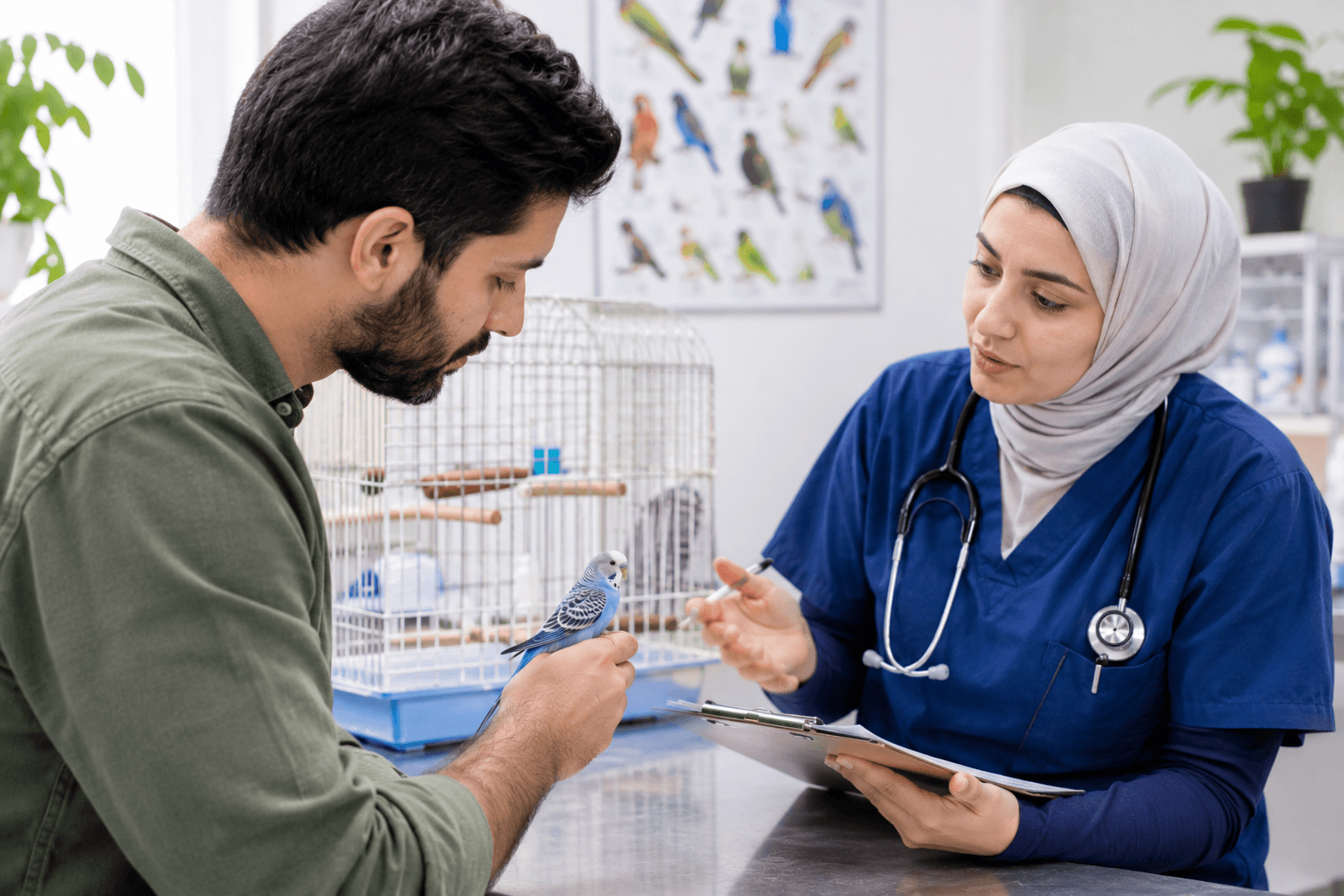
Prevention and Daily Care
The best treatment is for your bird never to get sick at all. Most of the illnesses we covered in the previous sections can be avoided, or at least softened, with a simple daily routine. 🌿
It’s like brushing your teeth daily to avoid fillings later. A few minutes each morning protect your bird from months of worry.
A Healthy Cage Environment
The cage is your bird’s entire home, so make it safe, clean, and calm. These are the key rules:
- 📏 Enough space: Your bird should be able to spread its wings and move without touching the bars
- 🧹 Daily cleaning: Replace the cage-bottom paper, and wash food and water bowls with hot water and soap
- 🌳 Varied perches: Different thicknesses strengthen the feet and reduce sores
- 🌬️ Ventilation without direct drafts: Fresh air, without the cage sitting in front of an air conditioner or open window
- 🌡️ Stable temperature: Avoid sharp swings between day and night
- ☀️ Indirect natural light: Helps the body produce vitamin D
Above all, stay away from irritants: cigarette smoke, incense, scented candles, sprays, and non-stick cookware. A bird’s lungs can’t tolerate them, as we saw in the emergencies section.
For new birds there’s a golden rule: quarantine them for at least 30 days away from your other birds, and wash your hands between handling each one. Many infections enter the home with the newcomer.
Balanced Meals for Your Bird
The most common mistake is relying on seeds alone. Imagine eating french fries as your only meal every day. Deficiencies in vitamin A, calcium, and more are bound to appear.
A general guideline for most parrots: pellets form the largest part of the diet, followed by fresh vegetables and leafy greens daily, with seeds in limited amounts as a treat. Fruit stays minimal because of its high sugar.
Don’t rush diet changes. A bird used to seeds may refuse new food for days, and some birds can be harmed if they go without eating for long. Make the switch gradual and under your vet’s supervision, and weigh your bird regularly during it.
To learn more about birds nutrition suited to each species, remember that a canary’s needs differ from a cockatiel’s, and both differ from an African grey’s.
These are foods to avoid completely:
- 🥑 Avocado
- 🍫 Chocolate and caffeine
- 🧅 Onion and garlic in large amounts
- 🍺 Alcohol
- 🧂 Salty or fried foods and your table scraps
Clean, fresh water is a daily must, changed twice a day in hot weather. And for females in egg-laying season, vets often recommend an extra calcium source, so ask yours which type suits her.
Daily Training and Interaction
A smart bird needs a busy mind. Boredom is the root of much plucking and screaming, as we noted in the behavior section.
A healthy relationship starts with trust, not force. Successful taming birds depends on patience and reward, not on grabbing or a raised voice.
These ideas make your bird’s day richer:
- ⏱️ Short sessions: 5 to 10 minutes twice a day beat one tiring hour
- 🎁 Instant rewards: A bite of a favorite food after each successful step
- 🧩 Rotating toys: Swap them weekly so they don’t become old news
- 🪵 Chewable items: Safe wood, paper, and toys your bird can shred
- 🕊️ Out-of-cage time: In a safe room under your supervision, away from open windows and the kitchen
- 🌙 Enough sleep: Cover the cage at night in a quiet spot
Watch your bird during training. A bird that loves to play responds and gets excited, while one that pulls back and suddenly loses interest may be tired or sick.
Routine Checkup Schedule
A routine checkup is like servicing your car before it breaks down mid-journey. It catches the silent diseases whose symptoms don’t show easily.
Here’s a simple schedule you can build on:
- 🆕 New bird: A first exam within the first week of arrival
- 📅 Healthy adult: A full checkup at least once a year
- 👴 Senior bird or one with a chronic condition: More frequent checkups, set by your vet
- ⚖️ Weekly at home: Record weight, review droppings, and watch activity and appetite
- 🪶 At any change: Don’t wait for the scheduled date
A simple consultation through SCOTY can be a great first step. The vet follows your bird’s case from its saved medical file, reviews photos and videos, and then builds a suitable care plan. You also keep free 24/7 chat follow-up for a full week, followed by a free follow-up call. 💚
And if you have a question right now about your bird’s food, behavior, or anything that worries you, book a consultation appointment with the vet and get peace of mind before the worry grows. 🩺
Remember, your bird doesn’t ask much of you: a clean home, balanced food, time with you, and an eye that sees what they can’t say. And all of that is within your reach. If you ever need a bird veterinary clinic, you’ll already know what to look for.