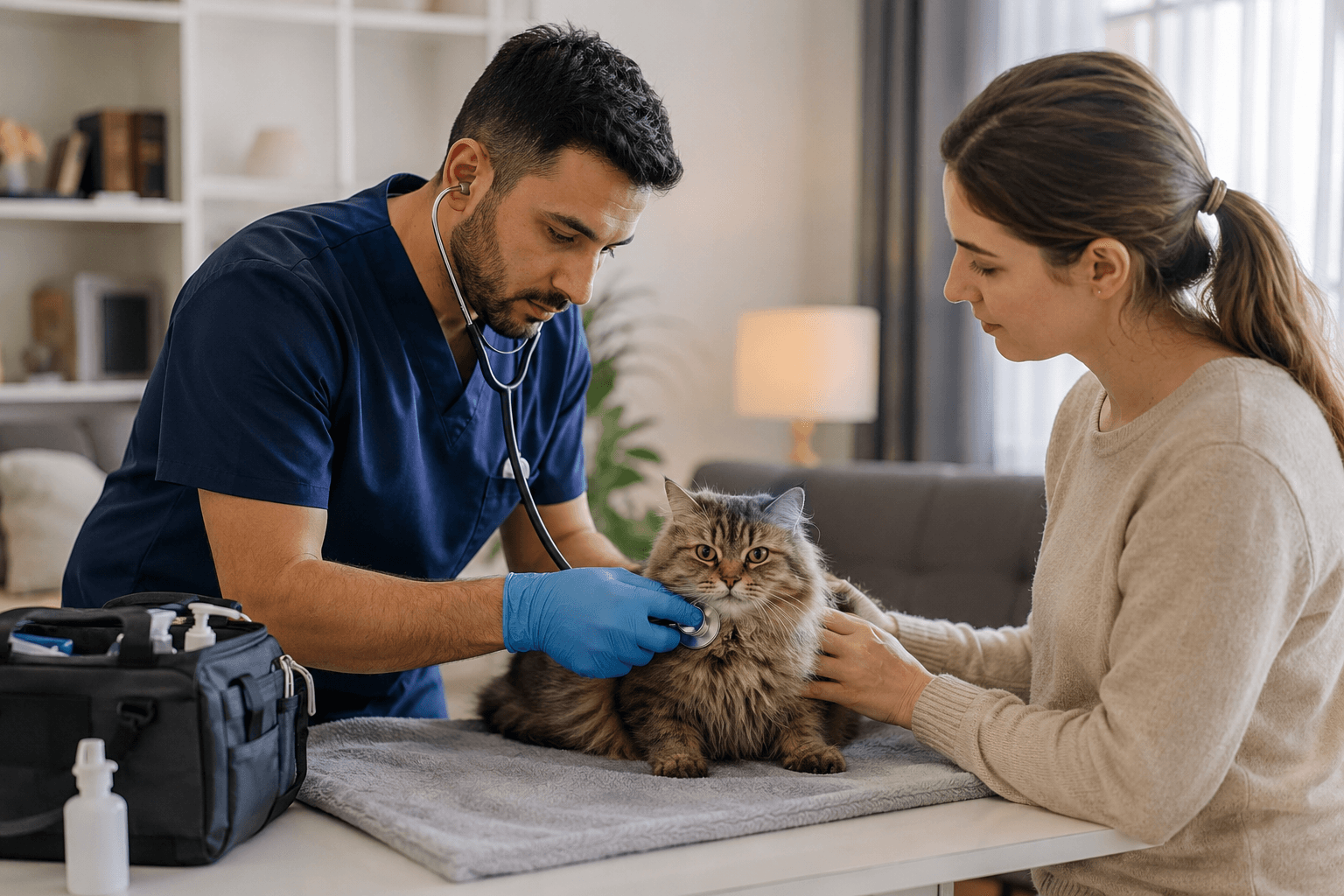
What Is a Mobile Cat Clinic — and Is It Really a Legitimate Alternative to Traditional Vet Care?
Picture this all-too-familiar scene: your cat "Luna" is curled up in her favorite sunny spot, completely relaxed and perfectly content. You decide today is the day for her routine vet check, so you retrieve the carrier from the closet — and the instant she hears that familiar latch click, something shifts entirely. Luna, your sweet and gentle companion, transforms before your very eyes into a creature of pure survival instinct. She bolts under the bed, squeezes herself behind the washing machine, lets out a dramatic series of warning yowls, and suddenly your quiet afternoon becomes an exhausting, sweat-inducing pursuit through every room in your home.
Sound familiar? You are absolutely not alone.
This is the lived reality of the vast majority of cat owners at virtually every scheduled vet visit. And what makes it most frustrating is that by the time you finally get Luna into the carrier, she arrives at the clinic already so flooded with stress hormones that the veterinarian is essentially examining a completely different version of your cat — one whose heart is racing, whose muscles are rigid, and whose real symptoms may be entirely masked or dramatically exaggerated by fear and anxiety.
This is precisely the problem that the concept of a mobile cat clinic was designed to solve — and it is a concept that is rapidly and fundamentally reshaping how thoughtful, modern cat parents approach veterinary care altogether.
What Exactly Is a Mobile Cat Clinic, and How Does It Differ from a Traditional Vet Visit?
At its core, a mobile cat clinic operates on one beautifully simple and powerful principle: the veterinarian comes to your home — you do not go to them.
Instead of the familiar, draining cycle of coaxing your cat into a carrier, driving through traffic while she cries continuously in the back seat, navigating a waiting room filled with barking dogs and other stressed animals, and sitting under harsh fluorescent lights in an unfamiliar sterile room — the licensed veterinarian arrives at your front door. They bring their complete medical equipment, set up wherever your cat feels most at home, and conduct a thorough, unhurried examination in the one environment where your cat is genuinely, deeply at ease.
The contrast between these two experiences could not be more fundamental:
- 🏥 Traditional veterinary clinic: A fully equipped medical facility with the diagnostic infrastructure to handle almost any case — but paired with high levels of feline stress, the logistical burden of transporting your cat, and the inevitable anxiety of the waiting room environment
- 🚗 Mobile cat clinic: A personalized, home-based examination experience with significantly lower stress levels, far greater convenience for the owner, and often more accurate behavioral and physical assessment from the vet — but with naturally more limited equipment compared to a fixed facility
Understanding this real trade-off between the two models is the essential foundation for making genuinely smart decisions about your cat's care. Neither option is universally superior — each has its ideal time, place, and situation.
And now, a powerful third option is gaining serious momentum in the modern pet care world — one that combines the deep comfort of home with high-level medical expertise. We will explore it fully throughout this guide.
Why Do Cats Specifically Need This Kind of Care?
Cats are not small dogs with different fur patterns — and this is not merely a playful opinion. It is a well-documented scientific and behavioral reality with direct, daily medical implications.
Cats are profoundly territorial creatures, and their bond with their physical environment often runs deeper than their bond with the humans in their lives. The moment you remove your cat from the boundaries of her familiar territory, her body launches an immediate, acute stress response: cortisol (the primary stress hormone) surges sharply, the nervous system enters a state of high alert, and a cascade of physiological effects follows:
- Noticeably disrupted breathing rhythm and elevated heart rate that can mislead the veterinarian's clinical readings
- Defensive aggression that is entirely out of character, making thorough physical examination extremely difficult or even impossible
- Active symptom masking or exaggeration, complicating accurate diagnosis significantly
- Deep psychological distress that can linger for days after returning home, manifesting as social withdrawal, appetite changes, or altered litter box habits
In plain terms: a stressed cat produces a harder examination, a harder examination produces less reliable results, and less reliable results lead to less accurate treatment decisions — none of which serves your cat's health.
This stress response is not limited to senior or already-anxious cats. It affects cats at every life stage. Even during the early weeks of kitten training — when young cats are forming their foundational relationships with their environment and the humans around them — veterinary behaviorists consistently emphasize minimizing unnecessary stress triggers. Traditional clinic visits, with all their unfamiliar stimuli, frequently sit at the very top of that list.
What Services Does a Mobile Cat Clinic Typically Offer? 🩺
Not all mobile cat clinics are created equal in scope, but professionally run services typically cover a broad and meaningful range of care categories:
Preventive and Routine Care:
Annual vaccinations and booster shots administered in the comfort of home, comprehensive wellness check-ups that include weight assessment, body condition scoring, dental evaluation, ear and eye inspection, and a full physical examination. Flea, tick, and external parasite treatment, as well as microchip implantation for permanent identification — all handled without a single stressful car ride.
Diagnostics and Basic Treatment:
Blood sample collection and dispatch to veterinary laboratories, basic urinalysis, treatment and bandaging of minor wounds and abrasions, and routine therapeutic injections. These procedures do not require a large fixed facility and are performed just as effectively — and far more comfortably — in a home setting.
Specialized Services (vary significantly between providers):
Some more advanced mobile cat clinic operations now carry portable digital X-ray units and handheld ultrasound devices, meaningfully expanding their on-site diagnostic capabilities. Certain providers also offer structured management of chronic conditions and regular monitoring visits for cats with ongoing health needs.
One important reality to keep in mind: the broader and more advanced the service offering, the higher the per-visit cost tends to be — which is precisely what makes alternative care models, including remote veterinary consultations, an increasingly logical and attractive option for many cat families in specific situations.
The Real Limits of a Mobile Cat Clinic: What It Cannot Do ⚠️
Honesty in presenting information matters far more than promoting any particular service — so this needs to be stated with complete clarity: a mobile cat clinic, regardless of how professional and well-equipped it is, cannot replace a veterinary hospital in every situation.
There are genuine medical scenarios that no mobile clinic can address with the required level of competence and safety, no matter how advanced its equipment:
Surgical procedures of any kind: Whether spaying and neutering, tumor removal, or fracture repair — all require a fully sterile operating theater, comprehensive calibrated anesthesia equipment, and a trained support team capable of managing emergencies during sedation. None of this can be safely replicated in a home environment.
Chemotherapy and serious disease treatments: These require a strictly controlled medical environment with precise safety protocols that are impossible to maintain outside a licensed facility.
Critical life-threatening emergencies: Acute respiratory failure, severe internal bleeding, or major trauma demand immediate, fully equipped hospital intervention — not a scheduled home visit.
Advanced diagnostic imaging: CT scans, MRI, and specialized endoscopy require large, expensive, fixed infrastructure that simply cannot travel.
The practical conclusion to hold clearly in mind: a mobile cat clinic is an excellent tool for preventive care, routine monitoring, and follow-up — but it works best as one component of a complete care ecosystem, not as a standalone solution for every possible health need.
Within that ecosystem, a third option stands out with growing strength today: remote veterinary consultation through specialized platforms like SCOTY, where you can book an appointment within minutes, send detailed photos and videos of your cat's condition for the specialist to review before the session even begins — all from the comfort of your sofa, with zero stress and zero travel. We will unpack this fully in the sections ahead. 🐾
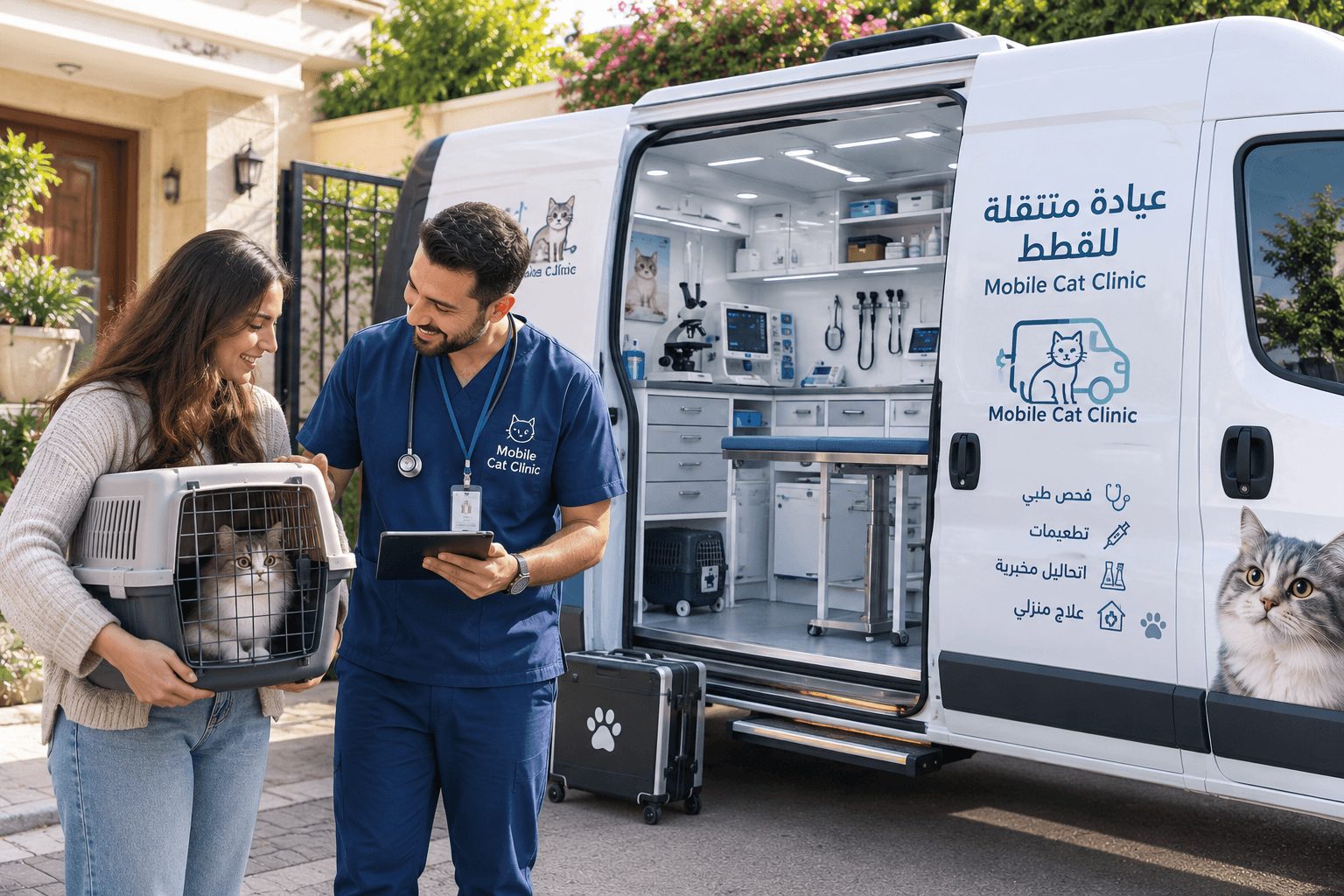
When Does Your Cat Actually Need a Mobile Cat Clinic? The Complete Symptom and Situation Guide Every Cat Parent Should Know
The hardest moment for any cat parent is not actually the moment of illness itself — it is that suspended, uncertain moment of standing in front of your cat watching something unfamiliar unfold, and asking yourself: "Is this serious? Do I need a vet right now, or can this wait until morning? Am I overreacting — or not reacting enough?"
This question, in all its variations, drives some cat parents toward unnecessary panic and others — far more dangerously — toward delayed action at the precise moment when early intervention could have changed everything.
This entire section exists to help you answer that question with clarity and genuine confidence, without guesswork, without spiraling anxiety, and without the paralysis that comes from not knowing what you are looking at.
Signs That Demand Immediate Veterinary Attention 🚨
Certain symptoms simply cannot wait for morning. What makes them even more complicated is that transporting your cat in these moments can sometimes worsen her condition — which is exactly why having access to an immediate option, whether an urgent home visit or an instant remote consultation with a qualified specialist, becomes not a convenience but a genuine medical necessity.
Seek immediate veterinary assessment if you notice any of the following:
- 😮💨 Breathing difficulty or open-mouth breathing: Healthy cats breathe exclusively through their noses under normal circumstances. The moment your cat is breathing with her mouth open, her respiratory system is under severe strain. This is a medical emergency — not a symptom to monitor and see.
- 🤢 Persistent, repeated vomiting that does not stop: This is categorically different from the occasional hairball expulsion that is a normal part of feline life. If your cat is vomiting multiple times within a few hours, or if the vomit contains blood or dark material, this requires urgent evaluation. If you are unsure where the line between normal and concerning falls, treating cat vomiting at home gives a clear, practical breakdown of when occasional vomiting is manageable and when it signals something that cannot wait.
- 🚽 No urination for more than 24 hours: This symptom is particularly dangerous in male cats. A urinary blockage is a life-threatening emergency that can become fatal within hours if left untreated. Do not apply a "wait and see" approach here under any circumstances.
- 🐾 Sudden lameness or complete refusal to move a limb: Especially when it appears without any visible external injury, this can indicate a blood clot, nerve damage, or a joint emergency requiring rapid diagnosis.
- 😵 Loss of balance, head tilting, or circling continuously in one spot: These neurological signs point to potential inner ear problems, vestibular disease, or central nervous system involvement — all of which need prompt professional assessment.
- 🩸 Any blood in urine, stool, or vomit: Regardless of the quantity, blood in any of these outputs signals that something inside your cat needs a medical eye — not a waiting period.
- 😶 Complete refusal to eat or drink for more than a full 24 hours: Cats do not tolerate prolonged food and water deprivation the way some other animals can. Extended fasting can trigger a serious and rapid-onset liver condition known as hepatic lipidosis — a condition that is entirely preventable with timely intervention.
Cats That Benefit from Regular Mobile Cat Clinic Visits Throughout the Year 📅
One of the most common misconceptions about mobile cat clinics is that they exist exclusively for emergencies. In reality, the cat families who benefit most from this model are often those using it proactively and consistently — not reactively.
🐱 Senior Cats (8 Years and Older)
As cats move into their senior years, traditional clinic trips become progressively more physically and psychologically taxing. Yet older cats simultaneously need more frequent veterinary monitoring — not less — to catch early changes in kidney function, heart health, thyroid levels, and blood pressure before they become advanced problems. A mobile cat clinic allows this essential monitoring to happen in the calm, familiar environment where senior cats genuinely thrive, producing more accurate baseline readings and less post-visit stress recovery time.
🐱 Cats Managing Chronic Conditions
Feline chronic kidney disease, diabetes, hyperthyroidism, hypertension, and heart disease all require regular, sometimes monthly check-ins. Transporting a medically fragile cat repeatedly adds a layer of physiological stress to a body that already needs all its resources directed toward managing illness — not recovering from unnecessary anxiety.
🐱 Cats with Severe Anxiety or Travel Phobia
Some cats have a heightened sensitivity to environmental change that goes well beyond ordinary nervousness. For these cats, even a short car journey can trigger a psychological crisis that reverberates for days in the form of hiding, refusal to eat, or behavioral regression. These cats deserve a care model that genuinely respects their nature rather than forcing them repeatedly through experiences that cause real suffering.
🐱 Pregnant or Nursing Cats
The stages of feline pregnancy and nursing are physiologically demanding and hormonally complex. Travel during these periods is physically tiring and can sometimes be unsafe. Knowing how to recognize pregnancy symptoms in cats clearly helps you understand exactly when in-home medical attention is appropriate, and allows you to minimize unnecessary travel during the times your cat most needs calm and stability.
🐱 Multi-Cat Households
Moving one cat to the clinic and returning her carrying unfamiliar clinic scents can genuinely disrupt the delicate social balance of a multi-cat home — resident cats may treat the returning cat as a stranger, leading to tension or conflict that takes days to resolve. A home visit eliminates this disruption entirely, keeping household dynamics stable and stress-free for all the cats involved.
Emergency vs. Routine: How to Tell the Difference with Confidence 🔍
The honest answer to this question is that the boundary is not always perfectly sharp — and recognizing that ambiguity is actually the first step toward responding well. But here is a practical decision framework that gives most cat parents the clarity they need:
🔴 Emergency — Act Immediately, Without Delay
Any symptom that is sudden in onset, intense in presentation, and affects your cat's breathing, level of consciousness, or physical mobility. Also any symptom from the urgent list above. When in doubt at this level, err toward action rather than waiting.
🟡 Needs Prompt Attention — Within 24 to 48 Hours
Symptoms that are clearly not normal but do not appear to pose an immediate life threat: a noticeable shift in appetite, changes in litter box frequency or consistency, unusual lethargy that persists beyond a day, or behavioral differences that feel meaningfully out of character.
🟢 Routine — Schedule a Regular Appointment
Annual or biannual wellness check-ups, scheduled vaccinations, and monitoring appointments for chronic conditions that are currently stable and well-managed.
A concrete real-life example: if your cat is experiencing what appear to be causes of diarrhea in cats — one or two episodes of loose stool with otherwise normal energy and appetite — that sits at 🟡. But diarrhea accompanied by visible blood, severe lethargy, or complete food refusal moves immediately to 🔴 and demands same-day attention.
Similarly, noticeable abdominal bloating accompanied by excessive gas in cats and mild behavioral restlessness is a 🟡 situation worth evaluating soon — but if that bloating is paired with obvious pain responses, refusal to eat, or rapid deterioration, escalate immediately to 🔴.
Common Mistakes Cat Parents Make When Deciding Whether to Seek Care ❌
Our deep love for our cats sometimes drives us toward decisions that inadvertently delay treatment or complicate situations that could have been resolved quickly. These are the patterns worth being aware of:
Mistake One: "I will just wait and see how she is tomorrow"
A period of watchful waiting is genuinely appropriate in some lower-stakes situations. But applying this logic to the acute, urgent symptoms described above can cost precious time that directly impacts outcomes. Your cat cannot articulate the degree of her pain or discomfort — and her instinct is to appear as normal as possible even when she is suffering. What looks like "she seems okay" on the surface may be active symptom concealment.
Mistake Two: Relying on social media groups as a substitute for professional advice
Online cat communities are full of genuine warmth, generous sharing, and good intentions. But they lack clinical examination, knowledge of your individual cat's medical history, and the diagnostic tools to distinguish between conditions that can look identical on the surface but require completely different treatment. For reliable, professionally grounded information, resources like vet questions and answers from qualified veterinary professionals offer far safer and more trustworthy guidance.
Mistake Three: Moving an injured cat without guidance
In cases of physical trauma, accidents, or suspected fractures, incorrect handling can significantly worsen existing damage or cause entirely new injuries. The right sequence is always to contact a veterinarian first, receive clear handling instructions specific to your cat's situation, and only then attempt to move her.
Mistake Four: Postponing necessary care to avoid distressing your cat
This is one of the most emotionally understandable mistakes — and one of the most medically consequential. Yes, your cat will experience some degree of stress during veterinary care. But consistently postponing necessary attention because of that stress allows conditions to progress from manageable to serious, and from simple to complex. The solution is never avoidance — it is finding the least stressful pathway to the care she actually needs.
And this is precisely where remote veterinary consultation demonstrates its most compelling value. Through SCOTY, you can book an appointment at any hour of the day or night, upload clear photos and videos directly illustrating what you are observing, and have a qualified specialist assess the situation accurately — providing you with a clear, confident next step without either you or your cat moving an inch from where you are. 🐾
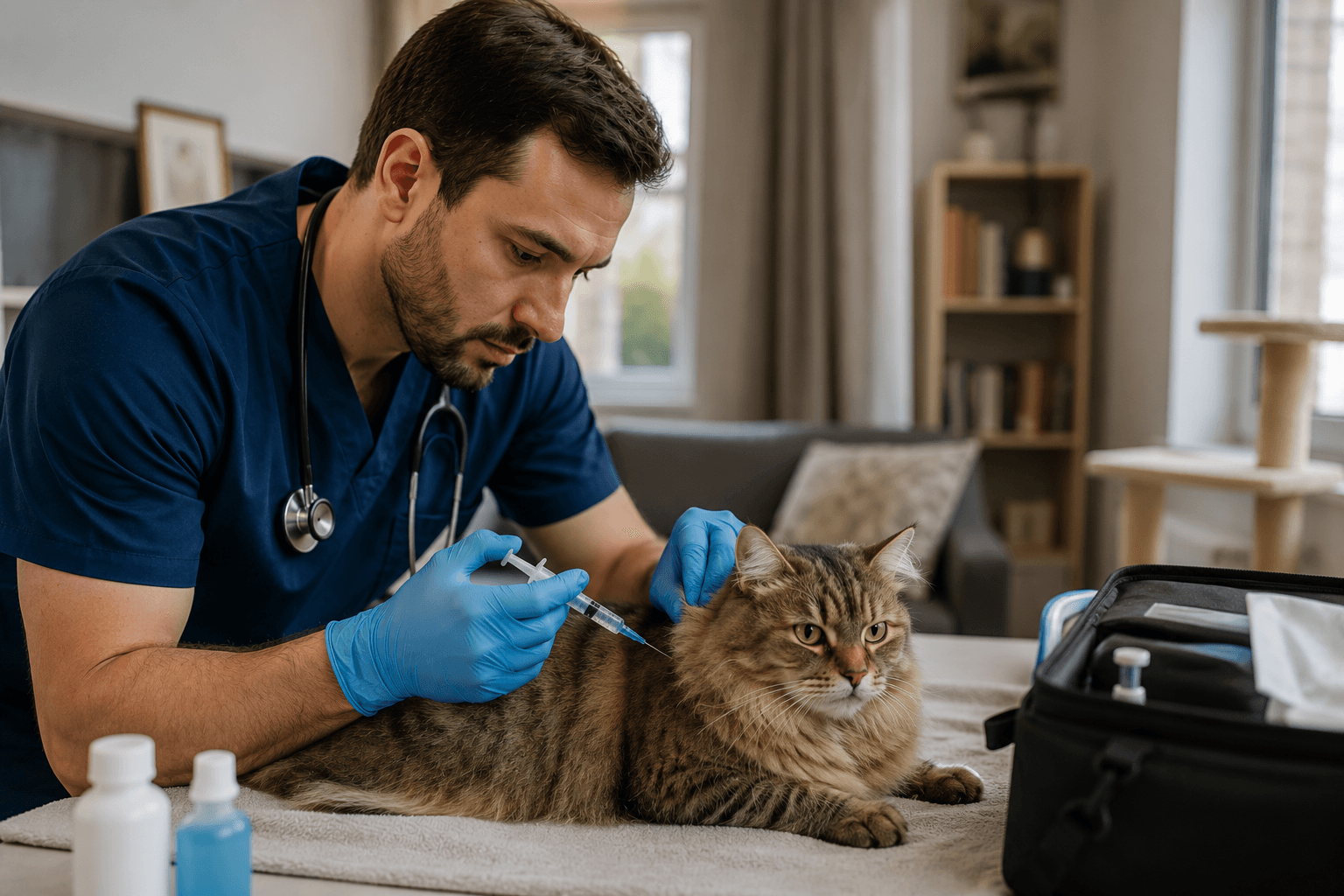
How to Choose the Right Veterinary Service for Your Cat: The Standards You Should Never Compromise On
In a market crowded with options and competing claims, choosing who you trust with the health of a creature who depends on you completely is a decision that deserves genuine thought and care — not a quick Google search and a convenient location.
Your cat cannot evaluate the veterinarian for you, cannot tell you whether the examination was thorough or rushed, and cannot communicate whether she felt safe or frightened during the visit. That responsibility rests entirely with you. This section gives you the practical frameworks and professional criteria to make that choice from a position of knowledge and confidence rather than assumption or chance. 💪
Credentials and Licensing: The Non-Negotiable Starting Point 📜
Before allowing anyone to approach your cat with medical instruments of any kind, verify these foundational elements without exception:
✅ Valid, Recognized Professional Licensing
Any veterinarian providing clinical care — whether in a fixed facility or through a mobile cat clinic — must hold a degree from an accredited veterinary institution and be formally registered with the relevant licensing body or veterinary board in their region. This is not a procedural technicality. It is the legal and professional floor below which no compromise is acceptable. Unlicensed veterinary practice is not simply substandard — it is a genuine danger to your cat's health and life.
✅ Genuine, Specific Feline Expertise
Veterinary medicine is a deeply specialized field, and the difference between a feline medicine specialist and a general practitioner who treats cats alongside dogs, birds, and reptiles is significant and clinically meaningful. Cats have unique physiology, distinctive disease prevalence patterns, and behavioral characteristics that respond differently to handling, medications, and diagnostic approaches than other companion animals. Feline-specific expertise is not a nice-to-have credential — it is a meaningful marker of the quality of care your cat will receive.
✅ Verifiable, Documented Practical Experience
How many years has this veterinarian been practicing feline medicine specifically? Do they have documented experience with conditions similar to what your cat is facing? Can you access ratings and testimonials from other cat owners who have worked with them? Academic credentials provide the foundation, but accumulated clinical experience is what produces the pattern recognition and judgment that leads to accurate diagnosis in complex or ambiguous cases.
✅ Communication Quality and Genuine Transparency
An exceptional veterinarian does not simply treat your cat and move on to the next appointment — they educate you, explain what they are observing in language you can genuinely understand, answer your questions with patience and respect, and provide a clear, concrete plan so you know exactly what to expect and what to watch for in the days ahead. A vet who makes you feel that your questions are an imposition, or who seems rushed in their explanations, is not the right fit for your cat's ongoing care.
Equipment Quality and Medical Supply Standards 🧰
A professional mobile cat clinic is distinguished not only by the equipment it carries, but by how that equipment is maintained, organized, and sterilized between patients.
The Essential Minimum for Any Home Visit:
A high-quality stethoscope calibrated for cardiac and pulmonary assessment, an accurate digital thermometer, complete ear and ophthalmic examination instruments, dental examination tools, sterile syringes and medical supplies in original sealed packaging, basic emergency medications including antihistamines and mild sedatives for acute reactions, and a professionally organized, sealed medical bag that reflects genuine commitment to hygiene and infection control.
Red Flags That Warrant Serious Caution:
Equipment that appears outdated, poorly maintained, or visibly unclean. Absence of visible sterilization protocols between cases. No clear articulated plan for what happens if your cat requires intervention beyond the mobile clinic's capabilities. Inability to provide a referral pathway to a partner veterinary hospital for cases requiring advanced care. These are not minor operational details — they are indicators of whether the service takes your cat's safety seriously.
Here is where a meaningful advantage of remote veterinary consultation through a platform like SCOTY becomes clear: before committing to any appointment, you can review each veterinarian's complete professional profile — their academic qualifications, years of feline-specific practice, areas of specialization, and detailed ratings from other pet owners who have previously consulted with them. You make your choice with full information and genuine confidence, not based on a clinic's proximity or the appeal of its advertising.
Understanding the True Cost of a Mobile Cat Clinic: The Complete Calculation 💰
The question of cost is entirely legitimate and deserves a direct, comprehensive answer rather than vague reassurances.
A mobile cat clinic visit is generally more expensive than an equivalent appointment at a traditional fixed clinic — and the reasons are entirely logical and transparent. The veterinarian invests significant time in travel to your location, bears fuel and vehicle maintenance costs, and carries a complete set of medical equipment that must be transported, maintained, and replenished rather than stored in a fixed facility.
The Typical Cost Components of a Home Visit:
A travel or call-out fee applied on top of the consultation charge, a base examination fee that typically runs 30 to 50 percent higher than the equivalent clinic appointment, and additional procedure costs for vaccinations, blood draws, treatments, or medications billed separately from the base visit.
But Have You Calculated the True Total Cost of a Traditional Clinic Visit?
Many cat owners compare the visible headline numbers without accounting for the full picture. The real cost of a traditional clinic visit includes: the round-trip travel time that may consume hours of your day, the measurable impact of your cat's stress on diagnostic accuracy — which can lead to missed findings or inconclusive results requiring repeat visits, the physical and emotional toll of the waiting room environment, time taken from work or other responsibilities that required rearrangement, the cost of a carrier, calming sprays, and potentially prescription sedatives recommended to make the trip manageable, and the extended period your cat may need to decompress and return to normal behavior after returning home.
When the full picture is laid out honestly, many cat parents find that the price premium of a mobile cat clinic narrows considerably — and the added value in diagnostic accuracy, reduced cat stress, and genuine owner convenience makes it a meaningful investment rather than an indulgence.
It is also worth noting here that your cat's overall healthcare costs are directly shaped by her daily wellness habits. Consistently providing the best types of cat food appropriate for her life stage and health status meaningfully reduces vet visits caused by nutritional deficiencies or diet-related illness. Similarly, maintaining a consistent routine of clean cat teeth prevents the accumulation of dental disease that quietly progresses into painful, expensive interventions under general anesthesia.
Remote Veterinary Care: The Smart Model That Is Redefining Feline Healthcare 📱
Let us be completely straightforward about something that matters: not every situation your cat faces requires a veterinarian at your door, and not every situation requires a clinic visit. Between those two poles lies a wide, well-populated middle ground — representing, in reality, the majority of the questions, concerns, and worries that fill a cat parent's daily life — and this is the space where remote veterinary consultation performs with remarkable effectiveness.
What Can Be Accurately and Meaningfully Assessed Through a Remote Consultation?
Symptom evaluation and urgency triage to determine the appropriate next step with confidence. Monitoring of stable chronic conditions and reviewing indicators of progress or decline between in-person visits. Reviewing and adjusting current treatment plans and medication dosages based on your observations and any available data. Specialized guidance on feline behavior, daily nutrition, and preventive care routines. Renewing prescriptions for ongoing, well-managed conditions. And perhaps most valuably — providing a calm, knowledgeable, reassuring presence for the cat parent who is worried at midnight and cannot determine whether what they are seeing warrants a trip to the emergency clinic or a good night's sleep.
What Sets SCOTY Apart in This Space?
SCOTY is not a random video call routed to an unknown vet with a generic background — it is a thoughtfully built, fully integrated veterinary care ecosystem that considers every dimension of the cat parent experience:
🔍 Before the session: Browse detailed, comprehensive veterinary profiles. Read each doctor's academic background, years of feline-specific experience, areas of clinical specialization, and genuine ratings from other pet owners. Choose the specialist whose expertise best matches your cat's specific situation. Then upload clear photos and videos of what you are observing — so the veterinarian has already reviewed your cat's case and formed initial impressions before the call begins. This transforms the session from an introduction into a focused, productive consultation from the very first minute.
🎙️ During the session: A complete, unhurried 30-minute consultation to discuss everything in depth — your observations, your cat's history, the diagnostic possibilities, and the recommended path forward. No waiting room pressure, no sense that the clock is running out, no feeling that you are keeping someone from the next patient.
📄 Immediately after the session: A certified digital prescription ready to download and fill through an online pharmacy, and a complete case report automatically saved to your cat's digital medical profile within the app — accessible anytime, from anywhere, by any veterinarian you authorize.
🔄 The feature that matters most: Free follow-up chat support available around the clock for a full seven days after every consultation, plus a complimentary follow-up call included. You are never left alone with your questions and concerns after the session closes — the support continues through the days when anxiety and uncertainty tend to peak.
This complete model addresses the practical limitations of a traditional mobile cat clinic in many everyday situations — with lower cost, greater flexibility, and genuinely continuous, uninterrupted care. 🐾

The Complete Cat Parent's Practical Guide: Before, During, and After Every Veterinary Visit
You now understand what a mobile cat clinic is, how it came to exist, and what distinguishes it from traditional care. You know how to recognize when your cat needs veterinary attention and how to classify the urgency of what you are observing. You know what criteria to apply when choosing between care options, and why those criteria matter.
What remains is the most practical question of all: how do you ensure that every veterinary experience your cat has — whether in-person at home or through a digital consultation — delivers its full value and achieves the best possible outcome?
This is your step-by-step operational guide. 🐾
The Perfect Preparation Before the Vet Arrives — or Before Your Remote Session Begins ✅
Thorough preparation does not simply save time during the appointment — it meaningfully elevates the quality of diagnosis and the depth of the conversation you can have with the veterinarian. A vet who walks into a session with complete, organized information about your cat is in an entirely different position from one who must reconstruct the history from scratch in real time.
📋 Gather Your Cat's Complete Medical Information Before the Session:
Her exact date of birth or precise age, sex, and whether she has been spayed or neutered. Her full medical history: prior diagnosed conditions, surgical procedures she has undergone, and any documented allergies whether to medications, foods, or environmental substances. A complete current medication list including the exact name of each drug, the dose, the administration method, and how long she has been taking it. The date of her most recent vaccination for each disease, and the date of her last internal and external parasite treatment.
🎥 Document Symptoms with Video and Photos the Moment You Notice Them:
This piece of advice sounds simple, but its medical value is genuinely exceptional — especially for remote consultations. Cats possess a remarkable instinct for appearing entirely normal in the presence of unfamiliar people and environments, even when they are genuinely unwell. The cough you heard three times last night may not occur once during the examination. The limping that alarmed you this morning may disappear the instant the vet enters the room. The video you captured on your phone in the moment the symptom appeared may turn out to be the single most diagnostically valuable piece of information in the entire session.
🏠 For In-Home Visits, Prepare the Physical Environment Thoughtfully:
Designate a quiet room well away from household noise and the movement of children or other people. Temporarily remove other pets from the space to eliminate competing stimuli and social tension. Place a clean towel or mat on a raised, stable surface — a table or low dresser works well — to provide a comfortable, accessible examination platform. Keep the carrier and any visually unfamiliar items out of your cat's sightline until the vet has arrived, settled in, and established a calm presence. Seeing unfamiliar objects before the examination begins heightens anticipatory anxiety unnecessarily.
💬 Prepare Your Questions in Writing Before the Session Begins:
Write down every question on your mind, regardless of how basic or obvious it might seem. There is genuinely no such thing as a question too small when it concerns your cat's health and your own peace of mind. A good veterinarian welcomes the prepared, attentive owner — the session has sufficient time allocated, so use every minute of it purposefully.
How to Help Your Cat Stay Calm During the Examination
Even in her own home environment, some cats remain tense and alert when an unfamiliar person enters carrying equipment they have never encountered. These are the approaches that have genuine, documented effectiveness:
🌿 Feline Calming Pheromones (Feliway)
A scientifically validated product available in spray form or as a plug-in diffuser. It mimics the natural facial pheromones cats produce when they are rubbing against objects they consider safe and familiar — communicating "this environment is secure" to your cat's nervous system through her own chemical language. Apply the spray in the designated examination room approximately one hour before the visit. Many cat owners report a genuinely noticeable difference in their cat's demeanor and cooperativeness.
🧸 A Garment Carrying Your Personal Scent
Place a recently worn piece of clothing near or beneath your cat during the examination. To your cat, your scent is the most powerful environmental cue for safety and security that exists. This costs nothing and requires no preparation — yet its calming effect is well recognized by feline behavioral specialists.
🔇 A Calm, Low-Stimulation Sensory Environment
Switch off the television, silence background music, and ask other household members to minimize movement and noise in adjacent areas during the examination. Reducing the overall sensory load in your cat's environment allows her nervous system to settle more naturally and gradually, rather than remaining in a heightened state of readiness.
🤲 Never Restrain Your Cat Forcefully
Forced physical restraint is perhaps the fastest and most reliable way to convert a nervous but manageable cat into a genuinely frightened and defensively aggressive one. Veterinarians who specialize in feline medicine are trained in low-stress handling techniques that build trust incrementally and work with the cat's natural behavioral responses rather than against them. Trust the specialist's approach, and resist the instinct to hold your cat tightly "for her own good."
🐟 Positive, In-the-Moment Reinforcement
Offer your cat her most prized treat or a small amount of her favorite food during or between examination steps. Pairing the sensory experience of the examination with a highly valued reward begins to shift the emotional association from threatening to tolerable — and with consistent repetition across visits, potentially to genuinely neutral or even positive.
What to Expect After the Session Ends 🔄
The veterinary encounter does not conclude when the vet walks out the door or when the video call screen goes dark. What unfolds in the hours and days following the session carries equal clinical importance to the examination itself.
📝 Read the Session Report Thoroughly and Immediately:
Whether your report arrives digitally or on paper, do not set it aside with the intention of reviewing it later. Read it in full immediately while the session is fresh in your memory. Every clinical finding, every recommendation, every follow-up instruction deserves your full attention. If any terminology is unfamiliar, any recommendation is unclear, or any instruction seems ambiguous — ask for clarification before the vet is no longer available. Your right to complete understanding is not a courtesy; it is foundational to your cat's treatment.
💊 Understand the Complete Treatment Plan Before You Begin:
What is the full name of each medication prescribed? What is the exact dose, and is it adjusted for your cat's current weight? How should it be administered — mixed with food, given directly into the mouth, applied topically? Does it need to be given with food or on an empty stomach? What is the complete intended duration of treatment, and why is it essential to complete the full course even if your cat appears to have recovered early? What specific side effects should you monitor for during the treatment period, and at what point should they prompt you to contact the vet?
🚨 Clarify Your Follow-Up Threshold Before the Session Closes:
Before the veterinarian finishes the consultation, ask them directly: "What specific signs or changes should prompt me to contact you immediately?" This single question, answered clearly and specifically for your cat's situation, provides an enormous amount of reassurance in the uncertain days that follow — replacing anxious guesswork with a defined, actionable framework.
🍽️ Remember That Effective Treatment Is Always Paired with Sound Daily Nutrition:
Many cat parents channel their full attention toward medications and clinical interventions during a health episode, and inadvertently overlook the foundational role that daily nutrition plays in recovery speed, immune support, and long-term disease prevention. Understanding cat nutrition principles and applying them consistently creates a biological environment in your cat's body that supports healing, strengthens resistance, and reduces the likelihood of recurrence for many diet-influenced conditions.
Building a Complete Medical File for Your Cat: The Investment That Pays Dividends in Every Crisis 📁
This is the step that the majority of cat parents defer indefinitely — and then urgently wish they had completed the first time they find themselves in a stressful veterinary emergency at an unfamiliar clinic at two in the morning.
Imagine this scenario: your cat is in acute distress, you have rushed to an emergency veterinary clinic, and the attending vet — who has never seen your cat before — asks you a series of rapid clinical questions. What medications is she currently taking? Has she had any prior reactions to anesthesia? Does she have any documented drug allergies? When was her last kidney function panel? What was her baseline weight six months ago? You find yourself standing there, phone in hand, searching through old text messages, trying to reconstruct information that should be instantly available but is scattered across years of paper receipts and half-remembered conversations.
This scenario plays out for cat parents every single day — and it is one that thorough, organized medical documentation makes entirely preventable.
🗂️ What Your Cat's Complete Medical File Should Contain:
Core identification data: her name, date of birth or best-estimated age, breed if known, sex, reproductive status, and a record of baseline weight measurements taken at regular intervals to track trends over time.
A complete vaccination history: every vaccine administered, the date it was given, the administering veterinarian, and the scheduled due date for each renewal — so no protective gaps develop through missed boosters.
A full record of past illnesses and surgical procedures: each diagnosed condition, the treatment protocol applied, how it resolved, and any lasting implications for ongoing care.
Current and historical medications: trade name and generic name for each drug, the dose prescribed, how it is administered, and the duration of use — both current and historical.
Documented sensitivities and allergies: any confirmed reactions to medications, specific food ingredients, or environmental substances — this information is potentially life-saving in an emergency when a vet is making rapid treatment decisions.
All diagnostic results and imaging: blood panel results, urinalysis findings, X-ray images, ultrasound reports — stored digitally wherever possible for easy sharing and long-term reference.
Emergency contact information: your regular veterinarian, a trusted specialist, and the nearest emergency veterinary hospital, with addresses, phone numbers, and hours of operation.
📱 A Digital Medical File Is Categorically Superior to Paper in Every Practical Dimension:
Paper records tear, fade, get wet, and disappear into drawers that are opened once a year. A well-maintained digital file is with you everywhere, can be shared with any veterinarian in seconds, and can be updated in real time after every appointment.
SCOTY solves this challenge with genuine elegance — every consultation completed through the platform is automatically and completely saved to your cat's digital health profile within the app. The veterinarian's full report, the certified digital prescription, follow-up notes and recommendations, and the photos or videos you submitted before the session — all organized in a single, chronological, accessible record that is available to you at any moment, from anywhere in the world, on any device.
No lost paperwork. No fragmented memory. No conflicting accounts from different clinics. No starting from the beginning with every new veterinarian your cat encounters.
A Final Word: Your Cat Deserves the Best Care Available — With the Least Stress Possible 🌟
Our journey through this guide began with what appeared to be a straightforward question: what exactly is a mobile cat clinic?
But we have arrived together at something considerably broader and more meaningful: modern veterinary care is evolving rapidly, and the tools available to thoughtful, caring cat parents for protecting and maintaining their cats' health have never been more varied, more accessible, or more effective than they are today. The mobile cat clinic was an important and genuinely valuable step in the right direction — but it was not the final destination.
Whatever you choose:
- 🚗 A mobile cat clinic that brings professional veterinary care directly to your front door
- 🏥 A full-service veterinary hospital for situations that require comprehensive diagnostic and surgical infrastructure
- 📱 A remote veterinary consultation for unmatched flexibility, complete comfort, and continuous professional support
...the constant at the center of all these choices remains the same: your cat deserves a qualified, experienced, caring medical professional looking out for her — and you deserve the clarity, confidence, and support to make the decisions that keep her healthy and thriving.
If you are ready to experience what genuinely modern feline veterinary care looks like, SCOTY puts everything you need in one place. Book an appointment in minutes — browse detailed vet profiles, choose the specialist whose expertise matches your cat's needs, select a time directly from the calendar, and begin a full, focused consultation from your living room. Walk away with a certified digital prescription, an automatically updated medical file, and free follow-up support for a full week after every session — because your cat's health journey does not end when the call does.
Because when it comes down to it, your cat is not asking for very much. Just good health, genuine care, and a parent who knows how to show up for her when it matters most. 🐱❤️