When Does Your Cat Need a Vet?
Have you ever noticed your usually calm cat hiding under the bed more than usual? Or seen your companion walk away from a favorite bowl without a sniff? 🐱 Details like these can seem small, but sometimes they’re a silent message saying, “I’m not okay.”
Cats don’t complain loudly. That’s why having a trusted veterinarian for cats is a bit like having a family doctor who knows your furry child’s history and spots changes before they grow into problems.
In this guide, we’ll walk through it step by step: when to visit the vet, what happens during an exam, how to handle the most common illnesses, and how to make caring for your cat easier and less stressful. Grab your coffee ☕ and let’s begin.
Many cat parents ask, “Is this worth a visit, or can I wait another day?” 🤔
Cats can go downhill faster than we expect, and waiting can cost more than the visit itself.
Signs That Need Urgent Care 🚨
These signs can’t wait, even if your cat seems “a little better” afterward:
- Refusing food for more than 24 hours. Cats in particular can develop a serious liver condition if they go without food for too long, especially if they’re overweight.
- Repeated attempts to urinate with nothing coming out, especially in males. This is an emergency that can become life-threatening within hours.
- Open-mouth breathing or panting while resting. A healthy cat doesn’t pant the way dogs do.
- Repeated vomiting, or diarrhea with blood, or severe lethargy.
- Seizures, sudden loss of balance, or weakness in the back legs.
Frequent sneezing with watery eyes and discharge is usually an upper respiratory infection, much like a bad cold in people.
A vet’s approach to a cat runny nose depends on the cause, whether it’s a virus, bacteria, or something stuck in the nasal passage. That’s why guessing at home isn’t a good idea.
Cats Are Masters at Hiding Pain
In the wild, a sick cat is easy prey. So your pampered housecat has learned to hide weakness.
Imagine someone with an infected tooth who carries on smiling through the day so nobody notices. That’s exactly what your cat is doing. 😿
So watch for small changes:
- Hiding for hours or avoiding your usual cuddles.
- Neglecting grooming, so the coat looks dull and ruffled.
- Changes in litter box habits, like going outside the box or sitting in it for long periods.
- Noticeably drinking more water than usual.
- Sleeping more or no longer jumping up to high places.
And before you label your cat “moody,” remember that why cats get angry so suddenly is often tooth or joint pain, not stubbornness.
Routine Checkups for Healthy Cats 💉
A healthy cat needs a vet too, just as you’d take your child for a checkup even with no complaints. Regular exams catch kidney, dental, and heart problems early, when treatment is simpler and cheaper.
The general schedule most vets follow:
- Kittens: first visit between 6 and 8 weeks, then vaccine boosters every 3 to 4 weeks until about 16 weeks.
- Adults: a full exam once a year, with vaccines renewed as your vet recommends.
- Seniors (over 7 years): a visit every six months, with blood work.
Look for a veterinarian for cats whom your cat is comfortable with and whose style puts you at ease. A lasting relationship with one vet means they’ll notice changes in weight or behavior quickly. 🩺
Special Cases Worth Watching
Some situations call for a more watchful medical eye:
- Kittens: their immune systems are still developing, and dehydration can set in quickly with the first bout of diarrhea.
- Pregnant cats: a swollen belly, pinker nipples, and a bigger appetite are among the classic pregnancy symptoms in cats. But confirming pregnancy, the number of kittens, and their health takes an ultrasound. Pregnancy usually lasts about 63 to 65 days.
- Senior cats: drinking more, or losing weight despite a good appetite, deserves a prompt checkup.
When Your Cat Worries You at Night 🌙
It’s 11 p.m., the clinics are closed, and your cat is acting strange. Is it an emergency, or can it wait until morning?
This is where SCOTY helps, as a complete online veterinary clinic. You can:
- Browse doctors’ profiles and choose the best fit for your cat’s case.
- Book an appointment directly from the calendar.
- Attach detailed photos and videos of your cat’s condition before the session, so the doctor can review them in advance.
- Discuss everything in a 30-minute call, with no crowded waiting room and no commute.
To be completely honest, in true emergencies like a urinary blockage or difficulty breathing, go to the nearest clinic immediately. For everything else, an early consultation gives you peace of mind and protects your cat.
The rule to remember from today: when in doubt, ask. ❤️
What Happens Inside the Clinic?
Many cats tremble before a visit, and many owners tremble right along with them! 😅 Knowing exactly what will happen takes the edge off for both of you.
How to Prepare Your Cat 🧳
Good preparation wins half the battle. Think of the carrier as your cat’s “car.” If she only associates it with bad experiences, she’ll resist every time.
- Leave the carrier open at home for several days, with a familiar blanket and a few treats inside.
- Cover it with a towel that smells like home, since darkness calms cats.
- Bring the vaccination card and any previous reports.
- Record symptoms on video. Cats often “recover” suddenly once they’re in the clinic, and a video shows the vet what really happened.
- Bring a fresh stool sample if she has diarrhea, because it helps detect parasites.
Also ask ahead of time whether any tests require fasting before the appointment.
And the more you choose a veterinarian for cats who works calmly and gives your cat time to settle into the space, the easier every future visit becomes. 🐾
Steps of the Clinical Exam
The exam is like a full tune-up for a car: it starts on the outside and works its way in. At nearly any veterinary clinic for cats, you’ll see these steps in a similar order.
A veterinarian for cats usually begins by asking about eating, drinking, bathroom habits, and activity. Your answers are half the diagnosis. 🩺
Then the vet checks:
- Weight and body condition: even a small gain or loss can mean a lot for an animal this size.
- Temperature: normal for cats is roughly 38 to 39.2°C (about 100.4 to 102.6°F).
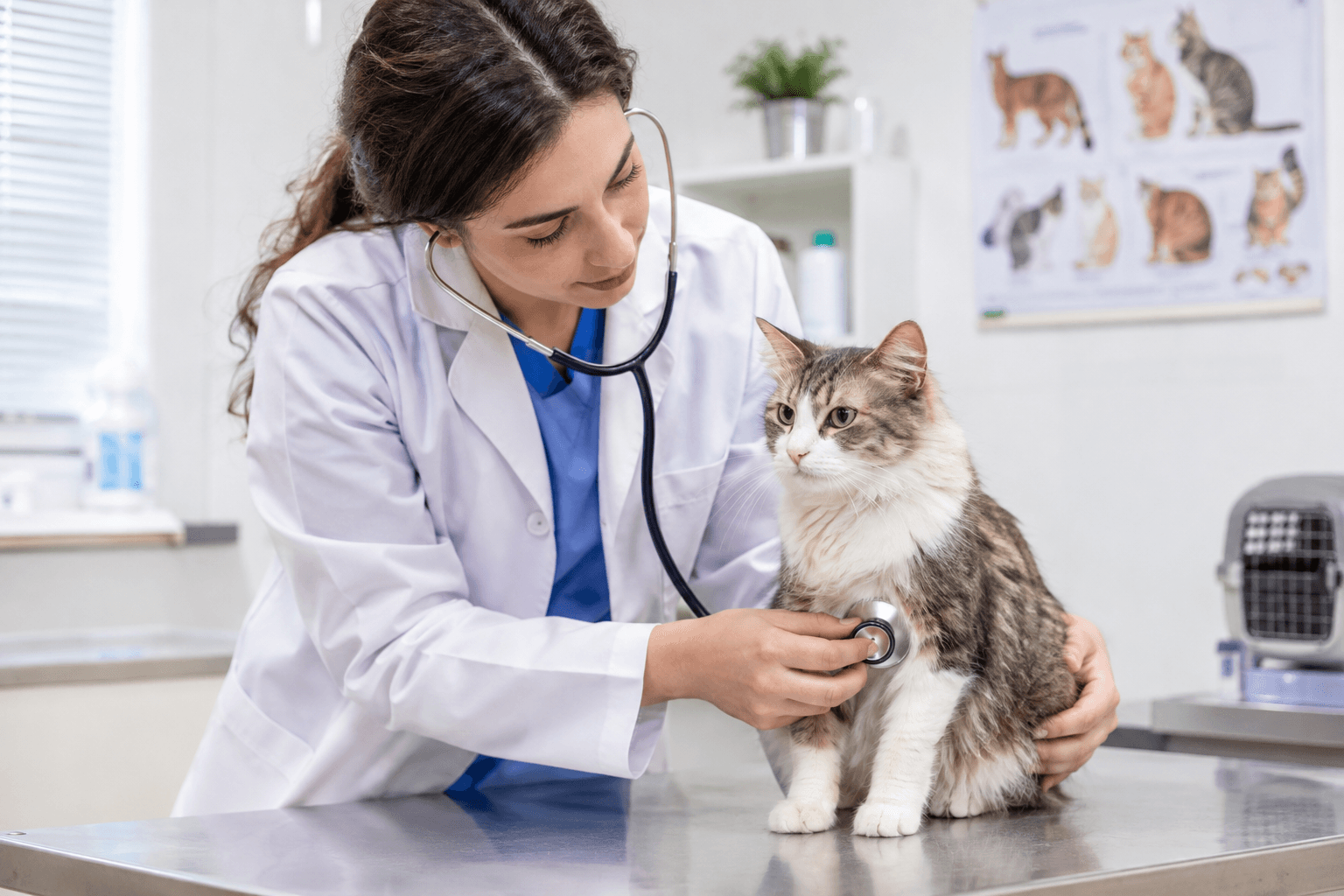
- Heart and lungs: with a stethoscope, listening for murmurs or wheezing.
- Abdomen: gentle palpation to assess the kidneys, bladder, and intestines.
- Eyes and ears: looking for discharge, inflammation, or ear mites.
- Skin and coat: checking for fleas, infections, and abnormal hair loss.
- Lymph nodes and joints: to detect lumps or stiffness.
If needed, the vet may also request blood work, X-rays, or an ultrasound to complete the picture.
Vaccines and Parasite Control 💉
Vaccination is a silent shield protecting your cat from potentially fatal diseases, especially in kittens.
- The core vaccine: protects against feline panleukopenia (feline distemper), feline herpesvirus, and calicivirus, the last two being responsible for most respiratory infections.
- Rabies: depending on local law and your vet’s advice.
- Feline leukemia vaccine: vets often recommend it for kittens and for cats that go outdoors.
As for parasites, they’re unwelcome guests:
- Intestinal worms: the vet starts deworming kittens early, then repeats doses on a schedule they set.
- Fleas and ticks: these need regular prevention, even for a cat that never leaves the apartment. They can hitch a ride on your shoes or a visitor! 🐜
One important warning: never use parasite-control products made for dogs on your cat. Some contain ingredients that are toxic to cats and can cause dangerous seizures.
Oral and Dental Health 🦷
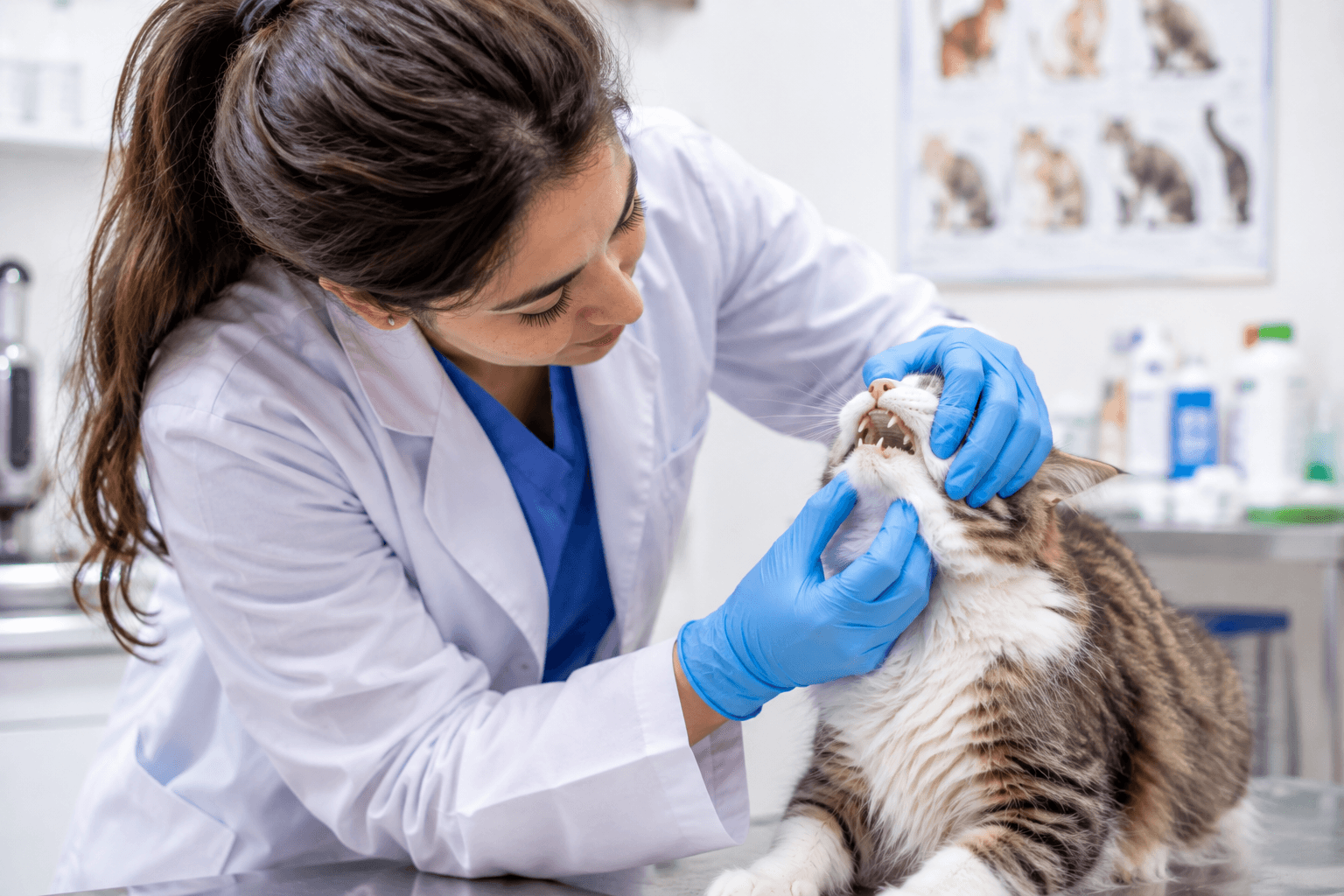
Mouth problems are among the most overlooked, because cats tolerate pain in silence. Most cats develop some degree of gum disease and tartar as they age.
Watch for these signs:
- Noticeably bad breath.
- Drooling, or chewing on only one side of the mouth.
- Losing interest in dry food.
- Pawing at the face or mouth.
Prevention is far easier than treatment. If you want to learn how to clean cat teeth at home, the principle is to go gradually: a clean finger first, then a soft brush with toothpaste made for cats. Be careful with human toothpaste, which isn’t safe if swallowed.
If there’s heavy tartar or inflammation, your vet may recommend a professional cleaning under anesthesia.
Your Cat’s File and E-Prescription 📋
After the exam comes organizing the plan: What’s the diagnosis? What’s the treatment? When is the next appointment? And how many times have you forgotten a medication’s name or lost the paper? 😅
This is where digital care shines. With SCOTY, the session ends neatly:
- An approved electronic prescription you can download and fill online with ease.
- The full case report documented in your cat’s medical file inside the app, so you can return to it anytime.
- An organized record of vaccines and medications, which helps any new vet and saves you from re-explaining everything.
And if you want a vet who knows your cat’s history from day one, booking a consultation takes minutes and starts a complete file from the very first session. ✨
Common Cat Illnesses and Solutions
No matter how well you care for your cat, there will be days she gets sick. What matters is knowing what you can observe yourself and what needs a vet. 🩺
Here are the most common problems that reach clinics, explained simply.
Skin Problems and Fungus 🐾
First, a quick note: “ringworm” has nothing to do with worms. It’s a fungus that lives on skin and hair, and it’s named that way because its patches form a ring shape.
Picture a small spot of mold on a slice of bread that starts as a tiny circle and keeps spreading. That’s close to what happens on your cat’s skin. 😿
Common signs:
- Round, hairless patches, often around the face, ears, and limbs.
- Gray scales or mild redness.
- Itching that varies, and sometimes no itching at all.
Most importantly, this fungus can pass to humans, especially children. Wash your hands after handling a suspected cat, and keep little ones away until the vet confirms the condition.
Cat fungus treatment starts with a confirmed diagnosis, because skin patches can also be allergies, fleas, or mites. Vets usually combine a topical or oral medication with cleaning the environment, and it takes weeks of consistent follow-through.
Don’t apply human creams on your own. Some contain ingredients that can mask symptoms or make things worse.
Digestion and Gas 💨
Have you heard rumbling from your cat’s belly, or noticed a slightly bloated tummy? The cause is often simple.
Here are the most common causes of gas in cats:
- Eating too fast: she swallows air with every bite, like someone gulping juice in a hurry.
- Sudden food changes: her digestive system needs days to adjust to a new food.
- Milk: most adult cats don’t digest lactose well, so the classic image of a cat with a saucer of milk is misleading. 🥛
- Intestinal parasites or sensitivity to certain ingredients.
To ease the problem:
- Offer several small meals instead of one big one.
- Try slow-feeder bowls designed to slow down eating.
- Switch foods gradually over 7 to 10 days.
But if gas comes with pain when you touch her belly, a hard swollen abdomen, diarrhea, or vomiting, it’s beyond ordinary gas and needs an exam.
Vomiting: When to Worry 🤢
A cat who brings up a hairball now and then isn’t necessarily sick. But frequent vomiting is not “normal,” as some people think.
The difference matters:
- Mild case: once, and afterward the cat is active, eating, and drinking.
- Worrying case: several times a day, or with lethargy, blood, or refusal of food.
You can handle treating cat vomiting at home only in mild cases, with simple rules:
- Provide clean water and watch how much she drinks.
- Offer a very small amount of light food after a few hours.
- Never give any human medication. Acetaminophen, for example, is extremely toxic to cats. ⚠️
See the vet right away if you suspect your cat swallowed string, ribbon, or a plant such as a lily, which is highly toxic to cats even in small amounts.
Urinary and Respiratory Health
These two systems need a watchful eye, because their problems can escalate quickly.
Urinary tract 🚽
- Frequent urination in small amounts, going outside the litter box, blood in the urine, or straining in the box with no result are all signs that call for an exam.
- Prevention helps a lot: wet food, clean water in several places, and one litter box per cat plus one extra.
- Stress itself can cause bladder inflammation in some cats, so a calm home is part of the treatment.
Respiratory tract 😮💨
- Sneezing and mild discharge may be a viral infection, but repeated coughing with a crouched, extended neck may point to asthma.
- Here’s a simple trick: count your cat’s breaths while she sleeps. If they regularly exceed 30 per minute, have her seen by the vet. ⏱️
In cases like these, a trusted veterinarian for cats is worth a great deal, because they compare her current state with her history and spot changes fast.
A 30-Minute Consultation 💬
Not every sign needs a trip to the clinic, and not every sign can wait. SCOTY helps you reach a clear decision quickly.
Imagine you’ve noticed a new patch on your cat’s skin or an odd cough. You can:
- Choose the right doctor based on their profile.
- Attach photos and videos of the patch or cough before the session, so the doctor can review them in advance.
- Discuss everything that worries you for a full 30 minutes, without rushing.
- Get an approved electronic prescription if needed.
And if you want to check on your cat’s condition today, you can book an appointment with the doctor from the calendar in minutes. ✨
Daily Cat Care, Day by Day
The vet sees her a few times a year, but you see her every day. That makes you her first line of defense. 🏡
The good news is that most prevention comes down to small, simple habits.
Nutrition by Life Stage 🍽️
Your cat’s food isn’t the same for her whole life. Her needs change, just as a child’s, a teenager’s, and a grandparent’s do.
- Kittens (up to about 12 months): need food made for growth, rich in protein and calories. Gradual weaning usually begins around 4 weeks of age.
- Adults: moderation is the key. Obesity is among the problems that most shorten cats’ lives, bringing diabetes and joint trouble.
- Seniors: often need more easily digestible food, and sometimes diets that support the kidneys, under your vet’s guidance.
A mother cat enters a special stage. She’s producing milk for her kittens and burning enormous energy, sometimes double her usual needs or more. That’s why vets care about the best food for nursing cats, which is usually calorie-rich kitten food, with clean water always available.
General tips that help every cat:
- Offer wet food at least once a day. It aids hydration and urinary health.
- Don’t leave food out all day without limits, especially if your cat tends to gain weight.
- Avoid table scraps: onions, garlic, chocolate, and grapes are all harmful to cats. ⚠️
If you’re unsure about the right portion, ask a veterinarian for cats who can weigh her and assess her body condition. The numbers on food bags are general averages, not a verdict on your particular cat.
A Safe Home, a Happy Life 🧶
A psychologically happy cat is less prone to illness. Boredom and stress show up in the body as hair loss, bladder inflammation, or aggressive behavior.
Think of your home from your cat’s point of view:
- High places: a shelf or cat tree, because cats feel safe when they can watch from above.
- Scratching posts: so your sofa isn’t the target. 🛋️
- Daily play: two sessions of 10 to 15 minutes with a wand or ball that mimics hunting.
- Clean litter boxes: scooped daily and kept away from food and water.
- Hiding spots: a cardboard box or covered bed, since privacy is a basic need.
And for safety:
- Install screens on windows and balconies, because cats fall from high floors more often than we imagine.
- Keep away string, hair ties, and plastic bags, which can be swallowed and cause dangerous blockages.
- Get rid of toxic plants, lilies above all.
- Consider microchipping and spaying or neutering, which protect your cat from getting lost and from many health and behavior problems.
Online Consultation or Clinic? 🤔
Many cat parents ask this, and the answer is that each complements the other.
Online consultation is usually suitable for:
- Assessing mild symptoms and deciding how urgent they are.
- Skin, behavior, and nutrition issues.
- Follow-up after treatment or after a visit.
- Explaining lab results and getting a second opinion.
- Being torn between “go now” and “wait until morning.”
The clinic is irreplaceable for:
- Emergencies such as difficulty breathing, urinary blockage, or accidents.
- Lab tests, X-rays, and ultrasounds.
- Vaccinations, surgeries, and cleanings under anesthesia.
The golden rule: when it involves breathing, urination, or bleeding, don’t wait. Go to the nearest clinic immediately.
A Free Week of Follow-Up 🎁
What worries cat parents most after a session is: “What if a new question comes up at night?”
This is where the biggest feature comes in with SCOTY:
- Round-the-clock chat follow-up for a full week after the session, at no extra cost.
- Another follow-up call, free, so you can be sure your cat is improving as she should.
- The case report saved in her medical file inside the app, so the doctor and you can return to it.
That means treatment doesn’t end when the call does. It stays with you until your cat’s condition settles. 🤗
You can now book an appointment with a doctor after browsing the doctors’ profiles and choosing the one who suits your cat.
Wrap-Up and Your Next Step ✨
Your cat can’t tell you, “I’m not feeling well.” But she says it by hiding, eating less, and changing her small habits. Understanding those signals is the first step of treatment.
Remember these points:
- Don’t wait long when you see danger signs: refusing food, trouble urinating, or open-mouth breathing.
- Regular checkups catch problems early, when they’re easier to treat.
- Vaccines and parasite prevention are a real shield, so use products made for cats only.
- No human medications for your cat, ever, without a vet’s guidance.
- Food, environment, and love are the foundation of her health, day after day. ❤️
If you’re looking for a veterinarian for cats who knows her case and follows up with you without complication, the next step is simple. Gather photos or a video of what worries you, pick a convenient time, and begin. 🐱